DbcultAccessing Vault...
6.2/10
Senior Film Conservator
A definitive 6.2/10 rating for a film that redefined the boundaries of cult cinema. The Soul of Broadway remains a cornerstone of transgressive art.
Stepping back into the nascent days of cinema, when flickering images held audiences spellbound, one often encounters narratives that, despite their age, resonate with an almost primal power. 'The Soul of Broadway', a dramatic offering from a bygone era, is precisely such a film. It’s a compelling tapestry woven with threads of desire, moral decay, and the arduous path to redemption, all set against the glittering, yet often corrupt, backdrop of the New York stage. Directed by Herbert Brenon, a filmmaker known for his robust storytelling, this picture plunges into the dark undercurrents of human passion, showcasing how easily a soul can be swayed from virtue by the intoxicating allure of vice. It’s a silent film, yes, but its narrative screams with a timeless intensity, a testament to the universal struggles it portrays.
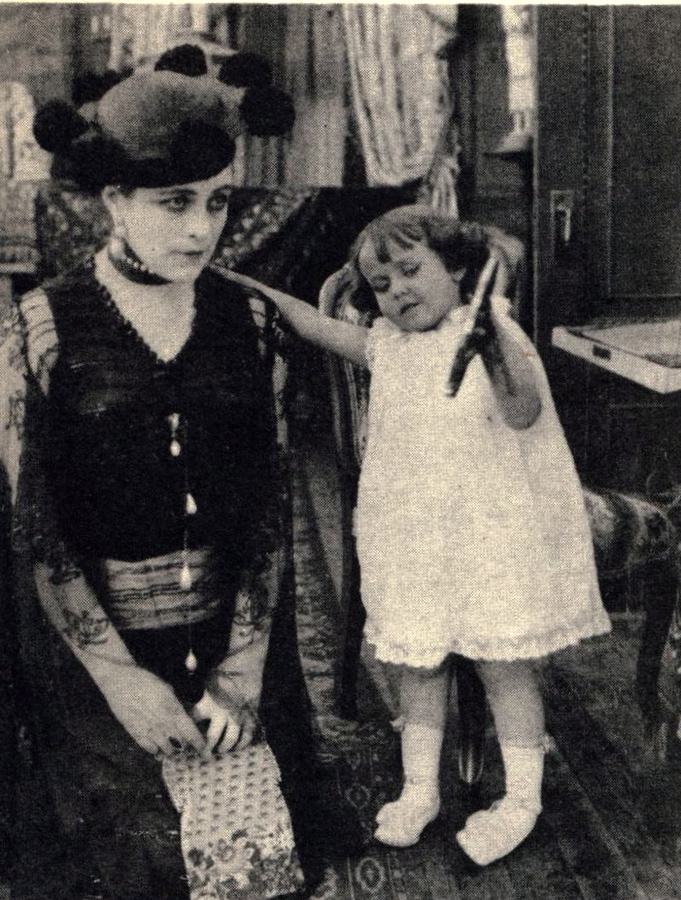
At its heart lies the formidable presence of Valeska Suratt as Grace Leonard—or La Valencia, as she is dramatically known. Suratt, a celebrated vampiress of the stage and screen, embodies the quintessential femme fatale with an almost terrifying grace. Her portrayal is not merely an act; it's an immersion into the very essence of a woman who wields her beauty and charm as weapons, shattering lives with the nonchalance of a practiced artisan. Grace Leonard is no mere antagonist; she is a force of nature, a tempest in human form, whose 'old in sin' descriptor hints at a past far more intricate and perhaps tragic than the brief plot synopsis allows. Her eyes, one can imagine, held the glint of a predator, her movements a hypnotic rhythm that promised both ecstasy and ruin. This is the kind of performance that defined an era, shaping the very archetype of the cinematic vamp that would captivate audiences for decades.
The narrative pivots around William Craig, portrayed by George W. Middleton. William is initially presented as a man susceptible to temptation, a blank canvas upon which Grace paints her destructive desires. He falls, and he falls hard, driven to criminality—to theft—simply to sustain the luxurious lifestyle demanded by his captivating temptress. This isn't just a story of a man making a bad choice; it’s a searing indictment of the seductive power of unchecked desire and the lengths to which individuals will go when ensnared by an overwhelming, destructive passion. His subsequent incarceration is not merely a legal consequence but a crucible, a period of profound suffering that strips away the superficial layers of his former self, revealing a core that yearns for redemption. The film, even in its brevity, manages to convey the weight of those five years in prison, transforming William from a passionate, reckless youth into a 'sad-faced, gray-haired man,' his 'mad passion' for La Valencia utterly cauterized by the harsh realities of his penance.
The true dramatic tension ignites upon William’s release. He emerges, seemingly cleansed, having found solace and love with a 'good woman' who remains blissfully ignorant of his sordid past. This new life, built on honesty and affection, represents his hard-won peace, a fragile sanctuary from the storms he once courted. However, the world of 'The Soul of Broadway' is not one that easily grants absolution. Grace Leonard, the architect of his downfall, re-enters his life not by chance, but by her own design. Her 'old passion is stirred,' a monstrous, selfish desire that disregards his transformation, his marriage, and his newfound happiness. This is where the film transcends a simple morality tale, delving into the profound and often cruel reality that the past, particularly a past as scandalous as William’s, casts an impossibly long shadow.
The confrontation between William and Grace is the narrative's beating heart. Her attempts to re-seduce him, to drag him back into the cesspool of their shared history, are met with his resolute refusal. This resistance is a testament to his spiritual rebirth, showcasing a man who has truly learned from his transgressions. Yet, Grace, ever the manipulator, refuses to be thwarted. Her ultimate weapon is not her beauty, but her knowledge of his past. The threat to expose his criminal history, to shatter the idyllic façade of his new life, is a classic dramatic device, but in Brenon’s hands, and with Suratt’s chilling portrayal, it feels fresh and devastating. It speaks to the universal fear of having one's skeletons dragged out of the closet, of having a carefully constructed present demolished by a forgotten past.
While silent films often relied on exaggerated gestures and facial expressions, the true artistry lay in conveying nuanced emotion without dialogue. Valeska Suratt's performance as Grace Leonard must have been a masterclass in this regard. Her ability to project both alluring charm and sinister intent would have been crucial in defining the character as more than just a caricature of evil. One can imagine her subtle shifts in expression, the calculated glint in her eye, the way her body language would convey both seduction and menace. She is the embodiment of the 'vamp', a character type that dominated early cinema, most notably epitomized by Theda Bara in 'A Fool There Was'. Both films explore the destructive power of a woman who preys on men's weaknesses, leaving a trail of broken lives in her wake. Suratt's Grace, however, seems to possess a more personal, almost vindictive drive, making her a particularly chilling figure.
The supporting cast, including Sheridan Block, Mabel Allen, Gertrude Berkeley, William E. Shay, and Jane Lee, would have played vital roles in fleshing out the world around Grace and William. While specific details of their contributions are scarce, their presence would have undoubtedly added depth to the narrative, providing the social fabric against which the central drama unfolds. The innocent wife, for instance, would have served as a poignant counterpoint to Grace, highlighting the stark choice William faces between his past and his present, between destructive passion and pure love.
Director Herbert Brenon, with his experience in crafting impactful dramas, would have orchestrated these performances, ensuring the emotional beats landed effectively. His visual storytelling, even without sound, would have relied on strong compositions, evocative lighting, and carefully paced editing to build suspense and convey the characters' internal turmoil. One can envision scenes where Grace's shadow looms metaphorically over William's new life, or close-ups that capture the raw anguish of his predicament. The film likely employed various cinematic techniques to enhance the emotional impact, such as iris shots to focus attention, intertitles to convey dialogue and exposition, and perhaps even early forms of parallel editing to heighten the tension between William's peaceful home life and Grace's looming threat. The very title, 'The Soul of Broadway', suggests a deeper commentary on the duality of the theatrical world itself—its dazzling exterior often concealing a darker, more morally ambiguous interior.
The themes explored in 'The Soul of Broadway' are remarkably resilient, transcending the specific historical context of its production. The struggle between vice and virtue, the burden of past sins, and the quest for redemption are universal human experiences. William's journey from infatuated thief to reformed husband mirrors countless narratives of second chances, while Grace's relentless pursuit underscores the destructive nature of obsession. This narrative arc finds echoes in other films of its era, such as 'The Broken Promise', which likely delved into the devastating consequences of failed commitments, or even 'Pieces of Silver: A Story of Hearts and Souls', which by its very title suggests a journey through moral and spiritual landscapes. The film's examination of how societal judgment can forever brand an individual, even after sincere efforts at rehabilitation, is particularly poignant. It asks whether true forgiveness, both from society and from oneself, is ever truly attainable when a shadow from the past persists.
The film also subtly critiques the societal pressures and moral ambiguities prevalent in the early 20th century. The 'New York stage' was, at the time, a melting pot of artistic ambition, glamour, and often, moral laxity. Grace Leonard, as a 'typical woman of the New York stage,' embodies this complex environment. Her character is a product of her surroundings, a reflection of a world where appearances could be deceiving and where moral compromises were often made in the pursuit of success or pleasure. This social commentary, though perhaps not overtly didactic, would have resonated deeply with contemporary audiences, offering both a thrilling drama and a cautionary tale.
The dynamic between Grace and William also serves as a fascinating study in power. Initially, Grace holds all the cards, manipulating William with ease. His imprisonment shifts the power dynamic, allowing him to reclaim agency over his life. However, her re-entry into his life, armed with the threat of exposure, re-establishes her dominance, albeit through a different means. This constant push and pull of power, the shifting tides of control, add layers of psychological complexity to the narrative. It’s not just a story of good versus evil, but of conflicting wills, of past trauma battling present peace, and the relentless struggle for self-preservation against external threats.
While many silent films have faded into obscurity, or exist only in fragmented form, the enduring appeal of stories like 'The Soul of Broadway' lies in their potent emotional core. They remind us that human nature, with all its flaws and potential for redemption, remains constant. The film, even without the benefit of a modern soundtrack or dialogue, would have communicated its message through the raw power of its performers and the skillful direction of Herbert Brenon. The stark contrast between the vibrant, seductive world of Grace and the quiet, domestic bliss William strives to protect creates a powerful visual and emotional tension.
For contemporary viewers, rediscovering such a film offers a unique window into the cinematic techniques and narrative conventions of early cinema. It allows us to appreciate the foundational elements of storytelling that continue to influence filmmaking today. The film’s ability to build suspense, develop complex characters, and explore profound moral dilemmas without spoken words is a testament to the artistry of its creators. It’s a compelling reminder that the 'soul' of any great drama doesn't lie in its technological sophistication, but in its capacity to illuminate the human condition.
In conclusion, 'The Soul of Broadway' stands as a compelling artifact from a pivotal period in cinema history. It's a film that, through its vivid characters and intense dramatic conflict, speaks to the enduring power of temptation, the possibility of redemption, and the inescapable grip of a past that refuses to stay buried. Valeska Suratt's portrayal of Grace Leonard is undoubtedly its magnetic center, a performance that must have burned brightly on screen, leaving audiences captivated and perhaps a little unnerved. Herbert Brenon's direction, guiding this potent tale of moral reckoning, ensures that even a century later, the film's silent whispers still echo with profound significance, inviting us to ponder the choices we make and the shadows they cast.
IMDb 5.6
1931
Community
Log in to comment.