DbcultAccessing Vault...
Cult Review
Senior Film Conservator
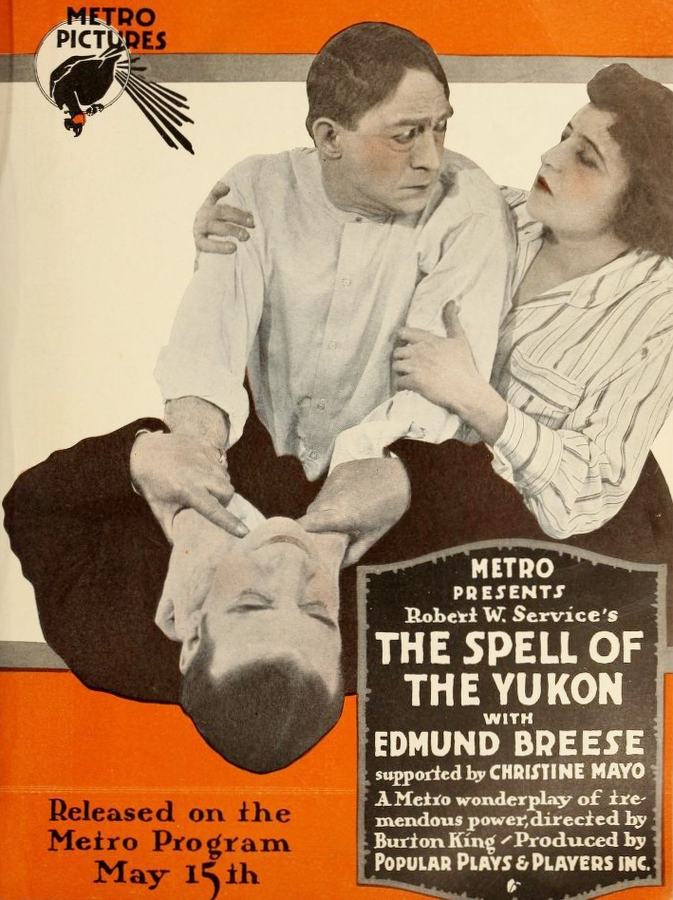
There's an undeniable allure to the grand, sweeping narratives of the silent era, tales where emotions are writ large across the screen, unburdened by dialogue but amplified by powerful performances and evocative cinematography. Among these forgotten gems, The Spell of the Yukon emerges as a compelling example, a film that delves into themes of injustice, exile, redemption, and the enduring power of familial bonds. Directed with a keen eye for dramatic tension and featuring a cast that brings a palpable intensity to their roles, this cinematic journey takes us from the stifling constraints of societal judgment to the boundless, yet equally unforgiving, expanse of the Alaskan wilderness.
At its core, The Spell of the Yukon is a story of a man wronged, a familiar trope in the melodramatic landscape of early cinema, yet rendered here with a particular poignancy. Jim Carson, portrayed with understated gravity by Arthur Hoops, is a man of integrity whose life is irrevocably altered by the malicious machinations of Albert Temple. Temple, brought to life with a chilling blend of smarmy charm and ruthless ambition by Frank McArthur, orchestrates a trumped-up embezzlement charge, not for financial gain, but as a calculated maneuver to eliminate his rival for Helen's affections. This act of betrayal sets in motion a chain of events that will ripple through nearly two decades, shaping destinies and concealing truths.
Jim's forced departure from his hometown isn't just a physical exile; it's a profound spiritual severance. Stripped of his reputation and his love, he flees to the distant, formidable Yukon, a land that promises both hardship and unparalleled opportunity. This setting, famously immortalized in the works of Robert W. Service, one of the film's credited writers, provides a magnificent backdrop for Jim's transformation. The stark, unforgiving beauty of the Yukon becomes a character in itself, mirroring Jim's internal struggle and eventually becoming the very source of his resurgence. It’s here, amidst the icy winds and the relentless pursuit of gold, that Jim forges a new life. He takes under his wing young Bob Adams, the son of a murdered friend, adopting him not merely as a ward but as a true son, a bond that becomes a bedrock of his existence in the desolate north. This act of paternal compassion, arising from tragedy, underscores Jim’s inherent goodness, a quality that even years of bitterness cannot entirely erase.
The gold strike Jim eventually makes is more than just a financial windfall; it’s a symbolic reclamation of his worth, a tangible manifestation of his resilience and hard work. After eighteen arduous years, Jim Carson, once a disgraced outcast, returns to his former life not as a broken man, but as a figure of considerable wealth and quiet power. This period of his life, though largely unseen, is powerfully implied, showcasing the transformative power of the wilderness and the perseverance of the human spirit. It's a testament to the narrative's strength that we feel the weight of those eighteen years, the sacrifices made, and the character forged in the crucible of the Yukon.
The narrative truly ignites upon Jim's return. The reunion with his past is not one of immediate confrontation, but rather a slow, agonizing re-entry into a world that has moved on, yet still holds the scars of his absence. Bob Adams, now a strapping young man, falls deeply in love with Dorothy, Helen and Albert's daughter. This burgeoning romance forms the central dramatic irony of the film. Bob, the son Jim adopted out of kindness, is drawn to the daughter of the woman Jim loved and the man who ruined him. The casting here is particularly effective, with Jacques Suzanne as Bob and Claire Lillian Barry as Dorothy, conveying a youthful innocence and burgeoning passion that makes their predicament all the more heartbreaking.
Jim's enduring hatred for Albert Temple, a festering wound from nearly two decades prior, prevents him from consenting to the marriage. His refusal is absolute, a stubborn refusal to allow any happiness to bloom from the tainted ground of his past suffering, especially if it involves the progeny of his tormentor. This rigid stance highlights the destructive nature of unaddressed grievances, demonstrating how deeply bitterness can entrench itself within the human psyche. It's a powerful portrayal of how past injustices can continue to dictate present actions, even when those actions cause pain to innocent parties. This emotional deadlock is where the performances truly shine; Arthur Hoops conveys Jim's internal conflict and his unwavering resolve with remarkable nuance, a silent battle waged across his expressive face.
The dramatic tension is expertly ratcheted up, reminiscent of other silent dramas where secrets and societal pressures dictate personal choices. One might draw parallels to the intricate family dynamics and hidden pasts explored in films like The Marriage of Molly-O, where obscured parentage often fueled the central conflict, or even the intense personal stakes found in Anna Karenina, albeit on a different scale of societal transgression. Here, the personal vendetta takes center stage, threatening to shatter the nascent happiness of the younger generation.
The climax of the film hinges on Helen's long-suppressed confession. Mary Reed, as Helen, delivers a performance laden with the weight of years of guilt and complicity. Her revelation to Jim that Albert is not Dorothy's biological father is not merely a plot twist; it is an earthquake that redefines every relationship and recontextualizes every past event. The true bombshell, however, is the subsequent disclosure: Dorothy is Jim's own daughter. This truth, kept hidden for nearly two decades, transforms Jim's animosity into an overwhelming surge of paternal love and regret. The sudden shift in his demeanor, from unyielding defiance to profound tenderness, is a testament to Hoops's acting prowess, conveying a lifetime of emotion without uttering a single word.
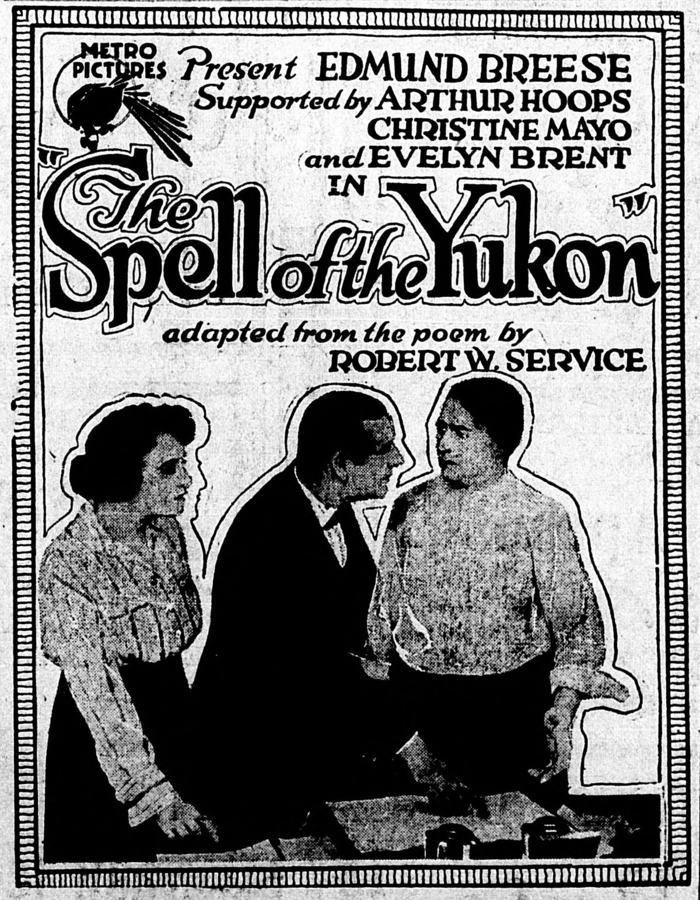
This revelation is a masterstroke of dramatic irony, a narrative device often employed by screenwriters Aaron Hoffman and Wallace Clifton to maximize emotional impact. It forces Jim to confront the full extent of his past suffering and the irony of his current stubbornness. The woman he loved, the child he never knew, and the adopted son he raised are all inextricably linked in a web of fate and hidden truths. The instant Jim comprehends his true relationship to Dorothy, his opposition to her marriage with Bob evaporates. The film culminates in a powerful moment of familial reconciliation, a testament to the enduring bonds of blood and the redemptive power of truth. This kind of dramatic unveiling, where long-held secrets shatter established realities, is a hallmark of the era, seen in the moral complexities of films like Mysteries of Paris, where hidden identities often drive the narrative forward.
Beyond the compelling plot, The Spell of the Yukon excels in its characterizations, particularly for a silent film. Arthur Hoops’s Jim Carson is a study in stoicism and simmering resentment, his journey from wronged man to wealthy patriarch is marked by an internal struggle that is palpable even without dialogue. Mary Reed’s Helen embodies a different kind of suffering – the quiet torment of a woman complicit in a lie, burdened by a secret that weighs heavily on her conscience. Her eventual confession is not just a plot device, but an act of liberation, both for her and for the narrative. Frank McArthur’s Albert Temple is suitably villainous, a man driven by petty jealousy and ambition, a stark contrast to Jim’s rugged integrity.
The younger cast members, Jacques Suzanne as Bob and Claire Lillian Barry as Dorothy, provide the emotional heart of the romance, their innocent love a beacon against the darkness of the past. Evelyn Brent, Christine Mayo, William Sherwood, Edmund Breese, and Lorna Volare, though perhaps in smaller roles, contribute to the tapestry of the community, filling out the world with believable figures who react to the unfolding drama. Their collective performances elevate the material, ensuring that the audience remains invested in the fate of these characters.
The film explores several profound themes. Justice and Revenge are central, as Jim’s long-held bitterness against Albert fuels his initial refusal. However, the film ultimately leans towards Redemption and Forgiveness, especially once the truth of Dorothy's parentage is revealed. The Call of the Wilderness, as suggested by the title, is another powerful motif, portraying the Yukon not just as a setting but as a transformative force, a place where one can rebuild or be broken. The untamed north acts as a crucible, stripping away societal pretense and forcing characters to confront their true selves. This echoes the raw, elemental struggles portrayed in other films of the era that celebrated the resilience against nature, though perhaps less directly than a film like The Captain Besley Expedition which focused on exploration.
Furthermore, the film delves into the complexities of Family and Identity. The hidden parentage of Dorothy, a classic melodramatic trope, is handled with a genuine emotional impact. It questions what truly defines a family – blood ties or the bonds forged through care and love. Bob, Jim's adopted son, remains a beloved figure, highlighting that love transcends biological connection. The societal hypocrisy that allowed Jim to be exiled while Albert thrived is also subtly critiqued, a common thread in films dealing with moral quandaries, much like the social commentary found in Hypocrisy.
The direction, though uncredited in some records for the era, maintains a steady hand, allowing the dramatic narrative to unfold naturally. The cinematography, while constrained by the technology of the time, effectively captures the contrasting environments – the claustrophobic interiors of the town and the expansive, often harsh, landscapes of the Yukon. The use of intertitles, crucial for conveying dialogue and exposition in silent films, is handled with precision, advancing the plot without feeling cumbersome. The pacing is deliberate, building suspense through character interactions and the gradual unveiling of secrets, rather than relying on rapid-fire action.
The screenwriting by Aaron Hoffman and Wallace Clifton, drawing inspiration from the spirit of Robert W. Service's work, is commendable for its ability to construct a plot that is both intricate and emotionally resonant. They masterfully weave together threads of romance, revenge, and familial drama into a cohesive whole. While Service's direct contribution to the plot structure is open to interpretation (given his primary role as a poet), the film certainly captures the rugged, often fatalistic, spirit of his Yukon poetry, where fortune can be found or lost in an instant, and human passions run as deep and cold as the northern rivers. The literary foundation provides a gravitas that elevates the film beyond mere melodrama.
In an era where cinema was still finding its voice, The Spell of the Yukon stands as a testament to the power of visual storytelling. It’s a film that resonates because its themes are timeless: the devastating consequences of deceit, the arduous path to redemption, and the profound, often surprising, ways in which family ties can bind and heal. For cinephiles and historians alike, it offers a fascinating glimpse into the narrative conventions and emotional potency of early American cinema, a silent epic that speaks volumes.
The journey of Jim Carson is a powerful reminder that while the wilderness can be harsh, the human heart holds its own untamed depths, capable of both immense hatred and boundless love. This film, with its dramatic twists and heartfelt performances, truly casts a spell, drawing viewers into its world of gold rushes, hidden pasts, and the ultimate triumph of truth and family. It's a compelling piece of cinematic history that deserves to be rediscovered and appreciated for its enduring narrative strength and emotional depth. The echoes of its drama can still be felt, proving that some stories, like the Yukon itself, are timeless in their grandeur and their ability to move the soul.

IMDb 5.6
1931
Community
Log in to comment.