DbcultAccessing Vault...
Cult Review
Senior Film Conservator
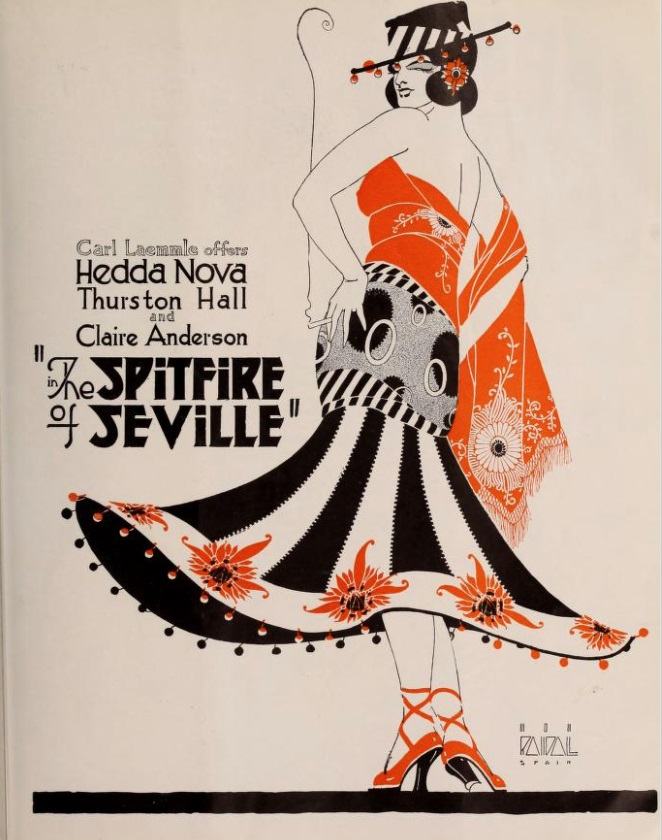
To traverse the cinematic landscape of yesteryear is to embark on an archaeological dig, unearthing treasures often overlooked by the modern gaze. Among these unearthed gems, "The Spitfire of Seville" emerges as a vibrant, if somewhat forgotten, testament to the dramatic prowess of silent cinema. Released at a time when the art form was rapidly evolving, this film, with its potent blend of romance, intrigue, and rugged adventure, transports us to the sun-baked mountains and bustling streets of early 20th-century Spain. It's a narrative spun with the threads of duty, deceit, and an indomitable spirit, particularly embodied by its central figure, Carmelita, whose journey from a chieftain's daughter bound by a grim promise to a woman forging her own destiny forms the pulsating heart of the picture.
The film opens with a scene steeped in tragic gravitas: Don Salvador, a commanding figure and leader of a band of political outlaws, breathes his last amidst the craggy embrace of the mountains near Seville. His dying breath carries a weighty mandate for his daughter, Carmelita: she must marry the most capable man in their ranks. This pronouncement, fraught with the burden of tradition and the imperative of succession, immediately sets a course for inevitable conflict. The ensuing duel between Pedro, a man driven by ambition and a possessive streak, and Leonardo, whose devotion to Carmelita seems more genuine, is a visceral display of the era's dramatic sensibilities, relying on broad gestures and intense physicality to convey the stakes. Pedro's victory, though securing Carmelita's hand, is tinged with the audience's apprehension, a sentiment amplified by Carmelita's magnanimous intervention to save Leonardo, a gesture that speaks volumes about her character's innate compassion even amidst the harsh realities of her world. This initial setup is remarkably effective, laying a robust foundation for the emotional complexities that are to unfold, much like the intricate character introductions seen in other adventure dramas of the period, such as The Beckoning Trail, which also placed its protagonists in morally ambiguous, high-stakes environments.
Carmelita's world, already defined by the stark choices of outlaw life, becomes further complicated with the arrival of Kent Staunton, an American artist seeking inspiration amidst the dramatic Spanish scenery. Their initial encounter is a charming stroke of narrative ingenuity: Carmelita, disguised as a boy to compete with a friend, is discovered by Kent, who, captivated by her unique spirit, asks her to pose. This playful deception not only introduces a burgeoning romantic tension but also subtly underscores Carmelita's inherent desire for freedom and self-expression, a nascent rebellion against the confines of her assigned roles. The innocent vulnerability of this moment is soon shattered by a sudden, violent storm, forcing Carmelita to spend the night in Kent's cabin. This seemingly innocuous event, a mere necessity for survival, becomes a catalyst for the film's central conflict, demonstrating how easily circumstances can be twisted into tools of malice. Pedro, driven by a virulent jealousy and a deep-seated sense of entitlement, misinterprets the situation, leading to a confrontation with Kent that culminates in Pedro's arrest. It's a classic trope, yet handled here with an urgency that resonates, highlighting the volatile nature of honor and suspicion in a community where reputation is paramount.
The true venom of Pedro's character is unleashed in the aftermath of his arrest. With a calculated malevolence, he plants a seed of vengeful deceit in Carmelita's mind, falsely accusing Kent of being a spy and, more damningly, of orchestrating her father's death. This lie, a brutal manipulation of Carmelita's grief and sense of filial duty, transforms her burgeoning attraction to Kent into a burning desire for retribution. It’s a pivotal moment, showcasing the devastating power of misinformation and how easily a vulnerable heart can be swayed by a skilled deceiver. Carmelita's internal struggle, caught between a growing, undeniable pull towards Kent and a fierce, misguided loyalty to her father's memory, provides much of the film's emotional depth. This psychological wrestling match is expertly conveyed through Claire Anderson's expressive performance, a hallmark of silent era acting, where facial expressions and body language carried the full weight of emotional narrative. The way she navigates this moral labyrinth recalls the complex heroine in The Woman Beneath, where hidden truths and societal pressures also dictate a woman's perilous path.
The move to Seville marks a new chapter, both geographically and emotionally. Carmelita, still under the spell of Pedro's lie, agrees to pose for Kent, a decision laden with ironic tension. She approaches these sittings not as an artist's muse but as an avenging angel, harboring a dagger and a murderous intent. The scene where she is on the verge of plunging the knife into Kent is a masterclass in silent film suspense, relying entirely on the audience's understanding of her internal conflict. The subtle shifts in her expression, the hesitation in her hand, and the powerful impulse that ultimately stops her from committing the act speak volumes, revealing the true nature of her heart and the strength of the unacknowledged affection she holds for Kent. This moment is a triumph of empathetic storytelling, allowing the audience to witness her moral awakening firsthand.
Claire Anderson's portrayal of Carmelita is undeniably the linchpin of the film. She embodies the titular "Spitfire" with a fiery energy and a deep well of emotional authenticity. From the dutiful daughter to the vengeful figure, and finally to the woman capable of discerning truth and choosing her own path, Anderson navigates these transformations with a compelling grace. Her command of the silent screen's lexicon—the dramatic gaze, the expressive hand gestures, the subtle shifts in posture—is exceptional, making Carmelita a character both formidable and deeply sympathetic. One is reminded of the strong female protagonists in films like Meg o' the Mountains, who similarly defy expectations and forge their own identities against challenging backdrops.
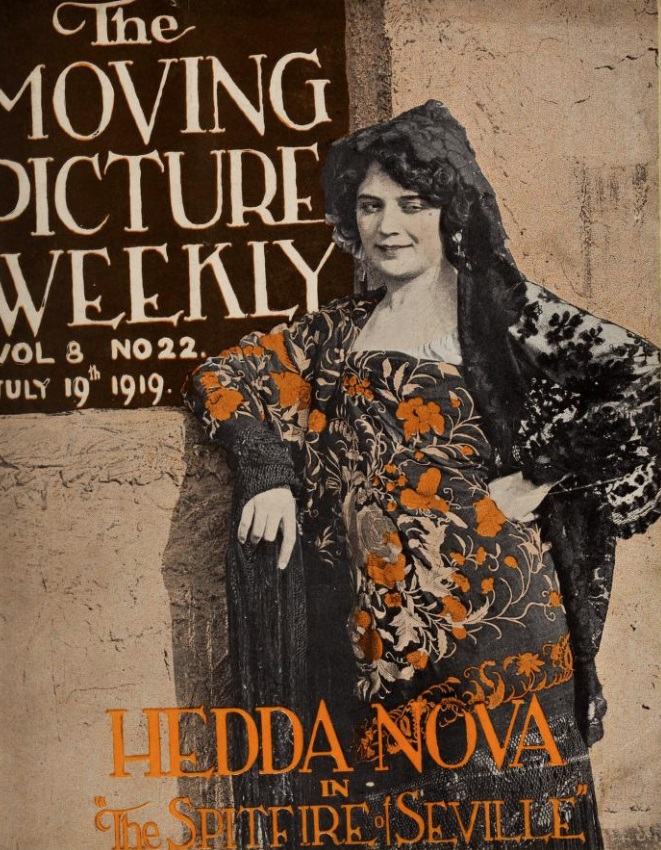
Edgar Allen as Kent Staunton provides the perfect foil to Carmelita's intensity. His character is the quintessential honorable outsider, a man of integrity whose presence inadvertently unravels the intricate web of deceit woven around Carmelita. Allen portrays Kent with a quiet strength and earnestness, his expressions conveying genuine affection and bewilderment in equal measure. He is the calm center to Carmelita's storm, and their chemistry, though largely unspoken, is palpable. Leo D. Maloney's Pedro, on the other hand, is a wonderfully detestable villain. Maloney embraces the theatricality required for silent film villainy, portraying Pedro as a man consumed by jealousy, ambition, and a chilling capacity for manipulation. His actions drive much of the plot's tension, and his presence casts a long shadow over Carmelita's choices. The supporting cast, including Robert Gray as Leonardo, provides solid performances that flesh out the intricate social dynamics of the outlaw band, adding layers to the central romantic triangle.
The directorial vision, likely a collaborative effort given the era's production practices (though Joseph F. Poland and Waldemar Young are credited as writers, the director's name isn't provided in the prompt, emphasizing the collaborative nature of silent film creation), effectively harnesses the dramatic potential of its Spanish setting. The use of location shooting, particularly the rugged mountains, adds a crucial layer of authenticity and grandeur to the narrative. The cinematography, while constrained by the technology of the time, skillfully captures the expansive vistas and the intimate emotional beats. The framing often emphasizes the isolation of the mountain outlaws and the contrasting vibrancy of Seville, creating a visual dialogue between two distinct worlds that Carmelita must navigate. The action sequences, though less elaborate than modern equivalents, are staged with a clear sense of tension and impact, particularly the duel and the climactic confrontation. The reliance on intertitles to convey dialogue and crucial plot points is seamless, integrated in a way that guides the audience without disrupting the visual flow, a testament to the sophisticated narrative techniques developed during the silent era. The pacing is robust, never lingering too long on any one scene, and ensuring a steady build-up of suspense and emotional resonance. This dynamic approach to storytelling is reminiscent of other thrilling silent adventures like One Shot Ross, which also leveraged its setting for maximum dramatic effect.
The screenplay, penned by Joseph F. Poland and Waldemar Young, demonstrates a keen understanding of melodramatic structure and character development. They craft a narrative that, while embracing the conventions of the genre, manages to imbue its characters with genuine motivation and internal conflict. The twists and turns, particularly the revelation of Pedro's lie, are well-timed, maintaining audience engagement. The writers skillfully build suspense, allowing Carmelita's journey of discovery to unfold organically, making her eventual choices feel earned. The dialogues, translated into intertitles, are concise yet impactful, driving the plot forward and revealing character. This narrative precision is vital in silent cinema, where every word and gesture carries significant weight. It stands as a strong example of how compelling stories could be told without the benefit of spoken dialogue, a stark contrast to the more experimental narrative styles seen in films like Memoria dell'altro, which explored different facets of human memory and perception.
"The Spitfire of Seville" also serves as a fascinating cultural artifact, reflecting the early 20th-century fascination with exotic locales and strong, independent female characters. At a time when women's roles in society were undergoing significant shifts, films like this offered audiences a glimpse into worlds where women, though often constrained by circumstance, possessed agency and emotional depth. Carmelita is not merely a damsel in distress; she is an active participant in her own fate, making choices, albeit sometimes misguided ones, that propel the narrative forward. This focus on female resilience can be seen in other films of the period, such as Betty of Greystone, which also championed spirited heroines. The film’s exploration of themes like loyalty, betrayal, and the pursuit of justice would have resonated deeply with audiences of the time, making it more than just a romantic adventure, but a commentary on enduring human struggles.
The final act of the film brings all the intricate threads of the plot together in a thrilling crescendo. The truth about Pedro's deception is finally revealed to Carmelita, shattering the illusion he had so carefully constructed. Her subsequent refusal to marry him, even after his escape, is a powerful assertion of her newfound autonomy and moral clarity. Pedro's violent reaction—slashing her portrait and forcing a marriage ceremony under duress—escalates the stakes to a fever pitch. This dramatic confrontation, a desperate attempt by Pedro to reclaim what he believes is his, is interrupted by Leonardo, who, having learned of the forced union, arrives to deliver a swift and decisive justice, shooting Pedro. It's a moment of classic cinematic intervention, ensuring that true love, and true justice, ultimately prevail. The subsequent marriage of Kent and Carmelita feels not merely like a happy ending, but a symbolic union of freedom and genuine affection, hard-won after a tumultuous journey. The swift and decisive resolution, while characteristic of the era, feels earned, providing a satisfying emotional release after the relentless tension.
"The Spitfire of Seville" is more than just a historical curiosity; it is a compelling piece of silent cinema that showcases the enduring power of narrative and performance. Its themes of love, betrayal, and the search for truth remain timeless, resonating as strongly today as they did a century ago. The film's ability to create a vivid sense of place and to draw the audience into the emotional maelstrom of its characters' lives is a testament to the artistry of its creators. For those interested in the evolution of film, or simply in a good old-fashioned romantic adventure, "The Spitfire of Seville" offers a rich and rewarding experience. It reminds us that even without spoken dialogue, the human heart's deepest desires and most profound conflicts can be communicated with astonishing clarity and impact. It stands as a vibrant example of early cinema's capacity to transport, to thrill, and to move, leaving a lasting impression long after the final frame fades to black. Its narrative complexities and dramatic turns offer a deeper engagement than many of its contemporaries, ensuring its place as a noteworthy entry in the annals of silent film history.
IMDb 6.4
1930
Community
Log in to comment.