DbcultAccessing Vault...
Cult Review
Senior Film Conservator
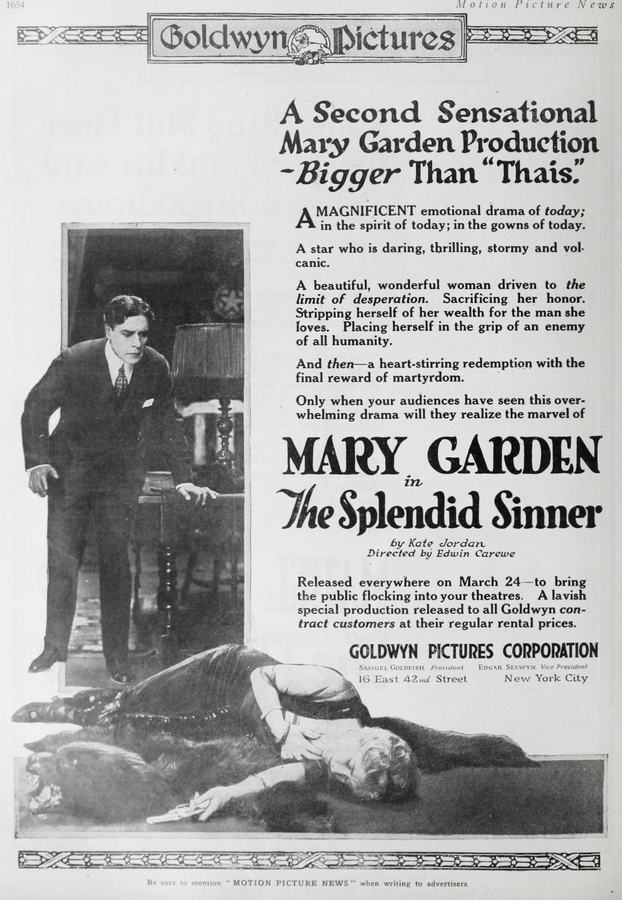
When the reels of The Splendid Sinner begin to spin, the audience is thrust into a bustling New York of the early 1910s, a city humming with immigrant ambition and the restless pulse of modernity. The protagonist, a woman of enigmatic origins, is introduced not through exposition but via a series of visual motifs: a tarnished locket, a whispered conversation in a dimly lit tavern, and a lingering glance at a newspaper headline that hints at a scandal long buried. This visual storytelling, a hallmark of Kate Jordan’s screenplay, immediately establishes a tone of concealed histories and looming consequences.
Her marriage to a German immigrant—portrayed with stoic gravitas by Anders Randolf—appears at first to be a sanctuary, a tentative bridge between two disparate worlds. The chemistry between Randolf and Roberta Bellinger (the wife) is rendered through lingering close‑ups and the delicate choreography of hands reaching across a modest kitchen table. Yet, the fragile veneer of domestic bliss cracks when a nosy neighbor, played by Hamilton Revelle, uncovers a fragment of her past: a photograph of her in a disreputable cabaret, a reminder of a life she has tried desperately to outrun. The revelation is not merely a plot device; it is a visual metaphor for the inescapable shadows that follow immigrants across oceans.
The narrative thrust accelerates as the First World War erupts. The husband, compelled by a sense of duty to his native land, returns to Germany. His transformation from a humble laborer to a high‑ranking officer—embodied by the austere presence of Hassan Mussalli—mirrors the rapid militarization of Europe. The film’s intercutting of New York’s bustling streets with the stark, snow‑laden trenches of the Western Front is executed with a striking contrast: the warm, amber glow of city lanterns against the cold, steel‑blue of battlefield night, a visual echo of the film’s color palette (dark orange, yellow, sea blue) that subtly permeates the mise‑en‑scene.
Meanwhile, the wife’s trajectory takes a divergent yet thematically resonant path. Driven by a complex amalgam of guilt, patriotism, and lingering affection, she enlists with the Red Cross. Mary Garden’s portrayal of the nurse is a study in restrained intensity; her eyes convey a storm of emotions while her hands move with clinical precision. The Red Cross hospital set is a masterclass in set design: rows of white beds, the soft rustle of linen, and the ever‑present hum of distant artillery. It is within this crucible of suffering that she encounters her husband, now a broken soldier, his uniform tattered, his eyes hollow yet still flickering with a faint ember of the man she once knew.
The reunion is not a melodramatic crescendo but a muted, almost reverent moment. The camera lingers on their faces, allowing the audience to absorb the weight of unspoken words. Their love, once a private sanctuary, is now refracted through the prism of war, duty, and personal redemption. The film deftly avoids sentimentality; instead, it presents sacrifice as an inevitable calculus, a balance sheet where love, honor, and national allegiance are weighed against each other.
The thematic core of The Splendid Sinner—the collision of personal desire with collective responsibility—finds resonance in contemporaneous works such as The Spanish Jade and The Prince of Graustark, both of which explore the tension between individual agency and societal expectations. However, where those films lean toward romantic escapism, Jordan’s script anchors the narrative in the stark realism of wartime sacrifice, aligning it more closely with the moral gravitas of Mit Herz und Hand fürs Vaterland and the stark emotionality of Sorvanets.
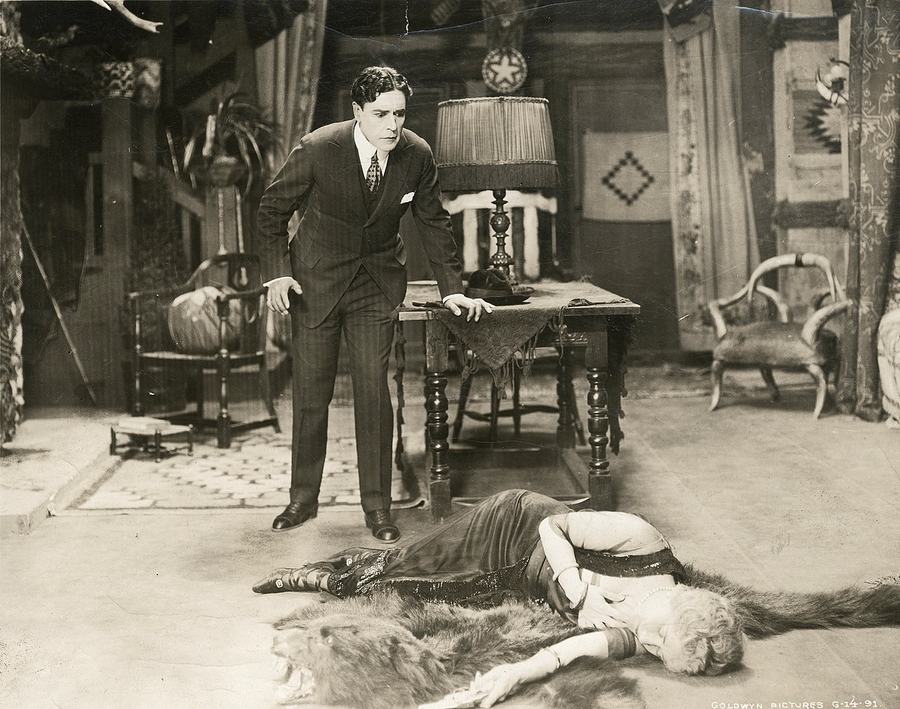
Cinematographically, the film is a study in chiaroscuro. The director employs deep shadows to underscore the protagonist’s internal conflict, while bursts of yellow lighting punctuate moments of fleeting hope—most notably during the scene where the nurse tends to her husband’s wound, the surgical lamp casting a halo that seems to sanctify the act of caregiving. The use of sea blue filters during the hospital’s night sequences evokes a cold, watery melancholy, reinforcing the sense that the characters are adrift in an ocean of uncertainty.
Performance-wise, Anders Randolf delivers a nuanced portrayal of a man torn between his adopted country and his birth nation. His stoic exterior cracks subtly in moments of vulnerability, especially when he gazes at his wife’s uniform—a visual reminder of the life he left behind. Roberta Bellinger’s embodiment of the conflicted heroine is equally compelling; she oscillates between defiant resolve and fragile yearning, a duality that anchors the film’s emotional core.
The supporting cast, though not as prominently featured, enriches the narrative tapestry. Hamilton Revelle’s role as the opportunistic neighbor adds a layer of social commentary on the invasive nature of gossip within immigrant enclaves. Henry Pettibone’s cameo as a Red Cross commander provides a glimpse into the bureaucratic machinery that both empowers and constrains the protagonist’s agency.
From a structural perspective, the screenplay’s pacing is deliberate, allowing the audience to linger on moments of introspection. The intercutting of the front lines with the Red Cross hospital creates a rhythmic echo, a visual heartbeat that drives the story forward. This technique is reminiscent of the editing style employed in Sporting Life, yet Jordan’s narrative stakes are considerably higher, as the personal and political are inextricably intertwined.
The film’s climax—her ultimate sacrifice—does not manifest as a grandiose battlefield death but as a quiet, self‑effacing act: she relinquishes her own life to ensure her husband’s safe return to Germany, a decision that underscores the paradox of love as both a binding force and a catalyst for loss. This denouement is rendered with a stark simplicity that amplifies its emotional impact; the camera pulls back to reveal a solitary candle flickering in a dimly lit room, the flame sputtering as if mirroring the extinguished hope of the characters.
In terms of historical context, The Splendid Sinner offers a rare glimpse into the American home front’s perception of the war. While many contemporaneous films glorified the battlefield, this work foregrounds the domestic repercussions of global conflict, aligning it with the thematic concerns of The Woman Pays and Judge Not; or the Woman of Mona Diggings. Its portrayal of a female protagonist who actively participates in the war effort predates the more overt feminist narratives of later decades, marking it as a progressive piece for its era.
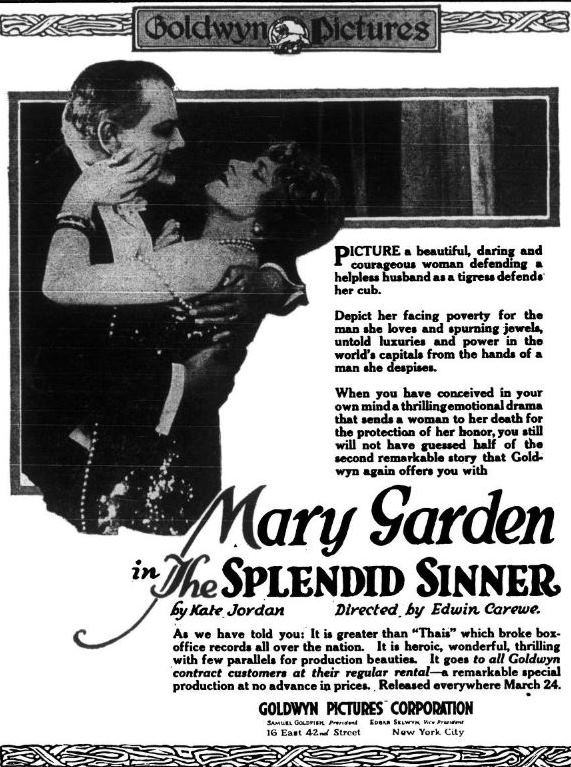
The film’s score—though silent in the traditional sense—relies on a live piano accompaniment that oscillates between mournful minor chords during the hospital scenes and a brisk, martial march when the husband ascends the ranks. This auditory dichotomy reinforces the visual contrast between love’s tenderness and war’s brutality.
Comparatively, the narrative structure bears a faint resemblance to the moral dilemmas presented in The Danger Signal, where characters grapple with the consequences of hidden truths. However, The Splendid Sinner distinguishes itself through its transatlantic scope, moving fluidly between New York’s immigrant neighborhoods and the European battlefields, thereby expanding the emotional geography of the story.
From a production standpoint, the film’s set pieces are meticulously crafted. The New York tenement interiors are rendered with an authenticity that captures the cramped, soot‑stained reality of early 20th‑century immigrant life. In contrast, the German military barracks are depicted with austere precision, the stark wooden tables and iron bunks evoking a sense of disciplined order. The juxtaposition of these environments underscores the protagonist’s internal schism—caught between two worlds that demand mutually exclusive loyalties.
The use of intertitles is sparing yet effective, delivering only essential dialogue and allowing the visual narrative to carry the emotional weight. When they do appear, the typography is rendered in a crisp, sans‑serif font that mirrors the film’s modernist aesthetic, further reinforcing its departure from melodramatic conventions of the era.
The film’s legacy, though eclipsed by more commercially successful contemporaries, endures as a testament to the silent era’s capacity for nuanced storytelling. Its exploration of identity, sacrifice, and the often‑overlooked contributions of women in wartime resonates with modern audiences, inviting re‑examination through contemporary lenses of gender and diaspora studies.
In sum, The Splendid Sinner is a richly layered work that weaves together personal tragedy and historical upheaval with a deft hand. Its performances, visual composition, and thematic depth coalesce into a cinematic experience that is both intellectually stimulating and emotionally resonant. For scholars of early cinema, aficionados of war dramas, and anyone intrigued by stories of love’s endurance amid chaos, this film offers a compelling, timeless narrative that continues to speak across the decades.

IMDb —
1927
Community
Log in to comment.