DbcultAccessing Vault...
5.7/10
Senior Film Conservator
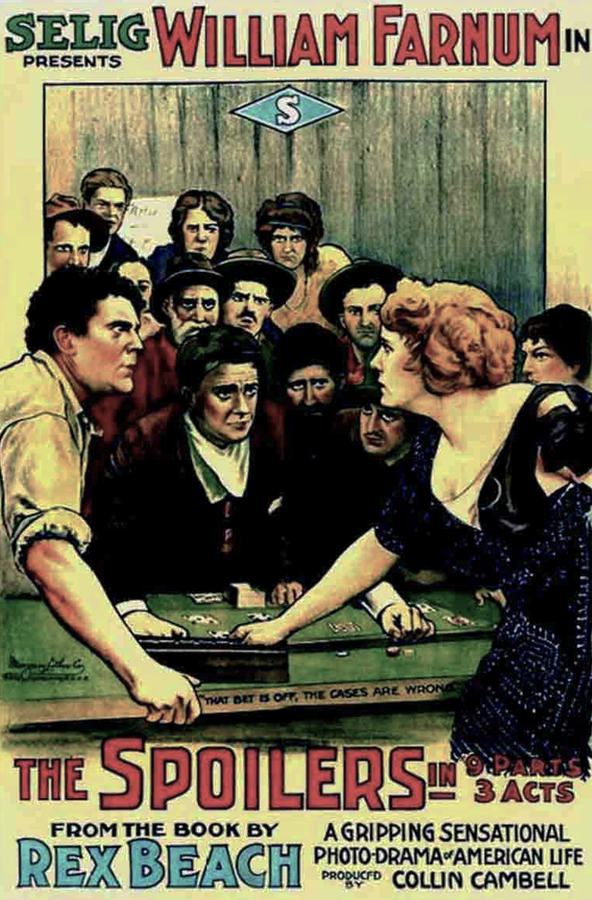
A definitive 5.7/10 rating for a film that redefined the boundaries of cult cinema. The Spoilers remains a cornerstone of transgressive art.
A canvas of ice, greed, and fists
Imagine a frontier where the ground itself can be panned, sluiced, and stolen before breakfast—where justice arrives by riverboat and leaves on the same tide, pockets bulging with bribery dust. Rex Beach’s 1906 novel, already a pulp titan, hit the screen in 1914 with the blunt force of a pickaxe swung at an claim-jumper’s skull. Director Colin Campbell doesn’t so much adapt the book as detonate it, scattering nuggets of melodrama across a mise-en-scène that reeks of sour mash and permafrost.
From the first iris-in on a sun-blistered wharf, the film declares its agenda: no pastoral ode to manifest destiny, but a bruise-colored postcard from capitalism’s bleeding edge. The camera—still shackled to static tableaux—nonetheless manages to tremble with the vibration of stampeding feet and clattering gold pans, as if the very tripod senses the wealth beneath the ice.
Performances mined from bedrock
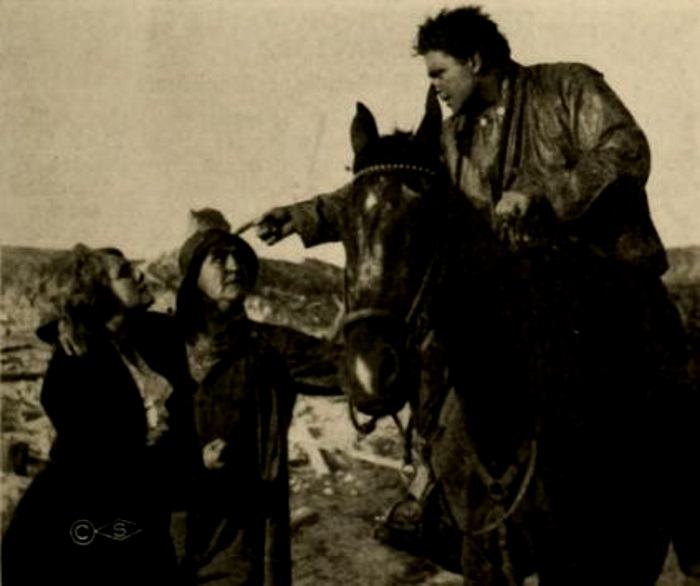
William Farnum’s Roy Glennister saunters into frame like a man who has already lost everything except the ability to lose more. His shoulders occupy the horizontal axis as though staking a claim on the very screen; when he clenches a letter from his absent sweetheart, the paper crinkles with the geological pressure of heartbreak. Farnum understands—long before Method gloom—that silent acting is sculpture in motion: every tilt of the Stetson must chisel character into the audience’s retina.
Opposite him, Cleo Ridgely’s Helen Chester pivots from Bostonian corseted naïveté to snow-smudged resilience without the usual Victorian flutter. Watch her pupils dilate in a courtroom close-up—an illicit intimacy in 1914—as she realizes the judge is auctioning her lover’s life along with his mine. The moment lasts three seconds yet stretches like an Alaskan twilight.
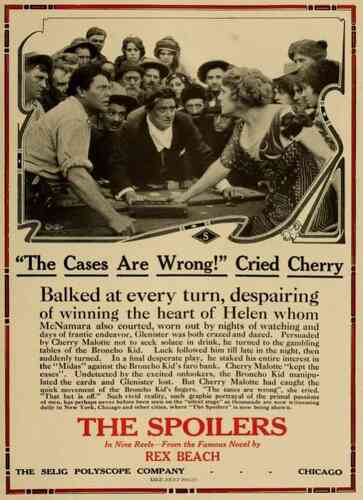
And then there is Cherry Malotte, essayed by Kathlyn Williams with a languid predatoriness that makes the saloon’s kerosene lamps flicker in envy. Williams lounges against the bar as if she upholstered it with her own reputation, dealing hands of poker and flirtation with the same unhurried wrist-flick. When she finally sacrifices her roulette-wheel future for Glennister, the gesture lands less as redemption than as a weary bet on the only honest chump left in town.
The set that swallowed the studio
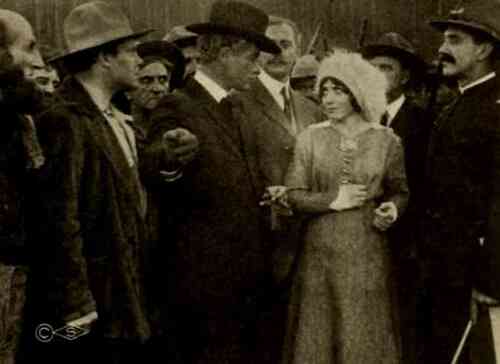
Universal built Nome on the backlot like an invading army: false-front saloons slapped with carmine paint, a courthouse whose Doric columns are only 2×4 planks dipped in stucco, and a riverbank dredged from a thousand sacks of studio gravel. Long-shots reveal the artifice—mountains painted on muslin ripple in the Santa Ana wind—yet the illusion holds because the actors sweat genuine conviction. When the final brawl erupts, splinters fly that are indisputably three-dimensional; legend claims three extras left the set in splints and one in a body cast.
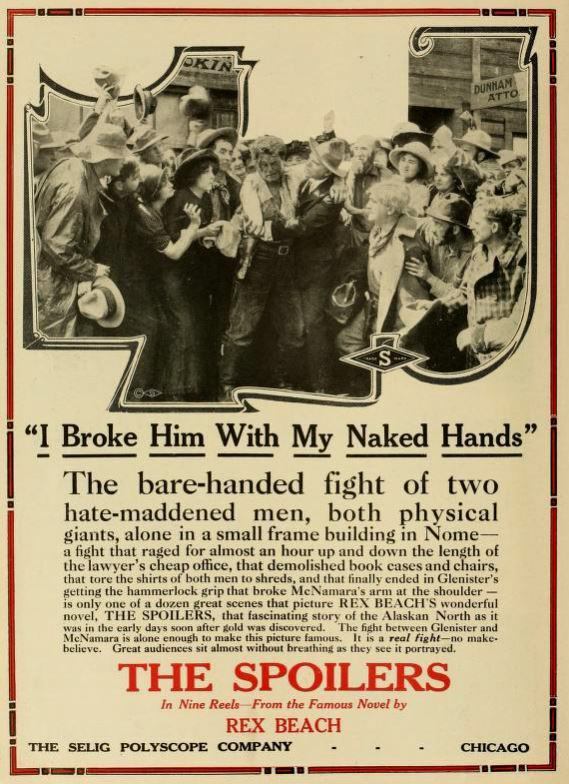
That brawl—seven minutes of pugilistic chaos—deserves archival enshrinement alongside Keaton’s collapsing facades and Griffith’s burning of Atlanta. Chairs disintegrate across backs, bottles blossom into shards against skulls, and the camera, freed from its proscenium prison, lurches after bodies that tumble from balconies like sacks of condemned ore. Contemporary reviewers called it “a cyclopean spree,” and even now the sequence feels ferocious enough to reopen scar tissue.
Gold, graft, and the great American shrug
Beach’s plot, streamlined by scenarist Lanier Bartlett, strips the reformist novel to its sinew: no subplots about Presbyterian missions or sled-dog epidemics—just the raw triangulation of land, law, and lust. The villains aren’t mustache-twirling caricatures but bureaucrats armed with fountain pens that can sign away a river. McNamara, essayed by a sneering Robert Edeson, embodies a particularly American species of corruption: the federal agent who outlaws larceny only to license it for himself.
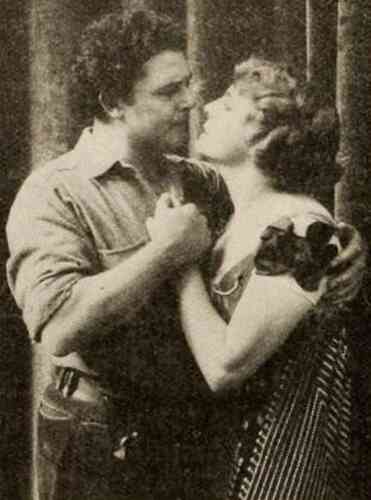
Yet the film refuses moral absolutes. Our hero is complicit; he stakes claims on land wrested from Indigenous hands only yesterday, and his righteousness glows with the same fool’s gold that blinds his adversaries. The Spoilers, true to its title, spoils not just ore but the very myth of the self-made man. When Glennister finally retakes his mine, the victory tastes of iron pyrite—glittering, worthless, and slightly sulfurous.
Gender under the midnight sun
Early silent Westerns usually relegate women to two crates: the virginal schoolmarm or the soiled dove with a heart of ore. Here, those archetypes circle each other like wolves. Helen may wear white Arctic furs, but she wields a derringer with surgeon-like steadiness; Cherry drapes herself in crimson yet pens the letter that saves the hero’s hide. Their climactic confrontation—no hair-pulling catfight but a terse exchange of glances across a gaming table—feels shockingly modern, as if the film spliced in a reel from 1935.
The movie intuits that in a boomtown demography of ten men to every woman, gender itself becomes currency. Helen’s gloved hand in marriage carries the same speculative value as a creek-bed claim; Cherry’s body is a negotiable commodity, yet she leverages it to become stakeholder rather than spoil. When the final shot frames both women watching Glennister stride into the horizon, their shared smirk suggests a tacit truce: men may own the ground, but women tally the books.
Cinematic DNA: what the spoilers bequeathed
Watch the fistfight in The Corbett-Fitzsimmons Fight (1897) and you’ll see documentary curiosity; watch The Spoilers and you witness narrative violence weaponized for emotional payoff. John Ford, Raoul Walsh, and even Howard Hawks mined this template—note the saloon shootout in The Virginian (1914, released months later) that lifts its tempo whole. The Spoilers proved that audiences would forgive cardboard mountains if the blood in the snow looked real enough.
Contrast it with the same year’s stately pageants—From the Manger to the Cross or Life and Passion of Christ—and you locate the fault line where American cinema split between reverence and rowdiness. The Spoilers chose rowdiness, and the box office chose The Spoilers.
Restoration, rediscovery, re-evaluation
For decades the only surviving print floated around in 9.5 mm Pathéscope excerpts, spliced with French intertitles that rechristened Nome as “La Ville du Mauvais Sang.” In 2019 the Library of Congress reconstructed a 35 mm negative from two incomplete positives, tinting night scenes a toxic cyan that makes the permafrost look radioactive. The new 4K scan reveals textures previously lost: frost on beard stubble, soot on kerosene chimneys, and—most startling—hand-painted gold flakes that sparkle in the hero’s pouch like miniature supernovas.
Accompanying the disc, historian Kevin Brownlow’s commentary track excavates production ledgers: $38,000 for the town set, $500 for genuine Yukon nuggets used as props, and $27 for the physician who treated Farnum’s cracked rib after take 43 of the balcony plunge. Such trivia humanizes the spectacle, reminding us that even mythic brawls clock out for payroll.
Where to let it spoil you today
Stream the 4K restoration via loc.gov’s National Screening Room, or snag Flicker Alley’s Blu-ray paired with the 1930 Gary Cooper talkie remake—an instructive diptych of how sound tamed the film’s feral energy. Avoid the Alpha Video bargain-bin DVD; its transfer resembles a snowstorm inside a coal scuttle.
Is The Spoilers high art? Only if you consider a gold-rush stampeders’ pit high, and I do: it’s the crucible where American cinema tested its most combustible elements—greed, lust, and kinetic release—and found them malleable. Ninety minutes later you won’t exit enlightened, but you will exit exhilarated, ears ringing with phantom gunshots and fingers unconsciously curled around an imaginary revolver. That, fellow cine-cynics, is the rarest ore of all: a silent that still speaks fluent adrenaline.
IMDb —
1932
Community
Log in to comment.