DbcultAccessing Vault...
Cult Review
Senior Film Conservator

Short answer: yes, if you have the patience for the deliberate pacing of late-silent French cinema. This film is for the cinephile who values atmosphere and social commentary over explosive action. It is absolutely NOT for anyone looking for a quick, casual watch or those who find the visual language of the 1920s inaccessible.
Before we dissect the celluloid, let’s get straight to the point. Mon curé chez les pauvres is a fascinating bridge between the theatricality of early film and the gritty realism that would define the next decade of French production.
1) This film works because it refuses to romanticize poverty, presenting the slums with a stark, almost documentary-like eye that was rare for its time.
2) This film fails because its second act meanders into melodramatic subplots that distract from the central, powerful conflict between the priest and the bourgeoisie.
3) You should watch it if you want to see how early cinema tackled the friction between organized religion and genuine social activism.
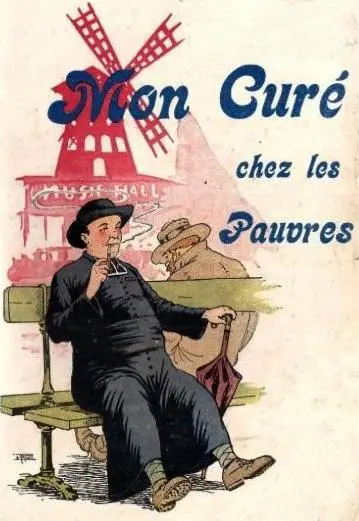
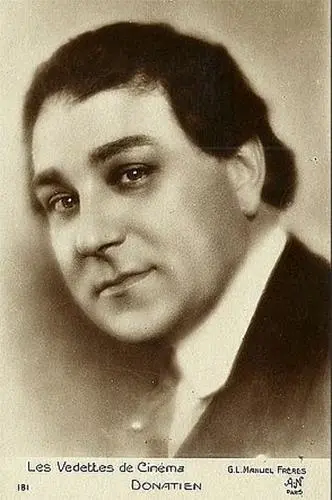
The character of Father Clément is the film's undeniable anchor. Played with a nuanced mix of humility and stubbornness by Donatien, he represents a radical shift in how the clergy was portrayed on screen. In many films of this era, such as the more adventurous The Adventures of Ruth, characters are often archetypes. Here, Clément is a man of flesh and blood.
One specific scene stands out: Clément sits in a cramped, poorly lit room with a family of miners. The way the camera lingers on the cracked walls and the empty plates tells more than any intertitle ever could. It’s a moment of quiet rebellion against the lavish church interiors we see earlier in the film.
Contrast this with the work of Louis Delluc in The Woman from Nowhere. While Delluc focused on the internal psychological landscape, Donatien focuses on the external, physical landscape of class struggle. Both are essential, but Donatien’s approach feels more urgent, more grounded in the dirt of the street.
Donatien, serving as both director and lead actor, brings a singular vision to the project. His directing style is surprisingly modern in its use of depth. He often places characters in the foreground while social chaos unfolds in the background, creating a sense of a world that is moving even when the protagonist is still.
The cinematography by the uncredited camera team captures the industrial grime of the setting with a palette of greys that feel heavy. It lacks the maritime majesty found in Toilers of the Sea, but it replaces that scale with an oppressive, claustrophobic intimacy. You can almost smell the coal dust.
However, the film is not without its flaws. The pacing is, frankly, problematic. There are sequences involving the local wealthy families that feel like they belong in a different, much lighter film—perhaps something closer to the tone of Our Alley. These moments of levity often feel forced and sap the momentum from the priest’s struggle.
Yes, because it tackles the timeless friction between institutional power and individual morality. It asks a question that remains pertinent today: can a person truly change a system from within, or will the system always find a way to silence the dissenting voice?
The film’s portrayal of the wealthy is cartoonish, almost to its detriment. They are painted with such broad strokes of villainy that they occasionally lose their humanity. But perhaps that was the point. In the eyes of the starving, the indifferent rich are not people; they are obstacles. It’s a brutal observation, but one that gives the film its bite.
Lucienne Legrand delivers a performance that is surprisingly restrained for the silent era. She avoids the wild gesticulations common in films like The Pursuing Vengeance. Instead, she uses her eyes to convey a sense of weary resignation. Her character serves as the emotional bridge between the priest’s idealism and the reality of the parish.
Jules de Spoly and Robert Guilbert provide solid support, though they are often relegated to the background. The real star, aside from Donatien, is the production design. The sets feel lived-in. The costumes are appropriately tattered. There is a tactile quality to the film that many modern digital productions fail to replicate.

Pros:
- Powerful central performance by Donatien.
- Authentic production design that avoids the "pretty" version of poverty.
- A bold thematic focus on class warfare through a religious lens.
Cons:
- Inconsistent tone between the drama and the satirical elements.
- Some supporting characters are underdeveloped caricatures.
- The ending feels slightly rushed compared to the slow build-up.
One of the most striking things about this film is how it handles silence—not just because it is a silent film, but because of how it uses the absence of action. There are long takes where nothing happens except for the priest looking out a window or a woman cleaning a floor. These moments of stillness are where the film’s true power lies. It forces the viewer to sit with the discomfort of the characters' lives.
It works. But it’s flawed. The film is a product of its time, yet it feels strangely ahead of it in its social consciousness. It doesn't have the polish of a Hollywood production, but it has a soul that many of those films lacked.
Mon curé chez les pauvres is a rough-hewn gem of the silent era. While it occasionally stumbles over its own narrative ambitions, its commitment to showing the world as it is—rather than how the elite wish it to be—makes it an essential watch for any serious cinephile. It is a quiet, angry film that still resonates nearly a century later.
IMDb —
1926
Community
Log in to comment.