DbcultAccessing Vault...
Cult Review
Senior Film Conservator
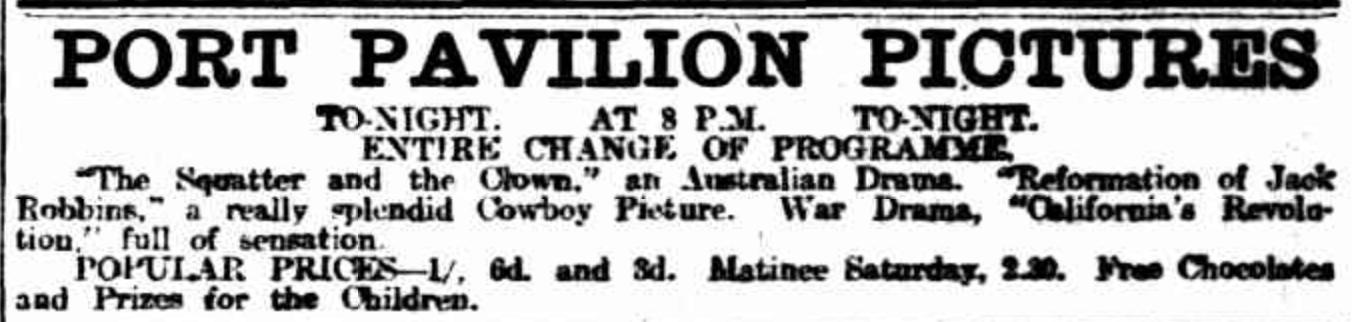
To peer into the flickering frames of The Squatter and the Clown (1911) is to witness the very gestation of the Australian cinematic identity. In an era where the medium was still shedding its theatrical skin, this film emerged as a vibrant, albeit primitive, synthesis of the 'squatter' subgenre that dominated the early antipodean imagination. Unlike the gritty realism of The Story of the Kelly Gang, which leaned into the rugged defiance of the bushranger, this work pivots toward a more domestic, yet equally volatile, social landscape. It is a film that breathes the dust of the outback while wearing the greasepaint of the circus, creating a juxtaposition that is as jarring today as it must have been captivating over a century ago.
The narrative architecture of the film is deceptively simple, yet it carries a heavy load of socio-political subtext. The 'Squatter'—a term originally denoting someone who occupied land without legal title but which, by 1911, had evolved into a title of aristocratic weight—functions as the pillar of stability. His world is one of fences, boundaries, and the slow, rhythmic toil of the land. Enter the Clown: a creature of no fixed address, a nomad whose only currency is laughter and spectacle. When these two worlds collide through the romantic interest of the squatter's daughter, the film transcends its melodramatic roots.
The casting, though lost to the mists of time in many archival records, reflects the broad, expressive style required of silent performers. The clown’s movements are a masterclass in kinetic storytelling, offering a stark contrast to the stolid, grounded presence of the squatter. One cannot help but compare this dynamic to other contemporary works of the period, such as The Squatter's Daughter, where the land itself acts as a secondary character. In The Squatter and the Clown, however, the land is a cage from which the daughter seeks to escape, viewing the circus not as a threat, but as a portal to a world of infinite possibility.
Technically, the film is a fascinating relic of early Edwardian filmmaking. The use of natural light in the Australian bush provides a stark, high-contrast aesthetic that no studio lighting of the time could replicate. The shadows are deep, almost ink-like, while the sun-drenched clearings feel overexposed and ethereal. This visual dichotomy perfectly mirrors the film's internal conflict: the light of the 'respectable' world versus the dark, mysterious corners of the traveling show.
While the camera work remains largely static—a common characteristic of the 'proscenium arch' style of the early 1910s—there are moments where the framing suggests a burgeoning understanding of cinematic depth. When the circus performers move through the background while the squatter and his daughter argue in the foreground, we see a primitive form of deep focus that adds layers to the storytelling. It lacks the frenetic energy of later British sports films like Harry the Footballer, but it compensates with a deliberate, almost meditative pacing that allows the emotional beats to resonate.
To understand The Squatter and the Clown, one must place it within the broader lineage of Australian cinema. It shares a DNA with films like The Squatter's Son, yet it diverges by introducing the 'outsider' element of the clown. In many ways, the clown is a sanitized version of the bushranger found in The Bushranger's Bride or The Life and Adventures of John Vane, the Australian Bushranger. He is a social deviant, yes, but his weapon is satire rather than a six-shooter.
The film’s climax, a masterfully executed sequence of high stakes and emotional resolution, utilizes the 'chase' trope that was becoming a staple of global cinema. However, here the chase is not for a criminal, but for a future. The daughter’s flight from the homestead toward the circus caravan is filmed with a sense of urgency that predates the sophisticated editing of the 1920s. It captures a raw, unpolished desperation that is deeply human. Compared to the more somber tones of Sentenced for Life, this film offers a glimmer of hope—a suggestion that the rigid structures of colonial life could, perhaps, be softened by the touch of the whimsical.
Critics of the era often dismissed such works as 'pulp' or 'low-brow' entertainment for the masses, yet from a modern vantage point, we can see the intricate weaving of cultural anxieties. The squatter represents the British ideal of the landed gentry, while the clown represents the chaotic, multicultural, and transient reality of the Australian frontier. The struggle between them is the struggle of a nation trying to define its soul.
The symbolism in the film is overt yet effective. The clown’s makeup serves as a mask, hiding the 'real' man from the squatter’s judgmental gaze. It is only when the daughter sees beneath the paint that the true connection is formed. This theme of 'unmasking' is a recurring motif in early silent drama, used to emphasize the moral superiority of the heart over social standing.
Furthermore, the presence of animals—both the livestock of the squatter and the trained beasts of the circus—serves to underscore the theme of domestication versus wildness. The squatter’s sheep are passive, controlled, and uniform; the circus animals are exotic, unpredictable, and performative. The daughter, caught between these two biological metaphors, eventually chooses the one that requires the most courage to embrace.
While many films from 1911 have perished due to nitrate decomposition, The Squatter and the Clown survives in the collective memory of film historians as a vital link in the chain of Australian storytelling. It lacks the technical polish of the later silent era, but it possesses a vitality and a sincerity that is often missing from more 'sophisticated' productions. It is a reminder that the core of cinema has always been, and will always be, the human face and the emotions it can convey without a single spoken word.
In the grand tapestry of early cinema, alongside the epic historical recreations like The Battle of Trafalgar or the religious fervor of The Life of Moses, The Squatter and the Clown stands as a humble yet profound testament to the power of the local story. It is a film about Australia, for Australians, and yet its themes of love, class, and the desire for freedom are universal. To watch it is to travel back in time, not just to a different country, but to a different way of seeing the world—one where a clown could be a hero and a squatter’s daughter could find her kingdom in a caravan.
IMDb 5.9
1929
Community
Log in to comment.