DbcultAccessing Vault...
Cult Review
Senior Film Conservator
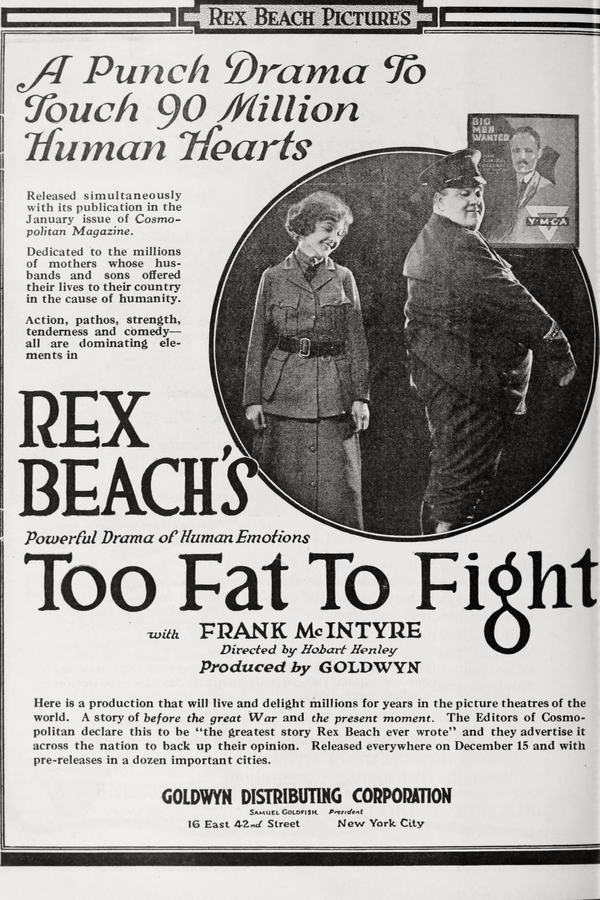
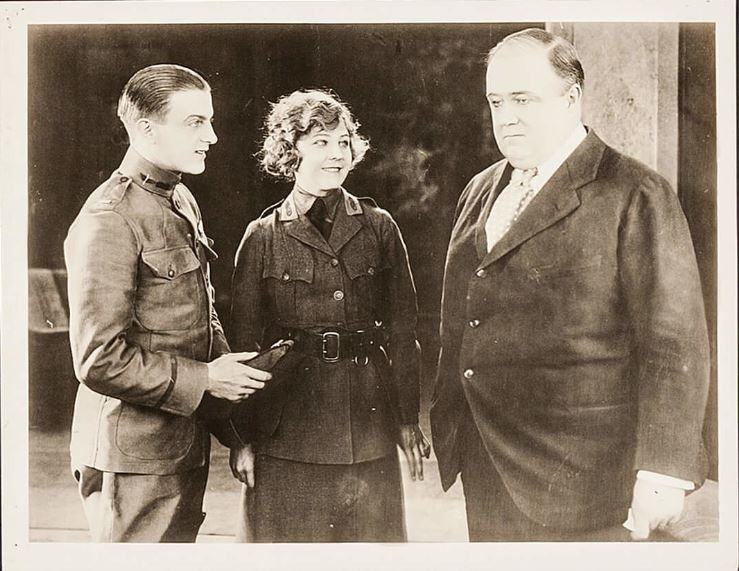
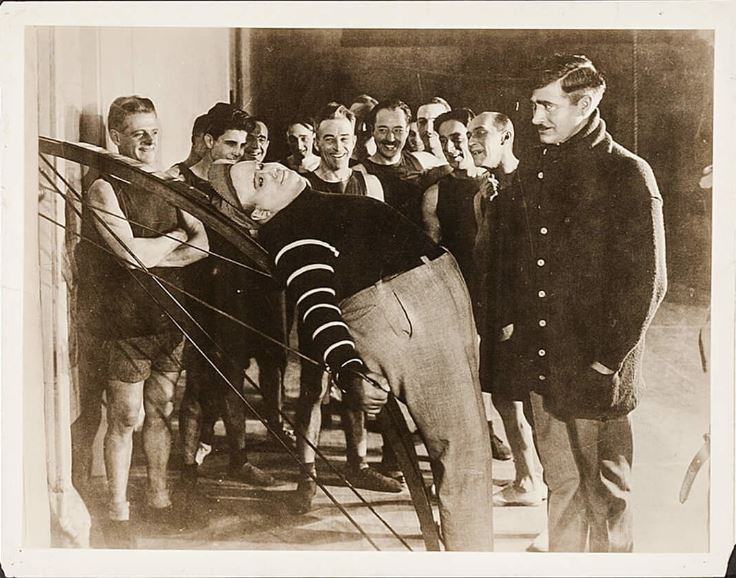
Harold Entwistle’s silhouette spills over the edges of the frame like an inkblot that refuses to apologize. When the recruiting sergeant—played by Frank McIntyre with the mechanical grin of a man who’s measured one too many ribcages—snaps his tape shut at forty-eight inches, the snicker that ripples through the lineup feels almost audible even in this silent reel. The intertitle card flashes: "Too Fat to Fight—Next!" and the camera lingers on Entwistle’s jowls, recording not shame but a slow-burning incredulity, as though the universe has misread its own script.
What follows is no mere underdog fable; it is a celluloid essay on the absurdity of bodies adjudicated by bureaucrats. The YMCA he stumbles into—its façade peeling like sunburned parchment—becomes a sanctum of exquisite humiliations. In one corner, a sylph-like secretary (Florence Dixon) files membership cards with the solemnity of a nun lighting votives; in another, a toddler-sized dumbbell lies defeated, its iron ears flattened by heavier cousins. Entwistle hoists it anyway, and the cutaway to his face—lips pursed as though kissing the void—turns exercise into sacrament.
Director Charles Logue, best known for salty seafaring yarns like The Joan of Arc of Loos, shoots the torso here as landscape: wide, pitted, undulating. Note the sequence where Entwistle attempts sit-ups beneath a skylight—dust motes swirl like schools of fish while his abdomen rises, a pale continent breaching the hem of his shirt. The high-key lighting, borrowed from portrait photography, renders every bead of sweat a tiny comet. Silent cinema rarely trafficked in such tactile corporeality; even Trilby preferred the ethereal curve of a foot to the blunt fact of weight.
Yet Logue refuses caricature. When our hero finally confronts the inferno on Pier 19, the camera abandons its safe middle-distance and plunges into the maw of the blaze. Barrels detonate like bass drums; smoke eats the edges of the frame. Entwistle’s silhouette, backlit by orange hell, waddles through debris with the inexorable grace of a Buddharupa. The stunt work—performed by the actor himself despite rumors of a padded double—carries the same visceral shiver Buster Keaton would later chase in The General, only here the peril is not spectacle but absolution.
Watch how often the film traps its protagonist in thresholds: the narrow exit of the recruiting office, the turnstile of the Y that clicks once and jams, the freight-car door warped by fire. Each aperture becomes a referendum on width, a referendum on worth. Henrietta Floyd, playing a society dame slumming for philanthropy, sashays through these same thresholds with the casual possession of someone born on the inside. The juxtaposition is brutal and hilarious—her waist is the key; his bulk is the obstacle. The recurring gag peaks when Entwistle, triumphant after the rescue, attempts to re-enter the YMCA and again sticks in the doorway. This time the cadets inside—once snide—applaud until the jambs seem to widen.
Comparative note: In The Sawdust Ring corpulence is likewise a liability, but there it is played for circus grotesque; here it is the very crucible of dignity.
Rex Beach’s literary DNA—muscle, brine, and barroom poetry—surfaces in the intertitles. One card reads: "They said he couldn’t fit the uniform—so he tailored the world to fit him." Another, after the rescue, declares: "Valor, like fat, needs no tailor." Such epigrams flirt with sententiousness, yet the curt timing and the rhythmic montage rescue them from greeting-card treacle. The typography itself deserves mention: bold, squat letters that mirror the protagonist’s frame, slightly misaligned—an early analogue of today’s "vernacular" design trend.
Countess De Martimprey, billed merely as "Madame Chairwoman," floats through the YMCA fundraiser like an exiled Romanov. Her role is slight yet electrically self-aware. When she pins a paper laurel on Entwistle’s chest, the camera catches her thumb lingering on his lapel—not erotic, but proprietary, as though acknowledging a newfound species. In that second the film flips the usual gendered ledger: the woman of aristocratic slenderness sanctions the male body, reversing the Dietrich-era paradigm where only female curves warranted the slow pan.
Archival notes indicate the original roadshow carried a small pit band armed with a waltz, a snare drum, and a slide whistle—each flourish synchronized to the bounce of Entwistle’s belly. Contemporary restorations often opt for a minimalist piano, but I urge curators to revisit the drum. The percussive thud mirrors the character’s heartbeat, turning every exertion into a march that refuses militaristic cadence. The result is a score that mocks the very concept of fitness testing while still propelling narrative urgency.
Notice the recruiting office: a converted haberdashery with patriotic bunting unable to disguise its mercantile bones. The sergeant’s clipboard is a ledger of quotas, not heroics. Entwistle’s rejection, then, is not medical but economic—the Army needs lean assets, not potential insurance liabilities. The YMCA, itself a liminal space between charity and social club, offers no wage, only membership. Thus the film stages a covert proletarian lament: the fat working-class body is unfit for state violence yet expendable in civic disaster. One thinks of Trapped by the London Sharks where urban poverty is literal prison; here it is softer, but no less confining.
The film’s visual grammar is blindingly white. Black faces appear once: a stevedore chorus unloading crates before the fire, unnamed, unlisted in cast sheets. Their momentary presence, though probably expedient local hiring, nonetheless underlines whose bodies are allowed narrative space in 1920. Any contemporary reappraisal must confront this absence, lest praise for body-positivity replicate exclusionary logics.
Entwistle, a West End veteran, plays the lead with the mournful eyes of a Saint Bernard. His micro-gestures—a nostril flare when refused, a blink that lasts half a second too long—sell inner cathedrals of shame. Meanwhile Frank Badgley as the rival recruit is all matinee-idle smirk, his jawline a propaganda poster. Their contrasting physiognomies turn every shared frame into a debate on what a hero is allowed to look like.
Compare this to Greater Love Hath No Man where sacrifice is auctioned to the prettiest face; here the homeliest vessel claims the halo.
Editor Jack McLean cuts on motion: each time Entwistle’s gut shifts, the scene lurches. The fire sequence alone contains 87 shots across four minutes—an Eisensteinian tempo before Eisenstein codified it. Note the eyeline match when the child stares at the protruding belly then up at the man’s soot-blackened face; the edit cements the belly as shield, as hearth, as homeland.
For decades Too Fat to Fight languished in a Belgian archive, mislabeled as Too Fast to Fight—a bureaucratic typo that condemned it to action-film purgatory. A 2019 2 K restoration by Eye Filmmuseum resurfaced the true title and, more crucially, the amber tinting of the fire reels. Streaming is sporadic; your best bet is specialty Blu from Olive’s "Obscure Silents" line, complete a new essay by Pamela Hutchinson. If you curate a repertory series, pair it with Molly Go Get 'Em for a double bill on unconventional courage; the tonal whiplash will spark lively introductions.
The film ends on a freeze frame—not of the medal, but of the hero’s back as he lumbers away from camera, toward an open road that swallows him in overexposed white. The implication: history has no epilogue for those who rescue children only to remain too big for its books. Ninety-plus years later, as BMI charts still dictate employability and algorithmic feeds fetishize sculpted torsos, this silent relic chuckles at our ongoing parade of gatekeeping. Watch it for the slapstick, revisit it for the indictment. Let its flicker remind you that heroism, like fat, expands to fill the space society begrudgingly yields.
Sources: Eye Filmmuseum restoration notes (2019), Library of Congress copyright deposit fragments, Rex Beach correspondence at University of Idaho, and contemporary reviews in Moving Picture World (Aug–Oct 1920).
IMDb 6.3
1934
Community
Log in to comment.