DbcultAccessing Vault...
Cult Review
Senior Film Conservator
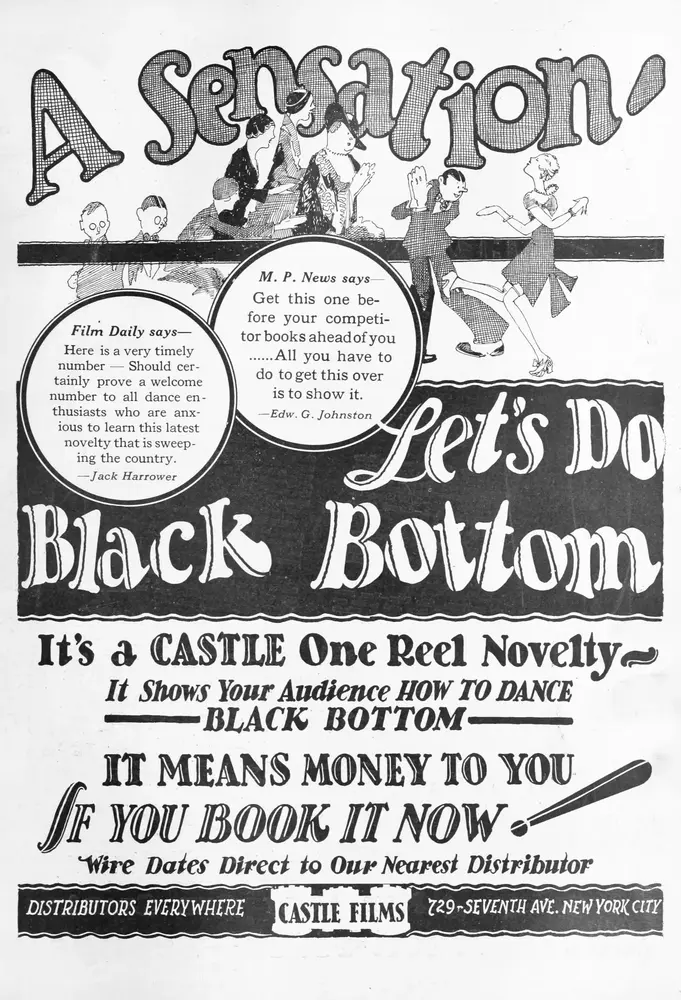
Is Let's Do Blackbottom worth your time in the age of high-definition streaming? Short answer: only if you view it as a jagged, fascinating shard of cinematic history rather than a complete movie.
This film is specifically for dance historians, Vitaphone obsessives, and those who want to see the exact moment the Broadway stage began to colonize the silver screen. It is absolutely not for anyone who requires a coherent plot, high-fidelity audio, or a runtime longer than a coffee break.
1) This film works because it captures the raw, unpolished athletic power of Ruby Keeler's tap style before Hollywood smoothed her edges.
2) This film fails because the Vitaphone recording process of 1928 makes the audio sound like it was captured through a wall of wet wool.
3) You should watch it if you want to understand the percussive violence of 1920s jazz dancing in its original context.
To understand Let's Do Blackbottom, one must understand the technical terror of the late 1920s. This wasn't just a film; it was a Vitaphone short. This meant the sound was recorded on a giant wax disc that had to be manually synchronized with the projector. When you watch Keeler dance, you aren't just seeing a performance; you are seeing a technical miracle of 1928.
Unlike the silent charm of The Star of Bethlehem, which relied on visual grandiosity, this short relies entirely on the novelty of hearing heels hit the floor. The sound is tinny. It crackles. But there is a haunting honesty to it. You can hear the physical effort. You can hear the floorboards groaning under the weight of the jazz age.
The camera is notoriously static. Because the early sound cameras were housed in soundproof booths (often called 'sweatboxes'), the cinematography lacks the fluidity seen in late-silent masterpieces. It feels like you are watching a stage play through a very narrow window. This rigidity is the film's greatest weakness, but it also forces the viewer to focus entirely on Keeler's lower body.
Ruby Keeler is the main event here. This is her debut, and she arrives with a level of confidence that is almost jarring. In later films, Keeler would become known for her 'wide-eyed ingenue' persona, but here she is a pure athlete. There is no sentimentality in her dancing. It is aggressive. It is percussive. It is fast.
Consider the moment she transitions from a standard shuffle into the full 'Black Bottom' movements. Her knees flare out, her hands slap her heels, and her torso remains remarkably stable while her legs become a blur. This isn't the elegant ballroom style of Fred Astaire. This is the 'buck and wing' style of the streets and the speakeasies. It’s loud. It’s clunky. But it’s real.
Comparing this to the lighthearted performance in My Girl Suzanne, you see a much more focused dedication to the rhythm itself. Keeler isn't trying to charm the camera; she is trying to conquer the microphone. Every tap is a declaration that the silent era is dead. It is a brutal, rhythmic assault on the senses.
While the Charleston is the dance most people associate with the 1920s, the Black Bottom was its grittier, more grounded cousin. Originating in New Orleans and moving through the Apollo Theater in Harlem, the dance was a cultural phenomenon. Let's Do Blackbottom is one of the few high-quality visual records of how this dance was interpreted by white Broadway performers of the era.
The choreography in this short is fascinatingly repetitive. In a modern music video, we expect a new move every four seconds. Here, Keeler leans into the hypnotic nature of the beat. She repeats motifs. She builds tension through speed rather than variety. It is a masterclass in 1920s endurance.
The setting is minimalist to the point of being barren. A simple backdrop, a flat floor, and a woman dancing. This lack of distraction makes the film feel more modern than many of its contemporaries. It feels like a 'screen test' for the future of entertainment. It lacks the comedic fluff of Mighty Like a Moose, opting instead for a pure, distilled exhibition of talent.
If you are looking for a story, look elsewhere. If you are looking for a historical artifact that explains why your grandparents were obsessed with tap dancing, this is essential viewing. It is a 6-minute blast of historical lightning.
The film captures a transition point. It sits between the theatricality of the past and the technical precision of the future. While films like The House of Toys tried to bridge these gaps with narrative, Let's Do Blackbottom succeeds by not trying to be a 'movie' at all. It is a performance capture, pure and simple.
Watching it today requires a bit of 'cinematic patience.' You have to look past the grain. You have to ignore the hiss of the audio. But if you do, you see a young woman at the peak of her physical powers, defining a genre that would dominate the next two decades of Hollywood production.
Pros:
- Authentic 1920s choreography captured in real-time.
- A rare look at Ruby Keeler before she became a polished studio star.
- Important historical document of the Vitaphone process.
Cons:
- Extremely short runtime leaves you wanting more context.
- Audio quality is poor by modern standards.
- The static 'sweatbox' camera work feels claustrophobic.
Let's Do Blackbottom is a cinematic fossil. It isn't 'good' in the way we think of modern films, but it is 'vital' in the way we think of primary source documents. It captures the frantic, desperate energy of a world that was about to fall into the Great Depression. Keeler dances as if the world is ending, and in a way, the world of silent film was. It works. But it’s flawed. It is a loud, rattling, wonderful mess of a debut.
IMDb —
1923
Community
Log in to comment.