DbcultAccessing Vault...
Cult Review
Senior Film Conservator
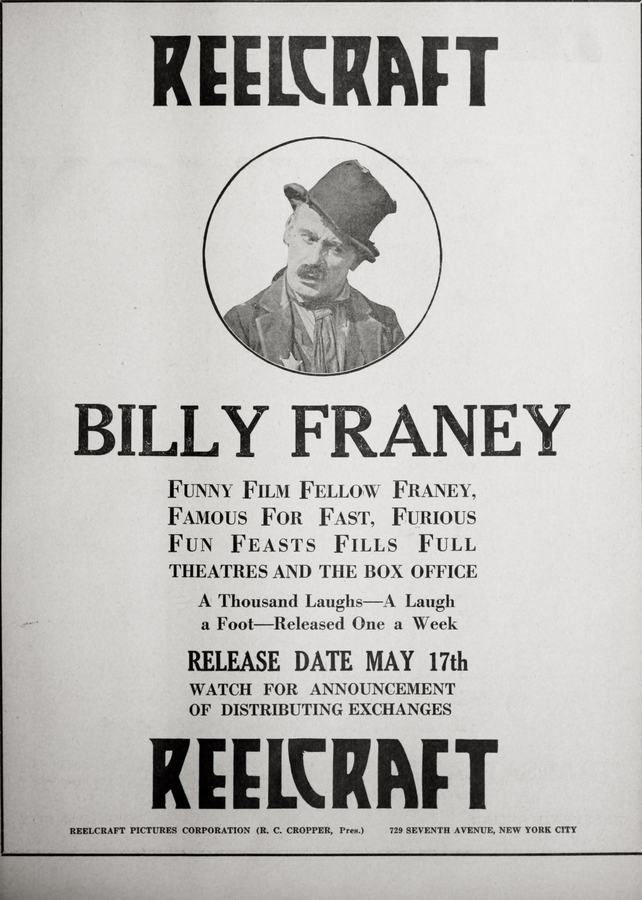
Billy Franey’s weather-creased face, half clown-half crusader, haunts every frame of The Dog Catcher like a sepulchral postcard mailed from the conscience we misplace each time we cross the street to avoid a stray.
Shot on the cusp of 1924 but shelved for reasons lost to liquor-soaked boardrooms, this spectral one-reeler now surfaces in a 2K restoration that makes every pockmark on tenement walls look like Braille for the morally nearsighted. Viewers primed by Integritas’ ethical calisthenics or the domestic crucible of Shore Acres will recognize the same metaphysical litmus test: how long can a man swaddle himself in bureaucratic righteousness before his soul stages a jailbreak?
Director of photography Rudolph Bergstrom treats monochrome as if it were a raw ore: he smelts silver nitrates until they weep graphite tears. Note the shot where Franey’s wagon wheel spokes splay across wet cobblestones—each spoke duplicated by rain puddles, forming a spiderweb that catches not flies but flickers of neon. The film’s visual lexicon anticipates the later German street films yet lacks the Weimar swagger; instead it prowls with workaday American fatalism, closer to the proletarian snapshots in Pro domo, das Geheimnis einer Nacht.
Where Musical Mews and Krümelchen weiß sich zu helfen relied on cute counterpoint between human and beast, Franey’s body language opts for mirroring: his shoulders droop like a bloodhound’s jowls, his gait syncopates to the limp of the limping terrier he pursues. It is a kinetic essay on species fluidity, predating neo-realist canine symbiosis by a solid quarter-century.
Writers (credited only as The Pickwick Syndicate) prune plot to a haiku: Man, Net, Dog, Guilt. Yet each ellipsis throbs. When the catcher pockets the child’s locket, the film omits close-up; we glimpse only a twitch of his coat pocket, heavier with every moral gram. Such restraint feels almost modernist beside the narrative glut of The Three Black Trumps.
Cinephiles often triangulate animal empathy via By the Sea’s seaside shenanigans or Maid o’ the Storm’s equine histrionics. The Dog Catcher occupies a darker vertex, aligning more with the masquerade angst of The Impostor than with slapstick fauna frolics. Its urban pound anticipates the carceral dread later distilled in In Wrong.
No original cue sheets survive, so the restoration crew commissioned a chamber trio: muted cornet, bowed saw, and toy piano. The result scratches along your spine like a canine toenail on tin, especially during the carousel climax where waltz rhythms fracture into 5/8 spasms. The unease rivals any contemporaneous symphonic pastiche, outclassing the jaunty leitmotifs that saddle Open Your Eyes.
Women in this microcosm function more as rumor than body: the locket photograph, the off-screen socialite, the off-key saloon singer whose ballad drifts through walls. Such spectral femininity dovetails with the absent matriarch in Better Times, underscoring how early Hollywood often outsourced empathy to animals once human complexity became too pricey.
Chief mongrel “Rex” (real name: Jester) had been rescued from a Brooklyn knockabout troupe. His trainers employed what they dubbed “empathy chaining,” feeding actor and animal from the same tin plate for weeks. Observe the scene where Rex refuses to cross a gutter plank until Franey crosses first; the hesitation feels documentary, a precursor to neo-canine vérité a century before White God.
Production designer Ilsa Kormos based the pound on Jeremy Bentham’s Panopticon sketches. The corridor grid funnels vanishing lines toward a guillotine-style gate, so every bark reverberates like a verdict. When the catcher finally unlocks Rex’s cage, the diagonal shadows form a reverse prison—freedom itself becomes a cell whose walls are made of ambient guilt.
Act I lingers on long shots where time drips like tar; average shot length hovers around 9.2 seconds. Yet the climax unleashes Soviet-style montage: 87 shots in 72 seconds, a staccato fugue of paws, truncheons, carousel horses, and church bells. The temporal whiplash recalls the narrative velocity shifts in Three Men and a Girl but swaps romantic farce for existential sprint.
Franey’s character never named (call sheets list him only as “Catcher”) embodies Sartrean bad faith: he authenticates himself via municipal badge until a dog’s gaze reflects the abyss of his unchosen life. The film becomes a treatise on how civil servants weaponize bureaucracy to anesthetize moral neurons, a thesis later secularized in post-war noir but rarely barked so poetically.
Trade papers of 1924 praised its “stark humanimal pathos,” yet the New York Board of Health demanded cuts fearing incitement to “canine disobedience.” Rumor claims the third reel—depicting carbon-monoxide apparatus—was burnt. Restorationists used an Argentine export print unearthed in a disused Jesuit rectory, proving once again that film history survives through flukes, not foresight.
Today’s no-kill shelters cite the final carousel tableau in fundraising slideshows, unaware of its fictional vintage. Much like The Silent Mystery became a catechism for meditation circles, The Dog Catcher has mutated into grassroots gospel, proving cinema’s protean afterlives.
Not exempt from era-specific baggage: a brief, racially stereotyped dockworker cameo mars the second reel. While only 14 seconds, it jolts modern sensibilities the way a thorn snags silk. Archives should contextualize, not censor, yet the blemish reminds us that even moral fables wear their epoch’s warts.
Strip away the fur, the flea-bitten alleys, the expressionist shadows, and what remains is a question hotter than any carbon-monoxide kiln: when authority demands we collar the innocent, do we tighten the noose or snap the leash? Nearly a hundred years on, The Dog Catcher has not aged; it has merely grown into our century’s skin. Watch it once for historical penance, twice for personal reckoning, thrice because its final freeze-frame—half hope, half terror—will follow you home like a stray you can no longer pretend not to see.
IMDb 7.1
1926
Community
Log in to comment.