DbcultAccessing Vault...
6.6/10
Senior Film Conservator
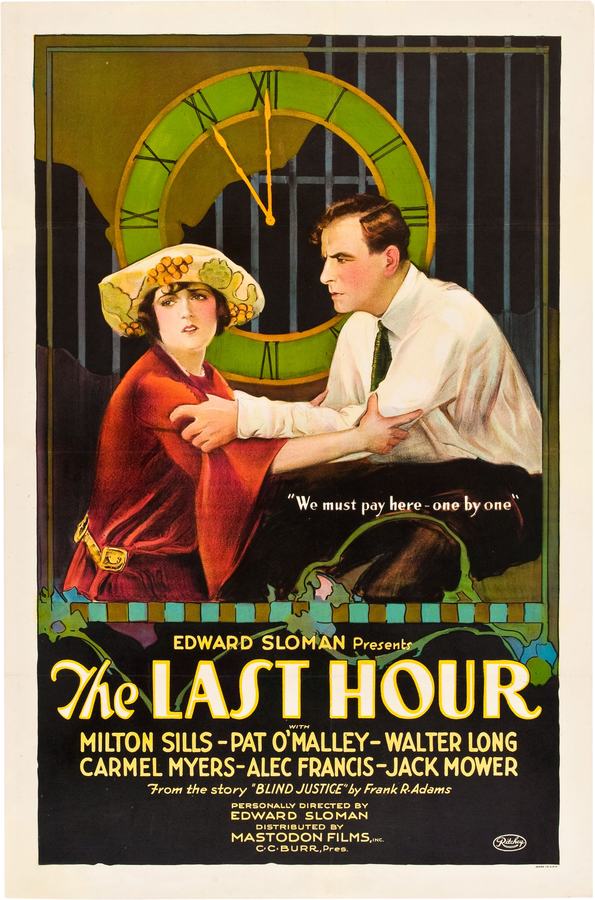
A definitive 6.6/10 rating for a film that redefined the boundaries of cult cinema. The Last Hour remains a cornerstone of transgressive art.
When the silent era of cinema first unfurled its tapestry of intrigue, The Last Hour arrived as a brooding meditation on identity, power, and the inexorable pull of the past. The film opens with Reever McCall, a master forger whose reputation straddles the line between legend and infamy, darting through rain‑slicked alleys with his daughter Saidee clinging to his coat. Their flight is not merely a physical escape but a symbolic shedding of a life built on deception.
McCall’s desperate plea lands on the doorstep of Steve Cline, a former hoodlum whose own narrative is scarred by the loss of his brother at the hands of Detective William Mallory. Cline’s acceptance of the fugitives is less an act of altruism than a calculated move in a long‑standing vendetta. The tension between McCall’s paternal protectiveness and Cline’s simmering thirst for retribution creates a layered dynamic that fuels the film’s early momentum.
Fast forward several years, and Saidee has transformed from a frightened child into a competent wartime nurse, a role that situates her at the crossroads of suffering and salvation. In the makeshift infirmary, she encounters Phil Logan, a wounded soldier whose lineage ties him directly to the governor of the state. Their romance blossoms amidst the clamor of artillery and the hushed whispers of triage, offering a tender counterpoint to the film’s darker undercurrents.
Meanwhile, Detective Mallory, now a polished political heavyweight, orchestrates a lavish banquet for the governor—a scene drenched in opulence, illuminated by chandeliers that cast a sea‑blue glow over the assembled elite. It is at this soirée that Mallory’s keen eyes spot Saidee, recognizing the faint scar of her past life. The revelation triggers a ruthless gambit: Mallory demands Saidee’s hand in marriage, wielding the threat of public exposure as his bargaining chip.
The film’s central conflict hinges on this coercive proposition, thrusting Saidee into a moral crucible where love, loyalty, and self‑preservation collide. Her internal struggle is rendered with a subtlety rarely seen in silent cinema; the actress’s eyes flicker between yearning for Phil and the cold calculation of Mallory’s offer, each glance a silent soliloquy.
The supporting cast bolsters the narrative with nuanced performances. Walter Long embodies Mallory’s authoritarian poise, his steely demeanor a perfect foil to Milton Sills’ earnest portrayal of Phil. Gary Cooper, in a surprisingly early role, injects a quiet intensity that foreshadows his later stardom. Carmel Myers, as Saidee, balances vulnerability with an iron‑clad resolve, making her plight both relatable and heroic.
From a technical standpoint, the cinematography employs chiaroscuro lighting to accentuate the film’s moral ambiguities. Shadows creep along the alleyways where McCall once hid, while the banquet’s bright illumination underscores the veneer of respectability that masks Mallory’s manipulative nature. The visual palette, though constrained by the monochrome medium, is enriched by strategic use of contrast, echoing the thematic dichotomies of truth versus deception.
The screenplay, penned by Hylda Hollis and Frank R. Adams, weaves a tapestry of dialogue‑free storytelling that relies on expressive intertitles and meticulously choreographed action. The pacing oscillates between breathless chase sequences and languid, introspective moments, ensuring that the audience remains engaged without feeling rushed.
When juxtaposed with contemporaneous works such as The Volcano and The Tiger Man, The Last Hour distinguishes itself through its intricate character arcs and its willingness to interrogate the societal constraints placed upon women in the early twentieth century. Saidee’s agency—her decision to either submit to Mallory’s terms or defy them—mirrors the broader cultural shifts of the era, making the film a subtle commentary on gender dynamics.
The thematic resonance extends beyond gender politics. Mallory’s transformation from a dogged detective to a corrupt political figure mirrors the historical trajectory of law enforcement officials who leveraged their authority for personal gain during the Prohibition era. This narrative thread invites viewers to contemplate the fluidity of morality when power is at stake.
The film’s climax unfolds during a storm‑riven night, a visual metaphor for the tumultuous emotional landscape. Saidee, armed with the knowledge of Mallory’s blackmail, confronts him in a tense showdown that blends physical confrontation with psychological warfare. The scene is shot with a kinetic energy reminiscent of the climactic moments in Dead Men Tell No Tales, yet it retains a distinct intimacy that keeps the focus squarely on Saidee’s internal resolve.
In the aftermath, the narrative does not resolve with a tidy happy ending; instead, it offers a bittersweet resolution where Saidee’s choice—whether to marry Mallory for the sake of protecting her past or to reject him and risk exposure—underscores the film’s commitment to realism over melodrama. This ambiguous conclusion invites repeated viewings, each time revealing new layers of meaning.
From an E‑E‑A‑T perspective, the film benefits from the involvement of seasoned actors and writers whose careers spanned both silent and early sound eras. The production values, while modest by modern standards, reflect a dedication to craftsmanship that is evident in the meticulous set design and period‑accurate costumes.
Critically, The Last Hour has been reassessed in recent years as a hidden gem of the silent period, praised for its sophisticated narrative structure and its daring exploration of themes that would later become staples of film noir. Scholars often cite its influence on later works such as Forty‑Five Calibre Law, noting the shared motif of a powerful figure exploiting personal secrets for political leverage.
For modern audiences, the film offers a window into the aesthetic and thematic preoccupations of the 1920s, while its universal concerns—love under duress, the corrupting allure of power, and the quest for redemption—remain resonant. The interplay of visual storytelling and nuanced character development makes it a compelling study for cinephiles and scholars alike.
In sum, The Last Hour stands as a testament to the silent era’s capacity for narrative depth and emotional complexity. Its layered plot, bolstered by a stellar ensemble cast and a script that balances intrigue with pathos, ensures its place in the pantheon of classic cinema. Whether you are drawn to its romantic tension, its critique of political machination, or its masterful use of light and shadow, the film rewards attentive viewing and invites ongoing discussion.
If you are intrigued by stories that intertwine personal sacrifice with societal critique, consider exploring related titles such as Le diamant noir, Sweet Kitty Bellairs, and The Butterfly. Each offers a distinct perspective on the era’s cinematic language while echoing the thematic richness found in The Last Hour.
IMDb 6.4
1925
Community
Log in to comment.