DbcultAccessing Vault...
Cult Review
Senior Film Conservator
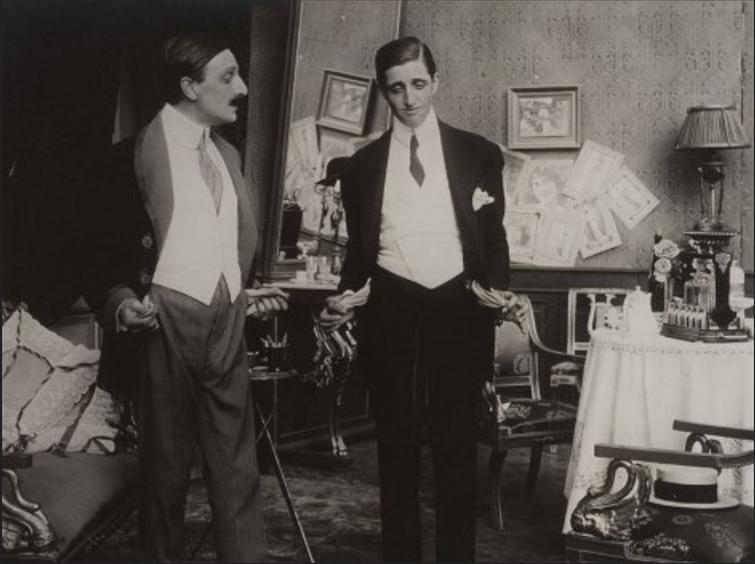
In the pantheon of early Italian cinema, few works capture the agonizing intersection of class aspiration and moral bankruptcy as viscerally as La gerla di papà Martin. Directed with a keen eye for emotional geography by Mario Bonnard, the film transcends the trappings of standard melodrama to become a haunting treatise on the cyclical nature of sacrifice. The 'gerla' itself—a simple wicker basket—serves as the central motif, a physical manifestation of the crushing expectations placed upon the working-class patriarch. Unlike the more whimsical explorations of social climbing seen in Princess Virtue, Bonnard’s work is steeped in a gritty, almost pre-neorealist sensibility that refuses to grant its characters an easy exit from their socioeconomic cage.
The performance of Francesco Amodio as Papa Martin is nothing short of transformative. He carries the weight of the world not in his arms, but in the slump of his shoulders and the hollowed-out expression of his eyes. When he learns of Armando’s duplicity, the impact is not merely a plot point; it is a seismic shift in the film’s moral landscape. The contrast between the pastoral honesty of the village and the invisible, corrupting influence of the city—where Armando’s soul was essentially bartered for a fake title—echoes the thematic concerns found in The Stain. However, where other films might focus on the scandal, Bonnard focuses on the silence: the quiet, agonizing realization that a lifetime of toil was sacrificed on the altar of a lie.
The introduction of Charençon, the loan shark, introduces a structural tension that propels the second act into the realm of a psychological thriller. Charençon is not merely a villain; he is the personification of the debt that the future owes to the past. His revelation that Armando’s law degree is a forgery acts as the film’s emotional fulcrum. It forces the audience to confront a terrifying question: what remains of a man’s legacy when the fruit of his labor is revealed to be rotten? This narrative trajectory mirrors the high-stakes emotional bargaining seen in The Price Woman Pays, though here the currency is not gendered virtue but paternal honor.
"The film utilizes light and shadow to delineate the moral divide between Martin’s sun-drenched fields and the murky, claustrophobic interiors where Charençon weaves his financial webs."
Armando’s character arc is a masterclass in the portrayal of weak-willed entitlement. His return home is not a homecoming but an invasion of artifice. The way he carries himself—the tailored suit, the affected gestures—clashes violently with the rugged, unpretentious environment of his parents. It is a visual dissonance that reminds one of the cultural frictions in 99, yet Bonnard grounds this in the specific Italian context of the era, where a degree was the only bridge across the chasm of class. When that bridge is revealed to be a phantom, the fall is catastrophic.
The visual language of La gerla di papà Martin is remarkably sophisticated for 1923. The camera work, though largely static in keeping with the period, utilizes deep focus to create a sense of inevitable collision. We often see Martin in the foreground, laboring, while the looming figure of Charençon or the distant, detached Armando occupies the background. This spatial arrangement emphasizes Martin’s isolation. While American productions of the time, such as The Seven Pearls, were leaning into serial adventure and rapid editing, Bonnard opts for a slow-burn aesthetic that allows the tragedy to marinate.
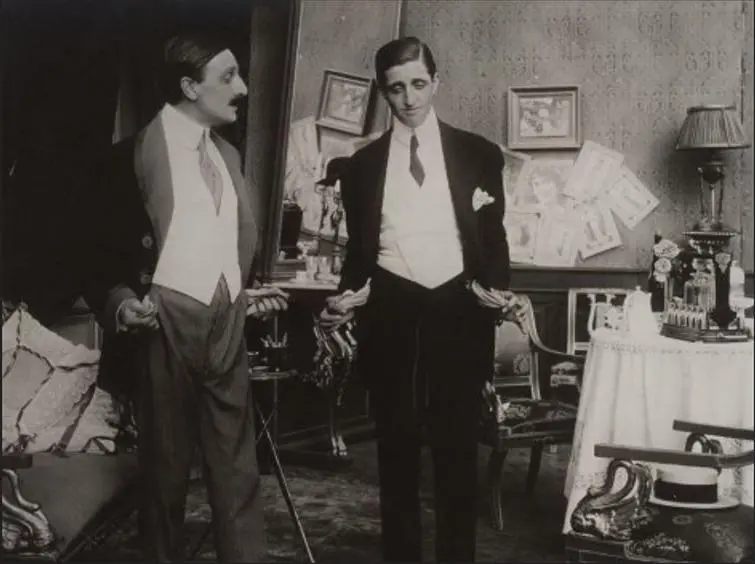
Consider the scenes involving Amelia, the goddaughter. She represents the path not taken—the honest, loyal alternative to Armando’s treachery. Her presence offers a glimmer of hope, a counterpoint to the nihilism of the main plot. Her relationship with the family provides a warmth that contrasts with the cold, transactional nature of Armando’s urban life. This dynamic of the 'pure' female figure standing against a backdrop of male failure is a recurring trope of the era, seen with varying degrees of nuance in Sister Against Sister and The Red Lantern.
When placing La gerla di papà Martin alongside its contemporaries, its unique European melancholy becomes even more pronounced. If we look at Reno, we see a focus on the legalistic and social fallout of divorce and domestic strife. Bonnard’s film, however, is concerned with a more primal form of law: the unwritten contract between father and son. The betrayal here isn't just personal; it's existential. It’s the same sense of profound loss found in Quand on aime, where love is the catalyst for both salvation and destruction.
The film also touches upon the absurdity of social posturing, much like the satirical undercurrents in Bluebeard's 8th Wife or Good Gracious, Annabelle, but without the safety net of comedy. In Martin’s world, there is no witty banter to soften the blow of poverty. There is only the 'gerla'. The scene where Martin confronts the reality of the mortgage is played with a restraint that is rare for silent-era acting. There are no wild gesticulations; there is only the slow sinking of a man into the earth he has spent his life tilling.
As the narrative hurtles toward its conclusion, the film shifts from a domestic drama into a grander allegory of redemption. Martin’s decision to shoulder the shame of his son is a moment of profound, albeit misguided, heroism. It raises questions about the nature of enabling and the boundaries of love. Is Martin’s sacrifice a noble act, or is it the final link in a chain of delusions? This ambiguity is what makes the film endure. It doesn't offer the easy moralizing of Tacks and Taxes or the swashbuckling certainty of Captain Alvarez.
Instead, it leaves the viewer with the image of a man still carrying his burden, long after the physical basket has been set down. The technical restoration of this film allows us to appreciate the subtle textures of the Italian landscape—the dust on the roads, the grain of the wood, the sweat on the brow. These details matter because they ground the melodrama in a tactile reality. Unlike the maritime escapism of Down to the Sea in Shoes, Bonnard’s film is rooted in the soil, and it is from that soil that the tragedy grows.
In the final analysis, La gerla di papà Martin is a haunting reminder of the fragility of the human condition. It explores the dark side of the 'self-made man' myth, showing how the desire for upward mobility can lead to a moral vacuum. It is a film about the things we carry—our debts, our dreams, and our children—and the realization that sometimes, the weight is simply too much for one man to bear. For those seeking a cinematic experience that is as emotionally taxing as it is artistically rewarding, this silent masterpiece remains essential viewing. It stands alongside Winning a Widow as a testament to the versatility of the era's storytelling, yet it carves out its own niche in the realm of pure, unadulterated tragedy.
IMDb 6.2
1932
Community
Log in to comment.