DbcultAccessing Vault...
6.1/10
Senior Film Conservator
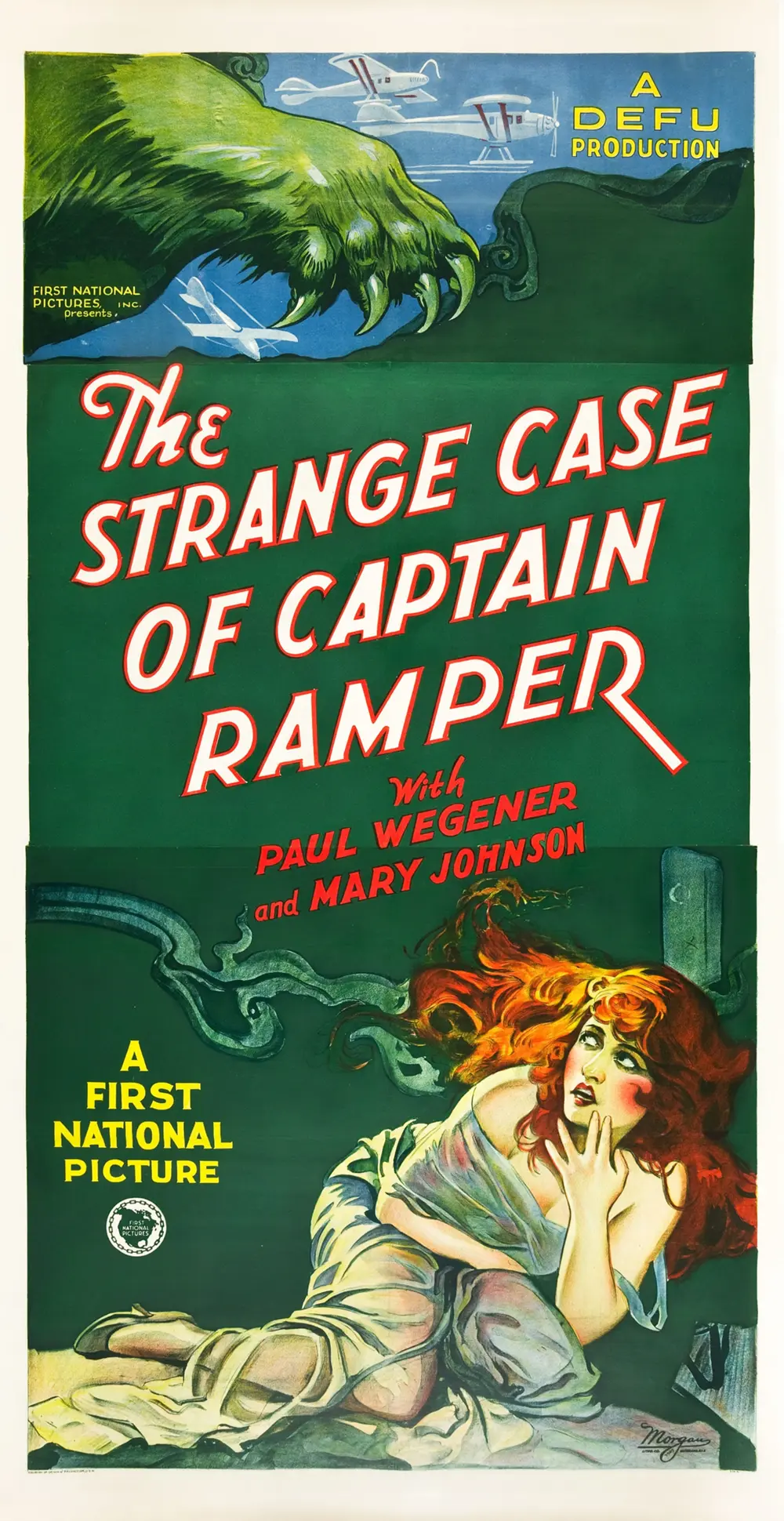
A definitive 6.1/10 rating for a film that redefined the boundaries of cult cinema. The Strange Case of Captain Ramper remains a cornerstone of transgressive art.
Should you invest your time in this 1927 silent relic? Short answer: Yes, but only if you have a high tolerance for the deliberate, often agonizing pacing of German Expressionism.
This film is specifically for those who find beauty in the grotesque and the psychological toll of isolation. It is absolutely not for viewers seeking a fast-paced creature feature or a traditional 'yeti' horror movie.
This film works because Paul Wegener delivers a physical performance that transcends the limitations of silent cinema, portraying a man who has literally forgotten how to be human.
This film fails because the second half, which deals with Ramper's return to society, occasionally leans too heavily into melodrama, losing the stark, haunting atmosphere of the Arctic prologue.
You should watch it if you have already explored the works of F.W. Murnau or Fritz Lang and want to see how the 'wild man' trope was birthed in the fires of Weimar-era anxiety.
The film is the first major production to treat the 'wild man' myth not as a pulp adventure, but as a psychological tragedy. It strips away the romanticism of the wilderness, replacing it with a cold, existential dread. The narrative asks if humanity is a permanent state or merely a costume we wear.
Paul Wegener was already a legend by 1927, largely due to his work in the various iterations of the Golem story. Here, he utilizes his massive frame and heavy features to create something entirely different. He isn't a monster made of clay; he is a man unmade by time.
In the early scenes where Ramper is discovered, Wegener’s movements are twitchy and unpredictable. He doesn't act like a man pretending to be an animal; he acts like an organism that has forgotten the concept of a mirror. It is a terrifyingly committed performance. One specific moment that stands out is when he first hears a human voice after fifteen years. He doesn't look relieved; he looks physically pained, as if the sound itself is a weapon.
This level of physical commitment is something we rarely see today outside of motion-capture performances. It reminds me of the raw intensity found in The Awakening, where the internal struggle is written entirely in the eyes and the posture. Wegener carries the weight of the film, and without him, the premise would have likely collapsed into camp.
While Wegener is the star, the presence of Max Schreck adds a layer of uncanny dread to the proceedings. Schreck, forever immortalized as Count Orlok, brings a skeletal, haunting energy to his supporting role. Every scene he occupies feels slightly tilted, as if the reality of the film is thinning out.
The cinematography by Curt Courant is equally essential. He captures the Arctic not as a postcard, but as a white void. The contrast between the blinding snow and the deep, ink-black shadows of Ramper’s cave creates a visual language of total isolation. It is far more effective than the urban settings seen in The City, which feels cluttered by comparison.
There is a specific shot where Ramper is being transported back to 'civilization' in a cage. The way the light hits his matted fur and vacant eyes makes him look like a relic from another geological epoch. It is a brutal, simple image that stays with you long after the credits crawl.
The film takes a sharp turn once Ramper is brought back to the city. This is where the social commentary kicks in. The 'civilized' people who rescue him are far more monstrous than the 'beast' they found in the ice. They see him as a commodity, a freak show attraction, or a scientific curiosity.
This theme of the soul being shackled by societal expectations is a common thread in Weimar cinema, much like the narrative beats in Souls Enchained. Ramper’s struggle to regain his speech and his memories is portrayed as a loss of innocence. In the wild, he was free, even if he was starving. In the city, he is well-fed but spiritually dead.
I would argue that the film’s most provocative stance is that Ramper was better off as an animal. It’s a cynical, dark perspective that feels remarkably modern. It suggests that our 'humanity' is just a thin veneer of manners and language that we use to hide our predatory nature. It works. But it’s deeply flawed in its execution during the final act.
We have to address the elephant in the room: the pacing. Like many films from this era, such as The Hell Ship, there are long stretches where the plot simply stops to breathe. For a modern audience used to 90-minute adrenaline hits, this can be a struggle.
However, I believe the slowness is intentional. The film wants you to feel the weight of those fifteen years. It wants you to sit in the silence. If the movie moved any faster, we wouldn't understand the depth of Ramper’s regression. The boredom is part of the point.
That said, the middle section involving the legal and medical debates over Ramper’s status does drag. These scenes lack the visual punch of the Arctic sequences and feel like they belong in a different, much more mundane movie. It’s a common issue in films from this period, where the high-concept hook is followed by a standard courtroom or drawing-room drama.
If you are a student of film history, this is non-negotiable viewing. It is a bridge between the expressionist monsters of the early 20s and the more psychological dramas that would follow. It handles themes of identity and 'otherness' with a sophistication that puts many modern reboots to shame.
For the casual viewer, it is a harder sell. You have to be willing to look past the dated makeup and the occasionally histrionic acting of the supporting cast. But if you can do that, you will find a story that is profoundly moving and deeply unsettling. It is a film about the death of a man’s soul, and that is a story that never goes out of style.
The Strange Case of Captain Ramper is a fascinating, if uneven, exploration of the human condition. It anchors its high-concept premise with a powerhouse performance by Paul Wegener, making it more of a character study than a horror film. While it suffers from some of the typical pacing issues of its era, its central question—what is left of a man when you take away his world?—remains hauntingly relevant. It is a dark, cold, and ultimately tragic piece of cinema that deserves its place in the pantheon of great silent films. It isn't perfect, but it is unforgettable.
"A stark reminder that the thin line between man and beast is not drawn by nature, but by the cruel gaze of other people."
IMDb —
1914
Community
Log in to comment.