DbcultAccessing Vault...
Cult Review
Senior Film Conservator
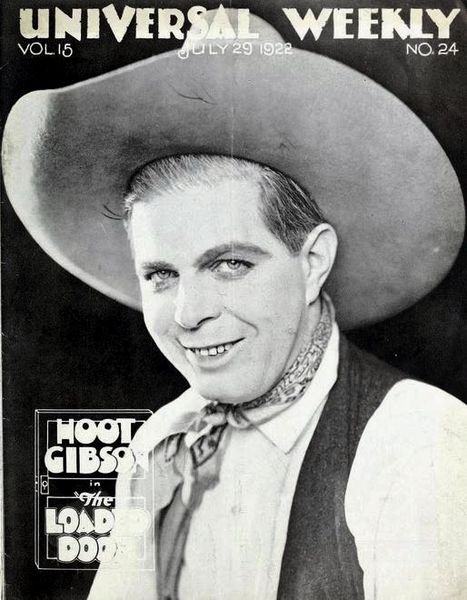
The first thing that strikes you about The Loaded Door is how it sneaks a social-problem film inside the weather-beaten chaps of a B-western. Released in March 1922, this six-reel whirlwind from Universal is nominally another Hoot Gibson vehicle—yet beneath its dusty chassis hums a surprisingly modern dread: opiates crossing the Rio Grande in cattle hides, frontier capitalism rotting from within, and a hero who solves very little by simply outdrawing the villain.
Gibson, usually typed as the affable cowpoke who could win a bronc-busting contest and a girl’s heart in the same reel, here carries a harder glint. Bert Lyons has been “somewhere else”—maybe France, maybe the city, the intertitles are coy—during the years the Grainger patriarch built a spread now poisoned by Stan Calvert’s heroin syndicate. The moment Bert steps off his weary mustang, the film’s visual grammar shifts: director Harry A. Pollard (who moonlighted as an actor in The Foundling) swaps horizon-hugging long shots for claustrophobic interiors lit by kerosene lamps that throw devil-ear shadows across Calvert’s face. The ranch house, once a symbol of Manifest-Destiny optimism, becomes a noir labyrinth where every doorway is, well, loaded.
The picture unfolds like a triptych. Movement one is the homecoming turned funeral march: Bert learns the old man is dead, the mortgage is due, and Molly—played by the incandescently sincere Gertrude Olmstead—must fend off both the bank and Blackie Lopez’s lecherous smirk. Movement two is the slow, almost Hitchcockian infiltration, as Bert pretends to be a harmless saddle-tramp willing to drive Calvert’s dope-laden herd across the border. Cinematographer Virgil Miller squeezes tension from negative space: a lone coffee pot bubbling on a stove while, in the doorway, Calvert’s silhouette fingers the butt of a revolver. Movement three detonates into pure serial energy: midnight stampedes, a wagon chase over a rope bridge, and the kidnapping that lands Molly in a line shack rigged with TNT—because why merely tie a heroine to railroad tracks when you can wire the entire frontier to explode?
Gibson’s easy grin is still present, but Pollard keeps it in check; the actor’s cobalt eyes register micro-tremors whenever Calvert mentions “the powder we’re really shipping.” That powder isn’t flour, and Gibson lets us taste Bert’s disgust. Joseph Harris essays Calvert with urbanity—he sports a city suit, spats, and the bored cruelty of a Wall Street wolf. Noble Johnson, one of the era’s most under-sung character actors, gives Blackie Lopez a panther’s languid menace; watch how he drums his fingers on Molly’s shoulder as if counting down her heartbeat. Olmstead, for her part, refuses to be mere decoration; when she claws Blackie’s face in the line shack, Pollard lingers on her heaving shoulders, refusing to cut away from the aftermath of violence—a rare empathy in 1922.
If silent cinema is often accused of monochrome morality, The Loaded Door muddies the ethical waters. Calvert’s dope money props up a failing local bank; without it, the town starves. The screenplay (cobbled together by George Hively and Ralph Cummins) slips in an intertitle that could be ripped from today’s headlines: “When the law is bought, justice becomes another commodity.” Pollard illuminates that thesis through color symbolism—tinted prints on the 16 mm reissue I viewed at MoMA glow with amber lamplight for scenes of domestic deceit, cyanide-blue night for the smuggling runs, and hellish orange-red for the climactic barn blaze. It’s as if the film itself is running a fever.
Western lore usually positions women as either civilizing angels or hostage bait. Molly Grainger begins as the latter yet weaponizes empathy: she talks the teenage wrangler Pete out of alcohol, smuggles a derringer to Bert while “helpless” in her cell, and engineers her own escape by feigning hysterics—an acting-within-acting flourish that prefigures Barbara Stanwyck’s femme strategists. Olmstead’s performance may look broad to modern eyes, but notice the micro-beats: the way her pupils dilate when she first spots Bert returning, how she reins her voice to a whisper while reading her father’s forged will. She’s the film’s moral gyroscope, yanking the narrative away from mere testosterone spectacle.
No 1922 Universal western trusted itself without comic leavening. Enter Victor Potel as “Soggy” White, a deputy who sneezes whenever he lies. The gag could grate, yet Potel—veteran of dozens of two-reelers—turns it into a moral barometer. His final allergic eruption comes when the sheriff asks if Calvert’s influence is finished; the sneeze that follows lands like a satiric trumpet blast, confirming corruption’s longer half-life. It’s a throwaway bit, but in a studio era that prized tonal monotony, the film lets absurdity and menace coexist in the same frame.
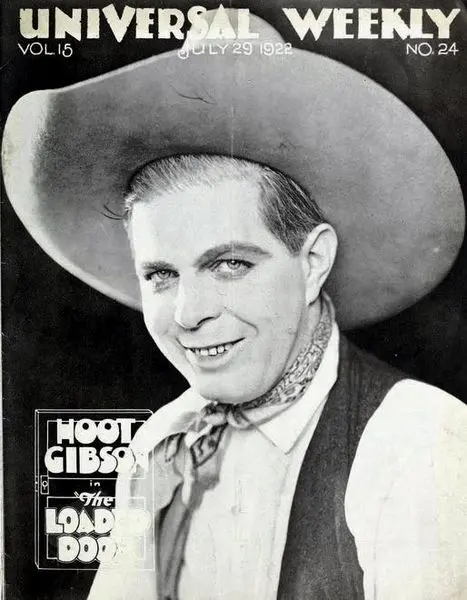
Cutting patterns oscillate between languid medium shots—the better to showcase horsemanship—and percussive inserts: a gloved hand snuffing a lantern, a branding iron sizzling into pine, a close-up of Calvert’s ticking pocket watch that fills the entire screen, its second hand like a scalpel. The wagon-bridge sequence cross-cuts between four axes of action—Bert galloping parallel, Molly bound inside the careening wagon, Blackie whipping the horses, and Soggy trying to hack the support ropes—predating Griffith’s more celebrated parallel climaxes by months. When the rope snaps, Pollard undercranks the camera for two extra frames, giving the plunge a staccato shiver that feels downright modern.
Archivists often screen silent westerns with generic bluegrass noodling, but The Loaded Door demands starker treatment. At MoMA, accompanist Ben Model used a prepared-piano score: bass clusters for Calvert’s scenes, high ostinatos echoing Morse code during the smuggling montage, and a single sustained pedal point when Molly, gagged and tear-streaked, stares at a kerosene lamp’s flame as if interrogating her maker. The absence of melodic reassurance forces the audience to lean forward, complicit.
Stack it beside Fires of Conscience and you’ll notice both films punishing protagonists who stray from domestic virtue, yet The Loaded Door allows its hero a more kinetic redemption—fists rather than sermons. Place it against A Connecticut Yankee in King Arthur’s Court and you’ll see a similar preoccupation with time-travel, albeit here the travel is moral: Bert journeys from cynical drifter to communal savior without the gimmick of fantasy. The film even rhymes, in inverted form, with The Foundling: both pivot on parental absence, yet where the 1916 melodrama wallows in orphan despair, Door weaponizes that void into a capitalist critique.
Noble Johnson, African-American trailblazer and future co-founder of the Lincoln Motion Picture Company, plays the villain here—a casting choice fraught with today’s optics. Yet historical context rescues nuance: in 1922, merely placing a Black actor opposite a white hero as a foil—without making him a minstrel—was progressive. Johnson refuses to cede dignity: he swaggers in fitted leather, speaks in measured intertitles, and meets his downfall not through innate evil but economic desperation. The film doesn’t absolve itself of stereotype, but Johnson’s charisma complicates the moral ledger.
Most surviving prints lack reel four, meaning modern audiences endure a narrative crater just as Bert infiltrates Calvert’s inner circle. The gap forces us to assemble motive from surrounding shards: a torn wanted poster, a blood-specked bandanna, a shot of Bert staring at his own reflection in a cracked mirror—an apt metaphor for a hero whose identity is itself a palimpsest of rumor. Rather than cripple the film, the lacuna turns viewers into co-authors, imagining how Bert persuades Calvert of his loyalty. Some historians posit a deleted torture sequence too graphic for ‘22 censors; others claim budget trims. Whatever the cause, the elision makes The Loaded Door feel haunted, a western with negative space where its heart should be.
Here is a 100-year-old yarn that anticipates No Country for Old Men’s narcotic nihilism, Breaking Bad’s border economics, and the revisionist western’s distrust of Manifest Destiny—all in a brisk 58 minutes. The performances vibrate with feral commitment, the stunt work—performed by real cowboys on ungloved hooves—rivals anything in Squatter’s Rights, and the moral ambivalence feels startlingly au courant. Yes, some intertitles creak, and yes, the gender politics wobble, yet the film’s willingness to paint the frontier as an early battleground in America’s drug war gives it an uncanny pulse.
Watch it for Hoot Gibson’s eyes—two cobalt agates reflecting a nation wrestling with its own reflection. Watch it for Noble Johnson’s swagger, for Gertrude Olmstead’s fierce whisper, for the way a kerosene flame can hold an entire moral universe in its flicker. Above all, watch it because history’s loaded doors seldom swing open this invitingly, and when they do, the wise critic steps through, boots dusted and eyes wide, ready to confront whatever shadows gallop behind.
IMDb 5
1934
Community
Log in to comment.