Summary
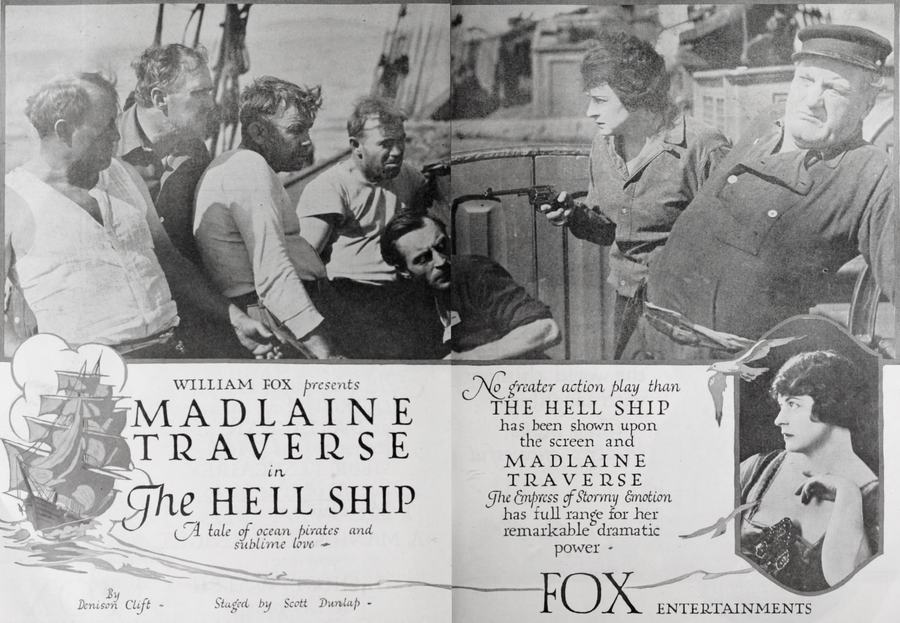
A rust-flecked tramp steamer, the Glory Ann, drifts like a bruised hymn through fog-thick waters, its iron lungs exhaling coal-smoke and mutiny. Satan Humphrey—so christened for the brimstone glare that could cauterize a man’s soul—rules the bridge until a knife’s wet glint silences him. His corpse, wrapped in tarpaulin, is tipped to the sharks while the crew’s jubilation curdles into dread: Paula, the captain’s daughter, steps from the shadows, revolver trembling yet unerring, her eyes twin muzzles of grief and vengeance. She corrals the cutthroats with the sheer torque of will, a colossus of petticoat and powder. Days later the sea offers up John Hadlock—half-drowned, salt-scabbed, a shipwrecked Odysseus with secrets stitched behind his teeth. Paula’s ministrations are alchemical: iodine becomes tenderness, bandages become vows. Under her watch the ship limps into San Francisco’s carnival glare to collect Glory, the sister Paula has never met—mirror-image stranger freighted with silk gowns and unspoken resentments. Once the trio re-embarks for the South Seas, the deckboards groan anew with conspiracy; knives wink like constellations, rum becomes blood, and the Pacific swells into a liquid Colosseum where love and insurrection wrestle for the final breath.
Synopsis
"Satan" Humphrey is the captain of the tramp steamer Glory Ann, is killed during a mutiny. His daughter Paula, brandishing a pistol, holds the mutineers at bay. Not long afterwards the ship picks up John Hadlock, an injured shipwreck survivor. Paula nurses him back to health and falls in love with him. John, recovering, helps her control the mutinous crew. The ship stops at San Francisco to pick up Glory, Paula's sister whom she hasn't seen since birth. As the ship sets sail for the South Seas, however, the crew mutinies again. Complications ensue.
Review Excerpt
"
A cursed freighter, a orphaned Amazon at the helm, and love that blooms like mold in the bilge—The Hell Ship is the silent era’s most intoxicating fever dream you’ve never seen.
Picture nitrate stock hissing through a carbon-arc projector while a lone cello scrapes a warning: this is not mere entertainment; it is a séance. Denison Clift’s 1920 gutter-poet screenplay, filmed on sets that reek of tar and kerosene, exhumes the maritime Gothic tradition and nails it to the mast like a carcass. T..."