DbcultAccessing Vault...
6.4/10
Senior Film Conservator
A definitive 6.4/10 rating for a film that redefined the boundaries of cult cinema. You're Next remains a cornerstone of transgressive art.
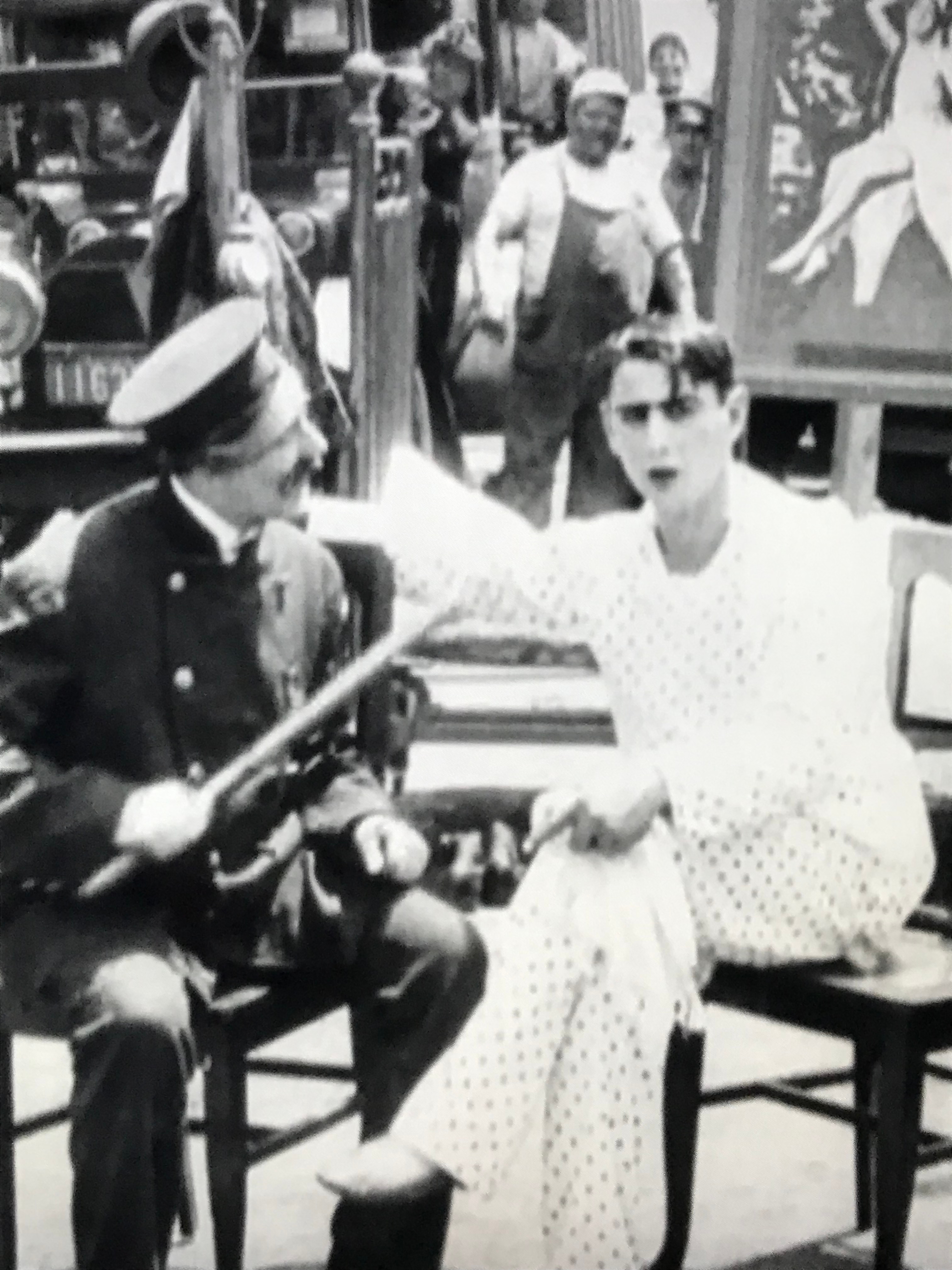
Cinema in 1919 was a landscape of radical experimentation and the refinement of the visual language of comedy. While the world was reeling from the aftermath of the Great War, the silver screen provided a sanctuary of kinetic absurdity. You're Next, directed by and starring the incomparable Marcel Perez, stands as a testament to this era's unbridled creativity. Perez, often overshadowed by the likes of Chaplin or Keaton, possessed a unique brand of manic energy that is perfectly encapsulated in this short film. The premise is deceptively simple: a blind barber serves a line of customers. Yet, within this minimalist framework, Perez constructs a complex web of physical gags that feel as dangerous as they are hilarious.
To understand You're Next, one must first appreciate the pedigree of Marcel Perez. Known across Europe and America under various pseudonyms like Robinet and Tweedy, Perez was a polymath of the silent screen. Unlike the pathos-heavy performances found in The House Built Upon Sand, Perez’s work is characterized by a lack of sentimentality. He is a technician of the gag. In You're Next, his portrayal of the blind barber is not a plea for sympathy but a vehicle for chaos. There is a certain audacity in making light of a sensory impairment, a move that modern audiences might find jarring, but in the context of 1910s slapstick, it was a daring subversion of the 'pitiable' character.
The supporting cast, including Pierre Collosse and the luminous Dorothy Earle, provides the necessary friction for Perez’s antics. Earle, a frequent collaborator, brings a grounded presence to the film, acting as the 'straight man' (or woman) to the barber’s erratic movements. The chemistry here is palpable, a choreographed dance of near-misses and sharp-edged tools. When we compare this to the ensemble dynamics in The Scarlet Pimpernel, the difference in tonal execution is stark. While the latter relies on theatricality and costume, You're Next relies entirely on the geometry of the human body in space.
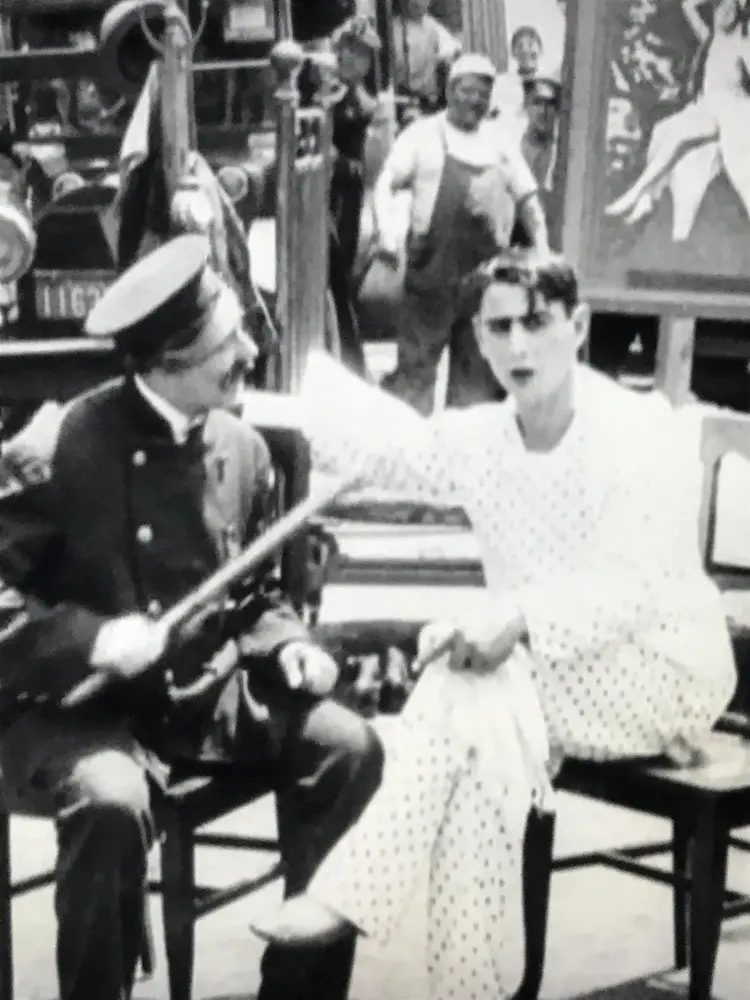
The setting is claustrophobic, a single-room stage that forces the action to remain tight and focused. This isn't the sprawling mystery of The Man of Mystery; it is an intimate theater of the absurd. The razor becomes a character in its own right—a gleaming, silver threat that hovers inches from the throats of the unsuspecting. The tension is built through repetition. Each new customer represents a fresh opportunity for disaster. The lathering process is treated with the same meticulous care as a surgeon’s prep, only to be undercut by the barber’s inability to see his canvas.
"Perez manages to turn a disability into a superpower of comedic timing, proving that the most effective humor often resides in the space between the expected and the executed."
There is a rhythmic quality to the editing that suggests Perez was deeply aware of the 'pacing' of a laugh. The film doesn't linger on the failure; it moves swiftly to the next escalation. This rapid-fire approach is a sharp contrast to the slow-burn psychological tension found in Lady Audley's Secret. Here, the secret isn't hidden in the past; it's right there on the barber's face, hidden behind a pair of opaque eyes and a mischievous grin.
Technically, You're Next utilizes the limitations of 1919 cinematography to its advantage. The fixed camera positions emphasize the stage-like quality of the barber shop, allowing the actors to utilize the entire frame. The use of depth is particularly impressive; we see the line of customers in the background, their faces a mounting gallery of horror as they witness the 'shave' currently in progress. This visual layering adds a psychological dimension to the slapstick—we aren't just laughing at the barber; we are anticipating the fear of the next man in line.
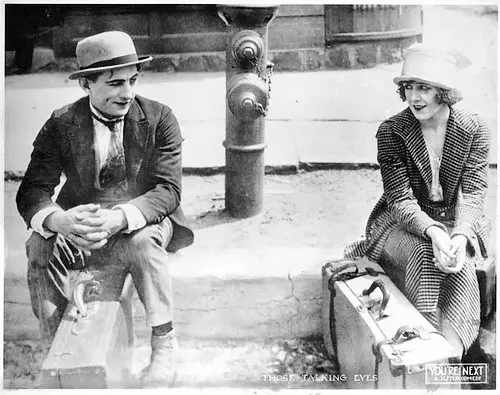
Consider the way the film handles light and shadow. While not as overtly expressionistic as Doctor Nicholson and the Blue Diamond, there is a starkness to the black-and-white photography that highlights the textures of the shop: the fluffiness of the shaving cream, the cold steel of the blades, the sweat on a patron’s brow. These tactile details ground the absurdity in a recognizable reality, making the physical comedy hit harder.
Historically, cinema has often treated blindness with a heavy hand, either as a source of tragedy or as a mystical gift, as seen in some thematic elements of The Two-Soul Woman. Perez rejects both. His barber is competent in his own chaotic way. He isn't a victim of his circumstances; he is the master of them. This subversion is revolutionary for its time. It suggests that the 'normative' world of the customers is what is truly fragile. Their reliance on sight makes them vulnerable to the barber’s tactile, chaotic world.
The film also touches on themes of class and social etiquette. The barbershop was a democratic space, yet the hierarchy of the 'chair' is absolute. When the barber accidentally cuts a customer or applies lather to their eyes, he is inadvertently dismantling the social dignity of the patron. This subtle social commentary is a hallmark of the best silent comedies, something also explored in a more dramatic fashion in Il discepolo.
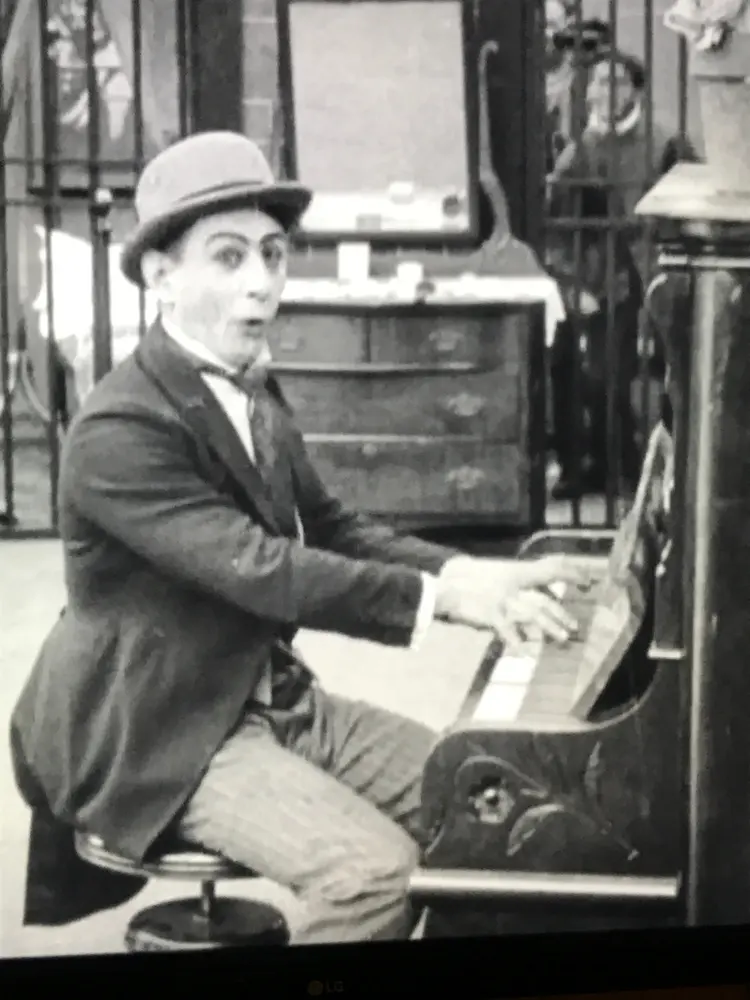
When placed alongside contemporaries like Nina, the Flower Girl, the sheer aggression of You're Next becomes apparent. Nina is a film of soft edges and sentiment; You're Next is a film of sharp edges and adrenaline. Even when compared to the crime-focused narratives of Time Locks and Diamonds, Perez’s work feels more dangerous because the 'crime'—the potential mutilation of a customer—is played for laughs. It pushes the boundaries of what is 'acceptable' humor.
Furthermore, the film’s structure—a series of escalating vignettes—mirrors the episodic nature of The Wrong Door, but with a tighter focus on physical continuity. Each 'next' customer is a variation on a theme, allowing Perez to explore every possible permutation of the 'blind barber' gag. It is an exhaustive study in a single comedic concept, much like the focused intensity found in Moths, though obviously in a much more frantic register.
Why does You're Next still resonate over a century later? It is because the fear of a bad haircut—or a dangerous shave—is universal. Perez taps into a primal anxiety and exorcises it through laughter. The film’s influence can be seen in everything from the Three Stooges to the high-concept physical comedy of modern performers. It lacks the complex plotting of Il processo Clémenceau, but it replaces narrative density with pure, unadulterated spectacle.
In the end, You're Next is more than just a historical curiosity. It is a vibrant, breathing piece of cinema that captures a master at the height of his powers. Marcel Perez, with his twitchy movements and sightless gaze, reminds us that comedy is often a matter of life and death—or at least, a matter of keeping one's ears intact. While films like Rupert of Hentzau offered grand adventure, and The Fighting Hope offered moral struggles, You're Next offered something arguably more precious: the chance to laugh at the sheer, terrifying unpredictability of the human condition.
Final thought: If you find yourself in a barber's chair and the stylist reaches for a blindfold, remember the lessons of Passing the Buck—sometimes it's better to just walk away with a shaggy mane than to risk the razor of a Marcel Perez protagonist.
IMDb 6.6
1932
Community
Log in to comment.