DbcultAccessing Vault...
Cult Review
Senior Film Conservator
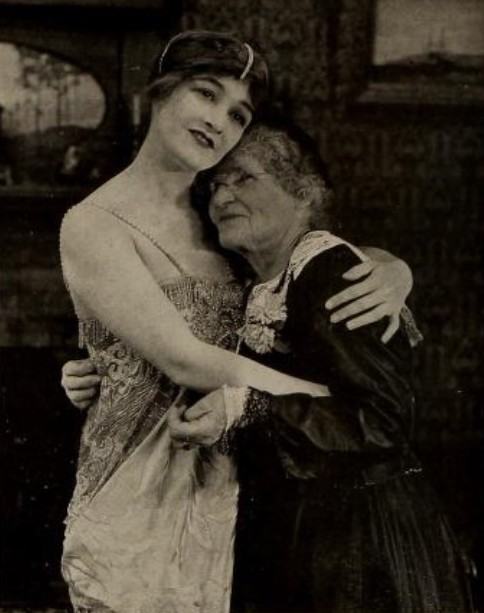
Cinema in 1918 was often a battleground between Victorian morality and the burgeoning modernism of the 20th century. *The Strange Woman* stands as a lighthouse in this turbulent sea, casting a harsh, unforgiving glare on the double standards of the American heartland.
To understand Inez de Pierrefond, one must first understand the wreckage from which she emerged. As portrayed by the luminous Gladys Brockwell, Inez is not merely a 'strange' woman; she is a survivor of institutionalized violence. The film’s opening act establishes her mother’s complicity in selling her into a marital nightmare—a brute of a husband whose only redeeming quality is his timely exit via a drunken brawl. This isn't just a plot point; it is the catalyst for a radical philosophical shift. Unlike the protagonists in The Price of Tyranny, who often suffer in silence, Inez weaponizes her pain into a manifesto of independence.
When she meets John Hemingway (William Scott), the contrast couldn't be more stark. John represents the naive optimism of the New World, an architect seeking beauty in the old stones of Paris while remaining oblivious to the internal structures of the human soul. Their romance is a collision of worlds. When Inez reveals her disdain for the marriage contract, the film captures a rare moment of intellectual honesty for the era. It’s a sequence that mirrors the psychological depth found in The Law That Failed, though with a much more defiant edge.
The transition from the bohemian freedom of Paris to the stifling atmosphere of Delphi, Iowa, is handled with a deftness that borders on the claustrophobic. The cinematography shifts, or at least the perceived space does, as Inez is subjected to the 'Gaze' of the town gossips. These characters, played with a delightful, skin-crawling righteousness by the supporting cast, serve as the film's true antagonists. They see a cultured, independent woman and immediately categorize her as an 'adventuress'—a term used in the early 20th century to sanitize their own insecurities.
The discovery of Inez's book, *Free Love*, acts as the film's MacGuffin, but its weight is far more than narrative. It represents the intrusion of European intellectualism into a space governed by rigid, unexamined dogma. The villagers' reaction is a masterclass in the psychology of the mob. It reminds me of the social friction explored in Mrs. Plum's Pudding, though *The Strange Woman* swaps comedy for a biting social critique that feels surprisingly contemporary.
"You call me strange because I speak the truth you only whisper in the dark," Inez seems to scream through her silent expressions, a sentiment that resonates through the ages.
Brockwell’s performance is the spine of the film. In an era often criticized for over-the-top pantomime, she brings a grounded, simmering intensity to Inez. She doesn't play her as a 'vamp' in the tradition of Salome, nor as a purely tragic figure like Beatrice Cenci. Instead, she is a woman of agency. Her denunciation of the villagers is the film's high-water mark—a moment where the 'strange' woman becomes the only sane person in the room. The way she carries herself—shoulders back, eyes sharp—contrasts beautifully with the hunched, whispering figures of the Delphi elite.
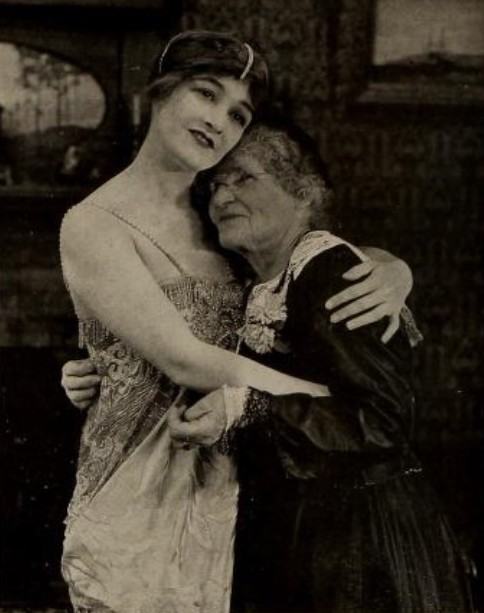
The film’s pacing allows her character to breathe, a luxury not always afforded in the 1910s. We see her internal conflict as she balances her hard-won philosophy against her growing affection for John’s mother, Mrs. Hemingway (Ruby Lafayette). This relationship is the emotional pivot of the film. While some might see Inez’s eventual capitulation to marriage as a betrayal of her ideals, a deeper reading suggests it is an act of empathy. She doesn't marry for the law; she marries for the love of a woman who showed her the first kindness she had ever received from a maternal figure.
When placing *The Strange Woman* alongside its contemporaries, its unique flavor becomes even more apparent. While Kilmeny offers a more pastoral, innocent take on the 'outsider' woman, and Merely Mary Ann leans into the sentimental, *The Strange Woman* refuses to pull its punches regarding the trauma of the past. It shares a certain DNA with The White Rosette in its exploration of female honor, but Inez is a far more modern construct—a woman who defines her own honor rather than letting society dictate it.
Furthermore, the film’s treatment of 'Free Love' is significantly more sophisticated than the sensationalism found in Love's Pilgrimage to America. It treats the concept as a legitimate intellectual response to a broken system. Even the comedic elements, reminiscent of His Picture in the Papers, are absent here, replaced by a somber, almost reverent approach to the protagonist's struggle. It is a film that demands to be taken seriously, much like the heavy dramas of the European tradition, such as Des Prokurators Tochter.
The final act of the film is a fascinating study in character psychology. The village meeting, intended to be a public shaming, backfires spectacularly. Inez’s speech (rendered through evocative intertitles) is a rhetorical masterpiece. She doesn't just defend herself; she deconstructs the very foundation of their morality. It’s a scene that feels as powerful as the social upheavals in Masks and Faces.
However, the true resolution is found in the quiet room with Mrs. Hemingway. Ruby Lafayette brings a saintly, yet grounded presence to the role. Her forgiveness isn't the condescending kind; it is a recognition of Inez's humanity. This maternal grace is the only thing capable of softening Inez’s hardened heart. The decision to marry is presented not as a defeat, but as a choice made from a position of strength. She chooses the ceremony to protect the peace of the woman who loved her, a nuanced ending that avoids the easy tropes of the 'reformed woman' seen in lesser films like The Green Swamp.
Ultimately, *The Strange Woman* is a sophisticated, layered drama that pushes the boundaries of silent film storytelling. It tackles themes of domestic abuse, intellectual freedom, and social hypocrisy with a maturity that is rare for 1918. While it lacks the exotic spectacle of A Princess of Bagdad or the domestic comedy of Házasodik az uram, it offers something much more enduring: a profound look at the cost of being 'strange' in a world that demands conformity. Gladys Brockwell’s Inez remains one of the most compelling figures of the silent era—a woman who looked at the chains of tradition and dared to ask, 'Why?'
IMDb 6
1932
Community
Log in to comment.