DbcultAccessing Vault...
Cult Review
Senior Film Conservator
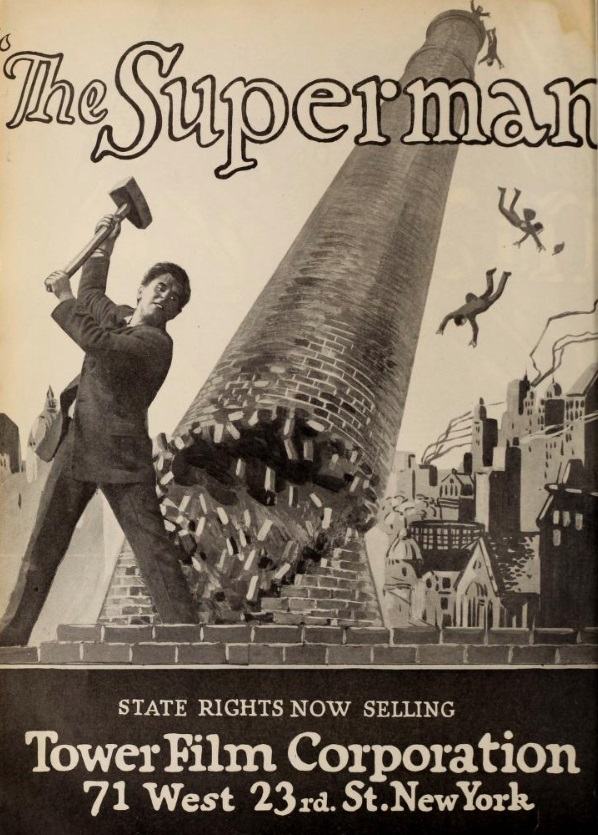
The cinematic landscape of the early 1920s was frequently populated by figures of gargantuan physical prowess, yet few films encapsulate the intersection of mythological grandeur and pulp adventure as vividly as The Superman. Featuring the legendary Luciano Albertini, an actor whose very presence seemed to warp the celluloid around his brawny frame, this feature stands as a testament to the era of the 'strongman' epic. Unlike the contemporary social satires like His Picture in the Papers, which utilized physicality for comedic effect, 'The Superman' treats the human body as a divine instrument of political and moral restoration.
The narrative scaffolding of 'The Superman' is built upon the classic trope of the malevolent relative—a prince whose ambition has curdled into a lethal obsession. Aldo Mezzanotte portrays this villain with a chilling, restrained intensity, eschewing the over-the-top gesticulation common in silent cinema for a more calculated, predatory stillness. His desire to occupy the throne is not merely a quest for power but a rejection of the natural order. By targeting the princess and her small daughter, he attempts to sever the bloodline, a theme of dynastic anxiety that resonates with the same frequency as the domestic tragedies found in Always in the Way.
The mythical kingdom setting serves as more than just a backdrop; it is a character in its own right, rendered through evocative set design and chiaroscuro lighting that emphasizes the shadows lurking within the palace corridors. The prince’s endeavors to 'dispose' of the rightful heirs are depicted through a series of escalating threats that push the boundaries of early 20th-century stunt work. Here, the film diverges from the grounded realism of The Green Swamp, opting instead for a heightened, almost operatic sense of peril.
When Luciano Albertini enters the fray as Samson, the film’s kinetic energy shifts. Albertini was not merely an actor but a phenomenon, a man who brought the discipline of the circus and the aesthetic of classical sculpture to the screen. In 'The Superman', his character is the antithesis of the prince’s intellectualized evil. Samson is a force of nature, a primal response to the prince’s sophisticated cruelty. The 'hazardous experiences' mentioned in the plot are not merely obstacles; they are the crucible in which Samson’s virtue is forged.
The choreography of these sequences—ranging from daring rescues to displays of sheer manual strength—prefigures the modern action hero. While serials like The Adventures of Kathlyn relied on episodic cliffhangers to maintain engagement, 'The Superman' integrates its thrills into a cohesive moral journey. Every feat of strength performed by Albertini is a blow struck against the prince’s illegitimacy. His interactions with Linda Albertini, who plays the imperiled princess, carry a weight of chivalric duty that elevates the film above mere spectacle.
In the broader context of silent-era storytelling, 'The Superman' occupies a unique niche. It lacks the cynical edge of Reputation, yet it possesses a grit that is often absent from the more sentimental offerings of the time. The film’s focus on the restoration of a royal court mirrors the thematic concerns of Kathleen Mavourneen, where the struggle for home and heritage takes center stage. However, where 'Kathleen' finds its resolution in pastoral longing, 'The Superman' finds it in the violent displacement of the usurper.
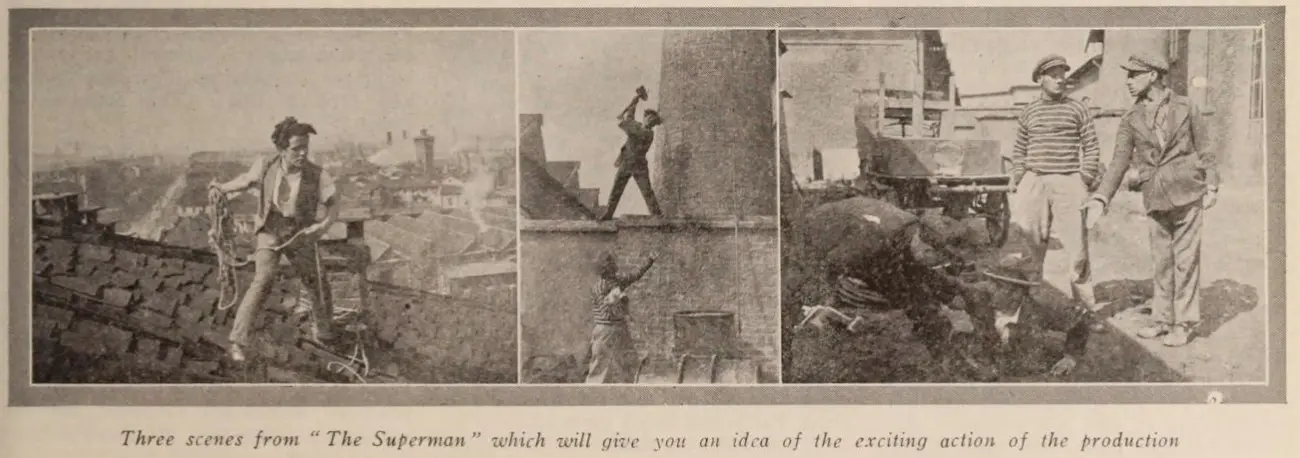
The supporting cast, including Varada and Arnold Patata, provides the necessary texture to the kingdom’s populace. Patata, in particular, offers a performance that suggests the wider impact of the prince’s tyranny on the common folk, a narrative thread that echoes the societal tensions explored in Defense or Tribute?. The prince’s malice is not contained within the palace walls; it is a contagion that threatens the stability of the entire realm.
The pacing of 'The Superman' is relentless, a quality it shares with the frantic energy of Around the Clock with the Rookie, though the stakes here are significantly more dire. The director utilizes the camera to capture the sheer scale of the mythical kingdom, using wide shots to establish the isolation of the princess and tight, claustrophobic framing to heighten the tension during the prince’s assassination attempts. The use of tinting—deep blues for the nocturnal escapes and amber for the royal halls—adds a layer of emotional depth that compensates for the absence of spoken dialogue.
One cannot overlook the film’s climax, which serves as a masterclass in silent action. The confrontation between Samson and the prince’s forces is not just a fight; it is a symbolic purging of the kingdom’s sickness. It carries the same weight of inevitable justice found in The Moonshine Trail or the heavy atmosphere of Somewhere in France. When the heirs are finally restored, the 'happy ending' feels less like a cliché and more like a hard-won equilibrium.
'The Superman' is a film that demands to be viewed through the lens of its time while acknowledging its influence on the future of the action genre. It navigates the treacherous waters of melodrama with the same dexterity that Samson navigates the prince’s traps. While it may lack the complex psychological shading of The Splendid Sin, it makes up for it with a clarity of purpose and a commitment to the visceral thrill of the struggle. The film’s preoccupation with fate and the 'rightful' path also draws interesting parallels to At the Cross Roads.
The malevolence of the prince is a shadow that only a figure like Samson could dispel. In the end, 'The Superman' is a celebration of the human form as a vessel for morality. It reminds us that in the world of silent cinema, actions did not just speak louder than words—they were the only words that mattered. Whether it is the chilling precision of the prince’s plans or the explosive power of Samson’s response, the film remains a captivating artifact of an era when the screen was a place of gods, monsters, and the men who dared to stand between them.
For those who appreciate the evolution of the hero archetype, this film is essential viewing. It bridges the gap between the ancient myths of old and the burgeoning cinematic language of the new century. It is as much a study of power and its abuses as it is a showcase for one of the most remarkable physical performers of the silent age. In the tapestry of 1920s cinema, 'The Superman' shines with a brilliance that is as enduring as the muscles of its titular hero, standing alongside other notable works like The Strangler's Cord, Comrade John, and The Heritage of Hate as a foundational piece of narrative history.
IMDb —
1924
Community
Log in to comment.