DbcultAccessing Vault...
6.4/10
Senior Film Conservator
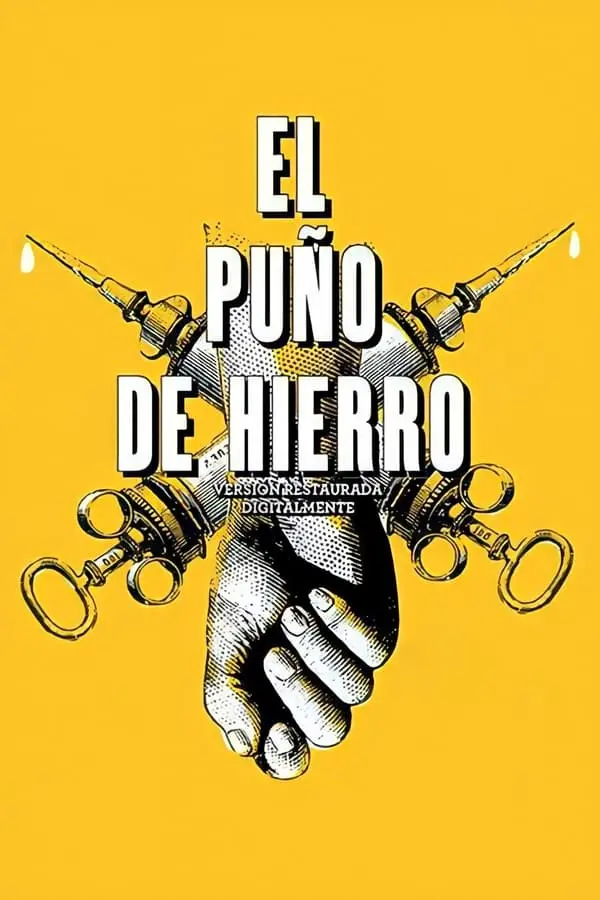
A definitive 6.4/10 rating for a film that redefined the boundaries of cult cinema. El puño de hierro remains a cornerstone of transgressive art.
Is El puño de hierro worth your time in the modern era? Short answer: yes, but only if you approach it as a visceral historical artifact rather than a polished piece of entertainment. This film is essential viewing for those interested in the evolution of social realism and Mexican cinematic history, but it is certainly not for viewers who demand the sophisticated pacing or subtle character arcs of contemporary thrillers.
Gabriel García Moreno’s 1927 work stands as a landmark of the 'Orizaba school' of filmmaking, offering a glimpse into a world that silent cinema usually preferred to keep hidden behind curtains of Victorian morality. It is raw, it is occasionally clumsy, and it is undeniably bold.
Before we dive into the murky depths of the plot, let's establish the core reality of this production:
El puño de hierro is a fascinating relic. It is one of the few surviving feature-length silent films from Mexico, and that alone gives it immense value. However, beyond its historical importance, it offers a surprisingly modern look at the mechanics of addiction. Unlike the more stylized European offerings of the time, such as Alraune, Moreno’s film feels grounded in the dirt and smoke of the real world. If you can handle the slow-burn pacing and the lack of a traditional musical score in many modern prints, the visual storytelling will reward you.
The performance of the cast, led by Manuel Carrillo and Octavio Valencia, is a study in silent-era extremes. Carrillo, as the victimized Carlos, portrays the physical toll of addiction with a harrowing commitment. There is a specific scene in a dimly lit drug den where Carlos’s body language shifts from aristocratic confidence to a frantic, twitching desperation. It is a haunting transition. It works. But it’s flawed.
On the other side of the needle is Dr. Anselmo. While some might find his 'evil doctor' trope exhausting, it serves a specific function in Moreno’s world. Anselmo represents the 'Iron Fist'—the crushing weight of a system that profits from human misery. His office is staged not as a place of healing, but as a trap. The way the camera lingers on the paraphernalia of his trade makes the doctor feel less like a man and more like a personification of the drug itself.
The cinematography in El puño de hierro is surprisingly sophisticated for a regional production. Moreno utilizes deep shadows and high-contrast lighting that predate the peak of American noir by two decades. The use of natural light in the outdoor scenes around Orizaba provides a sharp contrast to the claustrophobic, smoke-filled interiors of the opium dens. This visual duality highlights the central conflict: the bright future Carlos should have had versus the dark reality he chose.
Compare this to the grand, sweeping scales of J'accuse! or the rugged landscapes in The Law of the North. Moreno isn't interested in epic scope; he is interested in the intimacy of a tragedy. He wants the viewer to feel the walls closing in. The camera doesn't just observe; it accuses.
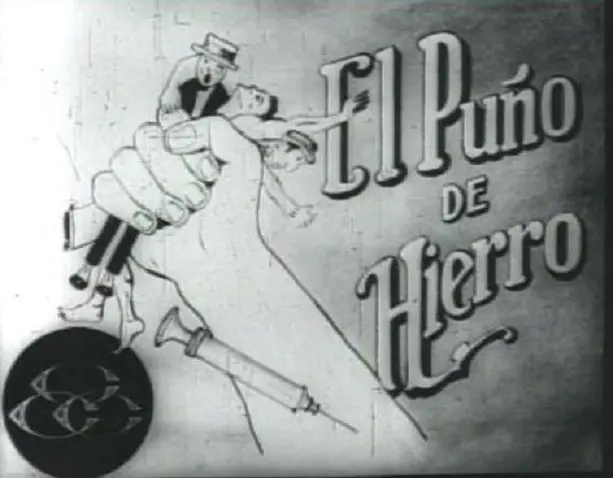
What strikes me most about this film is its refusal to be a simple romance. While the plot summary suggests a love triangle, the 'romance' is quickly sidelined by the clinical reality of the drug trade. This was a radical move in 1927. Most films of the period, like Rose of the Tenements, used social issues as a backdrop for sentimental fluff. Moreno does the opposite. He uses the romance as a hook to pull the audience into a lecture on public health and social decay.
There is a brutal simplicity to the film’s message. It doesn't ask for your sympathy; it demands your attention. The depiction of the 'El Tieso' character—a man already destroyed by drugs—is a terrifying glimpse into Carlos’s potential future. This isn't just storytelling; it’s a warning shot fired across the bow of Mexican high society.
It is important to remember that this film was nearly lost to time. Its restoration by the Cineteca Nacional has allowed us to see a side of 1920s Mexico that was often suppressed. While American films like Her Sturdy Oak or Cupid à la Carte were playing with light comedy, Moreno was investigating the rot in the social fabric. This film isn't just a movie; it's a social document.
"The film operates as a blunt instrument. It doesn't offer the poetic nuances of a Murnau or the technical wizardry of a Lang, but it possesses a grit that is entirely its own."
One could argue that El puño de hierro is the grandfather of the modern 'social problem' film. It shares a DNA with later works that explore the intersection of crime and addiction. Even compared to contemporary international films like Die suchende Seele, Moreno’s work feels more dangerous, more willing to get its hands dirty.
Is the pacing perfect? No. There are moments where the film lingers too long on transitional scenes that add little to the tension. However, when the film focuses on the psychological manipulation of Carlos by Anselmo, it is riveting. The editing in the drug den sequences uses quick cuts—unusual for the time—to simulate the disorientation of the characters. This is where Moreno shows his true talent as a director.
The film’s score, depending on which restoration you watch, often plays a huge role in the experience. Without the right accompaniment, the silence can feel heavy. But with a tense, atmospheric score, the imagery of the 'Iron Fist' becomes truly nightmarish. It is a testament to the power of the image that the film still resonates without a single spoken word.
El puño de hierro is a difficult, demanding, and ultimately rewarding piece of cinema. It is not 'fun' in the traditional sense. It is a grim, determined look at the darker side of the human condition. While it lacks the polish of the Hollywood machine, its authenticity more than compensates for its technical shortcomings. It is a hammer blow of a film that reminds us that cinema has always been a tool for social provocation.
If you are tired of the sanitized versions of history often presented in silent cinema, this is the antidote. It is messy, it is judgmental, and it is fascinating. It is a must-watch for anyone who wants to understand the full spectrum of early film.
IMDb —
1915
Community
Log in to comment.