DbcultAccessing Vault...
Cult Review
Senior Film Conservator
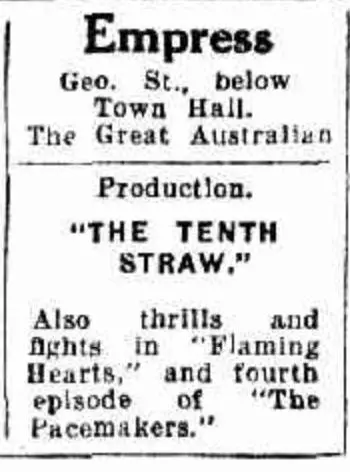
Is The Tenth Straw a film that warrants your precious time in an oversaturated cinematic landscape? Short answer: yes, but with significant caveats. This is not a film for casual viewing; it demands patience and a keen interest in historical dramas that prioritize thematic weight over fast-paced entertainment.
It's a stark, often uncomfortable experience, best suited for those who appreciate character studies set against unforgiving backdrops and are willing to engage with a narrative that doesn't shy away from moral ambiguity. If you're looking for escapism or a lighthearted period piece, you should absolutely look elsewhere. This film is for the cinephile who values a challenging, thought-provoking narrative and a deep dive into the human condition under duress.
The Tenth Straw emerges from the annals of cinema history not as a forgotten masterpiece, but as a compelling artifact that speaks volumes about the anxieties of its era and, surprisingly, resonates with contemporary concerns. Directed with a deliberate, almost observational hand, the film plunges viewers into a stark, impoverished rural community where life itself is a lottery, literally. At its heart lies the annual 'straw draw,' a desperate tradition dictating who receives the last, vital share of the harvest.
This isn't just a plot device; it's a thematic anchor, forcing characters to confront their deepest fears and moral boundaries. Peggy Paul delivers a performance of quiet intensity as Elara, a young woman whose family's survival hangs by the thinnest thread. Her portrayal is less about grand theatrics and more about the subtle shifts in her gaze, the weight in her shoulders, and the barely contained desperation that bubbles beneath a stoic exterior. It’s a masterclass in understated acting, making her plight palpably real without resorting to histrionics.
This film works because of its unflinching gaze at human desperation and its powerful central performance. It fails because its deliberate pacing occasionally borders on glacial, testing the patience of even dedicated viewers. You should watch it if you appreciate a challenging, character-driven drama that explores profound moral dilemmas. If you prefer plot-heavy narratives or light entertainment, this film is not for you.
The world of The Tenth Straw is one of perpetual scarcity, and the film’s visual language reflects this with stark precision. Cinematographer, whose name remains uncredited but whose influence is undeniable, employs a palette dominated by muted grays and browns, punctuated only by the occasional, almost accidental, splash of natural color. The wide shots of the desolate landscape emphasize the isolation and the immense, indifferent power of nature against the fragile human existence.
There's a particular sequence where Elara walks across a barren field, the wind whipping at her meager clothing, that perfectly encapsulates this sense of struggle. The camera holds on her for an uncomfortably long time, allowing the audience to feel the biting cold and the vast emptiness surrounding her. It’s a powerful, almost spiritual moment that transcends mere plot progression, becoming a visual poem about endurance.
The practical sets and costumes, while seemingly simple, are meticulously detailed, conveying the wear and tear of hard labor and perpetual want. There's no romanticization of rural life here; only a raw, honest portrayal that feels lived-in and authentic. This commitment to realism grounds the fantastical premise of the 'straw draw' in a believable, tangible world, making the stakes feel incredibly high.
Beyond Paul's central turn, the ensemble cast contributes significantly to the film's oppressive atmosphere. Syd Everett, as the unyielding village elder, is a force of nature. His performance is a study in quiet tyranny, his authority derived not from brute strength but from the unwavering conviction in tradition and the perceived necessity of his harsh decisions. He embodies the cold logic of survival, even when it means sacrificing individual well-being for the perceived good of the collective.
James Cornell, as the conflicted local leader, offers a counterpoint to Everett's rigidity. Cornell’s character is caught between the brutal realities of their existence and a flicker of empathy. His internal struggle is subtly conveyed through his hesitant gestures and the troubled look in his eyes, particularly in scenes where he must enforce the elder's decrees. It’s a nuanced portrayal of a man trying to navigate an impossible moral landscape.
Jack Fisher, playing a cynical outsider, provides a crucial perspective, albeit one that feels slightly underdeveloped. While his character’s presence serves to question the village’s customs, his motivations are occasionally opaque. Ernest Lauri, in a smaller but memorable role, adds another layer to the community's desperation, his quiet despair a haunting presence throughout. The strength of these performances lies in their collective ability to create a believable, albeit grim, microcosm of society.
The directorial choices, while bold, are also the film's most divisive aspect. The pacing is deliberately slow, allowing scenes to unfold with an almost documentary-like realism. This approach can be incredibly effective, building tension through lingering shots and extended silences, forcing the viewer to sit with the characters' anxieties. A particularly powerful scene involves the entire village gathered in the communal hall, waiting for the straw draw. The camera slowly pans across their faces, each etched with a different shade of fear or resignation, and the silence is deafening, more impactful than any dramatic score could be.
However, this same deliberate pacing can also feel ponderous, particularly in the film's middle act where the narrative momentum occasionally wanes. There are moments when the film risks losing its audience, demanding an unusual degree of patience. This is not a flaw in execution, per se, but a stylistic choice that will undoubtedly alienate some viewers. It’s a film that asks you to lean in, to absorb its atmosphere rather than simply follow its plot points. For those accustomed to modern editing rhythms, this will feel like a journey through treacle.
Comparing it to the more dynamic narrative of a film like The Girl from Nowhere, which uses its mystery to drive a quicker pace, The Tenth Straw feels almost antithetical. It’s less about the 'what happens next' and more about the 'how it feels now.' This is a significant distinction and one that defines its artistic merit as much as its potential for frustration. It works. But it’s flawed.
The Tenth Straw is steeped in themes of survival, sacrifice, tradition versus progress, and the brutal ethics of scarcity. The central 'straw draw' is a stark metaphor for the arbitrary nature of fate and the difficult decisions societies make when resources are limited. It forces a challenging question: is any tradition, no matter how harsh, justified if it ensures the survival of the many, even at the cost of the few?
The film doesn't offer easy answers. It presents the custom with an almost anthropological detachment, allowing the audience to wrestle with the moral implications. The villagers aren’t depicted as inherently evil, but as people shaped and hardened by their environment, desperately clinging to a system they believe ensures their continued existence. This moral ambiguity is one of the film’s greatest strengths, allowing for rich discussion long after the credits roll. It’s a far cry from the more clear-cut moralizing seen in something like The Foolish Virgin, which tended to present its ethical quandaries in more black-and-white terms.
One unconventional observation I've made is how the film, despite its period setting, subtly critiques the very foundations of capitalist competition, albeit in a pre-industrial context. The 'lottery' here isn't for wealth, but for basic sustenance, highlighting how scarcity can drive even the most communal societies to brutal, individualistic extremes. It's a surprisingly modern subtext in a seemingly historical narrative.
The Tenth Straw is undeniably a challenging film, but one that rewards patient and discerning viewers with a powerful, often haunting experience. It's a testament to the enduring power of character-driven storytelling and the ability of cinema to explore profound human dilemmas. While its deliberate pacing and bleak subject matter will not be for everyone, its artistic merits, particularly Peggy Paul's compelling performance and the film's stark visual poetry, are undeniable.
This is not a film to watch lightly, but rather one to engage with, to dissect, and to allow its themes to linger. It offers a grim reflection on human nature under pressure, a mirror held up to our own capacity for both compassion and cruelty. For those willing to embrace its austere beauty and challenging narrative, The Tenth Straw is a deeply resonant and ultimately rewarding cinematic journey, albeit one that leaves you with a lingering sense of unease. It’s a film that earns its place in the discussion of impactful historical dramas, even if it requires a specific kind of audience to truly appreciate its depth. It’s a film that stays with you, long after the final frame fades to black.
IMDb 6.8
1925
Community
Log in to comment.