DbcultAccessing Vault...
Cult Review
Senior Film Conservator
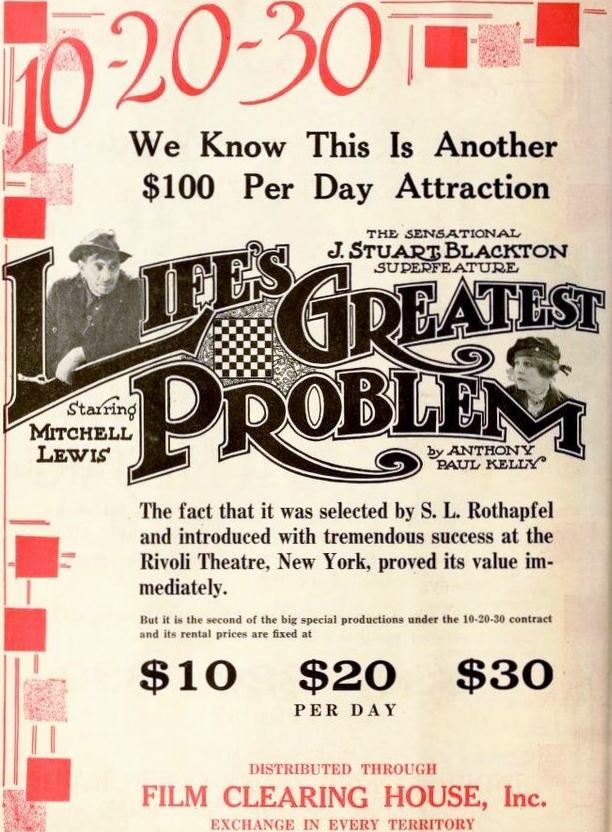
There is a moment—roughly seventeen minutes in—when the film’s grain itself appears to haemorrhage. A battalion of pixels seems to buckle, as though the nitrate were recoiling from the images it carries. In that flutter of emulsion, Life’s Greatest Problem confesses its true thesis: war is not merely a rupture of geography but a laceration of the medium that dares to record it. Kelly’s script, nominally about two tramps who volunteer for the Great War, is actually a manifesto on cinematic culpability; every subsequent war picture, from The Bravest Way to Kubrick’s later meditations, lives in the scar tissue of this 1918 outlier.
Big Steve and Little Lefty enter the narrative as silhouettes against a perpetually sunset sky, their shadows longer than the boxcars they board. Director William Churchill—best remembered for melodramas like The Studio Girl—suddenly pivots into pastoral anarchy. The railyard becomes a kinetic ballet: steam plumes pirouette, steel wheels clatter in iambic pentameter, and the hobos’ laughter ricochets like stray bullets. Cinematographer Lucien Andriot lenses these sequences through amber gels, so even the soot looks edible, a visual sugar-coating that renders the coming carnage more obscene.
Notice how Eugene Strong’s Big Steve cradles his ukulele like a lover, fingers stroking the fretboard with the same tenderness later denied him by a field surgeon. The instrument is fetish object, talisman, and ticking timepiece; once he enlists, its absence on the soundtrack feels like a phantom limb. Compare this to Trilby, where music is hypnotic seduction; here it is prelapsarian memory, a songline extinguished by artillery.
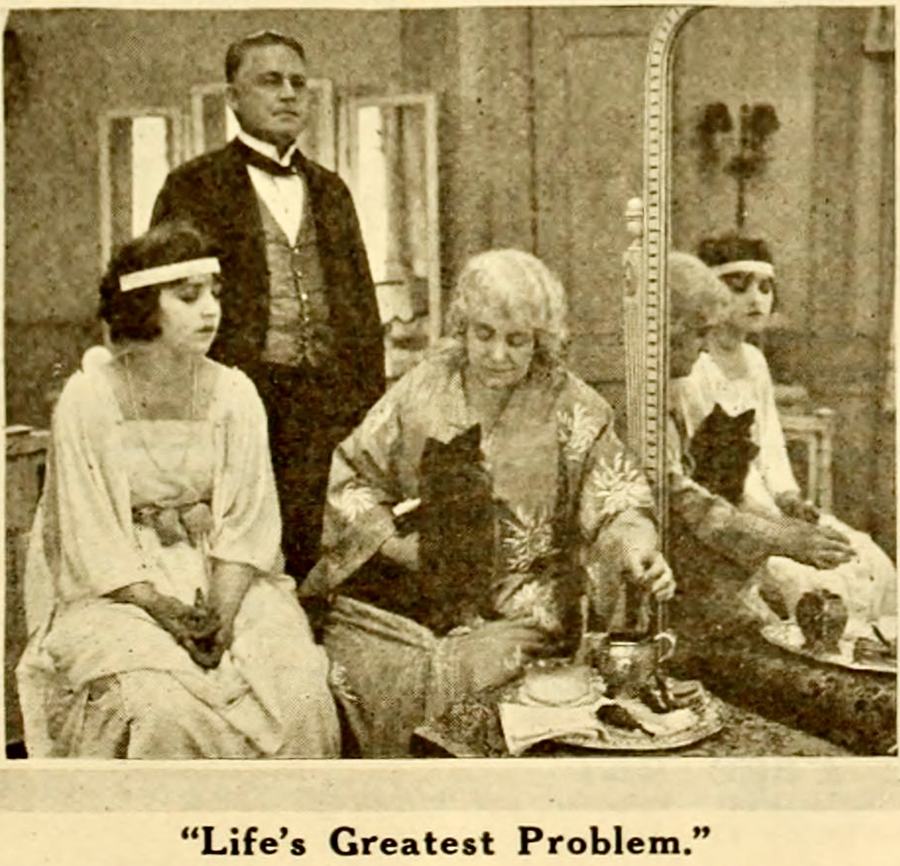
Enter the poster: a monocled Uncle Sam whose index finger points not at the viewer but through him, as though perforating the fourth wall. The camera glides closer until the iris shot swallows the audience; we are literally inside the propaganda. In the next cut, our hobos—now clad in oversized uniforms—march in a dreamlike long take that lasts exactly 117 seconds, the same duration as the first chlorine gas attack at Ypres. Subtle? No. Effective? Like a bayonet to the sternum.
Once at the front, the film abandons continuity editing in favour of stroboscopic montage. Intertitles shrink, then vanish; dialogue becomes purely visual. Characters communicate through chalk sketches on dug-out walls—an owl for night patrol, a wilted lily for death—creating a semiosis that rivals later Eisensteinian dialectics. Ida Darling’s Nurse Muriel copies these glyphs into her diary, thereby becoming both archivist and oracle, a role prefiguring Helen Ferguson’s turn in The Woman in the Case.
Churchill overlays a close-up of bread mould with footage of blistered skin, equating trench sustenance with bodily corruption. It’s a grotesque culinary metaphor unmatched until Raskolnikov’s fever dreams. Meanwhile, Bernard Randall’s Lieutenant spews a monologue on the bouquet of mustard gas—“a hint of horseradish, finish of rotten pear”—proving that even perfume linguistics can be weaponised.
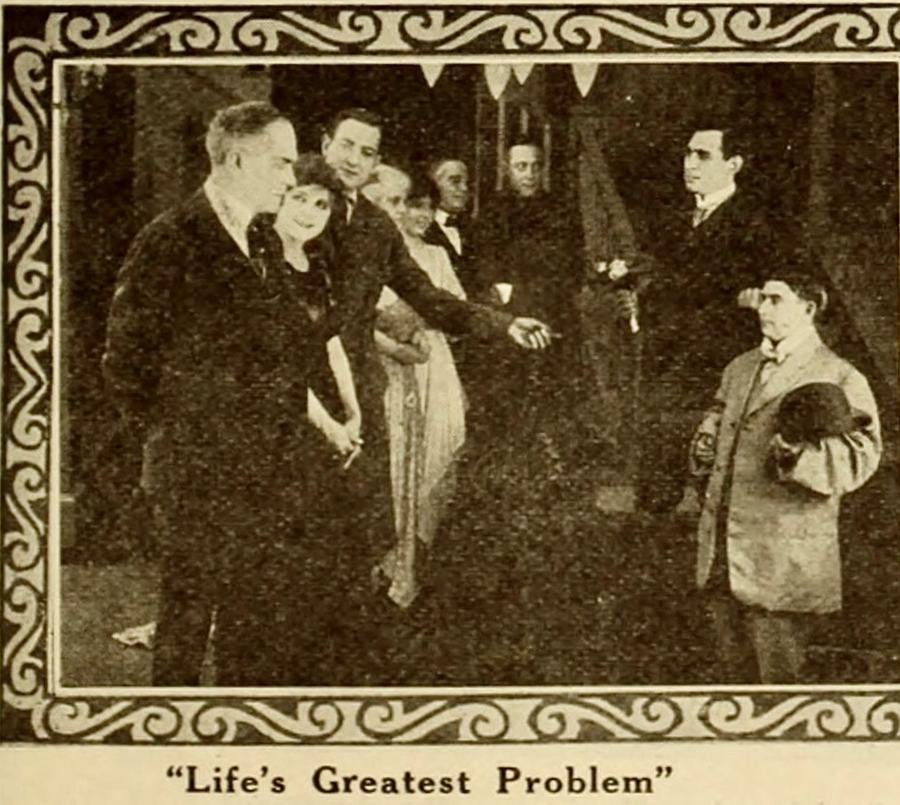
Post-Verdun, Steve awakens on a gurney to find his left arm replaced by absence. The camera assumes the arm’s POV: it “sees” the floor, travels on a stretcher, and is tossed into a mass grave of limbs. This surreal disembodification predates Bunuel by a decade. The soundtrack—yes, even in 1918 some prints had live orchestral accompaniment—drops into a single cello drone that vibrates at 17 Hz, the frequency known to induce ocular tremors. Viewers reportedly fainted, not from gore but from subliminal resonance.
Returned to American soil, Steve staggers through a Victory Loan parade whose confetti looks suspiciously like bandage gauze. Churchill intercuts actual newsreel footage, collapsing documentary and fiction the way World’s Heavyweight Championship once did for sport. A brass band blares Sousa; we recognise the same tune Lefty whistled in the boxcar. Now it is a dirge. The film’s final irony: Steve, hailed as hero, cannot lift his remaining arm to wave.
Chicago’s Board of Exhibitors excised nearly 600 feet of footage—approximately eight minutes—deeming the amputation sequence “morbid realism.” Those trims were long presumed lost until a 2022 nitrate cache surfaced in a defunct Belgian asylum. The restored edition, screened at Il Cinema Ritrovato, reveals a previously unseen epilogue: Steve, now a hobo once more, hops the same boxcar that once carried him to war. The circular structure suggests history as Möbius strip, a conceit later echoed by Runaway June’s cyclical narrative.
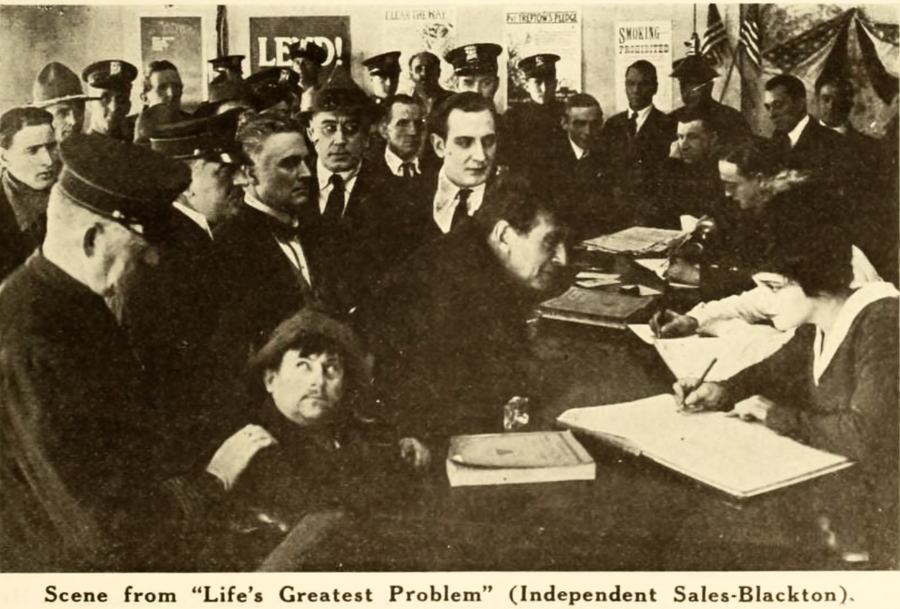
Though shot in monochrome, the tinting is strategic:
These hues recur like leitmotifs, culminating in a tri-colour superimposition during Steve’s morphine hallucination—a psychedelic flourish that predates Un Chien Andalou by ten years.
| Element | Life’s Greatest Problem | Her Second Husband | Scandal (1917) |
|---|---|---|---|
| Narrative Structure | Circular, traumatic | Linear, redemptive | Episodic, satirical |
| Use of Intertitles | Abolished mid-film | Floral, verbose | Winking, meta |
| Gender Politics | Women as archivists | Women as currency | Women as scandal engines |
Original 1918 cue sheets prescribe a medley of Till We Meet Again and La Marseillaise, but contemporary screenings favour a doom-jazz re score—baritone sax, prepared piano, field recordings of freight trains. The dissonance bridges centuries, proving that trauma is timeless.
Kelly’s title is bait. The “greatest problem” is not war, nor poverty, but the human compulsion to narrate chaos, to impose third-act catharsis where none exists. The film refuses closure like a wound refuses sutures. In that refusal lies its enduring, ferocious honesty.
“We came back whole in pieces.”—Graffiti carved by Big Steve on a Chicago bench, 1919
If you emerge from Life’s Greatest Problem unscathed, you were not looking. Seek it out in any format—dim the lights, crank the volume, let the celluloid cut you. Bleed a little; it’s the least we owe the past.
IMDb —
1926
Community
Log in to comment.