DbcultAccessing Vault...
5/10
Senior Film Conservator
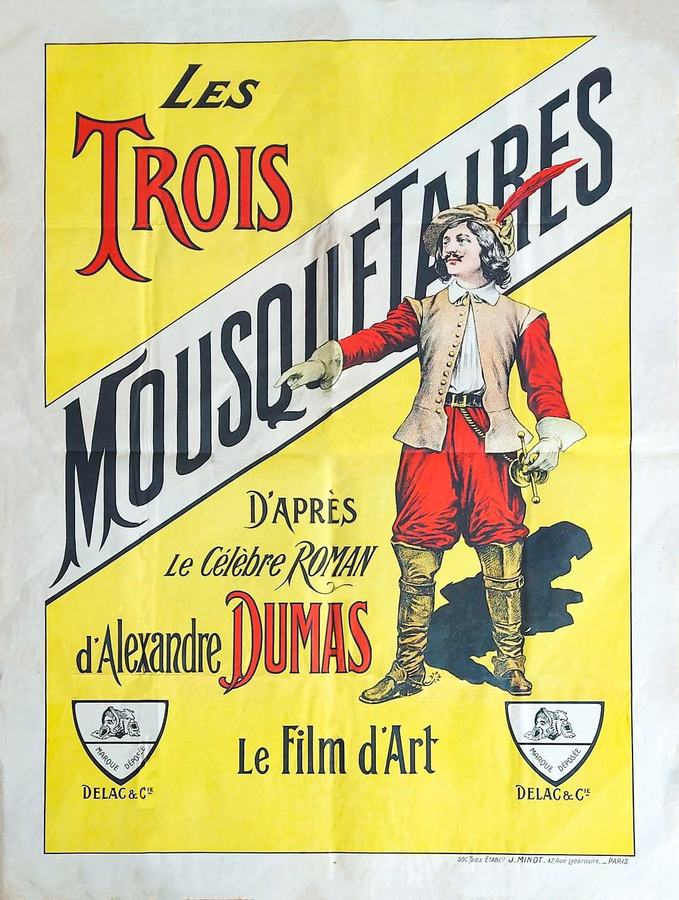
A definitive 5/10 rating for a film that redefined the boundaries of cult cinema. The Three Musketeers remains a cornerstone of transgressive art.
In the nascent years of the twentieth century, the silver screen was a medium of frantic experimentation and burgeoning ambition. The 1912 adaptation of The Three Musketeers stands as a monumental testament to this era, a period where the 'Film d'Art' movement sought to elevate cinema from a fairground attraction to a sophisticated artistic endeavor. Directed with a keen eye for historical pageantry by Henri Pouctal and André Calmettes, this production does not merely recount the exploits of D'Artagnan; it breathes life into the very fabric of 17th-century France. While contemporary audiences might find the pacing deliberate, the film’s architectural grandeur and thematic depth rival the literary complexity of Dumas himself. Much like Les Misérables of the same period, this film understands that epic storytelling requires a marriage of intimate character beats and sweeping historical vistas.
The film’s narrative architecture is built upon the sturdy foundations of loyalty and the precariousness of royal favor. Émile Dehelly’s D'Artagnan is a revelation of youthful vigor and unrefined charisma. Unlike the polished heroes of later Technicolor iterations, Dehelly imbues the character with a raw, almost feral energy that underscores the danger of the Gascon’s social ascent. His initial encounters with the Musketeers are staged with a theatricality that honors the source material’s stage origins while utilizing the camera to emphasize the spatial dynamics of the duel—a technique that was far more advanced than the static boxing matches seen in The Corbett-Fitzsimmons Fight or the Jeffries-Sharkey Contest.
Perhaps the most arresting performance in this silent epic belongs to Nelly Cormon as Milady de Winter. In an era where female roles were often relegated to the damsel in distress or the saintly mother—as seen in religious epics like From the Manger to the Cross—Cormon provides a masterclass in serpentine subtlety. Her Milady is not a caricature of evil but a woman navigating a patriarchal world through the only means available to her: intellect, seduction, and ruthlessness. The way the camera lingers on her expressions during the cardinal’s briefings reveals a psychological depth that was rare for 1912. She is the shadow to D'Artagnan’s light, a character whose complexity mirrors the intricate plotting of The Black Chancellor.
The interplay between Cormon and Marcel Vibert, who portrays the formidable Cardinal Richelieu, creates a gravitational pull that anchors the film’s more whimsical moments. Vibert’s Richelieu is a study in restrained power. He does not need to shout; his stillness is his weapon. This portrayal of political machination offers a fascinating contrast to the more overt villainy found in Oliver Twist. Here, the stakes are not merely personal but national, where a misplaced diamond or a forged letter could topple a dynasty.
Visually, the film is a triumph of the 'tableau' style. Each frame is meticulously composed, resembling the grand historical paintings of the 19th century. The use of authentic-looking locations and lavish costumes provides a texture that was often missing from the more spartan productions of the time. When compared to the rugged, naturalistic landscapes of Glacier National Park, the controlled environment of The Three Musketeers feels like a curated dream of the past. The interior scenes, particularly those within the Queen’s chambers, utilize a depth of field that allows for multiple layers of action, a precursor to the sophisticated visual storytelling that would define the next decade.
The action sequences, while lacking the rapid-fire editing of modern cinema, possess a rhythmic grace. The swordplay is choreographed with a dancer’s precision, emphasizing the 'art' in the Film d'Art movement. These scenes are not merely about the physical conflict but about the expression of character through movement. The Musketeers move as a single entity, their synchronized blades a metaphor for their ideological unity. This level of coordination is a far cry from the chaotic energy of The Story of the Kelly Gang, offering instead a refined, European sensibility of combat.
Adapting a work as sprawling as Dumas’ novel into the silent format was a Herculean task. The filmmakers opted for a serialized approach, allowing the narrative to breathe in a way that single-reel films could not. This expansive storytelling aligns it with other early historical epics like 1812 and Cleopatra. The film manages to capture the essence of the 'Diamond Studs' affair with a clarity that is commendable given the lack of spoken dialogue. Intertitles are used judiciously, allowing the actors’ physicality to carry the emotional weight of the story.
The film also serves as a fascinating cultural artifact, reflecting the French pride in their literary heritage. During a time when national identities were being forged and contested—echoed in films like The Independence of Romania—this production of The Three Musketeers reaffirmed the timeless appeal of the French spirit. It is a celebration of wit over brawn, of loyalty over self-interest, and of the enduring power of the underdog. The redemption arcs, while less overt than in The Redemption of White Hawk, are present in the evolving respect between the Musketeers and their young protégé.
As we look back at this 1912 gem from a modern vantage point, it is easy to dismiss it as a relic. However, to do so would be to ignore the foundational blocks it laid for the action genre. The DNA of every subsequent D'Artagnan can be found in Dehelly’s performance, and the blueprint for the cinematic femme fatale was arguably drafted by Cormon. The film’s influence extends beyond its own genre, touching upon the theatricality seen in Les amours de la reine Élisabeth and the moral gravity of Dante's Inferno.
In conclusion, The Three Musketeers (1912) is a vibrant, pulse-pounding, and visually arresting achievement that transcends its technical limitations. It is a reminder that the core of cinema has always been the story—the eternal dance of light and shadow, hero and villain, honor and betrayal. Whether you are a scholar of silent film or a casual fan of historical drama, this adaptation offers a rich, rewarding experience that proves some stories are indeed immortal. It stands tall alongside other early milestones like The Life and Death of King Richard III, carving its own niche in the pantheon of great cinematic literature.
IMDb 5.8
1929
Community
Log in to comment.