DbcultAccessing Vault...
5.5/10
Senior Film Conservator
A definitive 5.5/10 rating for a film that redefined the boundaries of cult cinema. The Timber Queen remains a cornerstone of transgressive art.
Celluloid splits like winter cedar when The Timber Queen ignites the screen, hurling splinters of proto-feminist fire into the smoky projector beam of 1922. What ought to be a creaky lumber-room relic—another chapter-play about contested deeds—is instead a kinetic manifesto carved with hot saws and hotter passions, its very grain humming with the sap of revolt.
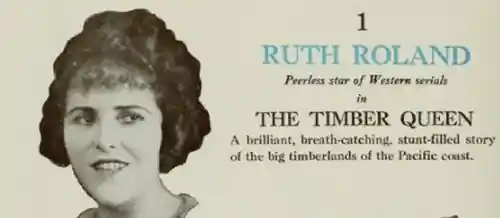
Lenora Halstead’s patrimony is no genteel estate; it is a breathing forest, a vertical ocean of timber worth more than the GDP of some nations. The will’s clause—marry before twenty-one or forfeit—reads like a patriarchal bear-trap baited with vanilla extract. Yet Ruth Roland, queen of the cliffhanger serial, refuses to play the trembling heiress. She stalks through each reel with the predatory grace of a lynx, her jaw set as though daring the camera itself to blink first.
Cousin Luther, silk-gloved and serpentine, embodies the era’s trust capitalism: a man who has never felled a tree but profits from every ring. His scheme pivots on Victorian marriage law, that antique ledger where women are inked from father to husband with no intervening space for self-ownership. The film’s genius lies in turning this legal fossil into a ticking fuse: every sunrise that Lenora refuses a forced wedding, her acres swell in value, and Luther’s smirk calcifies.
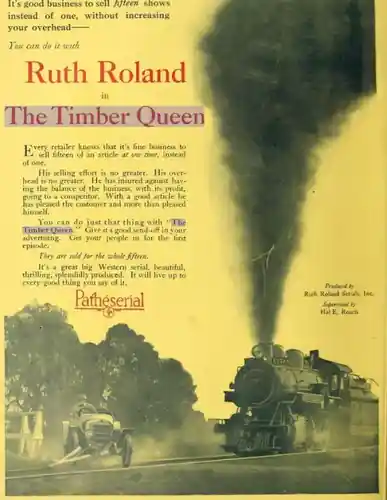
Enter Red McLain, played by Bruce Gordon with shoulders that seem borrowed from the mountain itself. Red’s affections germinate not in parlors but on logjams, where a misstep means the river claims your bones. Their meet-cute is a runaway flatcar hurtling toward a canyon: he leaps aboard, she steers, both shouting coordinates over the scream of metal. The camera—lashed to the actual flatcar—delivers a vertiginous rush that predates Dynamite’s later adrenaline fetish by nearly a decade.

Director Frank S. Mattison shoots on location in the Mendocino redwoods, trading studio artifice for the vertigo of 300-foot trunks. Shadows pool like spilled tar; sunlight spears through fog, igniting sawdust motes into galaxies. When Lenora ascends a spar tree to stamp her crest into the bark, the camera tilts ninety degrees, turning the horizontal forest into a cathedral wall, the ground a distant rumor. The tinting—amber for lamplight, viridian for dusk—feels organic, as though the film stock itself photosynthesized.
Compare this to Rip Van Winkle’s pastoral haze or the snow-drowned lyricism of Romeo and Juliet in the Snow; The Timber Queen opts for resinous realism, its mise-en-scène scented with turpentine and two-stroke oil. Even the intertitles—lettered on whorled cedar slices—bleed sap around the edges.
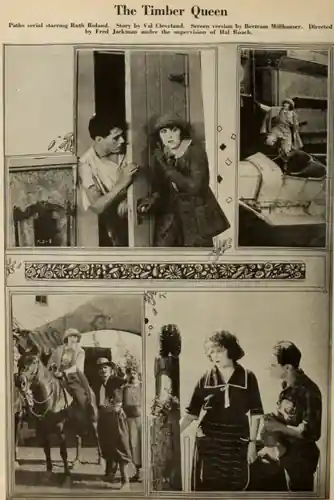
Roland’s physique is forged for serial peril: calves that could snap mooring lines, eyes that register both ledger columns and heartbreak. She performs her own stump jumps, clings to the underside of a water tower, and once—infamously—drops thirty feet into a log pond when a hidden cable snaps. The terror on her face is real, but so is the exultation that follows, a micro-expression that says: I have borrowed death’s scythe and shaved a splinter from its handle.
Bruce Gordon matches her with a performance pitched between silent-era stoicism and something rawer, almost Method. Watch the moment he realizes Luther has burned the bridge that could evacuate the workers: Gordon’s throat chords tense, his grip whitens on a cant hook, and without cutaways he ages five years in five seconds. It’s the kind of interiority that would feel at home beside Langdon’s haunted stare in Langdon’s Legacy or the moral corrosion charted in The Lion’s Den.
Beneath its swashbuckling veneer, the serial stages a radical audit of property law. Lenora’s refusal to marry before she can legally own herself becomes a strike against the very architecture of capital that treats women as conveyor belts between male hands. When she commandeers the payroll ledger, scrawling EMPLOYEES WILL BE PAID IN COMPANY SCRIPT NO LONGER, the gesture ricochets beyond melodrama into proto-labor activism. The mill workers—Swedish choppers, Sikh tie-men, and displaced Okie farmers—rally behind her, forming a picket line that doubles as a frontier wedding procession.
Contrast this with To the Highest Bidder where the heroine is auctioned for charity, or Her Social Value that quantifies a woman’s worth in ballroom invitations; The Timber Queen imagines value as something wrested from the ledger and replanted in communal soil.
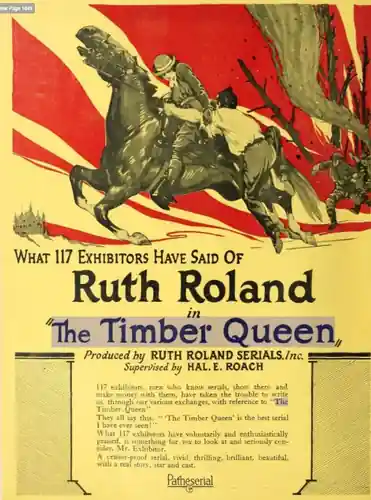
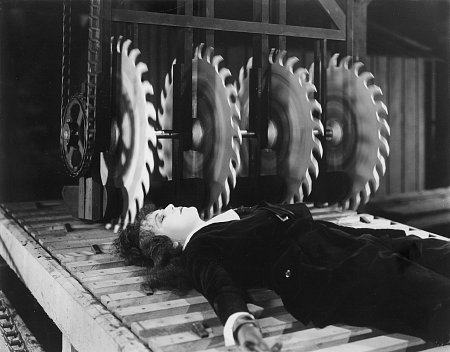
Episode 4 ends with Lenora lashed to a log shot through the mill’s band-saw; the blade’s teeth glint like a shark’s smile as the camera alternates between her eyes and the approaching steel. Episode 7 traps Red inside a burning donkey engine, pressure gauges trembling toward eruption. The rhythm—setup, catastrophe, impossible escape—should feel mechanical, yet the locations vary so wildly (snowfield, flume, semaphore tower) that each peril feels like a new dialect of danger.
The cinematographer, Ross Fisher, often keeps the rescue off-screen, letting us hear the whistle’s shriek or see the splash of a falling body, a restraint that amplifies dread. It’s a technique echoed decades later in Spielberg’s Jaws, but here the unseen beast is capital itself, jaws masked by legal documents.
Though silent, the film invites a score of ringing saws, steam hisses, and the syncopated thunk of tree hearts hitting frozen ground. Modern restorations often commission folk ensembles to bow washtubs and detuned fiddles, creating a soundscape that smells of pine tar. At the ciné-club screening I attended, the accordionist let a low E-flat drone throughout Luther’s villain monologue; when Lenora finally spits on his contract, the entire ensemble struck an A-major chord that felt like sunrise after an arctic night.
For decades The Timber Queen languished in the shadow of Roland’s more famous Red Circle serial, dismissed as a lumberjack Perils of Pauline. Yet archivists now cite it as early eco-feminist cinema, predating the timber-revolt documentaries of the 1970s and the guerrilla heroines of 1990s blockbusters. The Library of Congress selected Episode 5 for its Women Who Spoke Through Action retrospective, pairing it with Enlighten Thy Daughter and The Quitter to trace a lineage of heroines who reject passive enlightenment for kinetic revolt.
Meanwhile, timber museums in Oregon screen the serial during summer solstice festivals, projecting it against a plywood slab suspended between two living firs—a ghost image among the breathing, a reminder that cinema, like a forest, can be clear-cut or allowed to grow.
Minor flaws nip at the bark: a comic-relief cook whose minstrel mugging ages poorly, and Episode 9’s padded re-cap that stalls momentum. Yet these are termite holes in an otherwise towering redwood of serial art. The Timber Queen offers the rare adrenaline rush that also re-writes the social contract, a film where every splinter drawn from a hero’s palm feels like a splinter drawn from the audience’s own cramped inheritance of law and gender.
Seek it out whether you crave the kinetic cliffhangers that Billy Blazes, Esq. only half-delivers, or the ideological bite that Her Beloved Enemy hints at but soft-pedals. Watch it under the stars if you can, projector humming like a distant mill, the night air sharp with resin. When Lenora’s final signature dries on that heartwood pen, you’ll feel something shift inside your chest—an audacious certainty that deeds, like trees, can be re-planted, and that a woman’s autonomy might yet grow taller than any empire of pine.
IMDb 6.8
1920
Community
Log in to comment.