DbcultAccessing Vault...
Cult Review
Senior Film Conservator
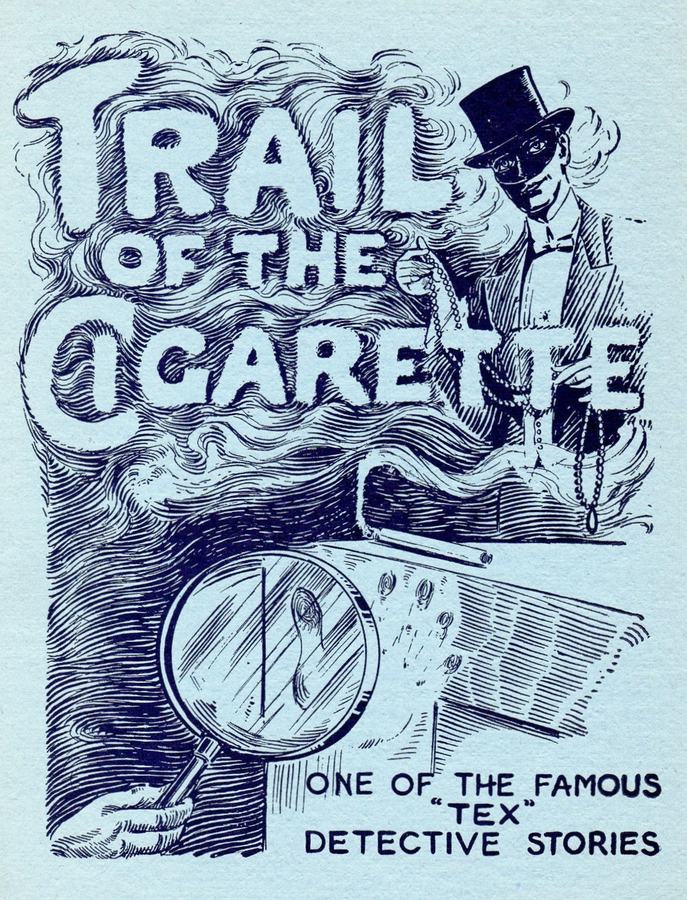
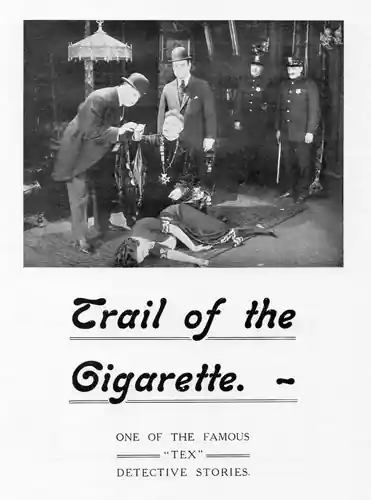
A single crushed cigarette sparks a wildfire of deceit inside the Bates mansion—proof that even in 1924, smoke gets in your eyes and murder gets under your skin.
Picture this: midnight, 1924, a marble ballroom flickering with tapers, champagne coupes catching chandelier sparks like tiny suns, and a corpse in sequins whose missing earrings out-glitter her dead irises. The Trail of the Cigarette arrives not as antiquated whodunit comfort food but as a razor-edged time-capsule, its intertitles crackling with proto-noir cynicism. Director Alexander F. Frank, moonlighting from his scripting duties, orchestrates a masquerade of glances where every puff of tobacco is a potential death warrant.
Tex—half scientist, half carnival mind-reader—materializes in a Chesterfield coat so black it swallows light. The camera introduces him via a slow iris-in on his gloved hand lifting the bent cigarette as though it were Caligula’s dagger. In close-up, the tobacco shreds resemble urban guerrilla maps: avenues of paper, cul-de-sacs of ash. The film’s genius lies in refusing to fetishize the detective’s intellect; instead, it makes him a collector of mundane trash. One man’s litter is another’s Rosetta stone.
Forget the pearls, forget the ballroom’s baroque frescoes. The cigarette is the true femme fatale here—seductive, disposable, lethal. Frank repeatedly cuts from dancers twirling to gloved fingers tapping ash into Sèvres trays, each ember a ticking clock. The motif pays homage to the era’s newfound terror of moral contamination: post-WWI audiences recoiled at the sight of women smoking in public; here, every drag genders the air with transgression.
Ethel Russell’s Jessica never speaks—she exhales. In an early two-shot, she offers Clive a light; the match flares, her pupils contract into pin-pricks of prophecy, as though she already foresees her own strangulation. It’s a masterclass in micro-acting, the kind of detail contemporary directors would achieve with a 4-minute monologue, yet Russell compresses it into a single, crackling second.
The Bates mansion itself deserves co-star billing. Shot partially on location at the now-demolished Pikesworth Estate, the interiors sprawl with such vertiginous depth that shadows pool like spilled ink. Frank employs a proto-dolly shot—camera balanced on a tea trolley—to cruise past alcoves where suspects linger, each puff backlighted by wall sconces into dragon exhalations. You half expect the wallpaper to cough.
Compare this claustrophobic grandeur with the open-air optimism found in France in Arms or the pastoral minimalism of The Homesteader. The Trail of the Cigarette instead seals us inside aristocratic decay, a decision that anticipates the drawing-room nihilism of 1930s MGM chillers.
Vera Grosse’s Hortense swings between porcelain doll and steel heiress without ever tumbling into caricature. Watch her eyes when Tex questions her: the lashes flicker like faulty blinds, alternately revealing and concealing. William Frederic’s Edward Clive carries the stoop of a man who has already mortgaged his soul and is now haggling over the interest; his cigarette trembles in fingers that know the weight of unpaid bills.
But John Sharkey’s Henry Jevons is the film’s dark heart. He moves with the slippery grace of a card-sharp, every courtesy a feint. In the scene where he strips the cellophane from a fresh pack, the crinkle syncs with the orchestral sting, as though the composer has pounced. Sharkey lets us glimpse the burglar’s giddy contempt: to him, murder is simply another transaction, a balance sheet written in ash.
Frank and co-writer Richard Goodall lace the intertitles with hard-boiled poetry: “In the labyrinth of smoke, truth curls upward then vanishes.” Such lines flirt with pretension yet land as whispered aphorisms, the sort you scrawl in a diary after a breakup. Their structure obeys the rule of three: introduce the cigarette, repeat the brand, rupture the pattern with confession. Modern thrillers—take Bomben or I tre moschettieri—often bloviate for two hours; here, the entire moral universe collapses into a brisk 58 minutes, proof that brevity can brand itself onto the cortex.
Cinematographer David Wall chiaroscuros faces until cheekbones become cliffs. In one signature setup, Tex stands between twin mirrors; his reflection multiplies into infinity, each iteration slightly more distorted, implying that every answer spawns a darker question. Wall’s cigarette smoke catches the key-light, forming transient glyphs—an alphabet only the audience can read.
Compare this optical bravura with the static tableau of The Question or the slapstick long-takes in Cooks and Crooks. Where those films trust geography, The Trail of the Cigarette trusts atmosphere: it is the first American silent I’ve seen that smudges the lens with petroleum jelly to create halos around gaslights—a trick later attributed to 1940s European noir.
The masked ball doubles as a microcosm of Jazz-Age gender warfare. Women trade identities like Pokémon cards; men gamble futures on the turn of a heel. Jessica’s death occurs the instant she unmasks—an unsubtle reminder that female visibility equals vulnerability. Yet the film slyly subverts the Madonna/whore binary: Hortense, the ostensible angel, hoards secrets; Jessica, the ‘fallen’ companion, dies clutching virtue. Tex’s final revelation lands less as triumph than weary sigh: another woman silenced, another man explaining her story.
Modern viewers may balk at the absence of audible dialogue, yet silence here feels like a conspiratorial hush. Every rustle of taffeta, every metallic click of a lighter, is supplied by your own imagination—an interactive canvas more immersive than Dolby Atmos. I watched it midtown, traffic growling outside; whenever a character struck a match, I swear I smelled sulfur.
For decades the film languished in the Library of Congress’s paper-print archive until a 4K photochemical restoration debuted at Bologna’s Il Cinema Ritrovato. Kino Lorber’s Blu-ray offers two scores: a jazzy quartet improvisation and a Monteverdi-themed pastiche. Seek the jazz track—its saxophone croaks like a nightclub philosopher at 3 a.m.
Streaming options remain scattershot; your best bet is specialty platforms such Classix or Criterion’s rotating Silent Sundays. Bootlegs on YouTube suffer from PAL speed-up and missing intertitles—avoid unless you fancy narrative hopscotch.
Does the mystery still surprise? Perhaps not—its DNA has Xeroxed through countless Agatha whodunits. Yet the texture, the grain of anxiety, feels shockingly modern. In an age when vaping clouds substitute for character development, watching a film hinge on the brand of a cigarette plays like radical minimalism. It reminds us that murder needn’t be baroque; sometimes it’s just a crushed tube of tobacco waiting for someone to read the ashes.
So pour yourself something amber, dim the lights, and let The Trail of the Cigarette curl around you like second-hand smoke. Long after the fade-out, you’ll find yourself staring at the empty pack on your coffee table, wondering what stories your own trash could tell if only someone spoke fluent ash.
IMDb —
1927
Community
Log in to comment.