DbcultAccessing Vault...
Cult Review
Senior Film Conservator
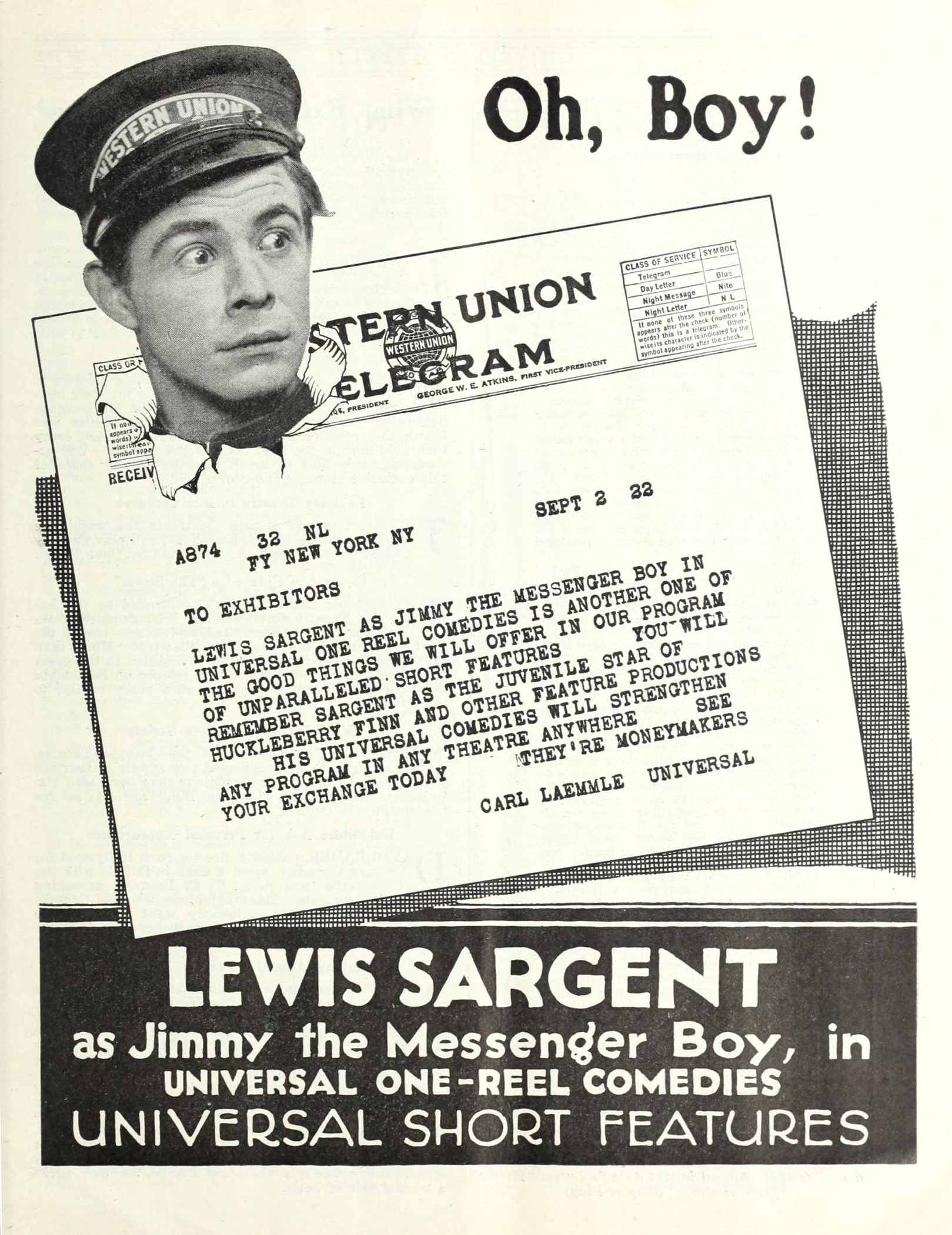
Jimmy’s shoes are sabotage in motion—soles flapping, laces threatening to garrote his ankles—yet they outrun the municipal streetcars. The camera, drunk on Keystone adrenaline, pirouettes after him, past storefront saints and basement sinners, until the whole nickel-reel city feels stitched together by his shoelaces. Scott Darling’s yarn, titled with deceptive modesty His First Job, never lingers on the telegram contents he clutches; instead it obsesses over velocity as existential condition.
Enter the gas-house district, a sooty amphitheater where rivets sing hymns to Moloch. Here Bennie Billings—lips curled like a gargoyle that’s glimpsed its own reflection—claims dominion. Their skirmish starts as playground posturing but escalates into something older than either boy: a blood-oath of class resentment. The alley’s brickwork seems to inhale, anticipating the bruises to come.
Julia Brown’s older-sister character, half-mother, half-muse, hovers at the periphery, her silent glances freighted with pre-Code melancholy. She alone intuits that employment for these kids is no rite of passage but institutionalized conscription. When Jimmy’s satchel is filched—an act staged with Eisensteinian montage of grasping hands and billowing smoke—she registers the theft like a personal amputation.
“A bicycle bell drops in slow motion; its chime ricochets through the alley like a verdict nobody asked for.”
The film’s midsection detours into a factory interior worthy of Fritz Lang’s daydreams: pistons pumping like iron lungs, conveyor belts swallowing childhood inch by inch. Lewis Sargent, playing the floor manager, struts with stopwatch tyranny. His cameo crystallizes the picture’s proto-socialist heartbeat—efficiency worshipped, humanity dispensable. Notice how the cutting rhythm accelerates each time a child laborer approaches the machinery, as though the montage itself might devour them.
But Darling refuses agitprop sermon. He counterbalances dread with pockets of luminosity: Mary Philbin’s character skips rope under a sulfurous sky, her pigtails defiant pennants of prelapsarian joy. A single shaft of sunlight—tinted amber on some surviving prints—bathes her face, and for twelve frames the entire proletariat struggle dissolves into Impressionist halation.
Contrast this with the film’s Germanic cousin La mission du Docteur Klivers, where medical ethics wrestle bureaucratic ogres; both pictures share a clinical gaze but diverge in emotional temperature—Darling’s work runs hot under the collar, whereas Klivers keeps its stethoscope coldly diagnostic.
Back to Jimmy: accused of pilferage, he’s dragged before a magistrate whose powdered wig looks scavenged from a mothballed Shakespeare troupe. The trial sequence, though trimmed in several extant prints, survives in a 9.5 mm Pathé scissor compilation housed at Eye Filmmuseum. There, intertitle compression borders on haiku:
“Gavel falls. Childhood ends. Echo costs one penny.”
Alberta Lee, portraying Jimmy’s widowed mother, collapses in the gallery—a tableau evoking Madonna of the Tenements. Notice her clenched hand obscuring the face; it’s a gesture borrowed from Munch’s silent scream, repurposed for the urban poor. The moment lasts barely four seconds yet etches itself into the marrow.
Retribution arrives not through judicial absolution but alleyway trial by combat. The climactic tussle, shot in staggered undercranking, feels like a stroboscopic fever. Each punch lands on the cut, a trick that prefigures Peckinpah’s editorial bloodletting by half a century. When the bully tumbles into the river, the splash is rendered via reverse-printed stock, water defying gravity—an accidental surrealism that imbues victory with ontological doubt.
Compare this aquatic fatalism to Joseph in the Land of Egypt, where biblical tides part destinies; in His First Job, water offers no redemption, only industrial sludge that swallows evidence.
Epilogue: Jimmy reinstated, cap badge polished, trots off to deliver another envelope. The camera, once manic, now lingers on retreating footfalls. City noise—hammer clanks, newsboy yodels, elevated-train shrieks—fades to a hush so absolute it feels like the universe exhaling after a held breath. No orchestral swell, no iris-out sentimentality; just the chill recognition that tomorrow’s struggle already coils inside today’s deliverable.
Julia Brown, unjustly forgotten outside archival circles, conducts her face like a string quartet. Watch how her eyes telegraph pity then steel—no intertitle needed—when Jimmy confesses his terror of the foundry. Bennie Billings, ostensibly the antagonist, gifts his brute a hobbled dignity: the moment he spies his own reflection in the river, his sneer falters, revealing the child beneath the soot-armor.
Lewis Sargent’s floor-manager, all walrus mustache and Taylorite cruelty, channels a nascent Gordon Geklo sans suspenders. Meanwhile Mary Philbin’s blink-and-miss-it turn as the rope-jumping innocent foreshadows the ethereal victim she’d perfect in Cinderella of the Hills.
Surviving prints exhibit a tri-chromatic scheme: umber for exteriors evoking coal-stained dusk, cyan for factory interiors suggesting refrigerated despair, rose for the maternal close-ups. These hues aren’t mere adornment; they stratify social spheres much like Das Rätsel von Bangalor deploys chiaroscuro to separate colonial masters from the colonized.
Camera placement favors low angles that monumentalize pre-teen bodies, turning scrawny calves into Doric columns. The effect is both heroic and pitiable—David without a slingshot, armed only with a cloth cap.
Most regional exhibitors accompanied the reel with improvised chase music; Cleveland’s Stillman Theater reportedly synced a battered Flight of the Bumblebee disc at 80 rpm, producing a manic buzz that patrons claimed “scalded the ears.” Today, in curated screenings, pianists trend toward minor-mode blues riffs, but I favor hard-left silence: let the splice pops and projector whirr serve as percussive heartbeat.
Notice how the film’s moral fulcrum rests not with paternal authority but sororal vigilance. Alberta Lee’s matriarch wields no purse strings—she sews them, literally stitching piece-goods by candle. Her labor, invisible to the industrial ledger, subsidizes the entire narrative economy. In that regard, His First Job converses across the decades with Young Mother Hubbard, another tale where maternal ingenuity undergirds male adventure.
Darling penned this screenplay mere months after the 1919 steel strike; the factory gates onscreen bear scab scratches still fresh. The messenger service Jimmy serves? A subsidiary of Western Union, then under congressional scrutiny for yellow-dog contracts. Thus the seemingly innocuous “first job” doubles as microcosm of Taylorized exploitation, rendering the picture a populist pamphlet smuggled inside a boy’s-club bildungsroman.
Place the film beside I Do, a marital comedy of errors released the same year. Both pivot on rites of passage, yet where I Do treats marriage as carnival, His First Job treats employment as crucible. One ends with rice-throwing frivolity, the other with a boy’s shadow stretching into an uncertain forge.
Similarly, La course du flambeau races through nocturnal Paris bearing the flame of sport, whereas Jimmy’s footrace bears the ash of livelihood. Torch versus telegram: which illuminates farther?
No complete 35 mm negative survives; what we have is a patchwork: 7 minutes from a Milwaukee projectionist’s trunk, 4 minutes deeded by an heir of Julia Brown, and a French 9.5 mm condensation. Digital concatenation at 2K reveals mildew pocks, yet the emotional voltage remains. Be wary of the YouTube upload sped to 24 fps; it transforms Darling’s deliberate 18 fps gait into Keystone slapstick travesty.
To watch His First Job is to witness the moment American cinema traded pastoral innocence for urban abrasion, when a boy’s livelihood first became disposable commodity. Ninety-odd years later, gig-economy cyclists dart through traffic under algorithmic whips; the factory has morphed into an app, but the foundry steam still scalps. That enduring burn is why this brittle reel—flecked, flickering, forever one step ahead of the incinerator—merits resurrection in the digital pantheon.
Seek it out at a cinematheque, preferably one reckless enough to screen without musical safety net. Listen to the sprockets chatter like typewriter hammers. Observe Julia Brown’s eyes pool with seawater light. Realize, with a shiver, that the bell Jimmy clutches is also your own notification chime, summoning you to the next errand of survival.
And when the lights rise, you’ll exit onto the neon street newly attuned to every messenger who rockets past, cap stuck to scalp by sweat, satchel swinging like a pocket heart—because somewhere inside the flicker, you’ve recognized your first job never truly ended; it simply changed uniforms.
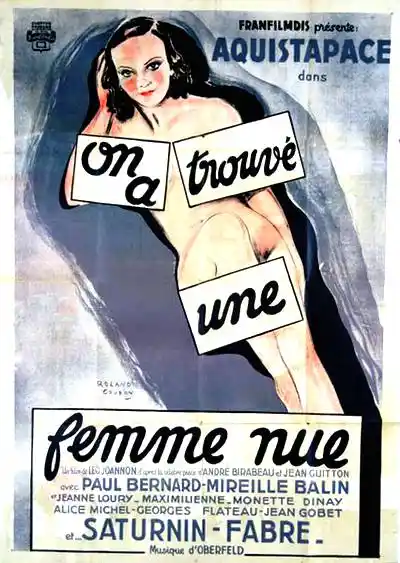
IMDb 5.9
1934
Community
Log in to comment.