DbcultAccessing Vault...
4.8/10
Senior Film Conservator
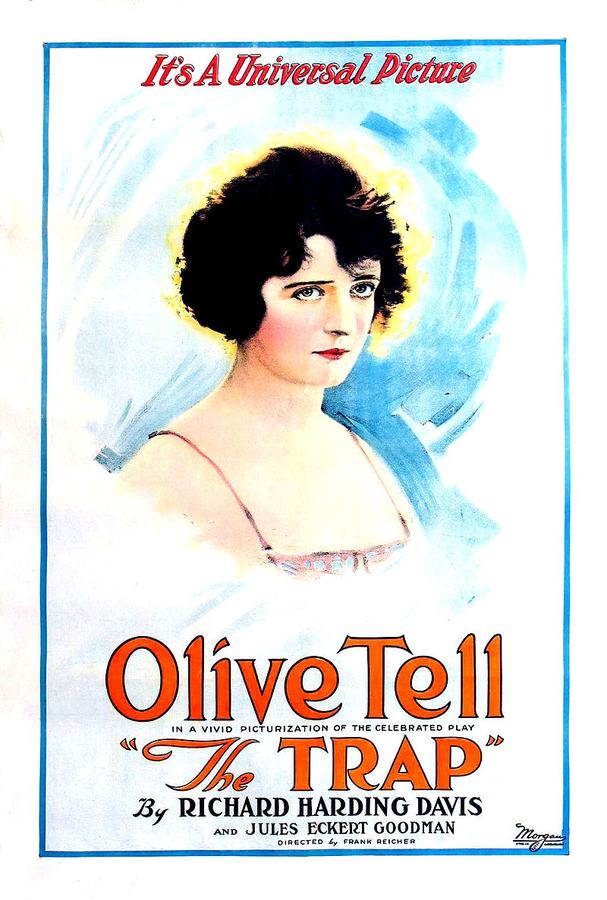
A definitive 4.8/10 rating for a film that redefined the boundaries of cult cinema. The Trap remains a cornerstone of transgressive art.
Stepping back into the cinematic landscape of 1919, one encounters 'The Trap', a silent film that, despite its age, still pulsates with a raw, human drama that feels startlingly contemporary. This isn't merely a period piece; it's a profound exploration of choice, consequence, and the intricate web of deception one weaves when trying to escape an untenable past. The narrative, penned by the collaborative genius of Richard Harding Davis, Eve Unsell, and Jules Eckert Goodman, presents a protagonist caught between the harsh realities of the Yukon frontier and the deceptive glitter of New York society, a struggle that resonates with timeless psychological depth.
Our story begins in the desolate yet captivating wilderness of the Yukon, a setting that immediately establishes a tone of survival and stark choices. Here, a young schoolteacher, her prospects as limited as the frigid landscape is vast, makes a pragmatic, if emotionally sterile, decision: to marry a wealthy prospector. It's a calculated move, a lifeline in a world where security is a fleeting commodity. This initial premise immediately sets up a moral quandary, echoing similar struggles for agency seen in films like Station Content or even the more rugged Nan of Music Mountain, where women often faced stark choices dictated by their environment. However, the screenplay, with a keen eye for human frailty, introduces a twist: she falls for the prospector's shiftless, 'no-good' brother. This act of impulsive rebellion, a rejection of the sensible for the passionate, forms the actual trap from which the film derives its title and its central conflict.
The initial cast members, Joseph Burke and Sidney Mason, embody the archetypal figures of the 'good' and 'bad' brother, though their performances, viewed through a century's lens, are more symbolic than nuanced. Yet, their presence is crucial in establishing the protagonist's initial dilemma. This early section of the film, though perhaps lost to time in its full visual glory, would have leaned heavily on the visceral power of the frontier, contrasting the raw beauty with the harshness of human nature. The disappearance and presumed death of the 'no-good' husband is the narrative's convenient escape hatch, allowing our heroine to shed her past, or so she believes, and embark on a new trajectory. This narrative device, a 'death' that isn't quite a death, is a classic trope, generating suspense and foreshadowing the inevitable return of past sins, a theme explored with varying degrees of success in numerous melodramas of the era.
The true magnetic north of 'The Trap' lies squarely with Tallulah Bankhead, even in this relatively early stage of her illustrious career. As the schoolteacher-turned-socialite, Bankhead brings an undeniable charisma and a nascent theatricality that would later define her. Her transition from the rugged Yukon to the refined drawing rooms of a New York stockbroker's mansion is not merely a change of scenery; it's a complete metamorphosis of identity. This kind of reinvention, often fraught with moral compromises, is a compelling subject for early cinema, as seen in films like The Square Deal, though perhaps with less psychological intensity. Bankhead's portrayal, even in the silent era's often broad strokes, hints at the internal turmoil of a woman living a lie, the constant fear of exposure lurking beneath her elegant facade. Her eyes, even without spoken dialogue, convey a complex cocktail of ambition, vulnerability, and a desperate desire to maintain her newfound status.
The choice of Olive Tell as the new, unsuspecting husband, a rich New York stockbroker, provides the perfect foil for Bankhead's character. He represents the pinnacle of respectability and wealth, everything the protagonist craves and everything she risks losing. The dramatic irony of their marriage, built on a foundation of undisclosed history, is palpable. The audience is privy to her secret, creating a constant tension, a ticking clock before the inevitable revelation. This narrative technique, where the audience possesses knowledge withheld from a central character, is a powerful tool in melodrama, driving empathy and anxiety in equal measure. Jere Austin and Rod La Rocque, also part of the ensemble, contribute to the intricate social tapestry, portraying characters who either aid or inadvertently complicate our protagonist's precarious balancing act.
The true engine of the plot ignites with the arrival of the blackmailer, a figure from the protagonist's forgotten Yukon past. This character, brilliantly conceived as the embodiment of her suppressed history, threatens to shatter her meticulously constructed present. The blackmailer's demands, and her desperate attempts to meet them without alerting her husband, form the crux of the film's suspense. This descent into a world of clandestine meetings and furtive payments mirrors the anxieties of secrecy found in films like Under Cover or even the more overtly criminal machinations of The Purple Mask. The psychological toll on Bankhead's character is immense; the weight of her deception becomes a tangible, suffocating presence. This is where the film transcends simple melodrama, delving into the corrosive nature of guilt and the terror of exposure.
The screenplay, attributed to the aforementioned trio, demonstrates a masterful understanding of pacing and escalation. Each demand from the blackmailer tightens the noose, pushing the protagonist further into moral compromise. The film doesn't shy away from depicting the moral grey areas, forcing the audience to grapple with whether her initial choices, born of desperation, justify her subsequent deceptions. This nuanced approach to character motivation, though perhaps subtle by modern standards, was progressive for its time, moving beyond simplistic hero/villain binaries. Earl Schenck's role, though not explicitly detailed in the plot synopsis, likely contributes to this escalating tension, perhaps as the blackmailer or an unwitting accomplice in the protagonist's plight.
Critiquing a silent film like 'The Trap' requires an appreciation for the unique artistry of the era. Without dialogue, the burden of storytelling falls squarely on visual composition, performance, and intertitles. The director, whose name is unfortunately not provided in the prompt but whose vision is undeniably present, would have relied on expressive gestures, dramatic lighting, and careful mise-en-scène to convey the emotional landscape. Imagine the stark contrast between the wide, untamed vistas of the Yukon, perhaps shot with a sense of expansive loneliness, and the confined, opulent spaces of the New York mansion, hinting at the protagonist's gilded cage. The use of close-ups on Bankhead's face would have been paramount, allowing her to communicate fear, resolve, and despair through subtle shifts in expression.
The craft of silent film acting, often maligned as overly theatrical, was in fact a highly refined art form. Actors like Bankhead had to convey complex emotions with their entire being, a physicality that sometimes feels exaggerated today but was essential for audience comprehension in an era devoid of spoken words. The film's success would have hinged on its ability to evoke empathy for a character who, despite her moral failings, is undeniably a victim of circumstances and her own desires. This ability to make an audience invest in a morally ambiguous character is a hallmark of enduring drama, a quality shared with character-driven narratives like La Gioconda, albeit in a different medium. The intertitles, far from mere exposition, would have been carefully crafted to provide crucial plot points, internal monologues, and emotional beats, guiding the audience through the narrative's twists and turns.
Beyond the thrilling melodrama, 'The Trap' offers fascinating social commentary. It illuminates the limited choices available to women in the early 20th century, particularly those without inherited wealth or social standing. Marriage, often a transactional arrangement, was frequently the only path to security. The protagonist's initial promise to the rich prospector is a stark reminder of this reality. Her subsequent impulsive marriage to his brother, while romantic in its defiance, ultimately plunges her into deeper peril. This film, like many of its contemporaries such as What Becomes of the Children?, subtly questions societal norms and the pressures placed upon individuals, particularly women, to conform or suffer the consequences.
The contrast between the raw, honest, albeit harsh, life in the Yukon and the sophisticated, yet equally treacherous, world of New York high society is another compelling theme. The film suggests that while the physical dangers of the frontier are overt, the moral and social dangers of urban life, particularly for those with secrets, can be far more insidious. The blackmailer's appearance is not just a plot device; it's a symbolic manifestation of the past refusing to stay buried, a constant reminder that identity can be fluid, but consequences are often immutable. The film's enduring appeal lies in its exploration of universal themes: the desire for a better life, the compromises made to achieve it, the crushing weight of guilt, and the relentless pursuit of self-preservation. These are human struggles that transcend time, language, and the evolution of cinematic technique.
In conclusion, 'The Trap' (1919) stands as a testament to the power of early cinema to tell complex, emotionally charged stories. Its intricate plot, propelled by the nascent star power of Tallulah Bankhead and a potent script, delves into the psychological toll of deception and the relentless grip of one's past. While a full restoration and wider accessibility would be a cinematic gift, even in its conceptual form, the film offers a compelling glimpse into the moral ambiguities and social anxieties of its era, proving that sometimes, the most dangerous traps are those we set for ourselves, whether in the frozen wilds of the Yukon or the glittering ballrooms of New York. It's a reminder that silent films, far from being mere historical artifacts, can still resonate with a profound and timeless human experience, captivating audiences with their innovative visual language and enduring narrative power.
IMDb —
1918
Community
Log in to comment.