DbcultAccessing Vault...
Cult Review
Senior Film Conservator
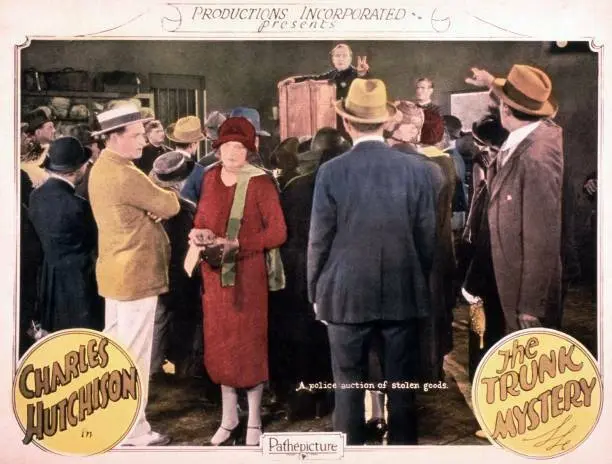
Can a silent film from over a century ago still captivate a modern audience? The short answer is: absolutely, but with a significant caveat. "The Trunk Mystery" is undeniably a relic, a fascinating window into the infancy of cinematic storytelling, yet it demands a certain patience and appreciation for its historical context that not every viewer possesses. This film is a must-see for ardent cinephiles, historians, and anyone with a deep curiosity about the evolution of the mystery genre, particularly within the silent era's unique constraints. However, it is emphatically not for those seeking fast-paced narratives, explicit dialogue, or contemporary production values.
For those willing to engage with its particular language, "The Trunk Mystery" offers a compelling experience, showcasing the ingenuity required to build suspense and character without the aid of spoken words. It’s a testament to the power of visual storytelling and the raw magnetism of early screen performers.
"The Trunk Mystery" arrives from an era when cinema was still finding its voice, literally and figuratively. As a critic, one approaches such a film not merely for its plot, but for its historical significance and its demonstration of early filmmaking prowess. The concept of a 'trunk mystery' itself is a potent narrative device, immediately conjuring images of hidden secrets, illicit contents, and the dramatic unveiling of truth. It's a trope that has endured precisely because of its universal appeal: what lies beneath the surface?
The film, as a product of its time, relies heavily on exaggerated physical performance, evocative intertitles, and carefully composed frames to convey its story. This isn't a flaw; it's the very foundation of its charm. The challenge for contemporary viewers is to recalibrate their expectations, to lean into the theatricality, and to appreciate the subtle cues that substitute for dialogue.
This film works because of its unwavering commitment to visual storytelling, proving that a compelling narrative can transcend the spoken word. It fails because its pacing and stylistic conventions, while revolutionary for its time, can feel glacially slow to modern sensibilities. You should watch it if you're a student of film history, a lover of early cinema, or someone seeking a unique, contemplative viewing experience that highlights the foundations of the mystery genre.
The strength of "The Trunk Mystery" lies in its premise. A mysterious trunk. What could be inside? A body? Stolen jewels? Crucial documents? The film capitalizes on this inherent curiosity, building its suspense not through complex twists but through the gradual revelation of clues. The narrative arc, while perhaps straightforward by today's standards, would have been a masterclass in tension for audiences of the early 20th century. It’s a testament to Forrest Sheldon and Frederick Chapin’s understanding of pure, unadulterated suspense.
The direction, likely emphasizing clear sightlines and dramatic close-ups, would have been crucial. Imagine a scene where the camera lingers on the lock of the trunk, then cuts to the anxious face of Ben Walker, his brow furrowed with concern, or the furtive glances exchanged between characters as they attempt to ascertain who knows what. These were the tools of the trade, and in a mystery, they are paramount.
The film’s pacing, a common point of contention for silent features, would have been deliberate. Each discovery, each reaction, each movement would have been drawn out to allow the audience to absorb the information and build their own theories. This slow burn is integral to its identity. It's not about speed; it's about immersion in the unfolding puzzle.
The cast of "The Trunk Mystery" features several notable names from the era, each bringing their unique brand of silent screen charisma. Ben Walker, often cast in more dramatic or heroic roles, would likely anchor the film with a sense of gravitas, his expressions conveying the weight of the investigation. His physicality would be key to portraying urgency and determination.
Ford Sterling, known for his comedic contributions, particularly with the Keystone Kops, presents an interesting dynamic. If his role here leans into his comedic persona, it could either provide much-needed levity or, conversely, undermine the suspense. My take is that a well-placed, subtle comedic foil can often heighten dramatic tension by offering brief respite before plunging back into the mystery. This balance is tricky, and it’s a gamble that early filmmakers often took.
Alice Calhoun, a prominent leading lady of the era, would undoubtedly bring a layer of emotional depth, whether as a damsel in distress, a key witness, or perhaps even a mysterious figure herself. Her ability to convey fear, suspicion, or resolve through gesture and gaze would be vital. The silent screen demanded a particular kind of actor, one capable of externalizing complex internal states, and Calhoun was certainly among them.
Richard Neill, Charles Hutchison, Charles W. Mack, and Otto Lederer would fill out the ensemble, each likely embodying a specific archetype crucial to the mystery: the stoic detective, the suspicious associate, the bumbling authority figure, or the enigmatic stranger. The interplay of these distinct performance styles is what would have given the film its texture, creating a tapestry of human reactions to an extraordinary situation.
Cinematography in "The Trunk Mystery" would have been less about sweeping vistas and more about functional storytelling. The camera's role was to guide the audience's eye, to highlight clues, and to capture the emotional intensity of the performances. Expect static shots, but also moments of dynamic framing, perhaps a tilt down to the trunk, or a pan across a room to reveal a hidden detail. The use of lighting, though rudimentary by today's standards, would have been crucial in establishing mood – stark contrasts for dramatic effect, or soft glows for moments of reflection.
The pacing of silent films often perplexes modern viewers. It's slower, more deliberate, allowing scenes to breathe and emotions to register without the rush of dialogue. For "The Trunk Mystery," this deliberate pace would have served to heighten suspense. Each discovery, each moment of doubt, would be given ample screen time, allowing the audience to fully absorb the gravity of the situation. This isn't a flaw; it's a feature of the era. It works. But it’s flawed if you approach it with contemporary expectations.
The tone would oscillate between genuine tension and perhaps moments of dramatic irony, or even subtle humor if Ford Sterling’s character is utilized in that capacity. The balance of these elements is what defines a successful silent mystery. It needs to be serious enough to maintain the stakes, but not so relentlessly grim that it becomes monotonous. The power of a good silent mystery is its ability to create a palpable atmosphere, a sense of foreboding that permeates every frame.
"The Trunk Mystery" stands as an important artifact in the lineage of cinematic thrillers. It predates many of the conventions we now take for granted, yet it lays the groundwork for them. Observing how it constructs its narrative without sound is an education in pure filmmaking. It teaches us about the ingenuity of early directors and writers who had to rely solely on visual cues and the power of human expression to tell a story.
Comparing it to other films of the era, such as The Trap or The Wonderful Chance, allows one to appreciate the subtle variations in how suspense was crafted. While specific plot details might differ, the underlying principles of creating intrigue and holding an audience's attention remain constant. "The Trunk Mystery" contributes to this rich tapestry, offering its own unique spin on a classic premise.
"The Trunk Mystery" is more than just a film; it's a historical document, a testament to the foundational power of cinema. While it may not offer the immediate gratification of a modern thriller, its value lies in its ability to transport us back to a time when moving pictures were a nascent art form, thrilling audiences with purely visual narratives. It's a challenging watch, certainly, but one that rewards patience with a profound understanding of where our beloved medium began. Is it a timeless piece of entertainment for everyone? No. Is it an invaluable piece of cinematic history that deserves to be seen and studied? Absolutely. It’s a compelling argument for the enduring power of a good secret, no matter how old the film stock.
IMDb 6.3
1923
Community
Log in to comment.