DbcultAccessing Vault...
Cult Review
Senior Film Conservator
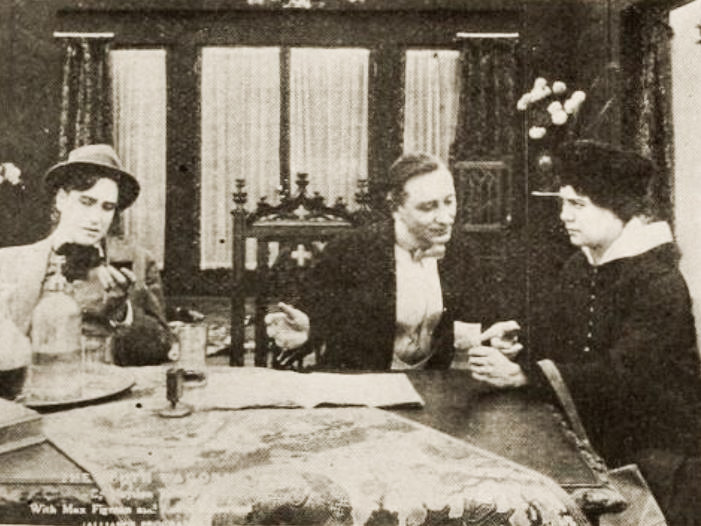
Imagine, if you can, a Roaring-Camp century still wet with Victorian varnish: gas-jets sputter, champagne flutes catch the light like prisms, and the future governor’s parquet trembles beneath the syncopated envy of silk slippers. Then—poof—the testosterone evaporates. The menfolk evaporate. What lingers is the perfume of forsaken debutantes and the sour taste of a joke whose punchline is male absence. This, friends, is the overture of The Truth Wagon, a 1915 one-reel marvel that feels closer to a barbed satire from 2025 than to most of its contemporaries’ sentimental treacle.
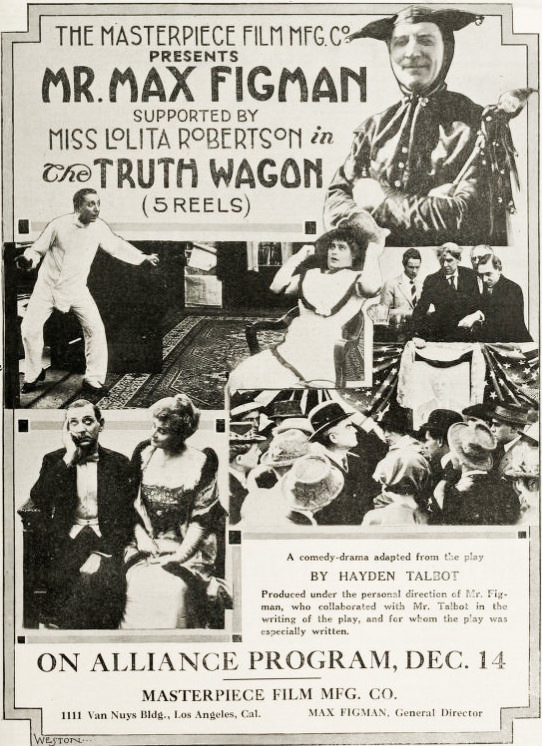
Hayden Talbot and Elliott J. Clawson—two scenarists who understood that America’s true religion was not democracy but the deal—weld together three combustible elements: patrician boredom, yellow-press desperation, and the raw-knuckled pugilism that passed for working-class spectacle. Their script is a daisy-chain of betrayals lit by phosphorous one-liners: “Why don’t you tell the truth and go to work?”—a refrain hurled like a rotten tomato until it becomes prophecy.
The film dares to suggest that the only difference between a political boss and a practical joker is the size of the stage on which they humiliate their victims.
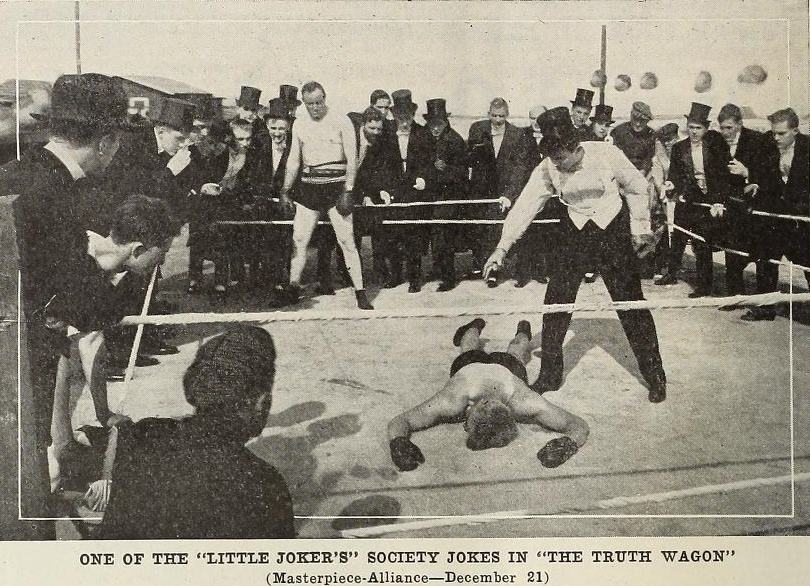
John Ross—played by Max Figman with the elastic smirk of a man who has never feared consequence—enters astride not a white charger but a swaying barge turned fight club. His tuxedo waistcoat is unbuttoned, his eyes star-spangled with gin, and his triumph is measured not in votes but in the swollen face of the boxer he sponsors. It is a miniature revolution: the leisure class opting out of its own ritual to taste sweat and blood. The scene is staged almost documentary-style; the camera holds on the ropes, the water slapping hull-planks, the cigar embers that puncture the dark like fireflies. No intertitle could match that visceral hush.
Cut to the Ross mansion, chandeliers now icicles of shame. The women—leftovers at their own feast—drift through long shots like ghosts. Director Al W. Filson (also essaying the compromised patriarch) lets the camera dolly past mirrors that reflect empty chairs; the negative space screams louder than any tirade. When John stumbles home, the family’s contempt is swift: a Greek-chorus condemnation distilled into nine syllables.
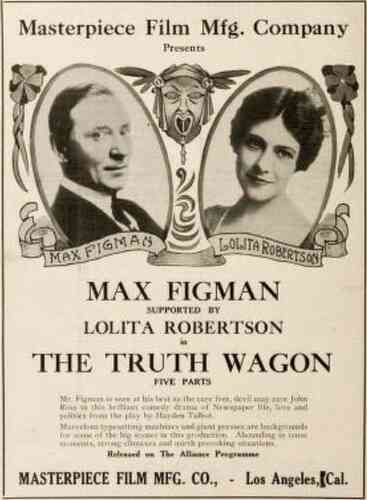
Enter Helen Dean (Lolita Robertson), a sob-sister reporter whose notebook is holstered like a six-gun. She exudes the caffeinated impatience of someone who has watched every honest newspaper in the city bought, bartered, or buried. Robertson plays her with squared shoulders and a half-smile that says she’s already written tomorrow’s headline in her head. Their first tête-à-tête crackles: two privileged wastrels recognizing in the other a potential weapon. She needles John; he filches her copy of Truth; the idea metastasizes.
What follows is a montage of civic arson. John mortgages his allowance, purchases the moribund daily, and rechristens himself publisher. The pressroom—rendered in low-key lighting that predates German Expressionism by half a decade—becomes a cathedral of clanking type, where every slug of lead is a bullet aimed at the bipartisan cabal that has handpicked his unwitting father. Note the symmetry: the same river that bore the prizefight barge now floats delivery trucks emblazoned with the slogan “All the news they pay us to suppress.”
George Ross—honest in the way a marionette’s painted smile is honest—believes himself the author of his own ascent. Henry A. Livingston plays him with the glassy optimism of a man who has never read his own contract. The real authors are Drew (state Republican svengali) and Sullivan (Democratic fixer), who meet in a shuttered barber shop to carve up constituencies like Thanksgiving fowl. Their pact is a master-class in cynicism: Democrats will cross lines to vote Ross, ensuring a pliant governor who will reward Sullivan with patronage. The intertitle card burns white-hot: “Principle is just another commodity—bid low, sell high.”
John’s exposé detonates this delicately composted corruption. Yet the film refuses a simple morality play. The son’s righteous crusade is also a brat’s vendetta; his newspaper becomes both pulpit and playground. When he nominates Helen’s father to oppose his own sire, the Oedipal subtext is less sub than surface. One intertitle reads like Shakespeare on a bender: “To unseat my father—this is filial piety reversed, stitched in newsprint and gall.”
Sullivan’s retaliation arrives in triplicate: lawsuits, purchased police, and finally a goon squad instructed to “stop the Truth from going to press if they have to wreck the plant.” What ensues is the silent era’s most exhilarating set piece: a nocturnal invasion lit by furnace doors and magnesium flash-pans. Jim the boxer reappears with an entourage of stevedore typesetters; inkpots become grenades, composing sticks turn cudgels, and a linotype machine—resembling some iron cephalopod—spits molten lead in arcs of defensive fire. The camera jerks, lunges, ducks as if it too has taken a left hook.
Critics who revere the battle-of-the-barricades in Les Misérables should note this earlier, scrappier ancestor: less grand, more intimate, yet every frame thrums with the same conviction that ideas defended by fists can, for one news-cycle, beat back the entropy of graft.
Betrayal metastasizes from within: Forbes, a star reporter grown weary of idealism’s wages, sells a fabricated sex-scandal to Sullivan’s rival sheet. The headline—“Publisher in Night-Ride Tryst with Lady Editor”—is a Molotov flung into the campaign’s final week. Sullivan offers the classic devil’s bargain: retract the exposé or watch Helen’s name dragged through tabloid muck. John appears to capitulate, sealing the trade in a scene shot through grated shadows that stripe faces like prison bars.
But the film withholds its ace. Earlier, John had slipped his father the damning contracts, affidavits, and canceled checks that map the conspiracy in indelible ink. Filson lets the moment breathe: George Ross sits alone in his study, lamp-glow carving trenches of remorse on his face. He then does what few politicos before or since dare—he resigns mid-race, endorses reformist Dean, and personally dictates his mea culpa to his son’s paper. Sullivan arrives the next morning expecting triumph, only to see newsboys waving extras that scream “ROSS WITHDRAWS; SULLIVAN EXPOSED.” The villain’s exit—hat brim yanked low, surrounded by jeering crowds—plays like a dry run for the perp-walk shots that will become cable-news catnip a century later.
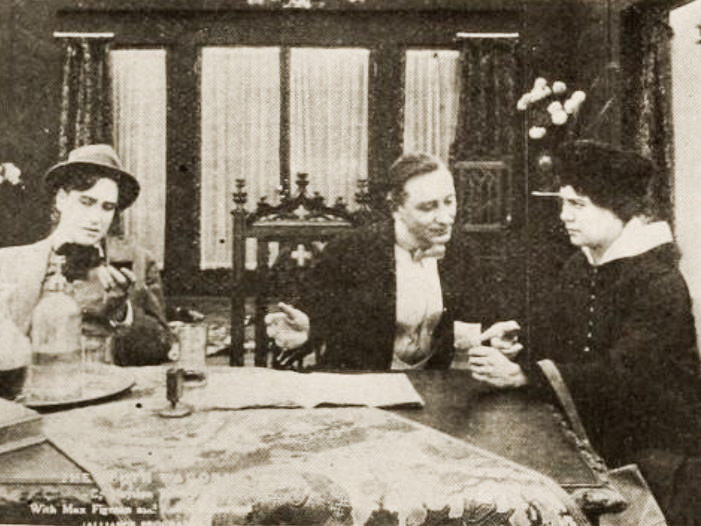
Love, here, is neither confection nor afterthought; it is restitution. John’s newspaper is financially gutted, its presses mangled, its staff bruised. His reward is not IPO windfall but the hand of Helen Dean, now first-daughter of the reform administration. Their final clinch—framed against the dawn-lit skeleton of the printing press—suggests that the only capital worthy of inheritance is integrity, and the only dowry worth accepting is a headline that can’t be bought.
The cinematography (credited to an uncredited virtuoso probably moonlighting from Keystone) toggles between chiaroscuro interiors—where cigar smoke coils like venomous thought—and exteriors washed in a sodium glow that feels proto-noir. Note the recurring visual motif of ropes and rigging: the barge’s hawsers, the printing-room’s fly-wheels, the telephone cords that fizzle when the police line is “unavailable.” Each implies bondage, circulation, the frayed nerves of communication. The Truth Wagon is literally the press wagon, but symbolically the rickety vehicle on which democracy lurches forward, axle creaking, pursued by wolves of vested interest.
Max Figman’s John toggles between lounge-lizard languor and ink-stained fervor with mercury speed. Watch his gait: at the ball he glides, weight on heels; in the newsroom he’s forward-leaning, as if the next headline physically tugs him. Lolita Robertson answers with eyes that seem to shutter-click every hypocrisy she clocks. In a medium where acting often meant semaphore, both performers traffic in micro-gesture: the twitch of a mouth corner, the way fingers drum Morse code on a pressroom desk.
Aficionados of Reporter Jimmie Intervenes will recognize the newsroom-as-battlefield trope, yet where that serial traffics in juvenile derring-do, The Truth Wagon opts for civic surgery. Conversely, the film’s climactic combat inside the newspaper plant retrofits the swashbuckling grandeur of Cleopatra’s galley revolt onto the mean streets of American democracy, proving that spectacle need not bankrupt substance.
Viewed today, the film feels eerily prescient. Replace Sullivan’s dockside goons with botnets, libel suits with SLAPPs, and the barge prizefight with a pay-per-view oligarch cage match, and you have the nervous system of our current polity. Yet its optimism feels almost alien: the conviction that one independent outlet, fueled by bravado and public-spirited rage, can still reroute the freight train of corruption.
Is it utopian? Certainly. But utopia, as Brecht reminded us, is a goal, not a gift. And sometimes the wagon creaks forward only when jesters trade their motley for ink-stained aprons and decide that the most audacious prank of all is to tell the truth and go to work.
IMDb 6.1
1936
Community
Log in to comment.