DbcultAccessing Vault...
Cult Review
Senior Film Conservator
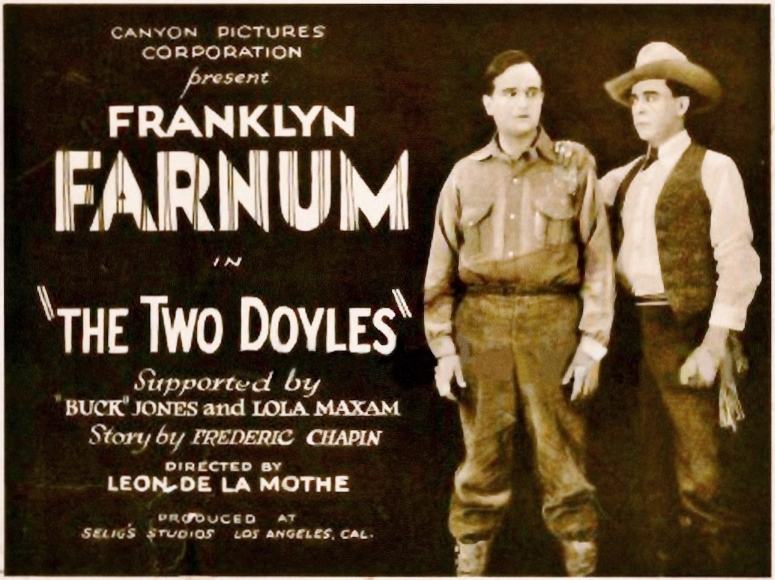
Stepping back into the sepia-toned world of early cinema, one often encounters narratives that, despite their age, resonate with timeless human struggles. "The Two Doyles", a silent film from 1919, is precisely such a creation, a compelling exploration of identity, betrayal, and redemption penned by the astute Frederick Chapin. Its premise, a classic tale of mistaken identity amplified by fraternal rivalry, delivers a potent emotional punch, proving that even without spoken dialogue, the power of storytelling can transcend the limitations of its medium. This film, though perhaps overshadowed by some of its more lavish contemporaries, carves out a significant niche through its earnest performances and its surprisingly nuanced characterizations.
The narrative pivots around John Doyle, portrayed with a quiet dignity by an uncredited actor whose presence nonetheless anchors the film. John is a man of the land, a rancher whose integrity is as unblemished as the vast Western skies above him. His life is one of honest labor and burgeoning affection for Eleanor Vance, played by the luminous Mary Bruce, whose expressive eyes convey a spectrum of emotion, from tender love to agonizing doubt. Bruce, a familiar face in the silent era, brings a delicate strength to Eleanor, making her more than just a damsel in distress; she is a woman of conviction, a vital moral compass in a world spiraling into chaos. Her portrayal here, while perhaps not as overtly dramatic as her turn in "The Land of Promise" (1917), is nonetheless deeply affecting, particularly in scenes where her faith in John is tested to its limits.
The catalyst for the ensuing drama is the reappearance of John’s estranged twin, James Doyle, an outlaw whose nefarious reputation precedes him. James, a master of disguise and deception, exploits his uncanny resemblance to his virtuous brother to execute a series of daring crimes. From a meticulously planned bank robbery to a ruthless cattle rustling operation, James meticulously frames John, casting a pall of suspicion over the innocent rancher. This dual role, whether played by a single actor or through clever editing and body doubles, is executed with commendable effectiveness, creating a palpable sense of dread and confusion. The visual distinction, often subtle, relies heavily on costume, mannerism, and the audience's understanding of the narrative’s intent, a testament to the filmmakers' skill in conveying complex ideas without dialogue. This thematic duality, where good and evil share the same visage, is a powerful trope, reminiscent of the moral complexities explored in films like "The Great Divide", albeit with a more literal interpretation of the 'divided' self.
The supporting cast further enriches this intricate tapestry. Vester Pegg, a prolific character actor of the era, embodies Sheriff Brody with a stern, no-nonsense demeanor. Brody is a man of justice, but also one susceptible to the weight of circumstantial evidence, especially when manipulated by a cunning antagonist. Pegg’s performance is understated yet impactful, conveying the sheriff's internal struggle between duty and personal conviction. His scenes with John, where doubt slowly creeps into his gaze, are particularly well-staged, illustrating the erosion of trust that forms a central pillar of the story. Franklyn Farnum, another silent film stalwart, delivers a memorable turn as Silas Thorne, a shadowy saloon owner whose insidious machinations contribute significantly to John's predicament. Farnum, often cast in villainous or morally ambiguous roles, brings a slick, calculating menace to Thorne, his subtle gestures and predatory glances effectively conveying his character's duplicity. His performance here, much like his work in "A Soldier's Oath", demonstrates his ability to inhabit roles that demand a certain degree of sinister charm.
Louella Maxam, while perhaps in a less prominent role, adds another layer to the community's response to the unfolding drama. Her character, whether a loyal friend to Eleanor or an unwitting victim of James's schemes, serves to highlight the broader impact of the outlaw's actions on the innocent townsfolk. Maxam's presence, though brief, contributes to the film's sense of communal disruption. And then there is Buck Jones. A name synonymous with Westerns, Jones, even in an early role such as this, brings his characteristic rugged authenticity to the screen. His character, likely a loyal cowboy or a rival figure, lends an air of gritty realism to the proceedings. Jones's physicality and natural charisma, which would later define his career in countless Westerns, are already evident here, offering glimpses of the star he would become. His presence alone would have been a draw for audiences of the time, eager to see their beloved cowboy hero in action, much as audiences flocked to see other Western icons in films like "The Spirit of the Poppy".
Frederick Chapin's screenplay is a marvel of concise storytelling, particularly impressive given the constraints of the silent era. He skillfully crafts a narrative that builds tension progressively, allowing the audience to feel John's mounting despair and Eleanor's unwavering, yet increasingly strained, hope. The plot threads are tightly woven, with each incident contributing to the larger tapestry of John's struggle for vindication. Chapin understands the power of visual storytelling, relying on expressive acting, dramatic staging, and well-placed intertitles to convey complex emotional states and plot developments. The pacing, though deliberate, rarely drags, maintaining a steady momentum towards the inevitable confrontation. This thoughtful construction is a hallmark of Chapin's writing, distinguishing "The Two Doyles" from more simplistic melodramas of the period and positioning it closer to the narrative sophistication of films like "The Ships That Meet".
The visual aesthetics of "The Two Doyles" are typical of its time, yet effective. The cinematography, while not groundbreaking, capably captures the expansive beauty and rugged harshness of the Western landscape. The use of natural light and practical sets lends an authenticity to the ranching scenes and the dusty town streets. The film’s director, whose identity remains obscured by the mists of time for this particular production, demonstrates a clear understanding of how to frame action and reaction, ensuring that the audience is always connected to the emotional core of the scene. The subtle shifts in lighting and camera angles during moments of high tension or emotional distress are particularly noteworthy, adding depth without overt artifice. This visual competence helps to immerse the viewer in John's plight, making his journey from respected citizen to hunted man all the more poignant.
The climax of "The Two Doyles" is a masterclass in silent film suspense. The confrontation between John and James is not merely a physical battle but a symbolic struggle for identity and justice. The tension is almost unbearable as John fights not only for his freedom but for his very name, his reputation, and his future with Eleanor. The resolution, while satisfying, avoids simplistic moralizing, instead offering a nuanced depiction of consequence and redemption. It is a testament to the film's enduring power that even without the benefit of a modern score or dialogue, the audience is left with a profound sense of the stakes involved and the emotional toll exacted by the conflict. This dramatic intensity and clear moral compass distinguish it from films that rely solely on spectacle, placing it firmly in the tradition of compelling character-driven dramas. The raw emotion conveyed, particularly in the final act, rivals the intensity seen in productions like "Infidelity", despite their differing genres.
Revisiting "The Two Doyles" today offers a fascinating glimpse into the nascent stages of cinematic storytelling. It reminds us that fundamental human experiences – love, betrayal, justice, and identity – have always formed the bedrock of compelling narratives. The performances, particularly from Mary Bruce and the uncredited lead, are a testament to the power of non-verbal communication, where a glance, a gesture, or a subtle shift in posture can convey volumes. Frederick Chapin's script provides a robust framework, allowing the actors to explore the depths of their characters' dilemmas with conviction and pathos. The film, in its quiet determination to tell a meaningful story, stands as a valuable artifact, a testament to the ingenuity and artistic ambition of early filmmakers. It’s a work that, while not as widely celebrated as some blockbusters of its time, contributes significantly to the rich tapestry of cinematic history, much like the culturally significant "Armenia, the Cradle of Humanity under the Shadow of Mount Ararat" in its own genre.
The film's exploration of societal judgment and the fragility of reputation is particularly relevant. John Doyle's struggle to clear his name against overwhelming odds resonates deeply, touching upon universal anxieties about how one is perceived versus who one truly is. The way the community's trust erodes, fueled by the manipulative Silas Thorne, serves as a cautionary tale about the dangers of unchecked suspicion and the power of insidious influence. This nuanced portrayal of community dynamics elevates "The Two Doyles" beyond a simple good-versus-evil Western, imbuing it with a psychological depth that was often rare in films of this period. It asks probing questions about the nature of truth and belief, forcing the audience to grapple with the same ambiguities that plague the characters on screen. The film's ability to provoke such thought, even a century after its release, is a testament to its enduring thematic strength. It's a quality that aligns it more with the contemplative dramas of the era, rather than purely action-driven fare, offering a thoughtful counterpoint to simpler narratives like "The Hayseeds Come to Sydney".
In conclusion, "The Two Doyles" stands as a compelling, if somewhat unsung, gem of the silent era. Its masterful blend of suspense, drama, and moral introspection, coupled with strong performances and a tightly constructed script by Frederick Chapin, makes it a valuable watch for anyone interested in the evolution of cinema. It reminds us that the foundational elements of powerful storytelling – compelling characters, high stakes, and a clear exploration of universal themes – are timeless, capable of captivating audiences across generations, regardless of technological advancements. The film’s ability to evoke such strong emotional responses and intellectual engagement without a single spoken word is a powerful reminder of the artistry inherent in silent film. It’s a testament to the fact that compelling narratives, when executed with conviction and skill, transcend the limitations of their form, cementing their place in the annals of cinematic achievement. This film, in its quiet ambition, holds its own among the more widely discussed works of the period, demonstrating that profound stories can emerge from even the most straightforward premises, much like the quiet intensity found in "The Man Beneath".
IMDb 6
1923
Community
Log in to comment.