DbcultAccessing Vault...
Cult Review
Senior Film Conservator
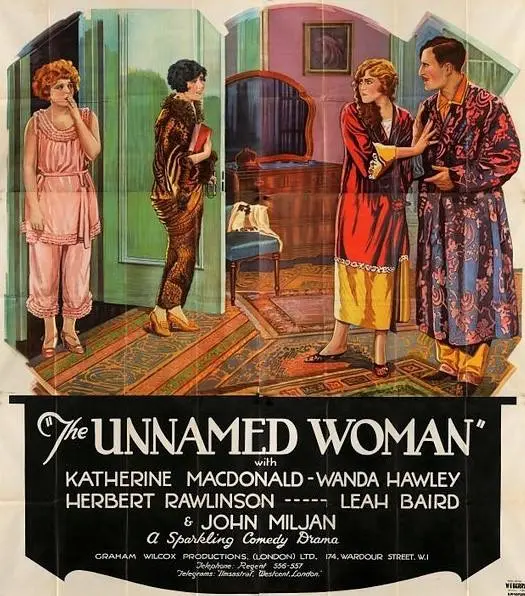
Stepping into the flickering glow of an early 20th-century picture palace, one is immediately struck by the raw, visceral power of silent cinema. There’s a particular magic to these films, a reliance on visual storytelling and the nuanced artistry of performance that often feels more immediate, more profoundly human, than many of their sound-era successors. The Unnamed Woman, a 1921 production featuring the luminous Katherine MacDonald, is a prime example of this enduring appeal, even if its narrative threads are woven with the familiar anxieties of domestic discord. It’s a film that, despite its age, speaks volumes about the fragility of marital vows and the perilous allure of forbidden desires, all orchestrated through the expressive language of the silent screen.
The narrative, penned by Charles E. Blaney and Leah Baird, plunges us directly into the strained atmosphere of the Brookes household. Donald Brookes, portrayed with a conflicted demeanor by Mike Donlin, finds himself increasingly detached from his wife, Flora. Grace Gordon embodies Flora with a quiet dignity, a woman whose inner turmoil and growing sense of neglect are palpable even without a single spoken word. The marriage, a seemingly stable institution from the outside, is already under considerable strain, a slow burn of unspoken resentments and fading affections. It's a classic setup, one that resonates through cinematic history, from the subtle infidelities hinted at in films like Married in Name Only to the more explicit betrayals of later eras. The genius here lies in the film’s ability to convey this marital entropy without overt declarations, relying instead on lingering glances, subtle gestures, and the eloquent despair etched across an actor’s face.
The catalyst for the drama’s escalation arrives in the form of a new girl, the titular 'unnamed woman,' brought to life with captivating intensity by Katherine MacDonald. MacDonald, a star of considerable magnetism during her era, imbues this character with a potent blend of vulnerability and volatile charm. Donald’s initial interest is, perhaps, innocent enough – a momentary distraction, a flicker of appreciation for fresh beauty. However, this innocent curiosity quickly morphs into something far more profound and dangerous. The film masterfully charts this progression, showing how easily a casual acquaintance can ripen into a passionate, albeit perilous, affection. It’s a testament to the directorial choices and the actors’ skill that this transformation feels organic, believable, and ultimately, inevitable. The camera often lingers on MacDonald’s expressive eyes, hinting at a depth of emotion that is both alluring and unsettling, a silent promise of both rapture and ruin.
What elevates The Unnamed Woman beyond a mere melodrama of infidelity is the unsettling revelation of the new girl’s true nature. She is not simply a rival for Donald’s affections; she is a deeply unstable, dramatic, and ultimately dangerous presence. MacDonald’s performance here is nothing short of mesmerizing. She channels a nervous energy, a dramatic flair that initially might seem like passionate intensity, but gradually reveals itself as a symptom of a more profound psychological disquiet. The film eschews simplistic villainy, instead presenting a character whose actions, however destructive, spring from a place of genuine, albeit warped, emotional need. This psychological complexity adds layers of tension, transforming the domestic drama into a taut, suspenseful exploration of obsession and mental fragility. One is reminded, in a way, of the societal ostracization and internal turmoil faced by characters in films like The Branded Woman, where a woman’s perceived flaws or actions lead to dramatic consequences, though here, the 'branding' is internal, a self-destructive spiral.
The screenwriting by Blaney and Baird is particularly adept at building this psychological tension. They understand that silence, in cinema, is not an absence but a canvas for projection. The audience is invited to read between the lines of the intertitles, to interpret the subtle shifts in facial expression, the hesitant gestures, and the charged atmosphere. This approach demands a high level of engagement from the viewer, fostering a more immersive and emotionally resonant experience. The progression from mild marital discontent to a full-blown crisis, tainted by the new girl’s escalating instability, feels earned and tragically logical. The film doesn't rush its revelations; instead, it allows the seeds of doubt and danger to sprout and grow, culminating in a harrowing climax that underscores the destructive power of unchecked desires and untreated psychological distress.
Mike Donlin’s portrayal of Donald Brookes is crucial to the film’s success. He navigates the treacherous waters of temptation and regret with a compelling sincerity. His character is not a one-dimensional villain, but a man caught between duty and desire, increasingly ensnared by a passion that he comes to realize is both intoxicating and terrifying. His silent struggle, the moments of hesitation, the flashes of guilt, and the ultimate dawning realization of the peril he has invited into his life, are rendered with a powerful subtlety. Grace Gordon, as Flora, provides the emotional anchor. Her silent suffering is a masterclass in understated acting. The audience feels her pain, her mounting anxiety, and her quiet strength as she confronts the disintegration of her world. Her performance serves as a poignant counterpoint to MacDonald’s more flamboyant portrayal, creating a dynamic tension that keeps the viewer invested in the fate of this fractured family.
Beyond the central trio, the supporting cast – including J. Emmett Beck, Leah Baird (who also co-wrote), Wanda Hawley, John Miljan, and Herbert Rawlinson – contributes significantly to the film’s rich tapestry. While their roles might be less prominent, their presence helps to flesh out the world, adding to the sense of a society observing, judging, and ultimately being impacted by the central drama. Even in brief appearances, these actors convey a sense of character and purpose, helping to ground the more intense emotional arcs of the protagonists. This ensemble work is a hallmark of quality silent film production, where every face, every gesture, had to communicate meaning without the aid of dialogue.
The direction of The Unnamed Woman, while not credited in the provided information, demonstrates a keen understanding of cinematic language. The use of close-ups to emphasize emotional states, the strategic deployment of shadows to create mood, and the pacing of the narrative all contribute to a compelling viewing experience. The film understands the power of suggestion, allowing the audience’s imagination to fill in the gaps, making the psychological horror all the more potent. There are moments of visual poetry, where a single frame conveys a world of unspoken despair or burgeoning madness. This aesthetic sensibility is what makes many silent films so enduring; they force us to engage with the image on a deeper, more interpretive level than many modern productions.
Examining The Unnamed Woman through a contemporary lens reveals its timeless themes. The dangers of unchecked desire, the complexities of mental health, and the societal pressures surrounding marriage and fidelity are concerns that remain relevant today. While the film’s melodramatic flourishes might feel a product of its time, the underlying human truths it explores are universal. It serves as a fascinating artifact not just of cinematic history, but of social history, offering a glimpse into the moral anxieties and psychological understandings of the early 20th century. Comparisons to other films of the era, such as the social commentaries found in The Shuttle, which often explored the intricate dynamics of marriage and women's roles within it, highlight a broader cultural preoccupation with these themes.
The film’s legacy, while perhaps not as widely celebrated as some of its more famous contemporaries, is nonetheless significant for its unflinching portrayal of a woman teetering on the brink. Katherine MacDonald’s performance, in particular, stands out as a powerful example of silent acting at its best – a nuanced, multi-faceted depiction of a character whose inner world is a tumultuous landscape. The script’s willingness to delve into the psychological rather immense rather than merely the sensational aspects of infidelity gives it an enduring intellectual weight. It’s a reminder that even in an era without synchronized sound, filmmakers were capable of crafting narratives of profound psychological depth and emotional resonance.
Ultimately, The Unnamed Woman is more than just a historical curiosity; it is a compelling drama that speaks to the enduring complexities of human relationships and the often-hidden perils that lie beneath the surface of attraction. It’s a film that demands attention, rewarding the viewer with a rich tapestry of emotion, suspense, and psychological insight. For enthusiasts of silent cinema, or indeed anyone interested in the evolution of cinematic storytelling, this picture offers a powerful and evocative experience, showcasing the remarkable talent of its cast and crew in conveying profound human drama through the exquisite art of silence. It serves as a testament to the fact that compelling storytelling transcends technological limitations, proving that a well-crafted narrative, delivered by skilled performers, can resonate across generations, leaving an indelible mark on the viewer's psyche. Its exploration of passion's darker side and the fragility of the human mind makes it a compelling watch, even a century later. The film's ability to evoke such strong emotions without a single spoken word is a powerful reminder of the artistry inherent in the early days of filmmaking, an artistry that continues to captivate and provoke thought.
IMDb 4.9
1935
Community
Log in to comment.