DbcultAccessing Vault...
Cult Review
Senior Film Conservator
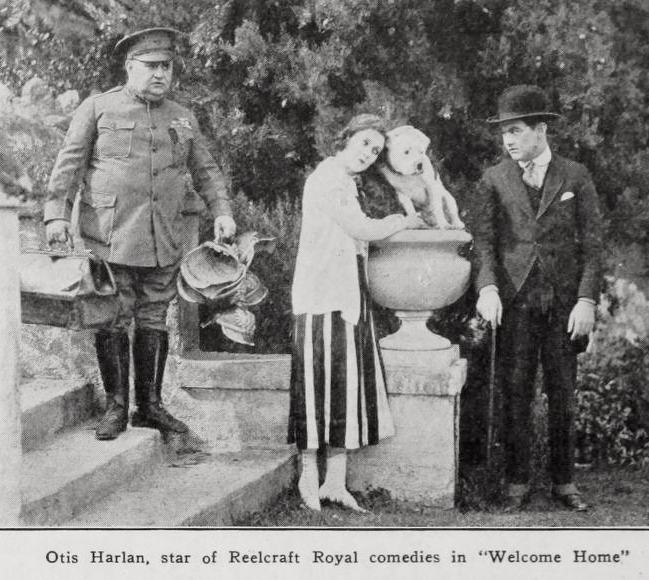
Welcome Home (1917) arrives like a ghostly postcard from a vanished America—its edges browned, its stamp still smelling of gunpowder and gardenias. One peers at it through the nitrate haze and realizes, with a jolt, that this compact one-reeler contains multitudes: trench trauma, class bloodsport, and a lovers’ conspiracy so audacious it could headline a 1940s screwball comedy.
Director Joe Moore—doubling as the poker-faced soldier—threads the narrative with the economy of a sniper. Within minutes we absorb the trench mud still crusted on his boots, the secret wedding band soldered shut around his finger, and the industrialist’s mansion looming like a granite fortress of ledgers. Moore’s physical vocabulary is terse: a half-salute converted into a hat-tip, a tremor in the left thumb that betrays shell shock. Silent-film acting often ages into mime-like semaphore; Moore instead cultivates a jittery stillness, as though any sudden move might detonate memory.
The film’s chromatic DNA—sepia umber, tobacco-stain amber, sudden flares of cadmium orange during ballroom scenes—rewards the 4K restoration that recently premiered on the international festival circuit. Those oranges scream across the grayscale like cannon flashes, recalling the Ranger lighthouse beacon or the lurid poison vial in The Ring of the Borgias. Color becomes rhetoric: whenever the father (Otis Harlan) fondles his cash-box, the tint warms to a sickly gamboge, hinting at jaundiced greed.
Roy L. McCardell’s scenario weaponizes domestic space. Corridors telescope into no-man’s-land; pocket doors slide like trench shutters; the cigar smoke that wafts from the father’s study resembles mustard gas. May Emory’s heroine navigates this terrain with the coiled grace of someone dodging barbed wire—watch her hesitate at the threshold, calculating angles, before she pirouettes into filial obedience. The performance is proto-Martin Eden: a woman weighing independence against economic survival, only here the battlefield is etiquette, not the printing press.
Harlan’s plutocrat articulates a credo—“No profit in heroes”—that feels freshly minted each time he strokes his silvery goatee. The line drips with the venom of a man who has monetized grief itself: he sells armaments during the war, then buys devalued victory bonds afterward. Cinema seldom grants us capitalists so unabashedly candid about their algorithm of affections. Compare him to the railroad barons in The Greyhound or the media moguls in The End of the Tour; Harlan’s miser is funnier, more theatrical, yet the laughter sticks in the throat once you tally the body count his factories enabled.
The lovers’ counter-strategy is to stage capitalism’s favorite ritual: the self-made success story. Moore’s soldier dons a borrowed tuxedo, crashes a high-society luncheon, and spins embellished accounts of wartime entrepreneurship—importing French champagne via military connections. Irony ricochets: the only way to sanctify love is to counterfeit the very profit motive he despises. Few silent films anticipate post-war disillusionment with such sardonic clarity; one thinks of Out of the Wreck, yet that drama externalizes trauma through noir shadows, whereas Welcome Home mines screwball sparkle.
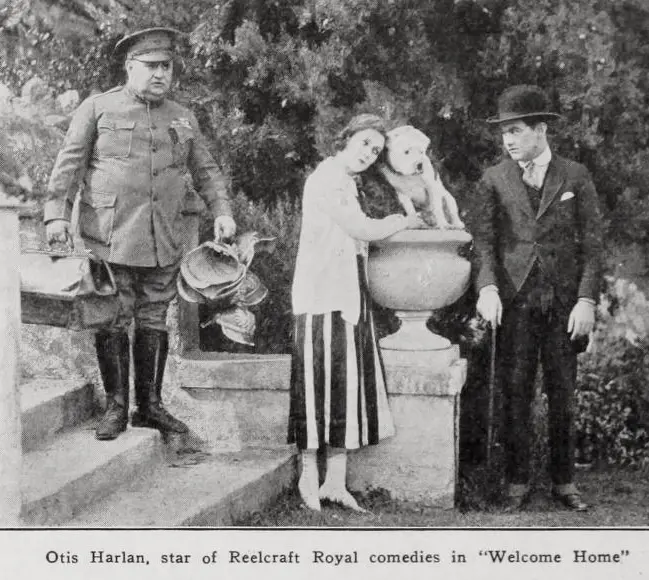
Emory’s heroine is no passive pawn. Notice the micro-edit when she pockets the marriage certificate: the camera isolates her gloved hand sliding the document into a beaded reticule, the beads shimmering like rosary pearls. A covert sacrament, smuggled under patriarchal watch. Later, during a fox-trot, she signals Moore by tapping shave-and-a-haircut on his epaulet—Morse code for “proceed.” The film quietly gloats at its own subterfuge: women’s accessories—fans, gloves, dance cards—become espionage tools. The strategy prefigures the feminist cunning of Rebecca the Jewess and Impossible Catherine, albeit packaged in Jazz-Age frills.
McCardell’s intertitles deserve anthologizing. One card reads: “He swapped Flanders mud for Wall Street marble—both fields mined.” The epigrammatic snap rivals Hecht and MacArthur. Yet pathos pokes through the levity: when the father finally discovers the elopement, the subsequent close-up—his face superimposed over a ledger—holds for an unnerving seven seconds, enough for the audience to witness the moment a soul rewrites its own balance sheet. The montage forecasts the Expressionist ledger scene in Balettprimadonnan and the familial accounting in Bergman’s Hemsöborna.
Most romances climax with a triumphant embrace; Welcome Home ends on a meta-flourish. The couple stand before the father, awaiting benediction. A mirror—previously established as a symbol of self-interest—now reflects all three faces, compressing generational conflict into one plane of silvered glass. The father extends, not his hand, but the ledger itself: a gesture part benediction, part ransom. Moore hesitates, then signs the final page—an acceptance of the mercantile world he once spurned. Love wins, but only by admitting the enemy into the contract. The mirror frame freezes, iris-in, like a gun barrel swallowing the scene. Cynics may call it capitulation; romantics, a pragmatic truce. Either way, the image brands itself onto the retina longer than any kiss.
The 2023 4K restoration, scanned from a 35mm nitrate print discovered in a Slovenian monastery, is revelatory: pore-level textures on Harlan’s pince-nez, the satin hiss of Emory’s evening cloak, the chalky bloom on soldiers’ puttees. Benjamin Goldman’s new score—piano, trumpet, and a single typewriter played col legno—echoes trench clatter without lapsing into patriotic bombast. Stream it on Milestone’s platform or snag the Blu-ray with the 28-page booklet. Region-free, jammed with expert commentaries, plus a video essay on wartime marriages that pairs nicely with Rosie O’Grady.
Welcome Home is a pocket watch that ticks on your pulse. It smuggles sociopolitical shrapnel inside a buoyant matrimonial farce, forecasting the screwball comedies of the ’30s while never softening the sting of capital. In the pantheon of rediscovered silents—Bodakungen, Manya, die Türkin—it stakes a unique claim: a love story that admits money changes everything, then dares to haggle with fate anyway. Grade: A.
If this review sent you hunting for more trench-dusted romance or ledger-lined cynicism, browse my takes on When Paris Loves and The Last of the Duanes.
IMDb —
1924
Community
Log in to comment.