DbcultAccessing Vault...
4.6/10
Senior Film Conservator
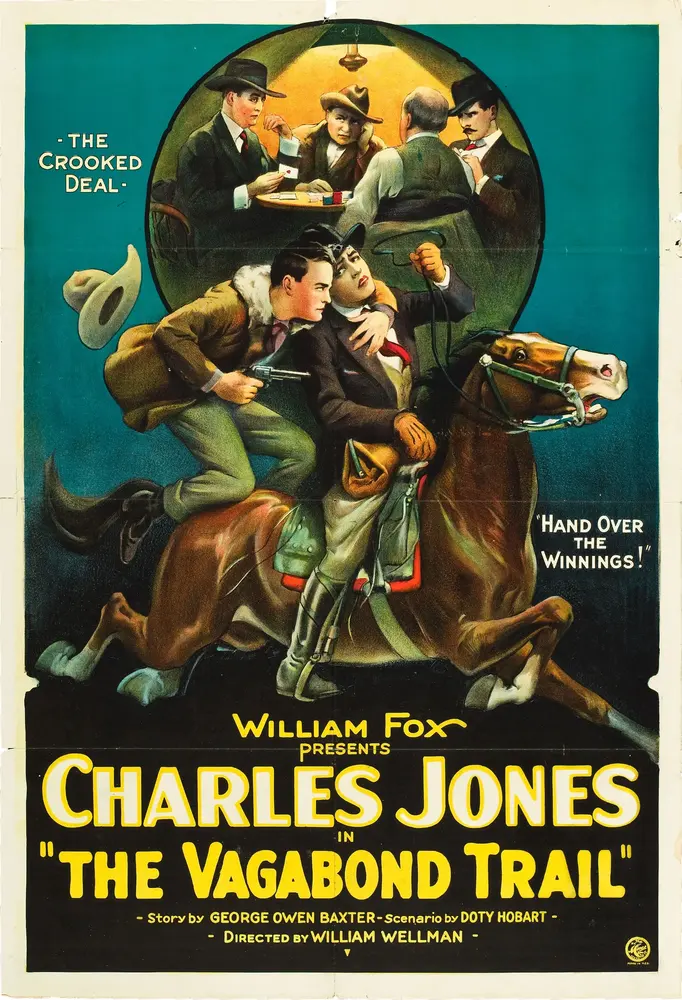
A definitive 4.6/10 rating for a film that redefined the boundaries of cult cinema. The Vagabond Trail remains a cornerstone of transgressive art.
There's an undeniable allure to the solitary figure of the cowboy, a wanderer against the vast, indifferent backdrop of the American frontier. The Vagabond Trail, a cinematic artifact from a bygone era, doesn't merely present this archetype; it immerses us in the raw, unvarnished existence of a man driven by a profound, elemental purpose. This isn't just a tale of six-shooters and dusty vistas; it's a deep dive into the human spirit's capacity for endurance, framed by the unforgiving landscape and the capricious nature of fate. At its core, the film unravels the intricate tapestry of Donnegan's journey, a saddle tramp whose very existence is defined by movement and an unyielding commitment to familial bonds. His quest for a wayward brother isn't simply a plot device; it's the very heartbeat of the narrative, pulsating with an urgency that transcends the typical genre conventions of its time.
From the outset, the film establishes a tone of restless urgency. Donnegan, portrayed with a stoic intensity by the inimitable Buck Jones, is a man of few words but immense resolve. His silent determination speaks volumes, a testament to Jones's prowess in conveying complex emotions through subtle gestures and piercing gazes. The initial scenes on the freight train are particularly poignant, painting a vivid picture of the transient life, a world populated by drifters and dreamers, each chasing their own elusive horizons. It's here, amidst the rhythmic clatter and the fleeting camaraderie, that the narrative’s pivotal conflict ignites. The confrontation with a brutish bully isn't just a random act of violence; it's a symbolic clash between the individual's pursuit of purpose and the arbitrary cruelty that often shadows the margins of society. Donnegan's violent expulsion from the train isn't merely a setback; it's a catalyst, a brutal rebirth that hurls him into a new phase of his odyssey, one where survival and the pursuit of his brother become inextricably linked with an emerging, unspoken quest for justice.
The screenplay, penned by Doty Hobart and the legendary Max Brand, exhibits a remarkable understanding of the Western genre's foundational myths while simultaneously injecting a psychological depth often overlooked in films of this era. Brand, renowned for his prolific output and his creation of iconic Western heroes, imbues Donnegan with a moral compass that, while tested, never wavers. This isn't a hero defined by flawless virtue, but by unwavering tenacity. The abruptness of Donnegan's ejection from the train serves as a stark reminder of the precariousness of life on the trail, a reality that resonates with the existential struggles often explored in more contemporary works like The Invisible Ray, albeit through vastly different lenses. Both films, in their own unique ways, delve into the sudden, transformative impact of external forces on an individual's trajectory.
The supporting cast, though perhaps less central to the film's driving force, provides crucial texture to Donnegan's world. Marian Nixon brings a delicate yet resilient presence to her role, a counterpoint to the rugged masculinity that dominates the narrative. Her interactions with Donnegan, however fleeting, hint at the possibility of connection and respite amidst the relentless hardship. Similarly, the contributions of George Reed, Harry Lonsdale, Virginia Warwick, Lee Shumway, Frank Nelson, and Charles Coleman, while often in roles that serve to advance Donnegan's journey, collectively build a believable and often harsh frontier community. Their performances, even in their brevity, underscore the film's commitment to portraying a world where every encounter, however minor, carries weight and potential consequence. This ensemble work, even in its understated form, is reminiscent of the communal tapestry woven in films like Golden Rule Kate, where the supporting characters often reflect the moral complexities of the setting.
Visually, The Vagabond Trail leverages the stark beauty of the Western landscape to great effect. The cinematography, though constrained by the technical limitations of its era, manages to convey both the grandeur and the oppressive isolation of the wilderness. The wide-open spaces are not merely backdrops; they are active participants in Donnegan's struggle, mirroring his internal vastness and the daunting scale of his task. The director deftly uses the environment to amplify the emotional stakes, making every dusty road and every distant horizon feel like a challenge to be overcome. The sense of scale and journey is palpable, a quality that allows the audience to truly feel the arduous nature of Donnegan's quest. This visual storytelling, which relies heavily on the power of the landscape, creates a sense of epic scope, much like the sweeping narratives found in classic literature.
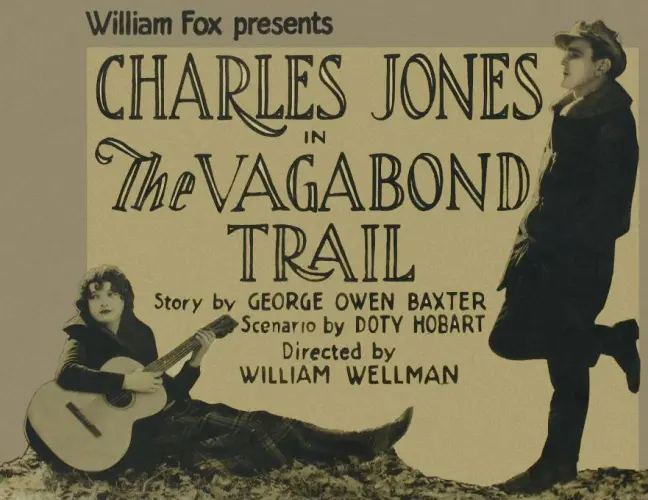
What truly elevates The Vagabond Trail beyond a simple genre piece is its profound exploration of themes. Brotherhood, naturally, stands paramount. Donnegan's unwavering dedication to his sibling, even in the face of immense personal peril, speaks to a primal human instinct for connection and responsibility. This isn't a superficial quest; it's driven by an almost spiritual imperative to restore a lost piece of himself. Beyond this, the film delves into concepts of justice – not necessarily legal justice, but a more visceral, frontier-style retribution against those who inflict harm. Donnegan's journey becomes a quiet assertion of self-worth and a refusal to be defined by the indignities he suffers. His resilience, a core tenet of the Western hero, is portrayed with a raw authenticity that avoids easy romanticism. He falls, he struggles, but he always rises, driven by an inner fire that refuses to be extinguished.
The pacing of the film, while perhaps deliberate by today's standards, allows for a meditative quality, giving the audience space to absorb the emotional weight of Donnegan's predicament. There are moments of quiet contemplation interspersed with bursts of action, creating a rhythm that feels organic to the journey itself. This ebb and flow in narrative momentum is a hallmark of effective storytelling, allowing the audience to breathe with the protagonist, to feel the long stretches of solitude and the sudden jolts of danger. It's a testament to the filmmakers' understanding that true drama often lies not just in what happens, but in the spaces between, in the quiet resolve that propels a man forward despite overwhelming odds.
In an era where Westerns often relied on formulaic plots and one-dimensional characters, The Vagabond Trail distinguishes itself through its nuanced portrayal of its protagonist and its willingness to explore the deeper currents of human motivation. It's not a film that shouts its intentions; rather, it whispers them through Donnegan's weary footsteps, his determined gaze, and the silent strength he exudes. Buck Jones, a true icon of the genre, embodies this quiet heroism with an understated power that is both compelling and deeply empathetic. His performance anchors the film, making Donnegan's struggles and triumphs feel genuinely earned. The raw physicality of his portrayal, combined with an inner vulnerability, creates a character that is both aspirational and deeply human.
Comparing it to other films of its period, one might find echoes of the relentless pursuit seen in action-comedies like Cops, where Buster Keaton's character is constantly on the run, albeit with a comedic slant. However, The Vagabond Trail leans into the dramatic weight of its protagonist's plight, eschewing levity for a more earnest depiction of hardship. Its thematic resonance also finds parallels in the steadfast devotion seen in films like The Faithful Heart, where loyalty and commitment form the bedrock of the narrative, albeit in a domestic rather than a wilderness setting. The film stands as a testament to the versatility of the Western genre, demonstrating its capacity to explore universal themes of loss, hope, and the indomitable will to persevere.
The enduring appeal of stories like The Vagabond Trail lies in their ability to tap into fundamental human experiences. Who among us hasn't felt adrift, searching for a lost connection, or faced an insurmountable obstacle that threatened to derail our purpose? Donnegan's journey, while set in a specific historical context, speaks to these timeless struggles. It's a narrative that reminds us that even when cast off and left for naught, the human spirit possesses an extraordinary capacity for recovery and forward momentum. The film doesn't offer easy answers or simplistic resolutions; instead, it presents a compelling portrait of a man who, despite profound adversity, refuses to yield. This nuanced approach to heroism, devoid of bombast, is perhaps its greatest strength.
Ultimately, The Vagabond Trail is more than just a Western; it's a profound character study, a meditation on brotherhood, and a testament to the unyielding spirit of those who walk the forgotten paths. It's a film that demands a patient viewing, rewarding the attentive audience with a rich tapestry of human emotion and a compelling narrative that lingers long after the credits roll. It solidifies Buck Jones's legacy as a leading man capable of conveying both rugged individualism and deep-seated humanity, and showcases the masterful storytelling of Max Brand. This is a film that deserves to be rediscovered, a quiet classic that continues to resonate with its timeless themes and its powerful portrayal of one man's relentless journey against the odds. It's an essential watch for anyone seeking to understand the enduring power of the frontier narrative and the profound depths of human resolve.
IMDb 6.3
1923
Community
Log in to comment.