DbcultAccessing Vault...
Cult Review
Senior Film Conservator
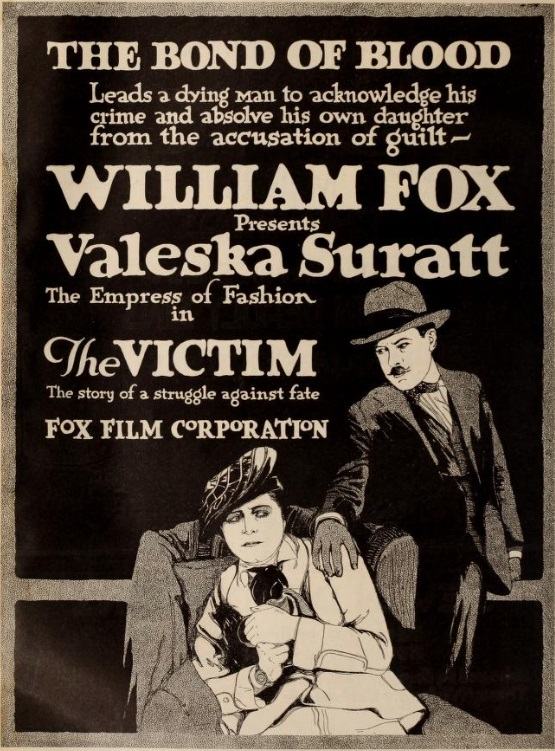
The year 1916 was a watershed moment for the nascent American cinema, a period where the medium began to shed its stage-bound origins in favor of a more nuanced, psychological visual language. At the heart of this transformation stood Will S. Davis’s The Victim, a film that, while perhaps obscured by the shadows of time, remains a searing indictment of institutional rot and the fragility of social ascension. Starring the enigmatic Valeska Suratt—a performer whose 'vamp' persona often overshadowed her considerable dramatic range—this production offers a harrowing look at the intersection of criminal justice and class warfare. Unlike the more whimsical offerings of the era, such as Susan Rocks the Boat, The Victim plunges its audience into a world where the past is a persistent specter, unyielding and predatory.
Will S. Davis, a director often celebrated for his ability to weave complex moral quandaries into accessible melodramas, finds in The Victim a canvas perfectly suited to his sensibilities. The film’s structure is a masterclass in tension, transitioning from the claustrophobic confines of a prison to the expansive, albeit sterile, luxury of the Boulton estate. This juxtaposition serves to highlight the protagonist's internal state: even in her gilded cage, Ruth Merrill remains a captive of her secrets. The narrative trajectory mirrors the dark, fatalistic energy found in contemporary European works like Tigre reale, though Davis grounds his story in a specifically American anxiety regarding the 'third degree' and police overreach.
The screenplay, also penned by Davis, avoids the simplistic moral binary common in mid-1910s cinema. Instead, it presents a stochastic world where innocence is no shield against the machinations of the corrupt. The detective character is not merely a villain but a personification of a systemic failure—a man who uses the law as a bludgeon for personal gain. This thematic depth elevates the film beyond mere potboiler status, aligning it more closely with the psychological gravity of The Escape, which similarly grappled with the inescapable gravity of one's origins.
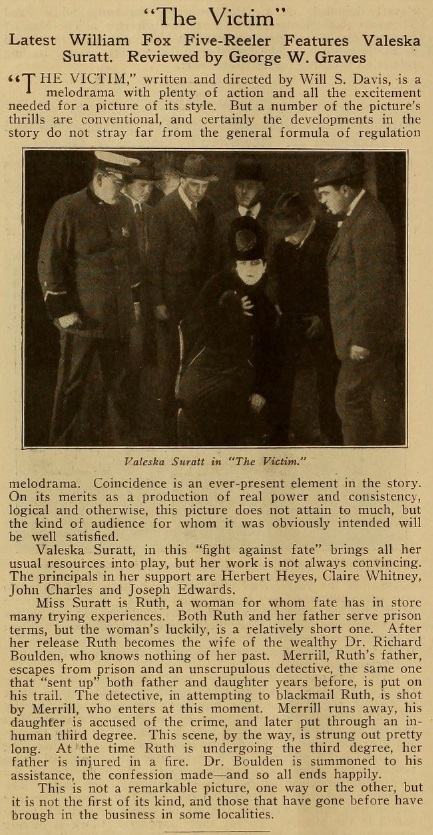
Valeska Suratt’s portrayal of Ruth Merrill is a revelation of restraint. Known for her extravagant costumes and feline screen presence, Suratt here strips away the artifice to reveal a woman pulverized by circumstance. In the early scenes of her incarceration, her physicality conveys a profound weariness, a stark contrast to the vivacity she displays as Mrs. Richard Boulton. This duality is essential to the film’s efficacy. We must believe in her capacity for both suffering and sophisticated deception. Her performance invites comparison to the nuanced characterizations seen in Blackbirds, another film that explores the precarious nature of a woman with a hidden history.
The supporting cast provides a sturdy foundation for Suratt’s emotional acrobatics. Herbert Heyes as Dr. Richard Boulton embodies the oblivious patriarchy of the era—kind, yet fundamentally detached from the realities of the working class and the formerly incarcerated. His ignorance is the pivot upon which the drama turns. Joseph Granby, as the unscrupulous detective, delivers a performance of chilling pragmatism. He represents the ever-present threat of exposure, a villain whose power stems not from physical might, but from his ability to manipulate the narrative of Ruth’s life. This dynamic creates a claustrophobic atmosphere reminiscent of the tension in The Bride's Silence.
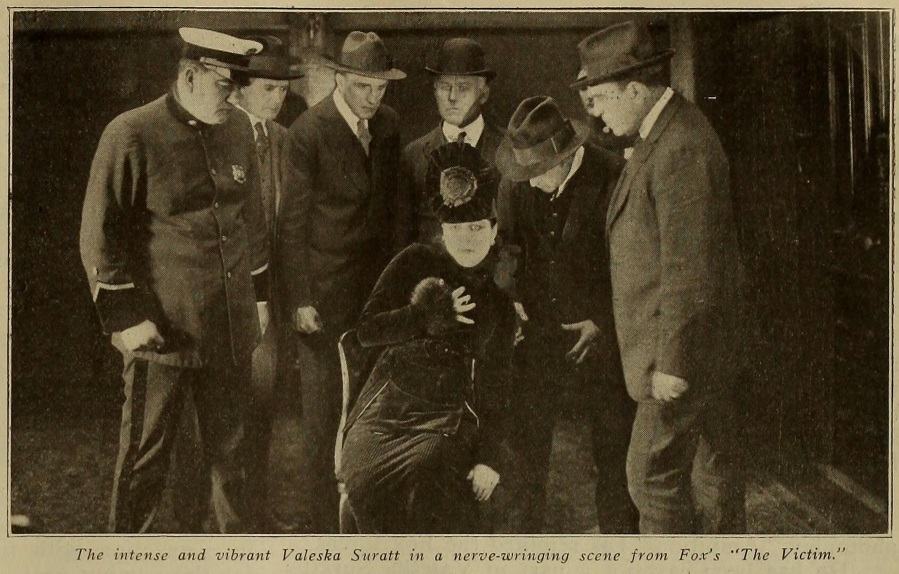
The climax of The Victim is centered around the infamous 'third degree' interrogation. In an era before the Miranda warning, this sequence serves as a visceral reminder of the brutality inherent in early 20th-century policing. Davis uses harsh lighting and tight framing to simulate the psychological pressure Ruth undergoes. It is a sequence of harrowing intensity, rivaling the physical grit found in the Jeffries-Johnson World's Championship Boxing Contest footage, albeit on a psychological plane. The police are not depicted as heroic figures of order, but as relentless inquisitors, indifferent to the truth so long as they can extract a confession.
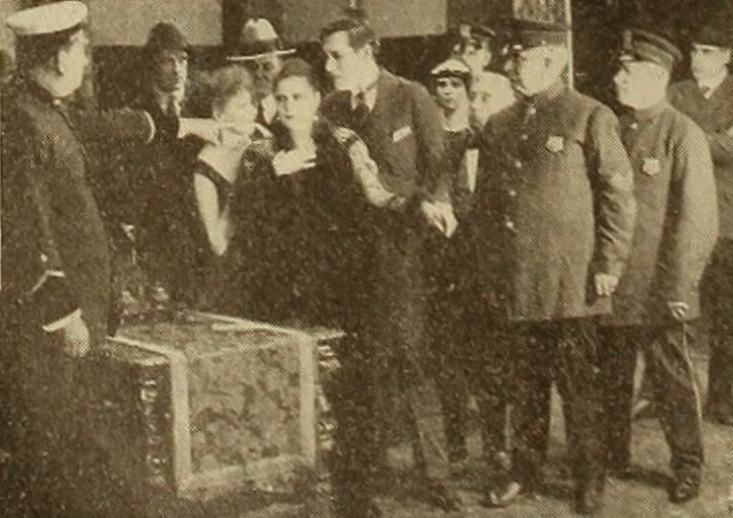
This interrogation is the thematic heart of the film. It asks whether a person can ever truly be exonerated by a society that thrives on the labeling of 'criminals.' Ruth’s struggle is not just against the law, but against the collective memory of her past. This exploration of social stigma is a recurring motif in the period's more serious dramas, such as The Whirlpool of Destiny, where characters are similarly swept away by forces beyond their control. The Victim, however, adds a layer of personal betrayal that makes the interrogation feel uniquely cruel.
Technically, the film is a product of its time, yet it displays flashes of brilliance that suggest a sophisticated understanding of the camera's power. The use of tinting—blue for the nocturnal escape scenes and amber for the domestic interiors—adds a layer of emotional resonance that the surviving black-and-white stills can only hint at. The cinematography by the Fox Film Corporation’s crew captures the starkness of the prison walls with the same precision it applies to the intricate lacework of Ruth’s gowns. This visual fidelity ensures that the world of the film feels lived-in and tangible, a stark contrast to the more ephemeral qualities of The Haunted Manor.
The pacing, too, is remarkably modern. Davis eschews the languid, theatrical pauses that often mar early silent films, opting instead for a propulsive narrative that mirrors Ruth’s escalating panic. The editing during the detective's murder and the father's subsequent flight is particularly effective, creating a sense of chaotic urgency. This kinetic energy is a precursor to the action-oriented storytelling seen in High Speed, though here it is tempered by the gravity of the dramatic stakes.
When situated within the broader context of 1916 cinema, The Victim stands out for its cynical worldview. While films like The Greatest Gift offered audiences a more sentimental view of human nature, Davis’s work suggests that the 'greatest gift' one can receive is anonymity. The film shares a certain DNA with the gritty realism of Slægternes Kamp, particularly in its depiction of familial loyalty as both a source of strength and a catalyst for ruin. The father-daughter bond in The Victim is the narrative's emotional anchor, yet it is also the very thing that prevents Ruth from fully escaping her past.
Furthermore, the film’s treatment of the 'fallen woman' trope is significantly more sympathetic than many of its contemporaries. Ruth is not a victim of her own moral failings, but of a corrupt system. This puts the film in conversation with Each to His Kind and Thrown to the Lions, which also interrogated the social machinery that grinds down the marginalized. The detective’s blackmail is the ultimate expression of this exploitation—he sees Ruth’s rehabilitation not as a triumph, but as a resource to be harvested. Even the lighter comedic elements found in films like The Blue Mouse or the period drama of A tiszti kardbojt feel a world away from the grim reality Davis presents.
It is a tragedy of film history that so much of Valeska Suratt’s filmography, including The Victim, has been lost to the ravages of nitrate decomposition. What remains in the historical record is a testament to a film that dared to challenge the optimism of the Progressive Era. It was a film that understood the permanence of the 'criminal' label and the ease with which the powerful can destroy the vulnerable. The 'grilling' Ruth receives is not just an interrogation; it is a ritual of re-subjugation, a way for the state to reclaim a body that had dared to seek a better life.
In the final analysis, The Victim is a foundational text of what would eventually become film noir. It possesses the requisite elements: the haunted protagonist, the corrupt authority figure, the secret past, and the sense of impending doom. While it lacks the stylistic flourishes of the 1940s, its thematic core is remarkably consistent with the genre's later developments. To watch The Victim (or to reconstruct it through its surviving synopses and stills) is to witness the birth of a cinematic preoccupation with justice, or the lack thereof, that continues to resonate today. It is a haunting reminder that in the eyes of the law, the truth is often less important than the conviction.
This review aims to preserve the memory of a film that spoke truth to power in an age of silence. Through the lens of Ruth Merrill’s suffering, we see the enduring struggle for dignity in a world designed to deny it. Will S. Davis and Valeska Suratt created something more than a movie; they created a mirror, and the reflection it provides is as uncomfortable now as it was over a century ago.
IMDb —
1928
Community
Log in to comment.