DbcultAccessing Vault...
Cult Review
Senior Film Conservator
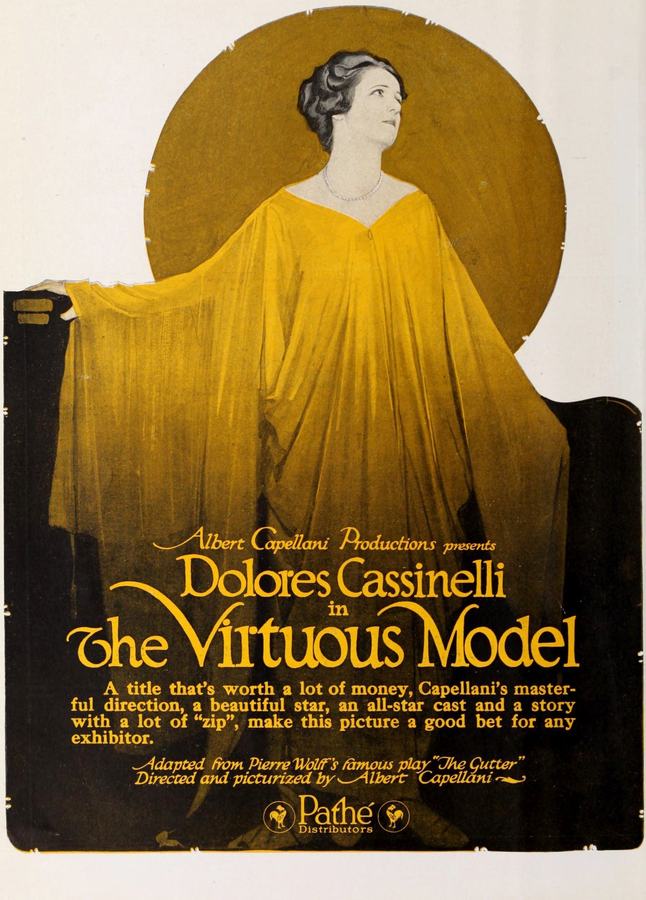
When the flickering reels of early French cinema are examined, The Virtuous Model (1924) stands out as a nuanced study of class, morality, and artistic obsession. Directed by Albert Capellani and scripted from Pierre Wolff’s stage work, the film weaves together the grim realism of Montmartre’s underbelly with the ethereal aspirations of a sculptor seeking redemption. In the following critique, I will dissect the narrative architecture, evaluate the performances—particularly Helen Lowell’s luminous portrayal of Denise—and situate the work alongside contemporaneous titles such as The Wishing Ring: An Idyll of Old England and Jealousy.
The film opens with a stark tableau of Denise Fleury (Helen Lowell) laboring over artificial blossoms in a dimly lit workshop, the clatter of machinery echoing the monotony of her existence. Capellani’s cinematography employs chiaroscuro lighting to underscore the protagonist’s internal conflict: the darkness of poverty juxtaposed with the faint glow of her moral compass. When the factory shutters—a moment rendered with a sudden cut to a ‘Closed’ sign—Denise’s world tilts, and the narrative thrust propels her into the cabaret’s lurid neon glow.
The cabaret sequence is a masterclass in mise‑en‑scene. The gaudy costumes, the smoky atmosphere, and the predatory patron who attempts to kiss Denise are filmed with a kinetic camera that circles the heroine, capturing both the threat and her steadfast resistance. This scene foreshadows the central conflict: the tension between the body as object and the soul as autonomous.
Enter Paul Brehant (Albert Roccardi), a sculptor whose fame is eclipsed by personal betrayal. His entrance is marked by a lingering close‑up of his gaunt face, a visual metaphor for his artistic impotence. The moment he intervenes to protect Denise, the film shifts from social realism to a more lyrical, almost mythic tone. Paul’s offer to model for a Venus statue is both a plot catalyst and an allegorical device: the Venus, traditionally the epitome of sensuality, is re‑imagined through Denise’s modesty, challenging the era’s gender norms.
Helen Lowell delivers a performance that balances vulnerability with iron‑willed determination. Her expressive eyes convey a spectrum of emotions without the need for intertitles—a testament to her command of silent‑film acting. In the scene where Denise refuses to pose nude, Lowell’s clenched fists and subtle head tilt speak louder than any dialogue could. The camera lingers on her profile, framing her as both muse and moral arbiter.
Albert Roccardi, as Paul, embodies the tormented artist archetype with a restrained intensity. His body language—often hunched, then slowly straightening as Denise’s virtue rekindles his belief in love—mirrors the sculptor’s creative process, chiseling away doubt to reveal renewed purpose. The chemistry between Lowell and Roccardi feels authentic, avoiding the melodramatic excess common in silent melodramas of the period.
Capellani’s direction is marked by a fluid use of tracking shots that follow Denise through the bustling streets of Montmartre, immersing the viewer in the socioeconomic texture of early‑20th‑century Paris. The film’s palette, though constrained by black‑and‑white stock, utilizes contrast to evoke the symbolic colors later associated with the narrative: the dark orange of the factory’s furnace, the yellow of cabaret lights, and the sea‑blue of the countryside honeymoon scenes. These hues are implied through set design and lighting, creating an emotional subtext that modern audiences can appreciate.
The sculptor’s workshop is rendered with an almost reverent stillness; the camera pauses on a marble block, the raw material awaiting transformation—mirroring Denise’s own journey from factory worker to artistic muse. The intercutting of close‑ups on Paul’s hands shaping the marble with Denise’s profile in the background is a visual metaphor for the intertwining of flesh and art.
When placed alongside Das schwarze Los, which also explores themes of fate and moral choice within a working‑class setting, The Virtuous Model distinguishes itself through its focus on artistic redemption rather than fatalism. Similarly, the film shares a thematic thread with A Doll’s House, where a female protagonist challenges societal expectations. However, Capellani’s narrative is less overtly feminist; it instead offers a nuanced portrait of a woman whose virtue becomes a catalyst for male transformation.
The intrusion of Countess Olga Vosloff (May Hopkins) introduces a classic love‑triangle, reminiscent of the tension in Midnight at Maxim’s. Olga’s accusation that Denise stifles Paul’s art raises a perennial question: does artistic brilliance require sacrifice? The film answers ambiguously, allowing viewers to contemplate whether true art can flourish within the bounds of fidelity.
The climactic scene, set in a modest Parisian garden, employs a low‑angle shot of Paul on his knees, a visual inversion of the traditional heroic pose. This gesture, combined with the soft focus on Denise’s composed visage, underscores the film’s moral message: humility and trust can restore broken bonds. The resolution, though melodramatic by modern standards, feels earned because the audience has witnessed Denise’s consistent integrity.
The final tableau—Denise and Paul walking hand‑in‑hand toward a sun‑drenched horizon—evokes a sense of hopeful continuity. The camera slowly pulls back, revealing the bustling city behind them, suggesting that personal virtue can indeed coexist with the chaotic world.
Although The Virtuous Model has not achieved the popular renown of contemporaneous epics like Keep Moving, its exploration of gender dynamics, artistic integrity, and class mobility remains resonant. Contemporary scholars often cite the film when discussing early cinematic representations of women who navigate patriarchal structures without relinquishing agency.
In an era where silent cinema is frequently reduced to novelty, Capellani’s work offers a sophisticated narrative that rewards repeat viewings. Its layered symbolism—embodied in the recurring motif of the artificial flower, a symbol of manufactured beauty versus authentic virtue—invites deeper scholarly inquiry.
Overall, The Virtuous Model is a compelling blend of social realism and romantic melodrama, anchored by standout performances and a director’s eye for visual poetry. For cinephiles interested in the evolution of female representation and the intersection of art and morality in early film, this title is indispensable. Its restoration, now available in high‑definition digital transfer, reveals the meticulous set design and nuanced lighting that were once obscured by film grain.
If you appreciated the moral complexity of Hearts or Diamonds or the atmospheric tension of The Haunted House, you will find The Virtuous Model a rewarding addition to your silent‑film repertoire.
In sum, the film’s deft interplay of visual storytelling, thematic depth, and compelling character arcs cements its place as a silent‑era masterpiece deserving of renewed scholarly and popular attention.
IMDb 6.3
1930
Community
Log in to comment.