DbcultAccessing Vault...
Cult Review
Senior Film Conservator
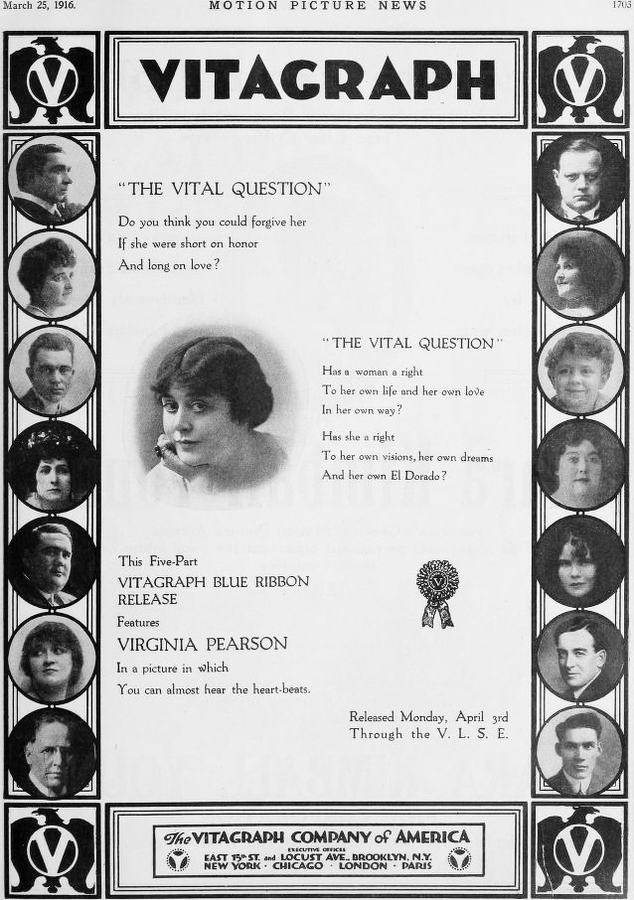
The silent era of cinema often functioned as a secular pulpit, and the 1916 Vitagraph production The Vital Question stands as one of its most resonant sermons on the volatility of virtue in a capitalistic landscape. Directed with a keen eye for social stratification, the film transcends its melodramatic roots to offer a scathing critique of the American Dream’s underbelly. It asks a question that remains uncomfortably relevant: at what point does personal loyalty become a crime against the public good? The screenplay, penned by the prolific Marguerite Bertsch and Joseph L. Norris, crafts a narrative architecture where every choice carries a weight that threatens to crush the protagonist under the sheer gravity of consequence.
At the heart of this cinematic tapestry is Scarsdale, portrayed with a stoic gravitas that serves as the film’s moral compass. Unlike the protagonists in The Straight Road, who often find redemption through external intervention, Scarsdale is the architect of his own isolation. When King—a businessman whose name has become synonymous with 'shady deals'—implores Scarsdale to use his legal prowess to obfuscate the truth, the film shifts from a domestic drama to a high-stakes ethical thriller. The tension is palpable; Scarsdale isn't just rejecting a client; he is severing his connection to Beatrice, his fiancée. This refusal to prioritize the 'tribal' loyalty of family over the abstract principle of justice marks him as a truly modern hero for the 1910s.
The film brilliantly juxtaposes Scarsdale’s ascent with the King family’s rapid disintegration. King’s suicide is not merely a plot point; it is a visceral manifestation of the shame inherent in a system where wealth is the only metric of worth. When the money vanishes, so does the man. This thematic exploration of financial ruin as a catalyst for moral decay is handled with a sophistication that rivals The Great Problem, yet it maintains a more intimate, character-driven focus.
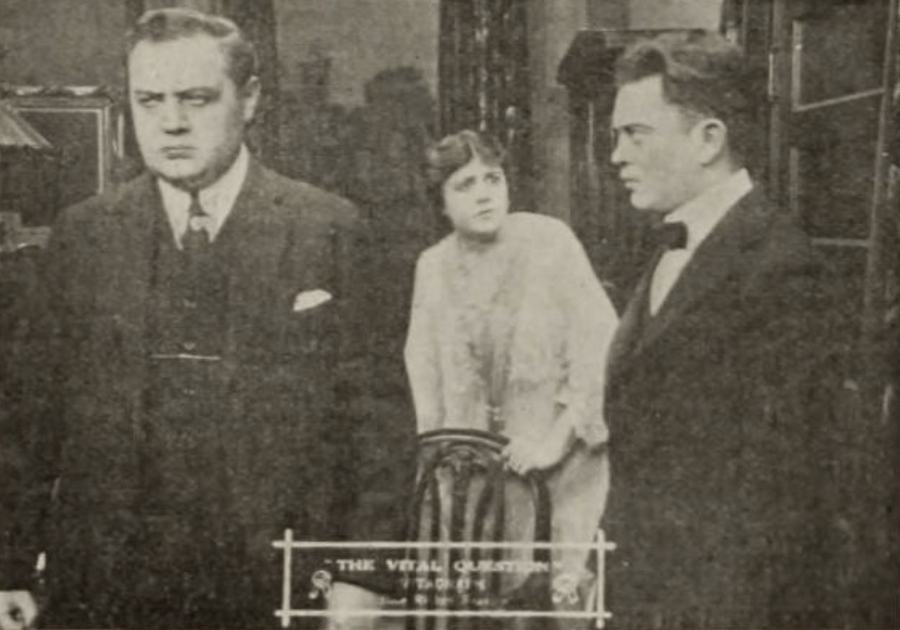
If Scarsdale represents the light of law, Worden is the encompassing shadow of corporate avarice. The transition of Worden from a 'helpful' friend to the head of the nefarious Beef Trust is a masterstroke of storytelling. It mirrors the actual historical anxieties regarding monopolies that plagued the American public during the Progressive Era. Worden is not a cartoonish villain; he is a predator who understands that the most effective way to control a person is through their vulnerabilities. His exploitation of Dick’s dissipation—a recurring trope in silent cinema often seen in films like Drugged Waters—is calculated and chilling.
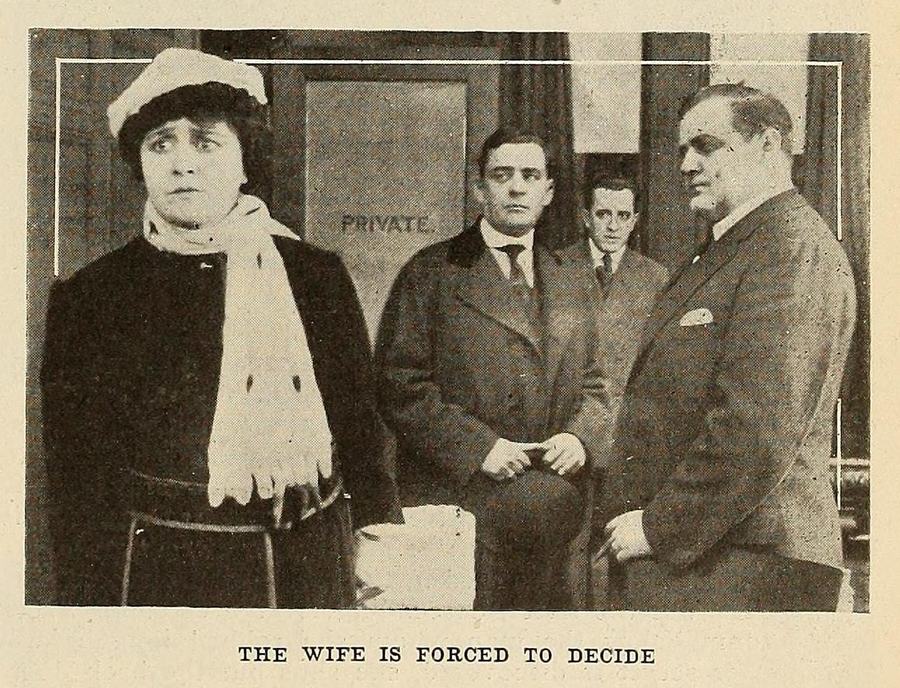
The scene in which Worden forces Beatrice into a 'marriage of convenience' to save her brother from prison is a disturbing look at the 'brute feeling' that can reside within the upper echelons of society. Here, Beatrice becomes a sacrificial lamb, her body and future traded for a forged check. The film does not shy away from the ugliness of this transaction. Unlike the romanticized sacrifices found in The Stronger Love, Beatrice’s consent is sobbingly given, a testament to the lack of agency women possessed when caught between the male-dominated spheres of law and finance.
The cinematography in The Vital Question deserves significant scholarly attention. The use of the electric library lamp in the final act is a stroke of genius. As Scarsdale, now the District Attorney, confronts Worden, the physical space reflects the moral complexity of the moment. The subsequent fight, the toppling of the lamp, and the descent into total darkness create a sensory vacuum where the gunshot becomes the only punctuation. This sequence is far more effective than the more theatrical climaxes of The Kangaroo or The Great Leap: Until Death Do Us Part. By stripping the audience of their sight, the film forces them to focus on the auditory and the psychological—the silence that follows the shot is deafening.
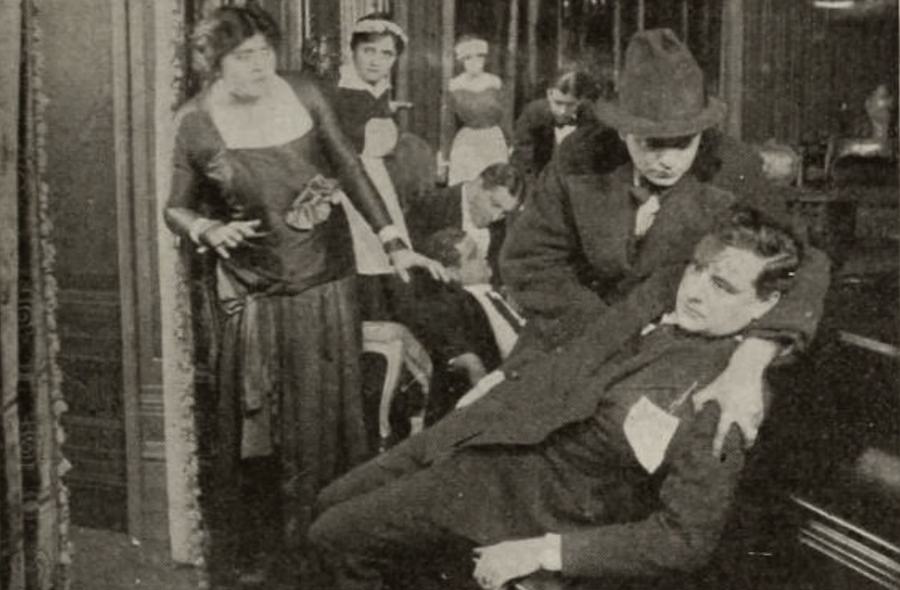
The revelation that Worden was killed by his own henchman is a poetic irony that satisfies the era's demand for 'poetic justice.' It suggests that evil eventually consumes itself, a theme explored with varying degrees of success in Thrown to the Lions and Gold and the Woman. However, in The Vital Question, the resolution feels earned because it is the direct result of Worden’s own machinations coming home to roost.
Virginia Pearson’s portrayal of Beatrice provides the emotional core of the film. Her journey from a hopeful debutante to a woman trapped in a loveless, coercive union is heartbreaking. While films like The Second Mrs. Tanqueray deal with the social repercussions of a woman’s past, The Vital Question focuses on the immediate, suffocating pressure of a woman’s present. Her refusal of Worden’s initial offer, fueled by her lingering love for Scarsdale, highlights her internal strength, making her eventual submission even more tragic. The film avoids the easy sentimentality of Under Southern Skies, opting instead for a gritty realism that was quite progressive for 1916.
The brother, Dick, played with a convincing 'maudlin condition' by George Cooper, serves as the catalyst for the film's middle-act despair. His dissipation is not just a character flaw but a symptom of a family that has lost its anchor. His forgery is the final nail in the coffin of the King family’s dignity, forcing Beatrice to choose between her brother’s freedom and her own soul. This dynamic creates a tension that is far more visceral than the stylized conflicts in Hamlet, Prince of Denmark.
The choice of the 'Beef Trust' as the antagonist’s vehicle is significant. At the time of the film’s release, the American public was deeply suspicious of the meatpacking industry, thanks in part to Upton Sinclair’s The Jungle. By making Worden the head of this trust, the filmmakers were tapping into a collective anger. This gives the film a weight that purely domestic dramas like The Broken Promise lack. It isn't just about a man and a woman; it's about a society struggling to reconcile its legal systems with the runaway power of monopolies. Scarsdale’s campaign against the trust is a cinematic representation of the Trust-busting era, making him a surrogate for figures like Theodore Roosevelt.
This political dimension elevates the film, providing a backdrop of societal stakes that mirror the personal stakes of the characters. When Scarsdale fights Worden, he isn't just fighting for Beatrice; he is fighting for the integrity of the American marketplace. This dual-layered conflict is what makes the film so enduringly fascinating. It bridges the gap between the personal and the political in a way that few silent films attempted, with perhaps the exception of Where the Trail Divides or The Arab, though those films dealt more with cultural and racial divides than economic ones.
In the end, The Vital Question is a film about the long game of morality. Scarsdale’s initial refusal to help King seemed like a defeat, yet it was the very thing that allowed him to eventually dismantle the corruption that Worden represented. The film suggests that while the path of integrity is fraught with immediate suffering, it is the only path that leads to a sustainable future. The final reunion between Beatrice and Scarsdale is not just a happy ending; it is a restoration of the natural order that was disrupted by King’s greed and Worden’s malice.
For fans of silent cinema who crave more than just slapstick or simple romance, this film is an essential watch. It possesses a narrative density and a thematic richness that outshine many of its contemporaries, such as Right Off the Bat. It is a stark reminder that the 'vital questions' of 1916—questions of corporate responsibility, the limits of loyalty, and the price of justice—are the very same questions we are still struggling to answer today. Through the lens of Marguerite Bertsch’s writing and the powerful performances of its cast, the film remains a haunting, beautiful, and profoundly intelligent piece of art.
IMDb —
1920
Community
Log in to comment.