DbcultAccessing Vault...
6.8/10
Senior Film Conservator
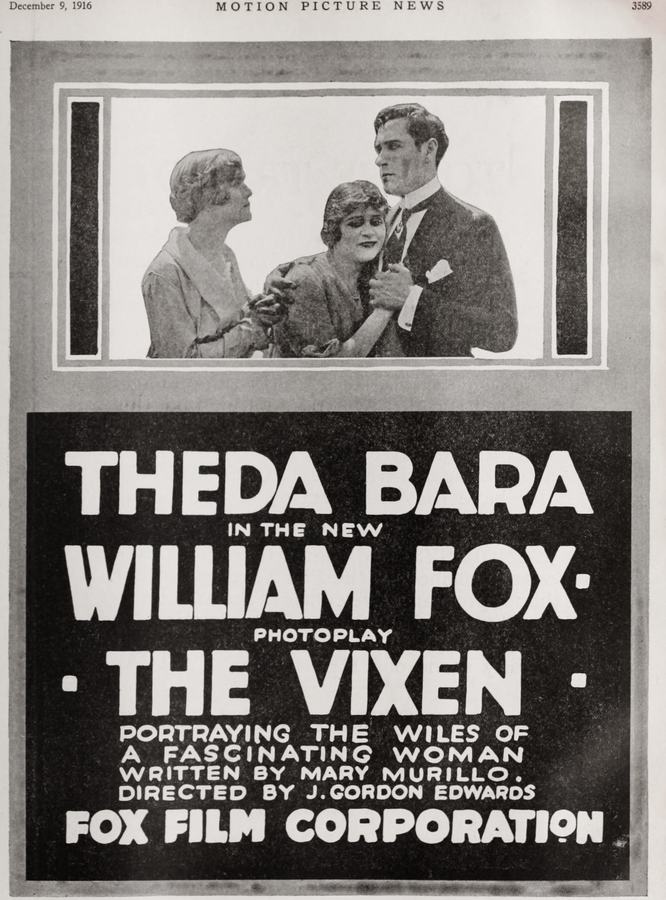
A definitive 6.8/10 rating for a film that redefined the boundaries of cult cinema. The Vixen remains a cornerstone of transgressive art.
Few figures loom as large in the annals of early cinema as Theda Bara, the original 'vamp,' whose exotic allure and scandalous screen persona captivated audiences and defined an era. In 1917’s The Vixen, Bara delivers a performance that is nothing short of electrifying, embodying the very essence of destructive charm. This isn't merely a film; it's a stark morality play, a psychological dissection of malice, and a testament to the enduring power of a woman's will, for better or, in this case, decidedly for worse. As Elsie Drummond, Bara unleashes a whirlwind of calculated chaos, a force of nature whose primary delight lies in the undoing of those around her, particularly her own kin. It's a masterclass in silent film villainy, a character study so potent it transcends the limitations of its medium, speaking volumes without a single spoken word.
Elsie Drummond, a character etched in the very fabric of cinematic infamy, is not just a 'vixen'; she is a predator cloaked in silk and guile. From her initial appearance, it's clear she operates on a different plane of existence, one where personal gratification trumps all ethical considerations. Her spoiled nature isn't a mere flaw; it's the fertile ground from which her more sinister impulses spring. The narrative paints her as a nymphomaniac, a label that, in the context of the era, speaks less to explicit sexuality and more to an insatiable, almost pathological, hunger for conquest and control. Her pleasure derives from orchestrating the downfall of others, a perverse artistry that she applies with chilling precision to her sister, Helen.
Bara’s portrayal of Elsie is a tour de force. Her eyes, often described as hypnotic, convey volumes – a flicker of disdain, a flash of manipulative intent, a cold calculation. When Helen, sweet and unsuspecting, finds love with the Wall Street businessman Martin Stevens, Elsie’s response is immediate and visceral. It’s not just jealousy; it’s a proprietary rage that someone else might possess something she desires, even if that desire is purely for the act of taking. She deploys her considerable charms, a potent cocktail of allure and cunning, to systematically dismantle Helen’s budding romance. The seduction of Stevens is a cold, clinical operation, executed with the detached professionalism of a seasoned hunter. Once Stevens is firmly ensnared, the true depth of Elsie’s perfidy is revealed. Her shiftless brother, Charlie Drummond, a minor but crucial cog in Elsie’s destructive machinery, steals from Stevens, leading to his financial ruin. This provides Elsie with the perfect pretext for abandonment, a casual discarding of a broken toy, highlighting her utter lack of empathy.
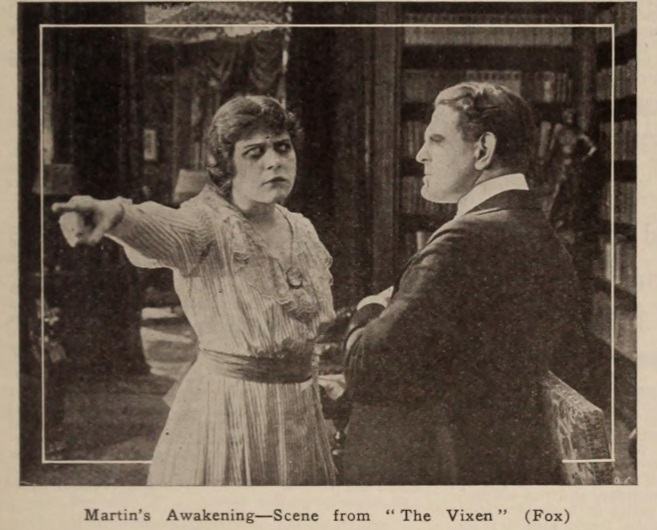
Yet, Elsie’s appetite for disruption is far from sated. Her next target is Knowles Murray, a promising young statesman, again, a man originally destined for Helen. This second act of romantic larceny is even more audacious, culminating in marriage. The move to Paris with Murray, and her subsequent motherhood, might suggest a softening, a domestication of the 'vixen.' But this is merely a superficial change. The core of Elsie remains untouched, a dark star burning with self-interest. The six-year interlude, which sees Helen burdened with their alcoholic father, only serves to underscore Elsie’s self-serving trajectory, her ability to escape responsibility while others suffer in her wake. Bara’s performance here, even years later, would likely maintain that subtle undercurrent of restless dissatisfaction, a hint that domesticity cannot truly contain such a potent force of ego.
In stark contrast to Elsie’s flamboyant malevolence stands Helen Drummond, a character whose quiet virtue shines as a beacon against the encroaching shadows. Helen is the archetypal long-suffering sister, a figure whose goodness is repeatedly tested by Elsie’s relentless machinations. Her initial enchantment with Martin Stevens, and later her connection to Knowles Murray, speaks to a capacity for genuine affection and a desire for a stable, loving life. Each time, Elsie’s shadow falls across her path, snatching away her happiness with cruel indifference. Helen’s endurance, however, is not passive. It is a profound strength, born of a selfless spirit and an unwavering moral compass.
The burden of caring for their alcoholic father, a task Elsie conveniently shirked, falls squarely on Helen’s shoulders. This responsibility, while arduous, further solidifies her character as one of quiet sacrifice and steadfast devotion. It’s a thankless role, but one she undertakes without complaint, highlighting the vast chasm between her and her sister. The most poignant demonstration of Helen’s profound empathy and moral fortitude occurs much later in the film. When Elsie, years into her marriage with Murray and now a mother of two, is on the verge of being discovered in Stevens’ arms by her husband, it is Helen who steps in. This act of intervention, providing an escape and a crucial alibi for Elsie, is not born of sisterly loyalty in the conventional sense. Rather, it is a selfless act of protection, driven by a profound understanding of the innocent children who would be irrevocably harmed by their mother’s exposure. This pivotal moment elevates Helen from a mere victim to a moral agent, a guardian of innocence, even if it means shielding the very person who has caused her so much pain.
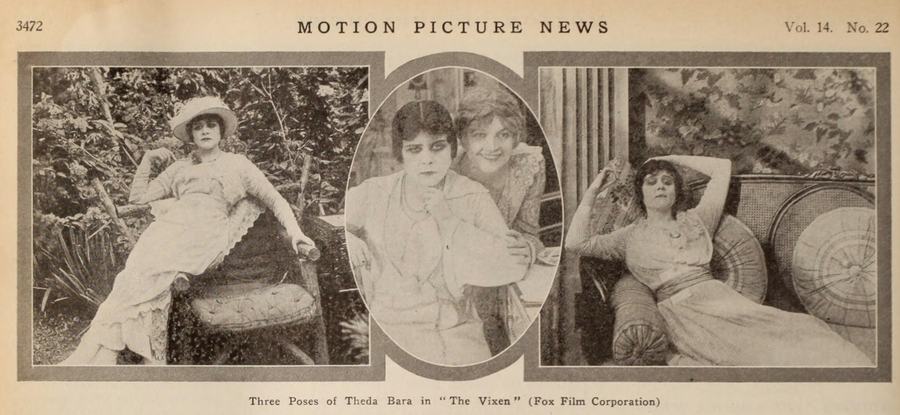
Helen's journey culminates in a quiet triumph. Martin Stevens, having been twice burned by Elsie’s deceit and having rebuilt his life, finally sees through the Vixen’s veneer. His eventual marriage to Helen is not merely a consolation prize but a profound recognition of enduring virtue. It signifies a choice for genuine affection, stability, and integrity over fleeting, destructive passion. Helen’s character, therefore, serves as the moral anchor of the film, a testament to the belief that goodness, however tested, can ultimately find its reward, offering a glimmer of hope amidst the pervasive cynicism of Elsie’s world.
The male characters in The Vixen are not merely passive victims but crucial elements in Elsie’s grand scheme of manipulation. They represent different facets of male susceptibility to a woman of Elsie’s formidable charm and cunning. Martin Stevens, initially a rising Wall Street businessman, embodies the ambitious, somewhat naive figure easily swayed by superficial glamour. His initial infatuation with Helen is quickly eclipsed by Elsie’s more aggressive, intoxicating allure. His financial ruin, orchestrated in part by Elsie’s brother Charlie’s theft, and Elsie’s subsequent abandonment, serves as a harsh lesson. Stevens’ journey is one of profound disillusionment and eventual wisdom. His ability to rebuild his wealth and position speaks to a fundamental resilience, but his ultimate realization about Elsie, and his choice to marry Helen, signifies a growth beyond mere material recovery – a discernment of true character.
Knowles Murray, the young statesman, represents a different kind of prey. He is a figure of societal standing and promise, whose intellect and ambition might, paradoxically, make him more vulnerable to Elsie’s sophisticated manipulations. His initial connection to Helen suggests a man capable of discerning genuine affection, yet Elsie’s calculated charm proves irresistible. His marriage to Elsie and their subsequent life in Paris, even with the presence of children, hints at a life built on a foundation of deceit. The near-discovery of Elsie in Stevens’ arms by Murray is the moment of reckoning, a precipice where his carefully constructed reality threatens to shatter. The fact that Helen intervenes to protect Elsie’s children, and by extension, Murray’s reputation from public scandal, underscores the fragility of his position and the pervasive nature of Elsie’s influence.
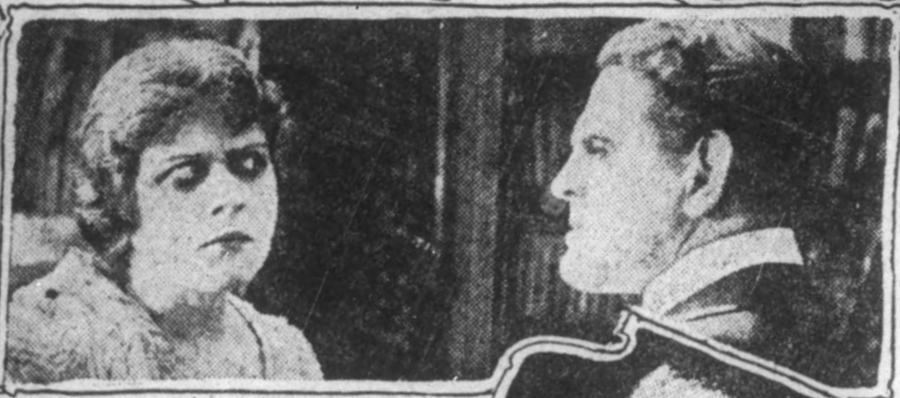
Charlie Drummond, Elsie’s shiftless brother, serves a more utilitarian purpose in the narrative. His act of theft, while seemingly independent, becomes a convenient tool in Elsie’s arsenal, a catalyst for Stevens’ downfall that allows her to shed him without a backward glance. He is a minor character, yet his actions have significant repercussions, highlighting the interconnectedness of the various destructive forces at play around Elsie. Finally, the alcoholic father, though largely unseen, provides the backdrop of familial decay and the stark contrast to Helen’s unwavering sense of duty. These men, in their varied capacities, become pawns in Elsie’s game, their lives irrevocably altered by her capricious will, ultimately serving to illuminate the devastating reach of the Vixen’s power.
The Vixen, beyond its compelling narrative, is a rich tapestry of enduring themes that resonate even today. At its core lies the potent dichotomy of manipulation versus genuine affection, and the stark consequences of unchecked vice against the quiet rewards of virtue. Elsie Drummond is the embodiment of pure manipulation, a character whose every action is a calculated move in a larger game of self-gratification. Her ability to charm, deceive, and abandon without remorse speaks to a chilling psychological profile, one that preys on the unsuspecting and exploits trust with ruthless efficiency. This is not mere flirtation; it is a systematic dismantling of emotional and financial stability for personal gain, a theme explored in other dramas of the era like The Crime of the Camora, which also delves into societal corruption and personal betrayal.
The film also serves as a quintessential exploration of the 'vamp' archetype, a phenomenon that Bara herself largely originated and perfected. The vamp was more than just a femme fatale; she was a woman whose power lay not in physical strength but in her seductive, almost supernatural, ability to drain men of their vitality, their wealth, and their moral standing. Elsie is the ultimate vamp, leaving a trail of ruined lives in her wake, much like the titular character might have in The Devil's Daughter, another film playing with themes of destructive feminine power. This archetype reflected societal anxieties about changing gender roles and female independence in the early 20th century, where a powerful, unattached woman was both fascinating and terrifying.
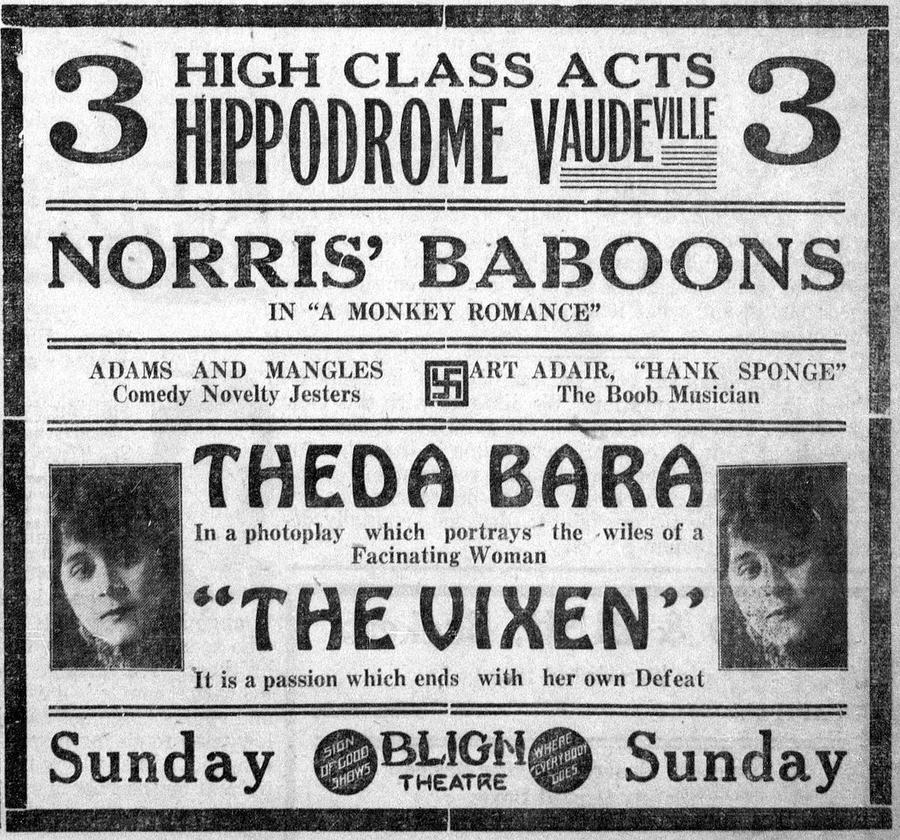
The theme of societal expectations and gender roles is subtly woven throughout the narrative. While Elsie brazenly defies conventional expectations of womanhood, Helen quietly upholds them, embodying the virtues of sacrifice, loyalty, and domesticity. The film, therefore, can be read as a moralistic tale, where Elsie’s temporary triumphs are ultimately overshadowed by Helen’s enduring peace and the true love she finds with a wiser Martin Stevens. This contrast offers a commentary on what constitutes true happiness and success – fleeting material gain and power, or genuine connection and moral integrity. The struggle for redemption, or the lack thereof, is also central. Elsie never truly changes; her deception is a continuous thread. Helen’s quiet suffering, however, leads to a profound form of personal redemption and a well-deserved happiness, echoing themes often seen in films focused on moral fortitude, such as Life's Harmony.
Love, lust, and betrayal form the emotional core of the film. Elsie's 'love' is merely lust for power and control, while Helen's is genuine and selfless. The betrayals Elsie perpetrates are not just against individuals but against the very fabric of trust and familial bonds. The story explores the devastating ripple effect of such betrayals, from financial ruin to emotional devastation, demonstrating how deeply one individual's malicious choices can impact an entire circle of lives. The film's enduring power lies in its ability to tap into these universal human experiences, presenting a stark, unforgettable vision of character and consequence.
Even without the benefit of sound, The Vixen, like many silent films of its era, would have relied heavily on visual storytelling to convey its intricate plot and intense emotions. Director J. Gordon Edwards, a frequent collaborator with Theda Bara, would have meticulously crafted each scene to maximize dramatic impact. The cinematography, while perhaps not as innovative as some contemporaries, would have been functional and effective, employing close-ups to emphasize Bara’s piercing gaze and the subtle shifts in her facial expressions – crucial for conveying Elsie’s manipulative thoughts. Lighting would have played a vital role, perhaps using stark contrasts to highlight Elsie’s duplicity and Helen’s purity, a common visual metaphor in silent melodramas.
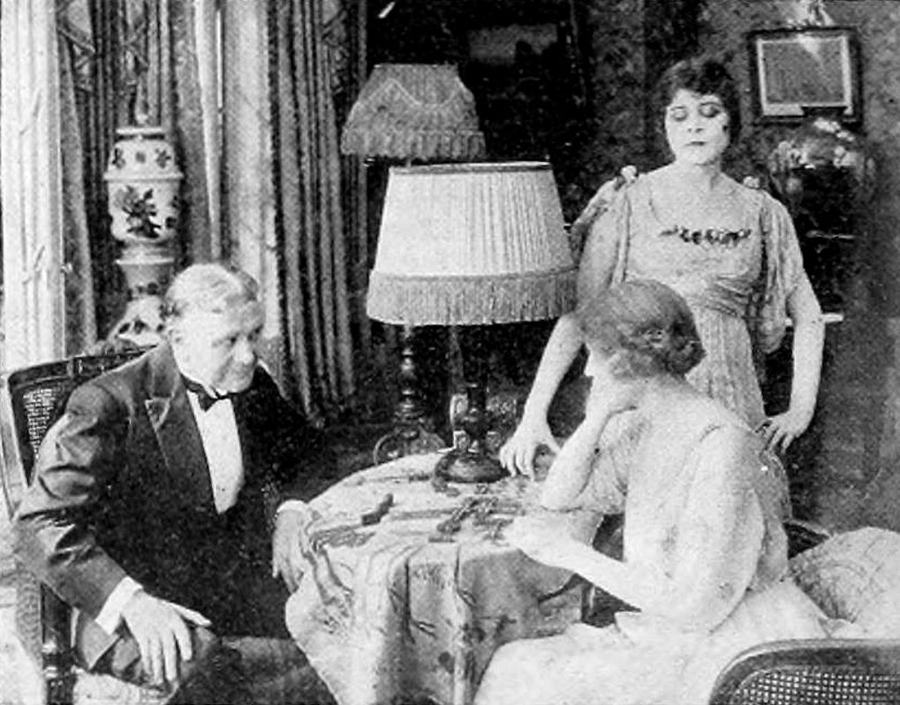
The pacing of the film, particularly the six-year jump, demonstrates an understanding of narrative economy, allowing for significant character development and plot progression without unnecessary exposition. Intertitles, the textual inserts that conveyed dialogue and plot points, would have been carefully written to maintain the flow and enhance the emotional weight of key moments. Costume and set design would also have been instrumental in defining character and atmosphere. Elsie’s wardrobe, undoubtedly extravagant and daring for its time, would have underscored her exotic, predatory persona, contrasting sharply with Helen’s more modest attire. The Parisian setting, even if depicted through studio sets, would have evoked a sense of European sophistication and decadence, further separating Elsie’s life from Helen’s more grounded existence.
The effectiveness of silent film often hinged on the actors’ ability to use their bodies and faces to convey complex emotions, and Theda Bara was a master of this craft. Her expressive gestures, her dramatic poses, and her intense stare would have filled the screen, ensuring that Elsie’s malevolence was palpable. The film’s dramatic arc, from Elsie’s initial acts of sabotage to Helen’s eventual sacrifice and Stevens’ final choice, would have been carefully structured to build tension and deliver a satisfying, albeit morally complex, resolution. While a modern audience might find the conventions of silent cinema unfamiliar, the core emotional power and thematic depth of The Vixen would have been undeniable, a testament to the enduring craft of early filmmakers.
Placing The Vixen within the broader context of silent cinema reveals its pivotal role in shaping certain archetypes and narrative conventions. As a prime example of the 'vamp' genre, it naturally invites comparison with other films that featured powerful, often destructive, female leads. While Theda Bara’s most famous role was arguably in A Fool There Was (not in the provided list, but a foundational text for her persona), The Devil's Daughter would be another excellent point of reference, showcasing how other actresses or directors tackled similar themes of seductive power and moral downfall. These films collectively painted a picture of the 'new woman' of the era, one who challenged traditional gender roles and exerted a fearsome influence over men.
The intricate web of manipulation and societal scandal in The Vixen also finds echoes in films like The Crime of the Camora or The District Attorney. While these might focus more on legal or criminal aspects, the underlying tension of secrets, public perception, and the ruin of reputations forms a common thread. Elsie’s actions, leading to Stevens’ financial ruin and the near-exposure of her own marital infidelity, highlight the fragile nature of social standing in that period, a theme that resonated deeply with audiences navigating a rapidly changing world.
The sisterly conflict at the heart of the story, a dynamic of virtue pitted against vice, can be seen in other dramatic works of the era, perhaps finding parallels in films like Life's Harmony, which might explore similar familial bonds tested by external pressures or internal strife. The themes of romantic betrayal and the shifting loyalties of affection are timeless, and one might find thematic resonance in a film like Then I'll Come Back to You, if it delves into complex romantic entanglements and enduring love despite obstacles. The dramatic recovery of Martin Stevens from financial ruin also touches upon themes of resilience and the battle against adversity, possibly connecting to films like The Silent Battle, where characters overcome significant personal or economic challenges.
Ultimately, The Vixen stands as a powerful artifact of its time, not just for its entertainment value but for its incisive commentary on human nature. It’s a film that, through its unforgettable lead performance and its stark moral landscape, continues to provoke thought and conversation, cementing its place as a significant contribution to silent cinema’s rich legacy. The character of Elsie Drummond, brought to life with such intensity by Theda Bara, remains a captivating and chilling reminder of the destructive potential of unchecked desire and manipulation, a cinematic villainess who truly earned her notorious moniker.
IMDb —
1919
Community
Log in to comment.