DbcultAccessing Vault...
Cult Review
Senior Film Conservator
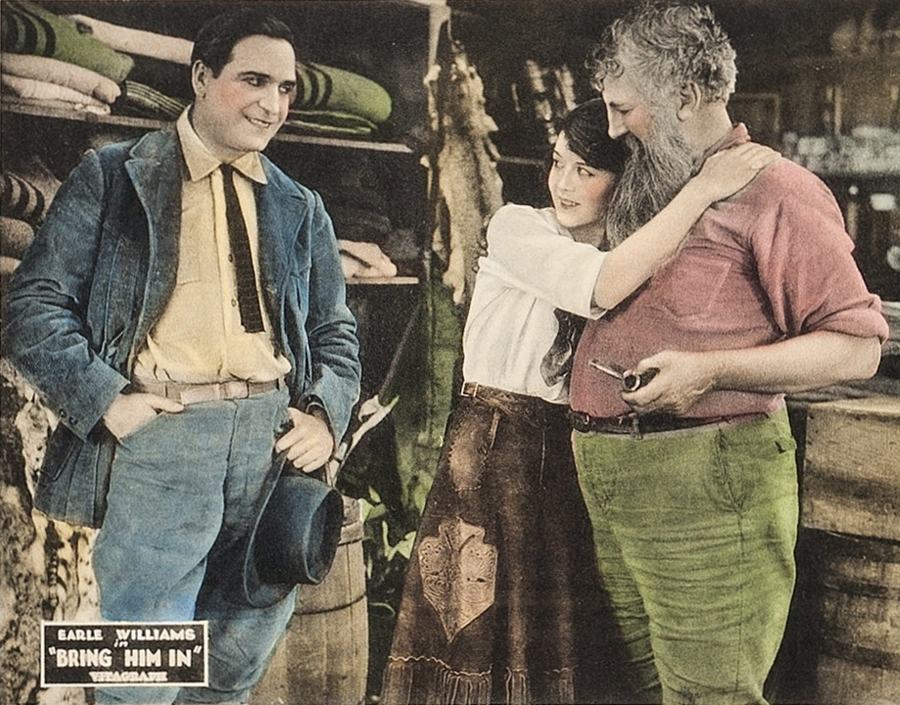
Ernest Van Pelt’s portrayal of a doctor whose unconscious transgressions manifest as literal crime is a masterclass in existential dread. *Bring Him In* operates in the shadowy realm where Freudian slips become factual, and the protagonist’s guilt is not merely internalized but externalized through the corpse of a gambler sprawled across his parlor floor. This is no mere thriller; it’s a dissection of the moral anatomy of a man who, by fleeing across the Canadian border, attempts to evade both the law and the gnawing weight of his own complicity.
The film’s opening sequence, a dream rendered in chiaroscuro, establishes a tension that never relents. The gambler’s lifeless body, a grotesque mirror of the doctor’s subconscious, becomes the catalyst for a journey that transcends geography and delves into the metaphysical. The RCMP’s pursuit is not just a narrative device but a symbolic force, representing the inescapability of consequence. Director H.H. Van Loan and Thomas Dixon Jr. weave a script that thrums with the pulse of a man unraveling, each frame steeped in the kind of visual anxiety that Hitchcock might have envied.
Van Pelt’s performance is a tour de force of micro-expressions. His eyes dart with the frantic energy of a man who knows the law is not his only pursuer. Bruce Gordon’s RCMP agent, by contrast, is a monolithic figure of authority, his presence as suffocating as the snowbound Canadian wilderness. The supporting cast—Fritzi Ridgeway, Earle Williams—anchor the film’s emotional undercurrents, though their characters remain secondary to the doctor’s internal maelstrom. The dialogue, sparse and staccato, serves the film’s claustrophobic tone, each line a brick in the prison of the protagonist’s guilt.
Thematically, *Bring Him In* resonates with the same existential quandaries explored in *The Lion Man* and *The Ivory Snuff Box*. Like those films, it interrogates the duality of human nature, but where those works lean into mysticism or melodrama, this one grounds its horror in the banality of moral failure. The doctor’s crime is not a grand gesture but a quiet, almost accidental act—a reflection of modern life’s capacity to normalize transgression. The Canadian wilderness, a recurring motif in the director’s oeuvre (see also *Ubirajara*), becomes a metaphor for isolation, a place where the self is stripped of societal veneer.
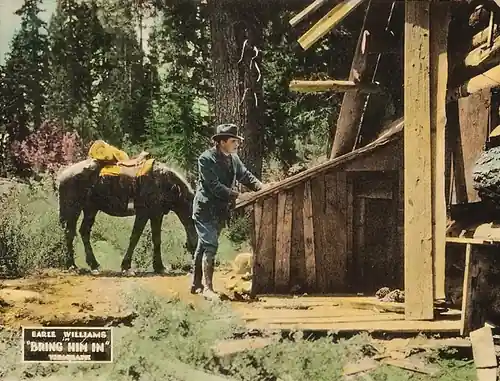
Visually, the film is a study in contrasts. The gambler’s corpse, lit in the cold glow of the living room, is juxtaposed against the doctor’s feverish escape into the snowy Canadian night. The color palette—dominated by whites, grays, and the occasional flash of the gambler’s crimson blood—creates a tableau of moral clarity in a world of ethical murk. The cinematography, though constrained by the era’s technical limitations, uses deep focus and Dutch angles to amplify the disorientation of the protagonist.
One cannot discuss *Bring Him In* without acknowledging its debt to the pulp tradition of *Wedding Blues* and *Winning Grandma*. These films, too, blend the mundane with the macabre, but where they often prioritize plot over psychological depth, this one inverts the hierarchy. The doctor’s flight is less a physical journey than a psychological odyssey, a descent into the regions of the self that even the law cannot reach. The RCMP’s investigation, while mechanically executed, serves as a narrative counterweight to the protagonist’s internal chaos.
The film’s climax, a confrontation between the doctor and the RCMP in a remote Canadian cabin, is a masterstroke of tension. Here, the walls seem to close in, the dialogue sharpens, and the protagonist’s defenses crumble. The final act, however, resists the easy catharsis of a trial or redemption. Instead, it lingers on the ambiguity of the doctor’s fate, leaving the audience to ponder whether his guilt is absolved or merely transmuted. This refusal to resolve neatly is both a strength and a hallmark of the film’s intellectual rigor.
Comparisons to *The Pinch Hitter* and *A Widow’s Camouflage* are inevitable, given the shared themes of duality and deception. Yet *Bring Him In* distinguishes itself through its unflinching focus on the protagonist’s interiority. Where other films in the canon use external conflicts to drive the narrative, this one inverts the structure, making the internal conflict the primary engine of the plot. The gambler’s death is not just an inciting incident but a thematic keystone, a literalization of the Freudian idea that the unconscious is the site of repressed desires and fears.
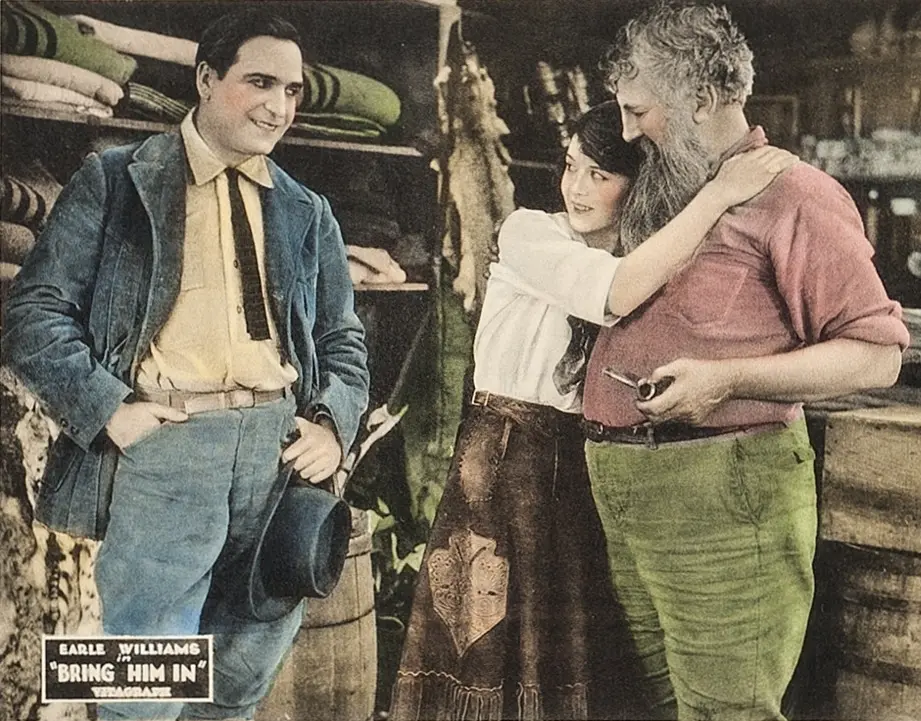
The film’s pacing, deliberate and methodical, mirrors the doctor’s own slow unraveling. There are no shortcuts here, no cheap scares or plot contrivances. Instead, the tension builds through atmosphere and implication, the kind of storytelling that rewards patient engagement. The soundtrack, a sparse arrangement of piano and strings, underscores the narrative’s emotional undercurrents without overwhelming them. Each note seems to echo the protagonist’s heartbeat, a metronome of anxiety.
In the context of early 20th-century cinema, *Bring Him In* stands as a precursor to the modern psychological thriller. Its exploration of guilt and identity would later be echoed in the works of Hitchcock and Welles, but it retains a uniquely American sensibility. The Canadian border, a liminal space in the narrative, becomes a symbol of both refuge and entrapment, a place where the protagonist’s worst fears manifest in the physical world. This duality is a recurring motif in the writers’ other works, particularly *Faith (1919)* and *This Hero Stuff*, which similarly grapple with the intersection of personal and public morality.
For cinephiles, the film offers a rich tapestry of visual and thematic elements to dissect. The doctor’s repeated glances at the gambler’s corpse, the RCMP’s methodical tracking, and the Canadian landscape’s indifferent beauty all contribute to a narrative that is as much about the journey through the mind as it is about the journey through space. It is a film that demands to be watched with both eyes and intellect, a rare feat in the silent era.
Ultimately, *Bring Him In* is a testament to the power of cinema to render the intangible tangible. The doctor’s guilt, his fear, his desperation—all are made palpable through Van Pelt’s performance and the writers’ meticulous script. It is a film that lingers, not because of its plot, but because of the questions it provokes about the nature of responsibility, the weight of secrets, and the inescapability of the past. In an age where many films prioritize spectacle over substance, this one remains a quiet, unyielding force, as unsettling in its themes as in its execution.
IMDb 5.5
1930
Community
Log in to comment.