DbcultAccessing Vault...
6.2/10
Senior Film Conservator
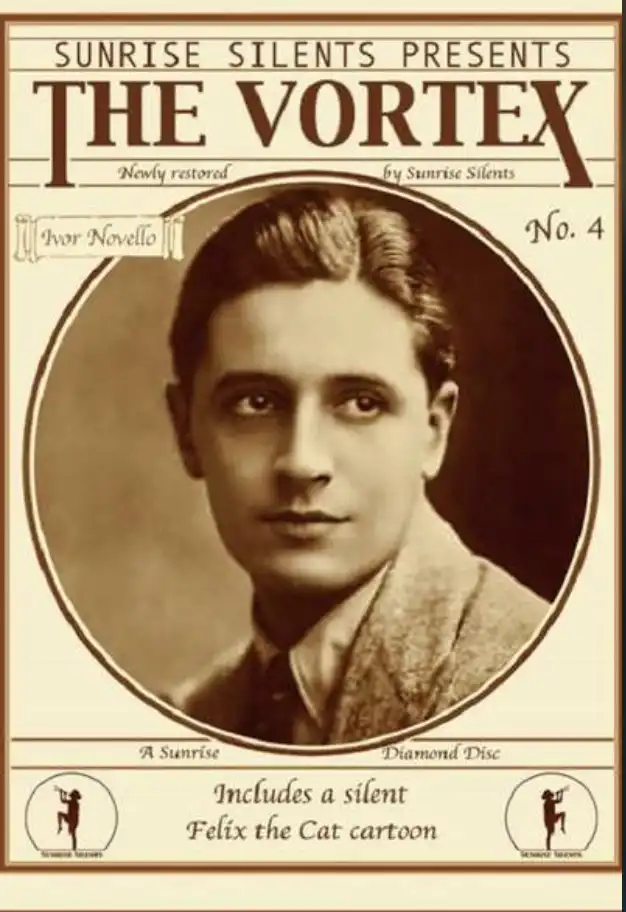
A definitive 6.2/10 rating for a film that redefined the boundaries of cult cinema. The Vortex remains a cornerstone of transgressive art.
Look, if you're not already into silent films, or at least curious about early Noël Coward adaptations, then The Vortex from 1928 is probably not going to be your new favourite movie. It's a specific taste, for sure. But if you've got a soft spot for the melodrama of the era, and don't mind a certain theatricality in your acting, there's something genuinely compelling here, even if it often feels like watching a play through a keyhole. Anyone expecting modern pacing or subtle performances will likely be tearing their hair out by the thirty-minute mark.
Ivor Novello, as Nicky Lancaster, is just *so* much. He’s all wide eyes and hand-wringing. It’s a silent film, so you expect a level of exaggeration, but his despair feels almost performative at times, like he’s trying to hit a note the camera can’t quite capture. There’s a scene early on where he’s at a party, and he just keeps staring into the middle distance, looking utterly miserable while everyone else is doing their best to look glamorous. It’s a little funny, actually. The contrast is stark, but also a bit much.
His mother, Florence (Willette Kershaw), on the other hand, is a masterclass in fragile vanity. Her costumes are incredible – those hats! – and she holds herself with this rigid elegance that just screams 'everything is fine, don't look too closely.' But you do look closely, and you see the cracks. Her reaction to Tom Veryan (Kinsey Peile), her much younger lover, is all fluttering eyelashes and forced gaiety. Peile, by the way, plays Tom as such a smarmy drip. He’s not even charming, just kind of vacant, which makes you wonder what Florence even sees in him beyond a trophy.
The whole setup, with Nicky finding out his fiancée, Bunty (Frances Doble), is also involved with Tom, is pure Coward. The intertitles, especially when they reveal these bombshells, are often quite direct, almost blunt. They cut right to the point, sometimes a little too quickly after a long, drawn-out reaction shot from Novello. It creates this weird rhythm, like the film can’t quite decide if it wants to linger or just get on with it.
There's a sequence in Florence's dressing room, I think, where she’s getting ready for yet another party. The camera stays on her for a long time as she applies makeup, and the silence, punctuated by the rustle of fabric, really lets you feel the emptiness of her life. It's not explicitly stated, but you get it. All this outward sparkle, nothing underneath.
The party scenes themselves are visually interesting. Lots of people dancing, but the overall effect is somehow claustrophobic, not celebratory. The extras often feel a bit like mannequins, just moving through the motions. You sense the pressure, the gossip, the pretense. It's a very specific kind of upper-crust misery, perfectly captured.
The ending, when Nicky finally confronts Florence, is where the film really tries to hit its emotional peak. Novello pulls out all the stops, bordering on hysterical, and Kershaw matches him with this sudden, raw vulnerability. It’s a scene that goes on for a while, and you can practically feel the stage origins of it. The camera pushes in, then pulls back, and the gestures become bigger. It’s an interesting choice. A modern film might play it quieter, but here, it’s all out there. It’s a bit exhausting, honestly, but you can’t deny the commitment.
The film could have been trimmed in places. Some of the reaction shots linger on Novello's face just a beat too long, and you start to wonder if the editor got lost. But then there are these quiet moments, like a shot of a discarded cigarette in an ashtray, or a glance exchanged between two women at a party, that speak volumes without any intertitle. Those are the bits that really work, that feel genuinely cinematic rather than a filmed play.
Ultimately, The Vortex is a fascinating window into a particular era of filmmaking and a particular writer's early sensibilities. It’s melodramatic, occasionally clunky, but there’s a real intensity to it. If you’re willing to meet it on its own terms, there’s a lot to chew on, even if it might give you a headache from all the silent screaming.
IMDb 6.4
1936
Community
Log in to comment.