DbcultAccessing Vault...
Cult Review
Senior Film Conservator
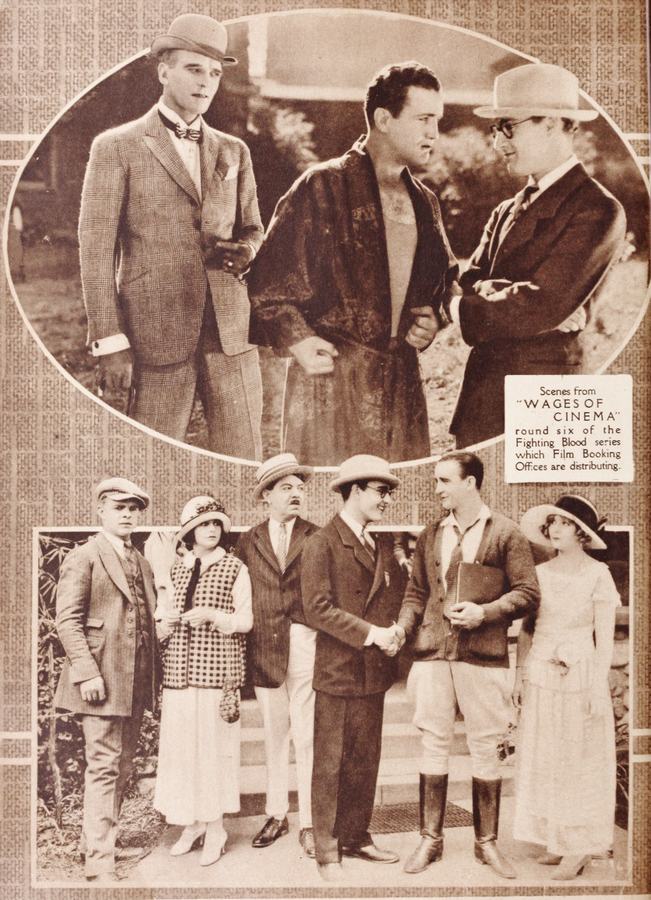
In the pantheon of early twentieth-century cinema, few subgenres captured the collective imagination with as much raw, unadulterated vigor as the boxing melodrama. The Wages of Cinema (1924) stands as a fascinating artifact of this epoch, a period where the visceral reality of the prize fight began to merge with the burgeoning artifice of Hollywood. Directed with a keen eye for the kinetic potential of the human form, the film serves as a meta-commentary on the nature of fame, leverage, and the performative requirements of masculinity during the Jazz Age.
The narrative centers on Gale Galem, portrayed with a rugged, unpolished charisma by Larry McGrath. Galem, known in the ring as "Six-Second" Smith, is a man defined by his brevity—his ability to end a conflict before the audience has fully settled into their seats. However, his greatest opponent is not a man of flesh and bone, but the bureaucratic avoidance of the reigning champion, "Red" Mack. To bridge this gap, Galem turns to the silver screen. It is a brilliant, if cynical, maneuver: if the champion will not meet him in the gym, perhaps he will meet him in the headlines. This thematic preoccupation with the camera as a tool for social and professional leverage echoes the darker social undertones found in The Eternal Grind, though here the stakes are personal rather than purely systemic.
The screenplay, derived from the sharp-tongued prose of H.C. Witwer and refined by Beatrice Van, possesses a rhythmic quality that mimics the cadence of a sparring match. Witwer, famous for his "Fighting Blood" stories, understood the vernacular of the gym better than almost any contemporary writer. His influence ensures that the dialogue—conveyed through those ornate intertitles characteristic of the era—crackles with a street-wise wit that prevents the film from descending into mawkish sentimentality. Unlike the more traditional romantic entanglements of The Martinache Marriage, the motivations in The Wages of Cinema are refreshingly pragmatic.
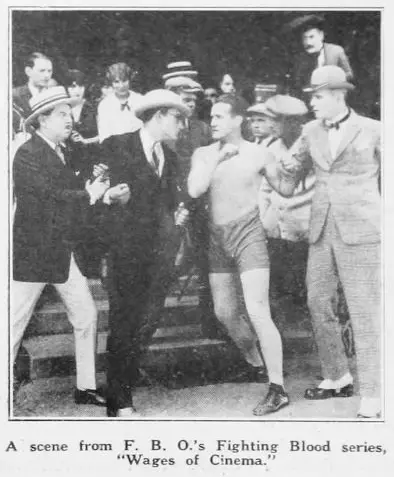
Beatrice Van’s contribution cannot be understated. As one of the prolific women writers of the silent era, she injects a level of structural sophistication into what could have been a standard brawler. She treats the film industry within the film as a labyrinthine monster, a place where identity is fluid and often commodified. This exploration of identity through performance is a recurring motif in silent cinema, often seen in works like April Folly, yet here it is grounded by the physical reality of McGrath’s boxing background.
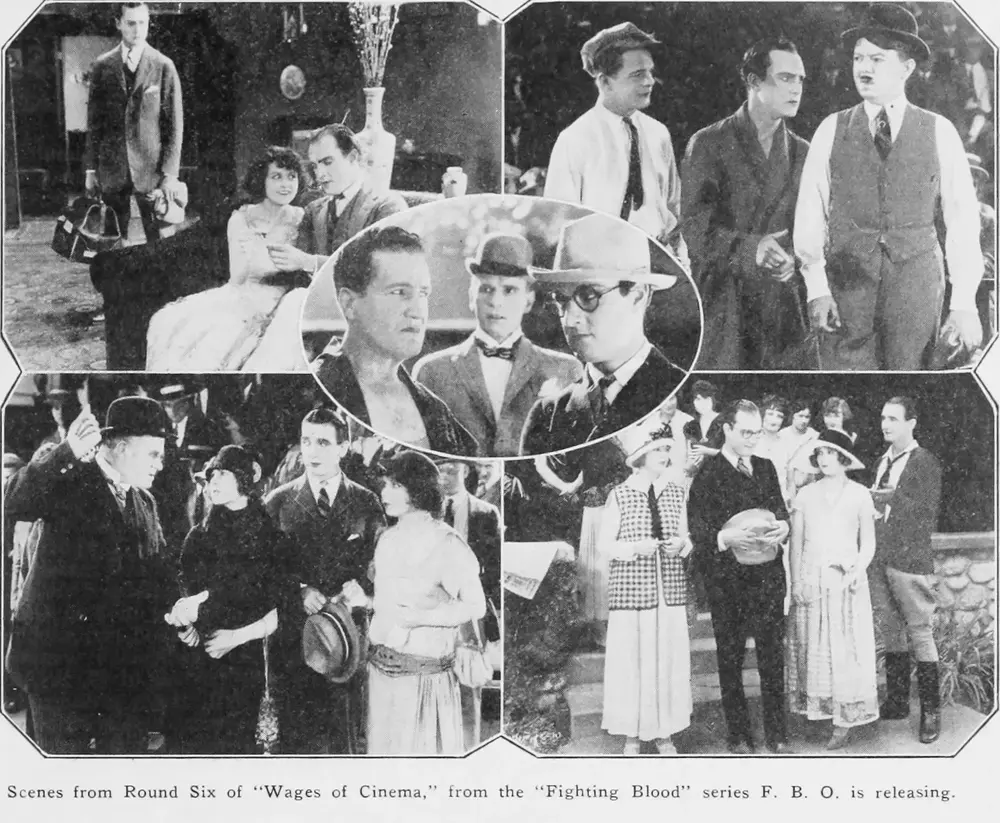
The supporting cast provides a colorful tapestry against which Galem’s monochromatic determination is set. Al Cooke and Kit Guard offer the necessary levity, acting as the quintessential sidekicks whose comedic timing provides a counterpoint to the high-stakes machinations of the plot. Their presence ensures the film remains accessible, balancing the grim determination of the protagonist with moments of levity that were essential for audience retention in the 1920s. This balance of tone is somewhat more successful here than in the often overly-earnest Determination.
Louise Lorraine, a luminary of the silent screen, brings a nuanced pulchritude to her role. She is not merely a prize to be won, but a participant in the cinematic world that Galem seeks to exploit. Her chemistry with McGrath is palpable, providing the necessary emotional core that justifies Galem’s detour into the world of greasepaint and arc lights. One can see parallels in the romantic dynamics of The Love Thief, though the stakes here feel significantly more grounded in the grit of the urban landscape.
Technically, The Wages of Cinema utilizes the limited resources of its time to create a sense of claustrophobic tension. The gym sequences are shot with a visceral proximity that was revolutionary for the time, capturing the sweat and the strain of the pugilists. The contrast between the dark, grimy interiors of the training camps and the bright, artificial glare of the movie sets creates a visual dichotomy that reinforces the film's central theme: the tension between the real and the projected. This use of lighting to define thematic boundaries is far more sophisticated than the flat cinematography often found in contemporary shorts like Give Her Gas.
The editing, particularly during the climactic sequences, employs a proto-montage style that heightens the sense of urgency. As Galem maneuvers through his acting roles, the intercutting of his training sessions suggests a man who is constantly fighting, regardless of whether he is in front of a camera or a heavy bag. This relentless pace prevents the 1500-word narrative depth from feeling bloated, maintaining a lean, athletic structure that mirrors its protagonist’s physique. It avoids the lethargic pacing that occasionally plagued dramas like The Greater Sinner.
To understand The Wages of Cinema, one must acknowledge its place within the broader cultural phenomenon of the "Fighting Blood" series. These films were more than mere entertainment; they were a roadmap for the working-class man’s aspirations. Galem represents the quintessential underdog, a figure who uses his only capital—his body—to navigate a world that would otherwise exclude him. This narrative of upward mobility through physical sacrifice is a trope that remains a cornerstone of American cinema, yet here it is presented with a cynical twist: the hero must become a "fake" (an actor) to achieve his "real" goal (the fight).
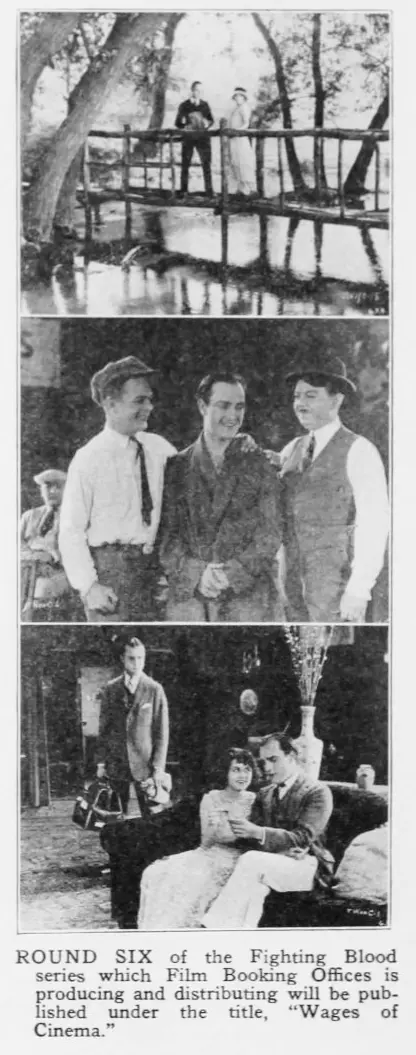
This irony is not lost on the audience. The film subtly mocks the very industry that produced it, suggesting that the "wages" of cinema are not just monetary, but involve a certain loss of soul. When compared to the slapstick innocence of Don't Weaken, The Wages of Cinema feels remarkably modern in its skepticism. It shares a certain DNA with The Woman Who Gave, in that both films deal with the transactional nature of human relationships in a world dominated by spectacle.
While many silent films have faded into the obscurity of nitrate rot, The Wages of Cinema deserves a place in the scholarly discussion of early Hollywood. It is a work that refuses to be categorized simply as a sports film or a comedy. It is a sophisticated satire of the burgeoning media-industrial complex. The performances, particularly from the athletic McGrath and the luminous Lorraine, provide a human anchor to the film's more abstract observations about fame.
In the final analysis, the film asks a poignant question: what is the cost of being seen? For Gale Galem, the price is his privacy and his dignity, as he must perform for the masses to get what he wants. This theme of performing for survival is echoed in Kids Is Kids, albeit in a much different context. However, Galem’s journey is uniquely masculine and uniquely American, rooted in the belief that through sheer force of will—and a bit of celluloid magic—one can force the world to take notice.
As we look back from our modern vantage point, where athletes are influencers and actors are brands, The Wages of Cinema feels incredibly prescient. It captured the birth of the modern celebrity athlete long before the term existed. It is a film that understands that in the arena of public opinion, the knockout punch is often delivered not by a fist, but by an image. Whether viewed as a historical curiosity or a sharp-edged satire, it remains a compelling testament to the power of the moving image.
The film’s resolution, while satisfying the generic requirements of the time, leaves the viewer with a lingering sense of the ephemeral nature of fame. Much like the characters in Midnight Madness, the protagonists are caught in a whirlwind of their own making. Ultimately, The Wages of Cinema is a knockout—not just for its physical action, but for its intellectual weight. It reminds us that even in the silent era, the loudest statements were often made through the subtle manipulation of the frame.
Critic's Note: For those interested in the evolution of the silent brawler, I highly recommend contrasting this with the earlier Was He a Coward? or the more sentimental Little Red Decides. The shift in tone toward the cynical realism of the 1920s is palpable and serves as a fascinating study in cinematic development.
IMDb 4.9
1926
Community
Log in to comment.