DbcultAccessing Vault...
Cult Review
Senior Film Conservator
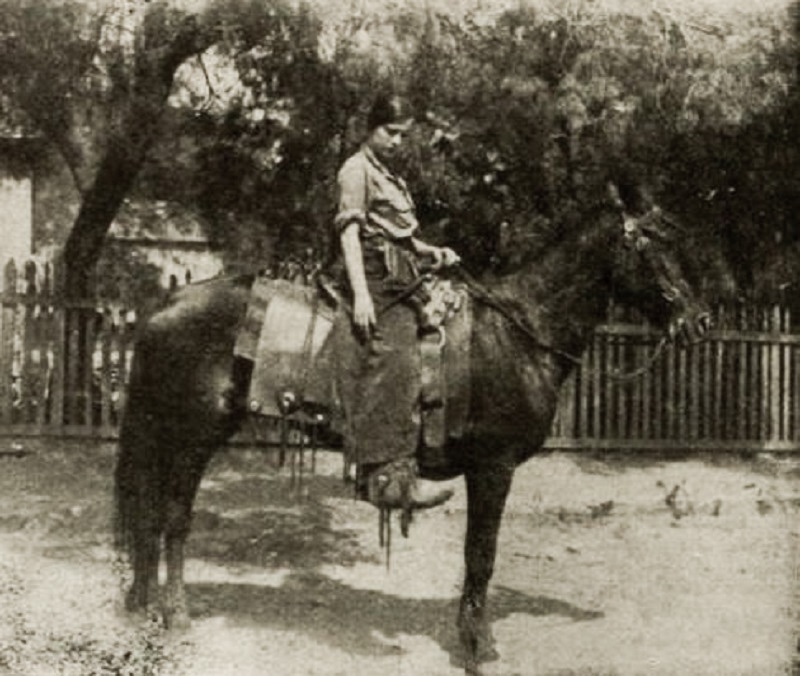
Picture the newsroom as a cavernous heart—each reporter a ventricle, each deadline a systolic thud. When the atrium collapses into silence twenty minutes before edition close, the Herald’s editor becomes a cardiac surgeon without a scalpel. Enter Fred Newton: boyish pulse incarnate, clutching a passport scrawled with hubris. His orders are deliciously impossible: cross a continent, pierce a revolution, and beam back the first unfiltered account of the Battle of Monclova before the inkwells freeze. The film treats this premise not as logistical absurdity but as birthright myth, a Gutenberg-era Icarus tale told at 24 frames per second.
The first reel unspools like a gasoline-soaked letter. A steamer’s whistle skewers the night; wireless antennas tremble like divining rods. Director uncredited (typical for 1914 one-reelers) favors axial cuts that feel almost cubist—battleship, transport, cub reporter, telegrapher—all interleaved without exposition, as though montage itself were the only language left. When Fred’s assistant clamps the portable key to the ship’s railing, every spark is a firefly of democracy. The camera lingers on the brass transmitter longer than on any human face, announcing the film’s true protagonist: information velocity.
By the time the narrative spills onto Texan dust, The War Extra has already sprinted past its contemporaries—compare it to From Dusk to Dawn’s pastoral melodrama or even Fantômas’ urban phantasmagoria. Here geography is antagonist: mesquite thorns, alkali glare, railroad tracks that vanish into geopolitical quicksand. Fred’s shack—built from prophecy and scrap lumber—rises like a Frontier chapel; its stovepipe exhales dots and dashes skyward, a private constellation.
Enter Dolores, the Mexican storekeeper’s adopted daughter, framed in doorway light so chiaroscuro it could have been carved by Giulio Cesare Abba’s celluloid chisel. Her rescue from outlaw clutches is the film’s hinge: suddenly the stakes pivot from journalistic bravado to corporeal survival. Viscerally, we feel the camera’s gaze masculinize—cross-cut between her dangling bracelet and Fred’s clenched rifle—yet the sequence refuses to drown in damsel cliché. Dolores will later spur a cavalry charge single-handedly, a narrative whiplash that prefigures the india bonita archetype still gestating in Mexican cinema.
The battle observation scene—shot from a treetop platform—deserves anthologizing in every silent war syllabus. Smoke plumes drift like ink in water; tiny soldiers jerk in fast-motion spasms, their mortality miniaturized yet horrifying. Intertitles hammer home the carnage with the restraint of a war correspondent filing under duress: "Constitutionalists sweep field—Federals in retreat." Nothing more. That asceticism is the film’s ethical spine: show the apparatus of reportage, not the viscera of death. Compare this to Salambo’s gaudy spectacle or The Coming Power’s sermonizing. The War Extra trusts the viewer to decode horror between the frames.
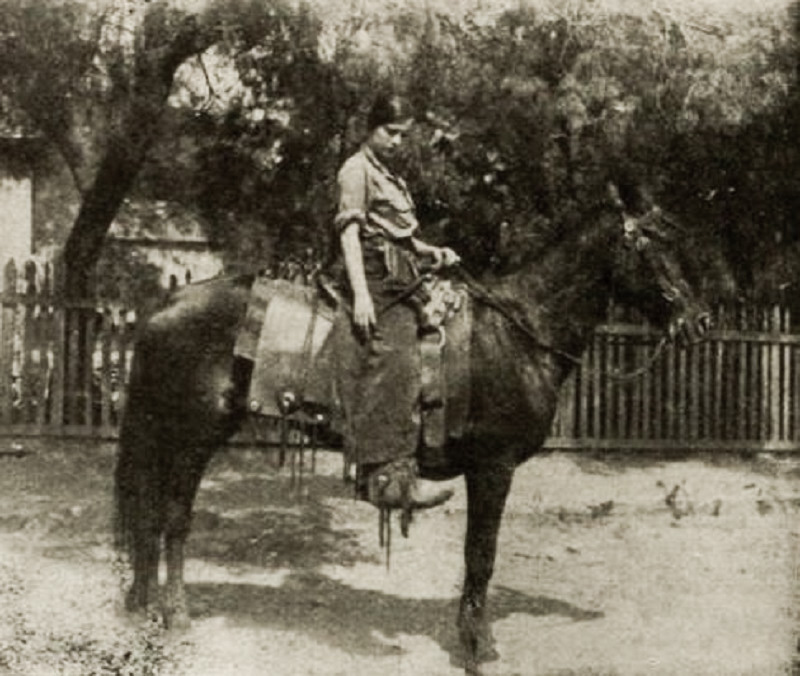
Back in New York, the Herald’s presses roar like Cretan bulls. Cylinders spin; paper rivers curl; stereotype plates slam home. The montage is industrial poetry—gears, elbows, newsboys—cross-cut with Fred’s shack now under siege. Parallel editing, yes, but infused with a proto-Eisensteinian tension: every impression on the plate mirrors a bullet impression on pine. When the outlaw-posse finally torches the shack, the telegraph key gutters out mid-sentence; sparks die like comets. The silence that follows is the film’s most radical aesthetic choice—no score, no intertitle—only the crackle of burning celluloid we imagine.
Yet Dolores is already galloping south-north, hair unspooling like battle standard. She recruits American cowboys in a cantina so dim it could be painted by Velázquez. Their charge across the Rio Grande is pure pulp exultation—hooves drumming water into silver sheets, six-shooters spitting cathode sparks. The climactic volley from U.S. regulars is staged in long-shot: men tumble from saddles in balletic arcs, dust clouds bloom ochre and carmine. It’s both triumphant and queasy, a first taste of imperial might served as deus-ex-machine. One thinks of later Vietnam imagery, of The Fugitive’s moral ambivalence, yet here the ambivalence is embryonic, unacknowledged.
The epilogue in Manhattan is lit like Eden at twilight. Newsroom veterans hoist Fred aloft; Dolores, now in lace collar, smiles with the stunned glow of someone who has outrun geography itself. Their marriage is staged before a skylight; rain beads on glass like Morse rain. Fade-out. No iris, no grandiloquent intertitle—just darkness and the echo of presses still rolling somewhere off-screen. It’s a finale so brisk it feels almost throwaway, yet it cements the film’s credo: history is a rough draft, marriage a typeset line, love the only scoop that outruns censorship.
Vinnie Burns, essaying Fred, channels Fairbanksian vim minus the wink. His physical lexicon—torso pitched forward, elbows slicing air—renders ambition as kinetic sculpture. Watch him scale the telegraph pole: boots bite wood, each rung a deadline. Opposite, Dolores (actress uncredited, a casualty of era) communicates in dark irises and chin-tilt defiance. Their chemistry is staccato, forged under literal gunfire rather than moonlight. When Fred collapses wounded, her grief is conveyed in a single over-shoulder shot: her hand hovers above his hair, afraid to touch, afraid not to. It is tenderness calibrated to the micro-gesture, a refutation of the era’s histrionic clutching.
Restored prints swirl with orthochromatic shimmer: skies bleach white, lips sink to midnight. Yet within this silver prison, the cinematographer wrings chromatic suggestion. Bandanas flare burnt-orange; cavalry guidons hint canary; Rio Grande waters glint sea-blue. These hues—though monochromatic in spectrum—activate a cognitive color wheel, a synesthetic sleight that predates Technicolor’s official rainbow.
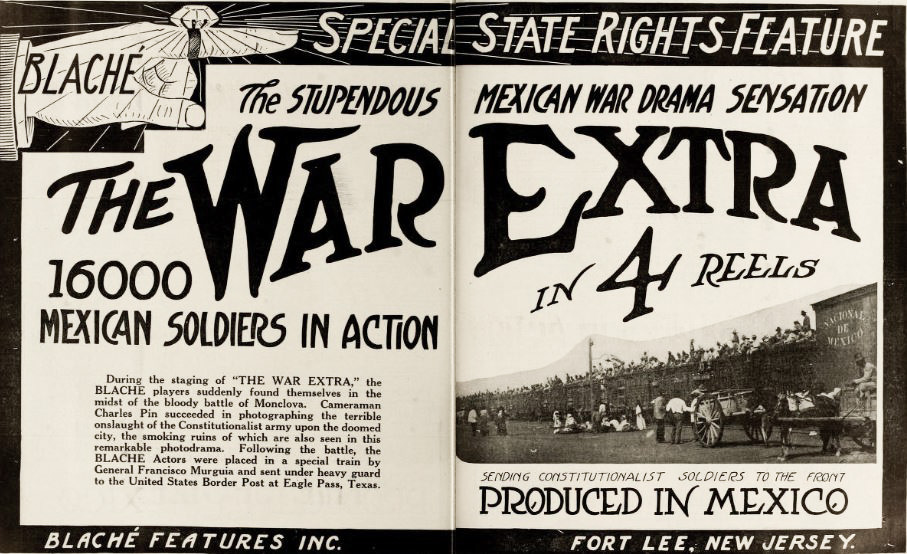
Shot in the afterglow of the Tampico Affair and pre-release of the Zimmermann Telegram, the film rides the crest of U.S. anxieties about southern instability. Yet unlike The Man on the Box’s jingoistic farce, it allows Mexican Constitutionalists strategic competence. Their victory at Monclova is not punchline but pivot, a nuance rare in 1914 American lenses. Similarly, the telegrapher’s portable key—an actual Packard & Zenith military field unit—anchors the tech-worship in hardware reality, a grandparent to Othello’s wire recorder paranoia.
At a lean 28 minutes, every splice is a heartbeat. Transition from newsroom to steamer to battlefield is executed via match-action on swinging doors—editor’s office becomes gangplank becomes cantina saloon-doors—an economical visual rhyme that collapses space-time without spatial coherence anxiety. Compare this to the languid tableaux of A Venetian Night; here, speed is ontology.
Dolores occupies the liminal zone between Madonna and messenger. Her ride to summon gringo cowboys rewrites the masculinist rescue trope, yet the film cannot resist final domestication in a Brooklyn parlor. Still, within 1914’s narrative lattice, her agency is a flare. Note the costuming shift: from embroidered huipil to high-collar blouse, mirroring assimilation pressure that would resonate with immigrant audiences of the Bowery.
Modern screenings with live percussion often default to militaristic snare, betraying the film’s quieter insurgencies. I recommend a prepared-piano approach: dampened strings for telegraph taps, mallets on cymbals for cannon echo, low ostinato for press rollers. Let silence gape when the shack burns; let audience hear their own blood, the way Fred hears his.
In an era of satellite uplinks and drone feeds, The War Extra feels like great-grandfather’s Twitter thread—urgent, typo-ridden, life-or-death. Its DNA persists in Live from Baghdad, Spotlight, even Nightcrawler’s ghoulish newscams. Yet the film’s most subversive bequest is epistemological: it admits that facts are fungible, that every scoop is also a scar, that the first draft of history is often written by kids too young to fear mortality.
Seek out the 2018 Eye Institute restoration—grain managed, not Botoxed—on 35 mm if you can. Let the projector chatter like a distant key. When the final frame flickers, resist the urge to applaud. Instead, listen to the after-hum of the xenon bulb cooling; that is the sound of a century folding into your lap, of headlines yet unwritten, of wars still queuing for their first telegraph click.
IMDb —
1918
Community
Log in to comment.