DbcultAccessing Vault...
Cult Review
Senior Film Conservator

In the annals of early cinema, certain films resonate with a particular, enduring power, not merely for their technical prowess but for their profound engagement with the human condition. Julius Steger’s The Warning stands as a testament to this, a silent film that speaks volumes about the insidious nature of guilt, the long arm of justice, and the generational ripples of moral compromise. It’s a work that eschews simplistic narratives for a nuanced exploration of character, consequence, and the societal pressures that often drive individuals to make choices they will forever regret.
Steger, a director often celebrated for his meticulous attention to psychological detail, crafts a narrative that feels both epic in its scope and intimate in its emotional impact. The story centers on Judge John Caldwell, portrayed with an almost unnerving gravitas by Henry Kolker. Kolker’s performance is a masterclass in silent acting, conveying a man whose public persona of unassailable rectitude is perpetually at war with an internal maelstrom of regret. We witness his ascent to prominence, a journey paved not by pure merit but by a calculated, youthful transgression: the framing of an innocent man, Robert Thorne, to secure his own future and a marriage of convenience to Eleanor, played by the elegant Mayme Kelso. Kelso, in turn, embodies the unwitting pillar of Caldwell’s constructed life, her serene presence a stark contrast to the turbulent undercurrents beneath her husband’s polished exterior.
The brilliance of Steger’s screenplay, penned with a keen understanding of dramatic irony, lies in its patient unfolding. The 'warning' of the title isn't a sudden, cataclysmic event, but a slow, creeping realization, a series of subtle omens and internal torments that besiege Caldwell as years pass. It’s the kind of sophisticated narrative structure that elevates The Warning beyond a mere melodrama, positioning it closer to a psychological thriller. The director’s restraint in revealing the full extent of Caldwell’s past allows the audience to participate in the judge’s growing unease, making his eventual reckoning all the more potent. This slow-burn approach is reminiscent of the thematic depth found in films like My Partner, where the weight of past decisions similarly presses down on characters, shaping their present and dictating their future.

The narrative gains another layer of complexity with the introduction of the next generation. Edith Thornton, as Clara Thorne, brings a compelling blend of vulnerability and resilience to her role as the daughter of the wrongly imprisoned Robert Thorne. Her burgeoning romance with Arthur Caldwell, played by Cyril Rheinhard, is the unsuspecting fuse that ignites the long-dormant secrets. Rheinhard’s portrayal of Arthur is one of youthful idealism and burgeoning love, setting up a tragic contrast with the dark truths that threaten to engulf his world. The performances here are not just about grand gestures; they are about the subtle shifts in expression, the unspoken anxieties that loom large on the silent screen.
William McKey’s Robert Thorne is a powerful presence, even in his quiet dignity. Upon his release from prison, his pursuit of truth is not driven by vengeful fury, but by a quiet, unwavering demand for justice. McKey imbues Thorne with a stoicism that makes his suffering palpable and his eventual confrontation with Caldwell deeply impactful. His character serves as the moral compass of the film, a stark reminder that even in the face of overwhelming power, truth possesses an undeniable force. The tension between Thorne’s quiet resolve and Caldwell’s crumbling facade is the dramatic engine that propels the final act of The Warning.
The supporting cast further enriches this intricate tapestry. Ogden Childe, Christine Mayo, Lila Leslie, Edna Mayo, and Frank Longacre, though perhaps given less screen time, contribute significantly to the film’s rich atmosphere, populating the world with characters who react to, and are often complicit in, the societal dynamics that allow Caldwell’s deception to fester. Their collective performances paint a vivid picture of a community grappling with unspoken truths and public facades, highlighting the societal pressures and hypocrisies that Steger so deftly critiques. This ensemble work, where even minor roles contribute to the overall thematic weight, distinguishes Steger’s directorial vision.
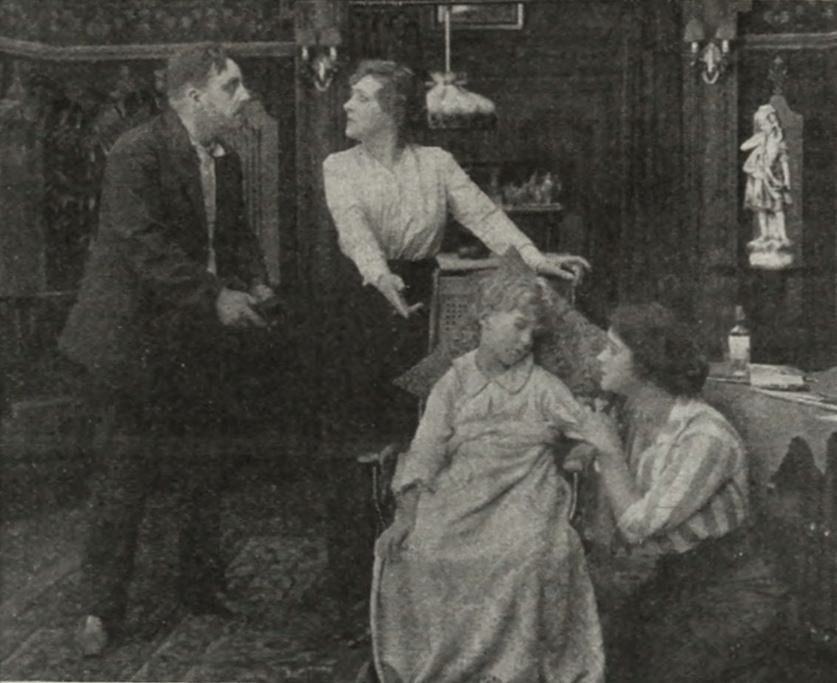
Julius Steger’s direction is characterized by a remarkable visual eloquence. He understands that in silent cinema, every frame, every gesture, every use of light and shadow must convey meaning. The cinematography of The Warning is particularly noteworthy for its symbolic weight. Shadows often cling to Caldwell, visually representing his hidden guilt, while moments of clarity or impending revelation are frequently bathed in stark, unforgiving light. The pacing is deliberate, building tension through sustained close-ups on the actors' faces, allowing their nuanced expressions to communicate the deep emotional currents at play. This masterful control over visual storytelling is what makes the film so compelling, even a century after its creation.
The screenplay, attributed to Steger himself, is a marvel of structural integrity. It avoids the common pitfalls of overly simplistic morality tales, instead delving into the psychological complexities of its characters. The motivations are layered, the consequences far-reaching, and the ultimate resolution, while providing a form of justice, doesn’t shy away from the lingering pain and irreparable damage caused by Caldwell’s actions. This commitment to portraying the messy reality of human fallibility and the enduring impact of choices is what gives The Warning its enduring resonance. It's a film that doesn't just tell a story; it probes at the very fabric of human ethics.
The themes explored in The Warning – justice, redemption, societal hypocrisy, and the burden of conscience – are as relevant today as they were in its original release. It’s a powerful reminder that transgressions, no matter how deeply buried, have a way of surfacing, often at the most inconvenient and destructive times. The film serves as a potent commentary on the dangers of prioritizing personal ambition over moral integrity, and the devastating impact such choices can have not only on the individual but on their loved ones and the very fabric of society. In this regard, it shares a thematic kinship with works like Within Our Gates, which, though dealing with different societal injustices, similarly explores the profound and often painful consequences of systemic and individual moral failings.
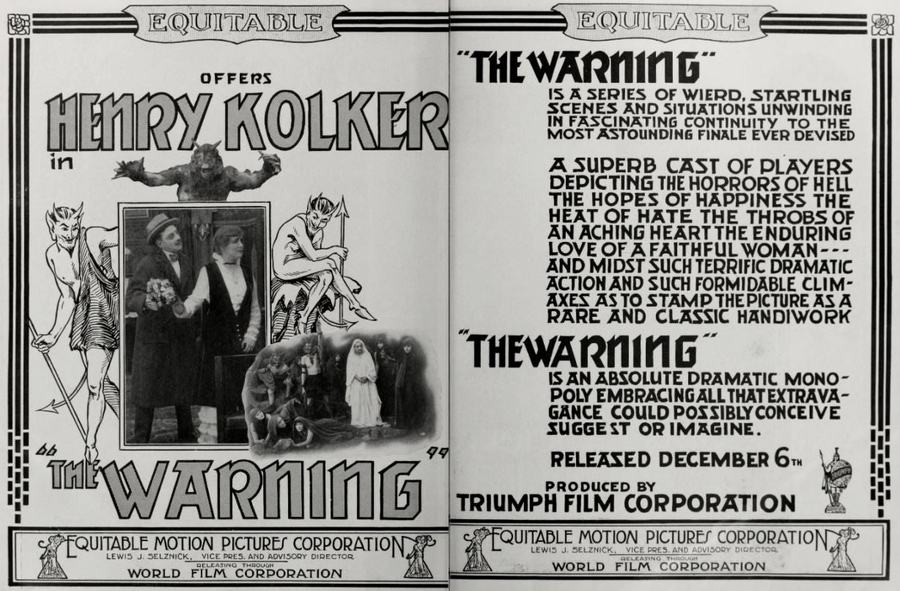
The climax of The Warning is a masterstroke of dramatic tension. As Clara uncovers the truth of her father's past and Caldwell's complicity, the carefully constructed world of the judge shatters. The confrontation is not one of explosive violence, but of devastating emotional impact, where reputations crumble and families are irrevocably altered by the weight of long-held secrets. Kolker’s portrayal of Caldwell in these final moments is particularly harrowing, depicting a man utterly stripped bare, his authority and respectability dissolving into abject despair. It is a powerful, cathartic moment that underscores the film’s central tenet: the truth, however painful, will always find its way to light.
What truly distinguishes The Warning is its refusal to offer simplistic resolutions. While a form of justice is achieved, the film doesn't pretend that all wounds are instantly healed or that the past can be entirely erased. Instead, it leaves the audience with a profound sense of the enduring consequences of human actions, a meditation on the complex interplay between individual choice, fate, and the relentless march of truth. It's a film that demands reflection long after the final fade to black, a true mark of its artistic merit and thematic depth. This complexity of resolution is often what separates enduring classics from fleeting entertainment, as seen in other thought-provoking dramas of the era like Ready Money, which also delved into the moral quandaries posed by ambition and wealth.
In conclusion, Julius Steger’s The Warning is more than just a silent film; it is a timeless piece of cinematic art that explores the intricate dance between morality and ambition with unflinching honesty. Through stellar performances from Henry Kolker, Mayme Kelso, William McKey, and the entire ensemble, and Steger's masterful direction and poignant screenplay, the film transcends its era to deliver a potent and perpetually relevant message. It’s a compelling journey into the heart of human fallibility and the inescapable power of conscience, a true gem that deserves to be rediscovered and appreciated by contemporary audiences for its profound insights and artistic integrity. A powerful cinematic experience, it stands as a stark reminder of the long-reaching consequences of our choices and the enduring quest for truth and justice in a world often clouded by deception.

IMDb —
1922
Community
Log in to comment.