DbcultAccessing Vault...
Cult Review
Senior Film Conservator
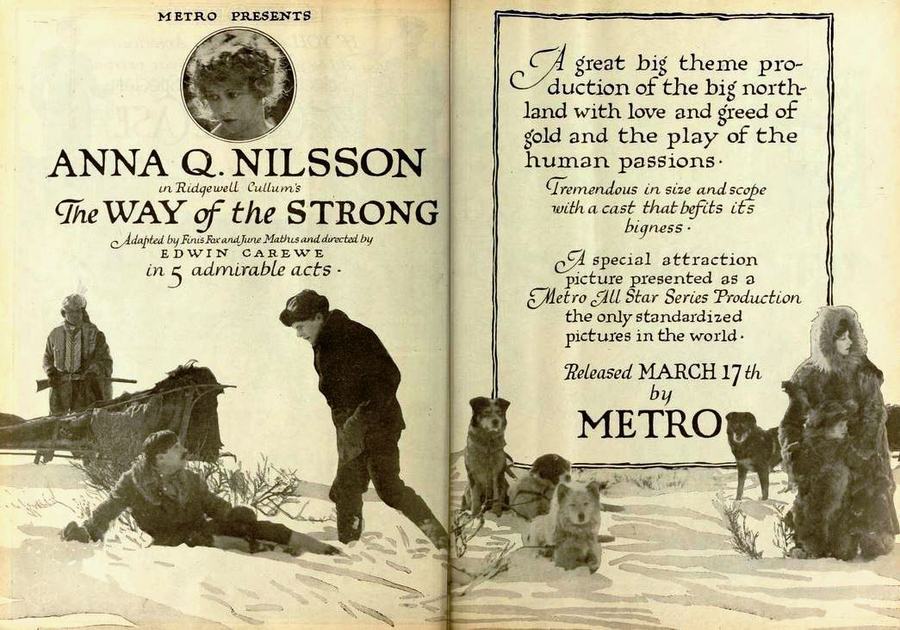
In the pantheon of early silent cinema, few narratives capture the visceral intersection of environmental hostility and human perfidy as poignantly as The Way of the Strong (1919). This is not merely a chronicle of Alaskan survival; it is a profound exploration of the atavistic impulses that drive men toward both destruction and divinity. Directed with a keen eye for the sprawling desolation of the North, the film serves as a testament to the era's ability to weave complex moral tapestries without the crutch of spoken dialogue.
The screenplay, co-penned by the legendary June Mathis, bears the hallmarks of her sophisticated storytelling. Mathis, who would later achieve immortality for her work on 'The Four Horsemen of the Apocalypse,' injects a sense of psychological realism into what could have been a standard melodrama. Unlike the more simplistic morality plays found in The Wild Olive, this film leans into the ambiguity of survival. The structure is bifurcated: the first act is a rugged, outdoor epic, while the latter half transitions into the claustrophobic, high-stakes world of finance and social maneuvering.
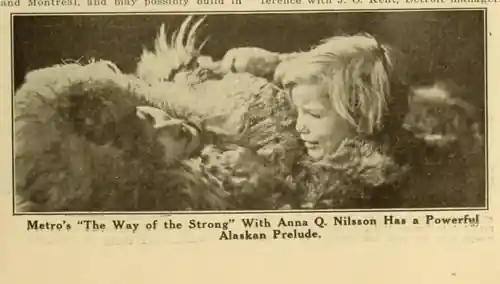
The transition from the icy wastes of Alaska to the polished mahogany of executive offices mirrors the evolution of the American identity at the turn of the century. We see the characters attempt to wash the grit of the mines from their hands, yet their past transgressions remain etched in their psyches like scars on the landscape. This thematic duality is handled with a sophistication that rivals The City, focusing less on the urban sprawl and more on the internal architecture of the soul.
The cinematography during the blizzard sequence is nothing short of revolutionary for 1919. The filmmakers utilized the primitive lighting of the time to create a sense of overwhelming whiteness—a blank canvas upon which James Leyburn’s cowardice is starkly painted. In this sequence, the environment is not just a backdrop; it is an active antagonist. The way the snow obscures the path mirrors the way Leyburn’s greed obscures his humanity. It stands in stark contrast to the more theatrical staging of The Heart of a Painted Woman, opting instead for a gritty, almost documentary-like realism.
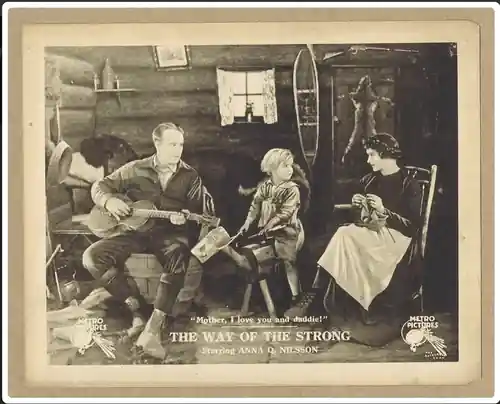
When Leyburn deserts Audrie and Frank, the camera lingers not on the action of his flight, but on the stillness of those left behind. It is a moment of profound cinematic stillness that anticipates the high-art movements of the coming decade. The pathos elicited here is not cheap; it is earned through the grueling depiction of nature’s indifference to human suffering. This sequence establishes the stakes for the rest of the film, ensuring that the eventual stock market ruin of Leyburn feels like a cosmic balancing of the scales.
Anna Q. Nilsson delivers a performance of ethereal grace and grounded strength. As Monica Norton, she represents the bridge between the traumatic past and the hopeful future. Her screen presence is magnetic, providing a necessary warmth to a film that often dwells in the cold. In comparison to the female leads in Untamed Ladies, Nilsson offers a more nuanced portrayal of womanhood—one defined by resilience and moral clarity rather than mere social rebellion.
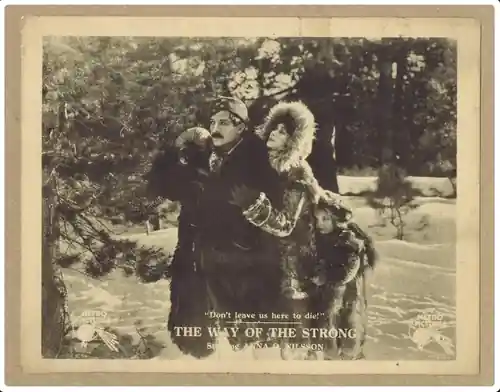
The conflict between James Leyburn and Alexander Hendrie is a masterclass in contrasting masculine archetypes. Hendrie, played with a stoic intensity, represents the 'strong' man of the title—not through physical dominance, but through his capacity for love and his eventual forgiveness. Leyburn, conversely, is the 'strong' man in a Nietzschean sense, believing himself above the laws of loyalty, only to find that his strength is a hollow facade. This psychological interplay is far more sophisticated than the binary conflicts found in Kentucky Brothers.
One of the most fascinating aspects of the film is its depiction of the financial world. By 1919, the American public was becoming increasingly aware of the power—and the peril—of Wall Street. The film treats the stock market as a second wilderness, one where the predators wear suits instead of furs. When Alexander financially ruins Leyburn, it is presented as a sophisticated form of frontier justice. This transition from physical violence to economic warfare is a brilliant narrative choice that reflects the changing zeitgeist of the post-WWI era.
The use of the market as a plot device provides a sense of modernity that keeps the film from feeling like a dated relic. It shares some DNA with the high-stakes drama of Temptation, but with a more grounded, revenge-driven core. The tension in the office during the final confrontation is palpable, proving that a well-written scene needs no explosions or chases to captivate an audience.
The resolution of 'The Way of the Strong' avoids the saccharine pitfalls that often plagued silent-era endings. The reunion between Alexander and his son Frank is handled with a dignified restraint. It is a moment of quiet catharsis that resonates because of the sheer volume of suffering that preceded it. The film suggests that while the past cannot be erased—Audrie remains dead, and the years of separation cannot be reclaimed—the future can be redeemed through truth.
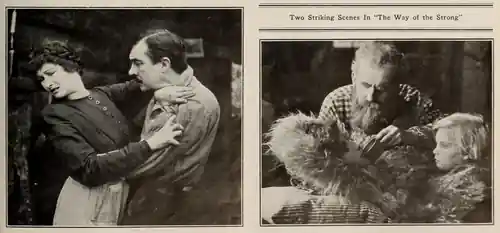
The scene where Monica observes Leyburn’s confession is a triumph of staging. The use of depth of field and character positioning allows the audience to feel the weight of the revelation simultaneously with the characters. It is a sophisticated use of the medium that one might expect from a film like The Stolen Paradise, yet it feels entirely organic to this specific story of Alaskan origins.
Examining 'The Way of the Strong' requires an appreciation of the technical limitations of its time. Without the benefit of synchronized sound, the film relies heavily on its score and the expressive capabilities of its cast. The tinting used in the original prints—blues for the night-time blizzards and warm ambers for the interior scenes—adds a layer of emotional texture that is often lost in modern black-and-white restorations. It possesses a visual grandeur that rivals the documentary-style footage of the Kineto Coronation Series, but with the added depth of a scripted narrative.
While films like 1915 World's Championship Series captured the physical prowess of athletes, 'The Way of the Strong' captures the endurance of the human spirit. It is a film that demands to be viewed not as a museum piece, but as a living, breathing work of art. The themes of betrayal and the search for family are universal, transcending the specific historical context of its production.
Ultimately, 'The Way of the Strong' is a masterpiece of early cinematic storytelling. It balances the epic scale of the Alaskan wilderness with the intimate drama of a family torn apart by greed. The performances, particularly those of Nilsson and the supporting cast, are nuanced and evocative. For those interested in the evolution of film narrative, this is an essential text. It occupies a space between the raw energy of early shorts and the refined complexity of the late silent era, standing alongside works like John Needham's Double or A Son of the Immortals as a shining example of what the medium could achieve before it found its voice.
In an age of digital spectacles, there is something profoundly moving about the simplicity of this story. It reminds us that at its core, cinema is about the human face and the emotions that flicker across it like shadows on a cave wall. Whether it's the sheer terror of a blizzard or the quiet joy of a father finding his son, 'The Way of the Strong' communicates these truths with a clarity that remains undimmed after more than a century. It is a film of grit, gold, and grace—a true testament to the enduring power of the silent screen.
Reviewer Note: For those seeking more explorations of moral dilemmas in early cinema, consider our reviews of When It Strikes Home and the mysterious The Winged Mystery.
IMDb —
1930
Community
Log in to comment.