DbcultAccessing Vault...
Cult Review
Senior Film Conservator
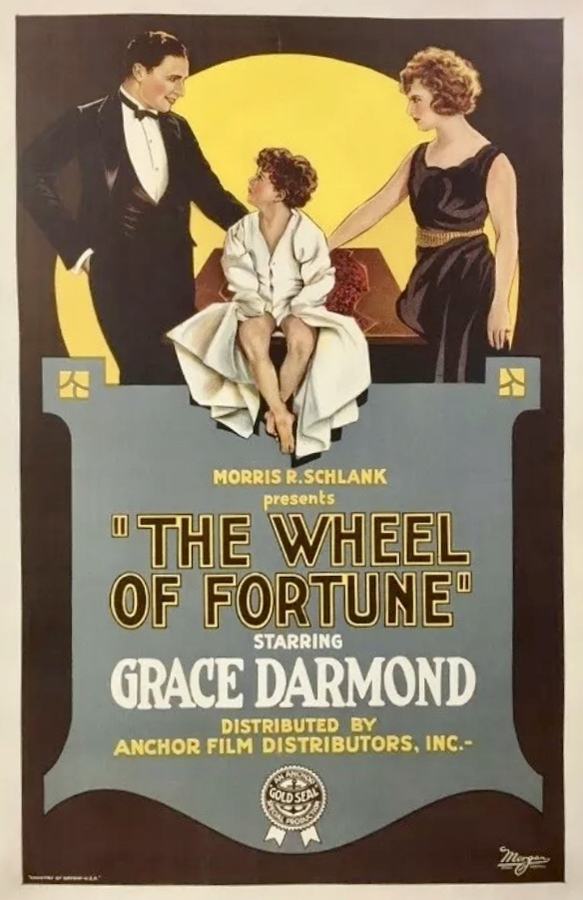
Ah, the silent era! A time when storytelling transcended spoken dialogue, relying instead on the eloquent power of gesture, expression, and the sheer artistry of cinematography. Among the myriad cinematic offerings of that fascinating period, one film, The Wheel of Fortune, stands as a particularly compelling artifact, a testament to the enduring human struggle against the caprices of fate and the unyielding pressures of societal circumstance. Directed with a keen eye for dramatic tension and written by the insightful duo of Helen Robertson and Grace Darmond (who also graces the screen with her commanding presence), this picture is far more than a mere melodrama; it's a philosophical inquiry into the very nature of agency and sacrifice.
From its opening frames, the film plunges us headfirst into the bleak, yet paradoxically vibrant, landscape of an early 20th-century industrial city. The pervasive grime and the relentless churn of machinery serve as a stark backdrop to the personal tragedy unfolding in the life of Lily Vance, brought to life by the incandescent Grace Darmond. Darmond, a name synonymous with a certain dramatic intensity in the silent film lexicon, delivers a performance here that is nothing short of mesmerizing. Her Lily is not merely a damsel in distress; she is a woman forged in the crucible of hardship, possessing a spirit that, though beleaguered, refuses to be utterly extinguished. Her expressive eyes, a vital conduit for emotion in the absence of dialogue, convey a universe of pain, love, and agonizing resolve. We feel, rather than merely observe, the crushing weight of her predicament – the desperate need to secure medical aid for her ailing younger brother, Thomas, portrayed with a delicate vulnerability by Philippe De Lacy. De Lacy, even at a young age, manages to imbue Thomas with a fragility that makes Lily's sacrifices all the more poignant, all the more urgent.
Enter Richard Thorne, a character designed to embody both the seductive allure and the inherent dangers of unchecked ambition, masterfully played by Jack Dougherty. Dougherty's Thorne is a revelation, a charismatic enigma who commands every scene he inhabits. He's not a mustache-twirling villain in the simplistic sense; rather, he’s a force of nature, a man whose moral compass is perpetually skewed by a thirst for power and control. His initial offer to Lily – financial salvation for her brother in exchange for her public association – is presented not as a threat, but as an irresistible proposition, a lifeline cloaked in silk. Dougherty's nuanced portrayal ensures that Thorne is both repellant and strangely compelling, a testament to the complex writing that underpins his character. The dynamic between Darmond's Lily and Dougherty's Thorne is the beating heart of the film, a tense, electric dance between desperation and manipulation, purity and corruption.
Into this morally ambiguous arena steps John Sterling, a character of unwavering principle and quiet strength, played with admirable conviction by Charles Dennis Platt. Platt's Sterling serves as Lily's conscience, her anchor to a world of integrity that Thorne’s influence threatens to obliterate. His return to the city, initially unaware of Lily's plight, establishes a powerful contrast. Where Thorne offers a gilded cage, Sterling offers genuine partnership and an honest future, albeit one less certain in its material comforts. The love triangle, while a familiar trope, is handled with a remarkable depth here, transcending mere romantic rivalry to become a symbolic battle for Lily's very soul. The film excels at showcasing the subtle shifts in Lily's internal landscape as she grapples with these opposing forces.
What elevates The Wheel of Fortune beyond a simple narrative is its profound thematic depth. The title itself is a powerful metaphor, a constant reminder of the capricious nature of destiny. The literal 'wheel of fortune' in Thorne's opulent casino becomes a recurring visual motif, an indifferent arbiter of fate, mirroring Lily's own agonizing gamble. The film masterfully explores the intersection of free will and determinism. Is Lily a mere pawn of circumstance, forced by poverty into a life she abhors, or does she retain the capacity for choice, even amidst the most crushing pressures? The writers, Robertson and Darmond, refuse to offer easy answers, instead inviting the audience to ponder the ethical complexities of such a predicament.
Social commentary is another vein expertly mined by the film. It paints a vivid, albeit silent, portrait of class disparity in the burgeoning industrial age. The stark contrast between Lily's initial squalor and Thorne's decadent excess is not merely visual; it’s a critique of a system that allows such vast gulfs to exist, forcing individuals into impossible choices. The film subtly suggests that the 'fortune' being spun is not just monetary, but the very fabric of human dignity and societal justice. In this regard, it shares a certain kinship with other films of the era that dared to peer into the less glamorous corners of society, much like the earnest social realism sometimes found in a film like Merely Mary Ann, though The Wheel of Fortune leans more into the dramatic consequences of moral compromise rather than the quaint charm of resilience.
Beyond the central trio, the supporting cast adds considerable texture to the narrative. Howard Davies, in a role that perhaps underscores the pervasive influence of Thorne, brings a certain gravitas to his character, whatever his specific function may be within Thorne's sprawling enterprise. His presence often serves as a silent, watchful eye, a testament to the layers of control Thorne wields. Similarly, Zalla Zarana and Grant Morris, while perhaps not given as much screen time as the leads, contribute effectively to the film's atmosphere, populating Thorne's world with figures who either benefit from or are entangled in his schemes. Even the briefest appearances, such as that of Leslie Harper, are carefully crafted to serve the overarching narrative, ensuring that every face tells a part of the larger story.
The performances, particularly from Darmond and Dougherty, are a masterclass in silent film acting. They understand that every gesture, every tilt of the head, every subtle shift in facial expression must carry the weight of dialogue. Darmond's portrayal of Lily's internal conflict – the battle between a mother's love for her brother and her own eroding self-respect – is heartbreakingly real. Dougherty, on the other hand, exudes a magnetic charm that masks a cold, calculating core. His movements are precise, his smiles often predatory, creating a character that is both alluring and deeply unsettling. This kind of nuanced villainy sets him apart from more straightforward antagonists seen in films like The Deceiver, where moral lines might be drawn with a bolder, less ambiguous hand.
The direction of The Wheel of Fortune is a study in effective visual storytelling. The cinematography, while adhering to the technical limitations of its era, is used to remarkable effect. Close-ups are employed sparingly but powerfully, allowing the audience to truly connect with the characters' emotional states. The use of lighting, particularly in Thorne's lavish, yet often dimly lit, casino, creates an atmosphere of both grandeur and shadowy intrigue. The visual contrast between the oppressive squalor of Lily's early life and the dazzling, but ultimately hollow, opulence of Thorne's world is a constant visual reminder of the film's central conflict. The pacing, a crucial element in silent films where intertitles must carry significant narrative load, is expertly managed, building tension gradually towards the climactic confrontation.
The screenplay, penned by Helen Robertson and Grace Darmond, deserves particular commendation for its intricate plotting and character development. They craft a narrative that, while dramatic, never feels contrived. The motivations of each character are clear, even when their actions are morally ambiguous. The writers skillfully weave together the personal drama of Lily's sacrifice with the broader social commentary, ensuring that neither overshadows the other. The film's strength lies in its ability to humanize difficult choices, making the audience empathize with Lily’s impossible position. This narrative complexity, where the protagonist is not simply good or bad but deeply flawed by circumstance, echoes the more nuanced character studies found in serious dramas of the period, perhaps even prefiguring the moral quandaries explored in later, more overt psychological thrillers. It avoids the more straightforward heroic arcs, favoring instead a journey through moral ambiguity, a path less traveled by some contemporaries like White Eagle, which, while entertaining, often relied on clearer demarcations of good versus evil.
The film's climax, set during a high-stakes charity gala, is a masterclass in dramatic staging. The opulence of the setting serves as a stark contrast to the raw human emotion boiling beneath the surface. Sterling's public challenge to Thorne, fueled by his discovery of the truth, is a moment of catharsis, a desperate attempt to reclaim Lily from the clutches of her gilded prison. The unexpected appearance of a recovering Thomas, a silent witness to his sister's profound sacrifice, is a narrative stroke of genius. It's a moment that strips away all pretense, revealing the naked truth of Lily's actions and forcing her to confront the ultimate choice. The resolution, rather than providing a simplistic 'happily ever after,' offers a more profound commentary on the enduring power of human connection and the courage it takes to forge one's own path, even when the 'wheel of fortune' seems to dictate otherwise. It's a conclusion that resonates with a quiet power, leaving the audience to ponder the true cost of moral integrity versus material comfort.
In an era often stereotyped for its straightforward narratives, The Wheel of Fortune distinguishes itself through its psychological depth and its unflinching look at the moral compromises demanded by a harsh world. It's a film that asks difficult questions and trusts its audience to grapple with the answers. The performances, particularly from Grace Darmond and Jack Dougherty, are indelible, creating characters that remain etched in the memory long after the final fade to black. For enthusiasts of silent cinema, or indeed anyone interested in the enduring power of human drama, this film is an essential viewing. It showcases not only the technical prowess of early filmmaking but also the timeless ability of cinema to explore the most complex facets of the human condition, making it a true gem in the cinematic firmament. Its exploration of personal peril and the fight for freedom of choice could even be seen as a precursor to the more overtly adventurous narratives of films like Kidnapped, albeit with an internal, rather than external, landscape of danger. It's a story that proves the silence on screen can be infinitely more eloquent than any spoken word.
The legacy of The Wheel of Fortune lies in its ability to transcend its historical context and speak to universal truths. It’s a powerful reminder that while the 'wheel' may spin, and fate may deal its hand, the ultimate power of choice, and the courage to make it, resides within us all. It's a film that truly earns its place in the pantheon of compelling silent dramas, proving that profound storytelling is truly timeless. While other films like Impossible Susan might focus on overcoming personal quirks, The Wheel of Fortune delves into the much heavier, almost existential, burden of a forced choice, making it a starker, perhaps more enduring, examination of character under duress. This is cinema that compels reflection, leaving a lasting impression on the discerning viewer.
IMDb 8.1
1919
Community
Log in to comment.