DbcultAccessing Vault...
6.2/10
Senior Film Conservator
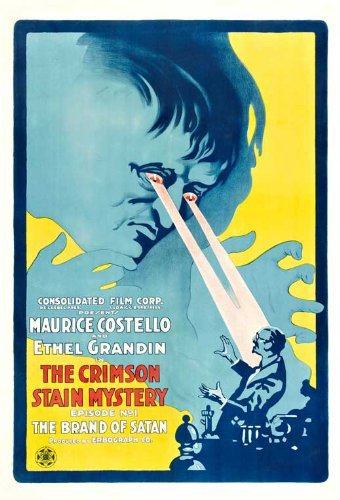
A definitive 6.2/10 rating for a film that redefined the boundaries of cult cinema. The Crimson Stain Mystery remains a cornerstone of transgressive art.
The 1916 cinematic landscape was a crucible of experimentation, a period where the grammar of visual storytelling was being forged in the heat of industrial expansion and wartime anxiety. Within this volatile milieu, The Crimson Stain Mystery emerged not merely as a serial, but as a chilling harbinger of the body horror genre.
At the epicenter of this narrative sits Dr. Montrose, a character who embodies the archetypal 'mad scientist' long before the trope became a stagnant cliché. His ambition—to chemically augment human intelligence—mirrors the era's obsession with eugenics and social engineering. However, unlike the romanticized vision of progress found in The Diamond from the Sky, Montrose’s laboratory is a site of visceral failure. The transmutation of his subjects into 'hideous monsters' serves as a potent metaphor for the unintended consequences of tampering with the biological blueprint of the soul.
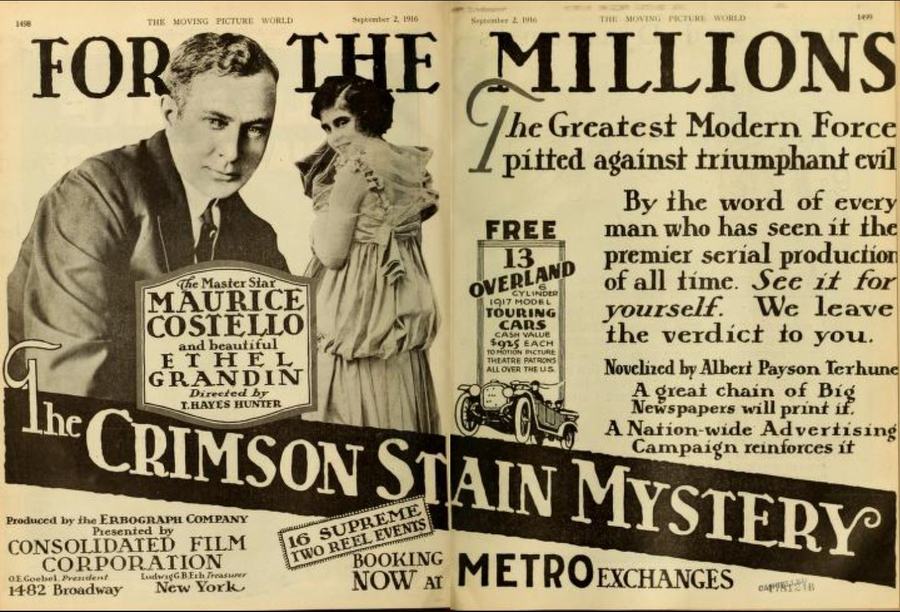
These antagonists are not merely mindless brutes; they are a collective, a dark reflection of the burgeoning labor unions and organized syndicates of the early 20th century. Their predatory nature is calculated, turning the very intelligence Montrose sought to enhance into a weapon of urban terror. This thematic depth elevates the film beyond the simplistic morality plays of contemporary works like Pro Patria, offering instead a cynical meditation on the fragility of civilization.
The aesthetic of The Crimson Stain Mystery is steeped in a proto-noir sensibility. The use of shadow and light creates a claustrophobic atmosphere that rivals the gritty realism seen in The Regeneration. The titular 'crimson stain'—a small fleck in the eye of the villain—is a masterstroke of visual storytelling. In a medium devoid of dialogue, this singular physical marker becomes a haunting leitmotif, a visual anchor for the detective's pursuit and the audience's dread.
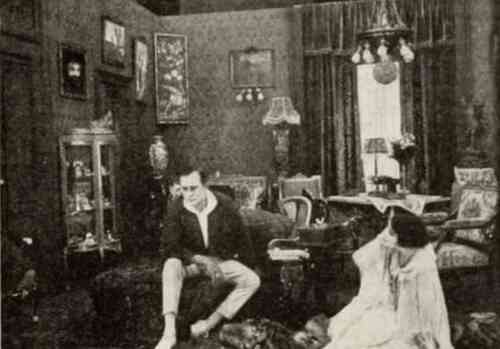
This ocular deformity suggests a deeper rot, a biological signature of the character's moral bankruptcy. It is an early example of using physical 'tells' to build suspense, a technique that would later be perfected in the Golden Age of Hollywood horror. The film’s pacing is relentless, eschewing the melodramatic pauses common in Armstrong's Wife in favor of a propulsive, mystery-driven structure.
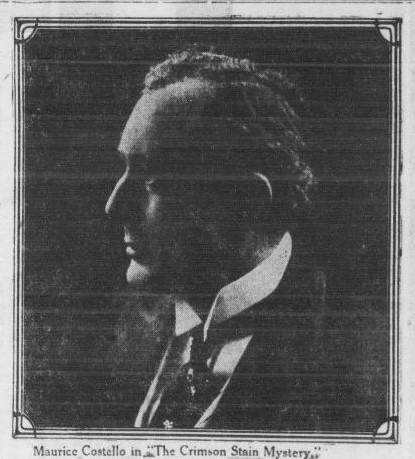
The cast, led by the incomparable Maurice Costello, delivers performances that bridge the gap between theatrical pantomime and modern naturalism. Costello, once the quintessential matinee idol, brings a gravitas to the role that grounds the more fantastical elements of the plot. His interactions with the ensemble—including the nuanced work of Ethel Grandin and Eugene Strong—create a sense of high stakes that was often missing from more standard adventure serials like Michael Strogoff.
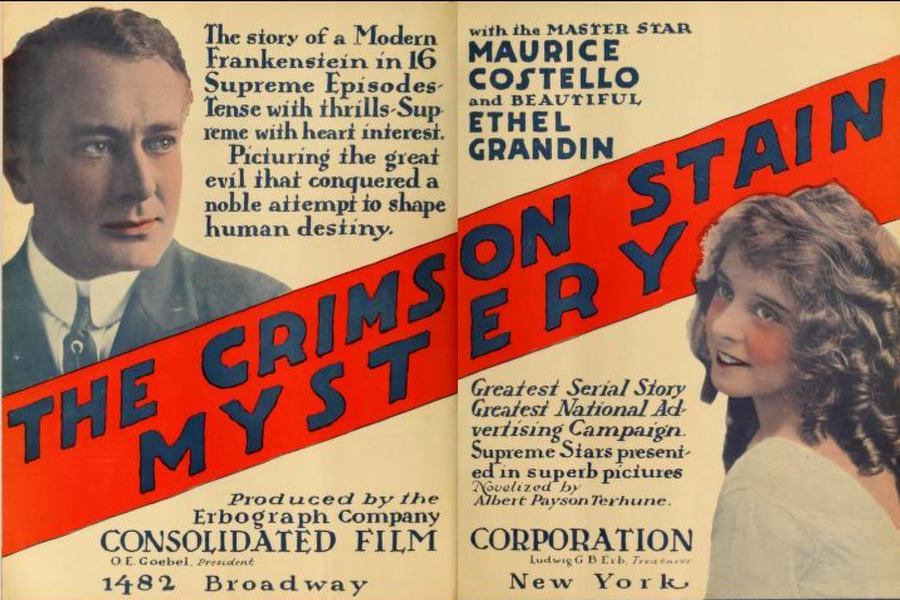
The 'monsters' themselves, portrayed with a disturbing physicality by the supporting cast, evoke a sense of uncanny valley that must have been profoundly unsettling for 1916 audiences. Their movements are jagged, predatory, and devoid of the grace found in the period's more traditional dramas. This physicality provides a stark contrast to the refined, almost stiff, presence of the law enforcement characters, highlighting the gulf between the old world of order and the new world of chaotic biological evolution.
When juxtaposed with Sins of Great Cities, The Crimson Stain Mystery feels significantly more modern in its cynicism. While both films deal with the perils of the urban environment, the latter locates the source of evil not in social failing, but in scientific arrogance. It shares more DNA with the psychological tension of Old Brandis' Eyes than with the sweeping historical epics like The Last Days of Pompeii.
Furthermore, the detective procedural aspect of the film is remarkably sophisticated. It lacks the simplistic 'whodunnit' feel of The $5,000,000 Counterfeiting Plot, opting instead for a slow-burn revelation of the villain's identity. The search for the man with the crimson eye becomes an obsession, a descent into a world where every face is a potential mask for a monster.
Writer Albert Payson Terhune, better known for his canine literature, exhibits a surprising penchant for the macabre here. His script avoids the saccharine sentimentality often found in Saints and Sorrows or The Octoroon. Instead, he leans into the pulp sensibilities of the era, crafting a narrative that is both high-concept and viscerally engaging. The dialogue—conveyed through intertitles—is sharp and economical, driving the plot forward without the flowery prose that bogged down many of its contemporaries.
Terhune’s world-building is particularly impressive. He creates a sense of a secret history unfolding beneath the streets of the city, a hidden war between the enlightened few and the mutated many. This sense of subterranean conflict would become a staple of the horror genre, influencing everything from the Universal Monsters to modern-day sci-fi thrillers.
From a technical standpoint, the film’s use of location shooting and atmospheric lighting sets it apart. While Four Feathers utilized grand vistas to evoke a sense of scale, The Crimson Stain Mystery uses the cramped, dirty alleys of the city to evoke a sense of dread. The cinematography is intimate, often focusing on the minute details—a hand on a doorframe, a shadow on a wall, or the glint of light in a stained eye—to build tension.
The film’s editing, too, is ahead of its time. The cross-cutting between the detective’s investigation and the monsters’ activities creates a rhythmic urgency that keeps the viewer on edge. This isn't the leisurely storytelling of Stolen Goods; this is a frantic race against time that feels surprisingly contemporary in its execution.
Reflecting on The Crimson Stain Mystery over a century later, one is struck by its sheer audacity. It is a film that dares to explore the dark side of the human psyche and the potential horrors of scientific progress. While films like The Fox Woman or Vendetta focused on personal betrayals and social mores, The Crimson Stain Mystery looked toward the future—and saw a nightmare.
It stands as a testament to the power of silent cinema to evoke primal fears through purely visual means. The crimson stain is more than a plot point; it is a symbol of the indelible mark that our choices—and our failures—leave upon us. For any serious student of film history or lover of early horror, this serial is an essential piece of the puzzle, a haunting reminder that the monsters we fear most are often the ones we create ourselves in our quest for perfection.
A visceral, haunting, and intellectually stimulating journey through the shadows of the 1910s.
IMDb —
1927
Community
Log in to comment.