DbcultAccessing Vault...
Cult Review
Senior Film Conservator
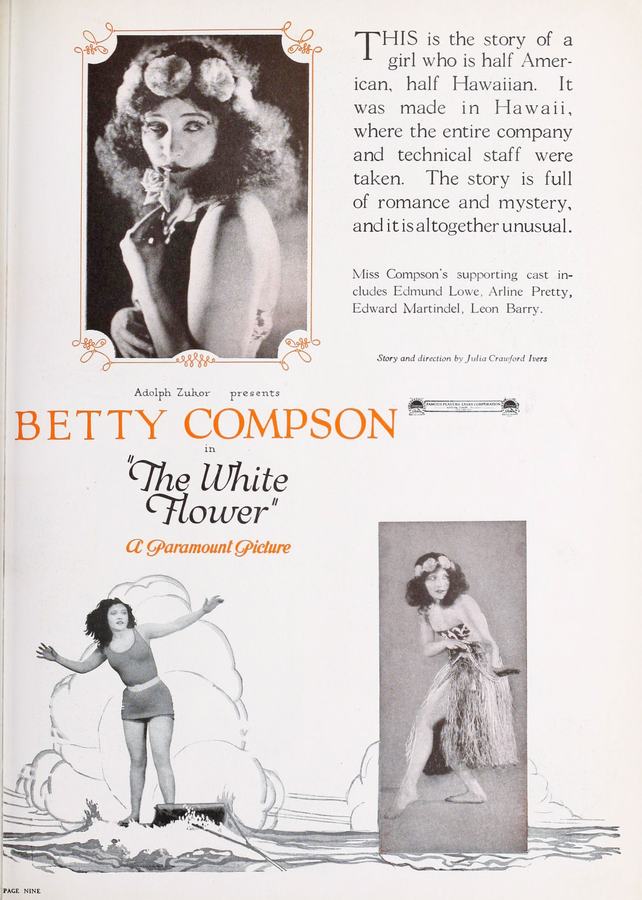
Ah, the silent era! A time of grand gestures, sweeping melodramas, and visual storytelling that transcended spoken words. Among the myriad cinematic offerings from this golden age, 1923’s The White Flower emerges as a particularly fascinating specimen. It's a film that plunges headfirst into an exotic locale, weaving a tapestry of mystical prophecy, forbidden love, and the devastating consequences of jealousy. More than just a simple love story, it's a profound exploration of cultural clash, the power of belief, and the arduous path to redemption, all set against the breathtaking, yet often tumultuous, backdrop of early 20th-century Hawaii.
From its very opening frames, The White Flower captivates with its vibrant, almost painterly depiction of Hawaii. This wasn't just a picturesque setting; it was an integral character in itself, embodying both serene beauty and an underlying current of ancient, potent magic. The film introduces us to Konia Markham, portrayed with captivating intensity by Betty Compson. Konia is a woman caught between worlds, her American lineage entwined with her Hawaiian heritage, making her a compelling figure of cultural duality. Her internal landscape is as rich and complex as the island’s topography, a fact brilliantly conveyed through Compson’s expressive silent performance. The initial exposition, delivered not by dialogue but by the solemn pronouncement of a sorceress, immediately plunges the narrative into the realm of the mystical. This isn't just a romantic trope; it's a foundational element, establishing that the forces at play here extend beyond mere human will. The prophecy of the perfect white flower as a harbinger of true love sets up an almost mythical quest, elevating the stakes beyond a simple romantic entanglement.

The moment Bob Rutherford, played by the dashing Edmund Lowe, offers Konia a gardenia at a grand banquet is not merely a polite gesture; it's the fulfillment of a prophecy, a visually striking confirmation of her destiny. The choice of a gardenia, with its pristine white petals and intoxicating fragrance, is symbolic – purity, love, and a touch of the exotic. However, this blossoming romance immediately attracts the venomous attention of David Panuahi, Konia’s spurned suitor, brought to life with a simmering resentment by Maui Kaito. Kaito’s portrayal of Panuahi is a masterclass in silent film villainy; his jealousy isn't overtly theatrical but a slow, burning malevolence that festers and eventually erupts. This dynamic immediately establishes the classic love triangle, but with an added layer of cultural and magical intrigue that distinguishes it from more pedestrian melodramas of the era, such as perhaps The Legacy of Happiness, which often focused on more conventional societal conflicts.
Panuahi’s machinations are where the film truly embraces its darker, more primal themes. His manipulation of Konia, preying on her vulnerability and perhaps her latent belief in the efficacy of ancient Hawaiian traditions, leads to the film’s central conflict: the kahuna's death curse on Ethel Granville, Bob’s fiancée (Lily Phillips). The portrayal of the kahuna and the curse itself, while potentially leaning into exoticism, is handled with a certain gravity that underscores the cultural beliefs at play. It’s a testament to Julia Crawford Ivers’ writing that this supernatural element feels less like a gimmick and more like a pivotal force driving the characters' moral choices. The tension here is palpable, a slow-burning dread that builds as Ethel’s health deteriorates, a silent testament to the curse’s power.
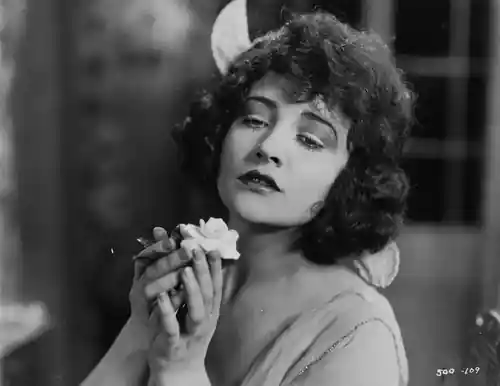
The heart of The White Flower lies in Konia’s internal struggle and her eventual journey toward redemption. As Ethel weakens, it’s Bob’s unwavering devotion, his tender care for his ailing fiancée, that becomes the catalyst for Konia’s transformation. This is where Compson’s performance truly shines. We witness, through subtle facial expressions and body language, the erosion of Konia’s jealousy and the burgeoning of empathy and guilt. It’s a nuanced portrayal of a character grappling with the profound consequences of her actions. The film avoids making Konia a one-dimensional villain; instead, it paints her as a complex figure, swayed by powerful emotions and cultural beliefs, yet ultimately capable of profound compassion. This emotional depth is what elevates The White Flower beyond a simple potboiler. It delves into the human capacity for cruelty and, more importantly, for change.
The decision to have the curse removed is not merely a plot device; it’s Konia’s conscious act of atonement, a rejection of the destructive path she was led down. This moment resonates with themes of moral awakening, echoing the profound shifts in character seen in other silent dramas like Her Better Self, where protagonists undergo significant moral transformation. The film deftly handles the reversal, portraying it with a sense of urgency and relief, but without diminishing the gravity of the initial transgression. The narrative ensures that the audience understands the weight of Konia's actions, even as she strives to undo them.
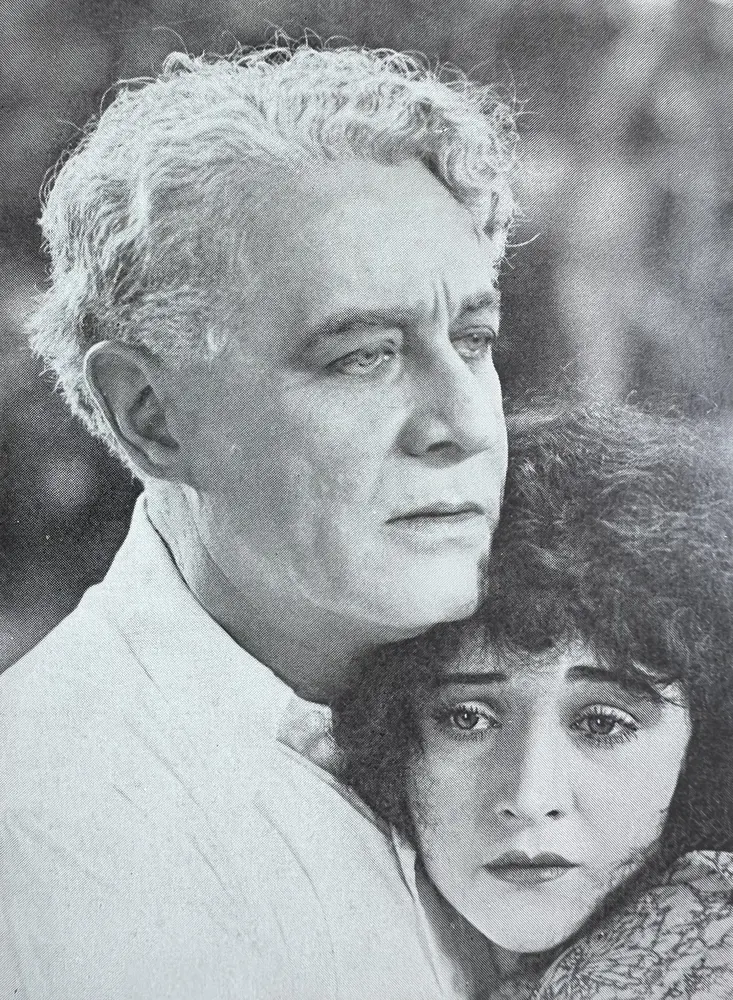
The climax of The White Flower is a masterclass in silent film melodrama. Konia, burdened by the immense guilt of her actions and perhaps believing herself unworthy of happiness, retreats to the edge of a volcano, contemplating suicide. This dramatic setting—a fiery abyss symbolizing both destruction and purification—is a powerful visual metaphor for Konia's internal turmoil. It's a moment of profound despair, a testament to the emotional intensity that silent films could convey without a single spoken word. The sweeping landscapes, captured with remarkable cinematography for the era, enhance the sense of isolation and the vastness of Konia's internal struggle.
It is here, at the literal brink, that Bob Rutherford, now released from his engagement by an understanding and magnanimous Ethel, finds her. His declaration of love, arriving at the precise moment of Konia’s greatest despair, is the ultimate fulfillment of the sorceress’s prophecy and the emotional catharsis the audience craves. Edmund Lowe plays this scene with earnest sincerity, his devotion a stark contrast to the earlier jealousy and manipulation. The ending, while undeniably romantic, also carries a deeper resonance: it's not just about two lovers finding each other, but about forgiveness, redemption, and the enduring power of genuine affection to overcome even the darkest of deeds. This triumphant resolution, where love conquers all, aligns with the romantic sensibilities of films like Loyalty, where devotion is ultimately rewarded.
Betty Compson, as Konia, delivers a performance that anchors the entire film. Her ability to convey complex emotional states—from initial bewitchment and burgeoning love to jealous rage, profound guilt, and eventual despair and hope—without dialogue is truly remarkable. She uses her eyes, her posture, and subtle gestures to communicate volumes, drawing the audience deep into Konia’s tumultuous inner world. Edmund Lowe, as Bob, provides a solid, dependable counterpart, embodying the steadfast hero whose unwavering goodness ultimately guides Konia back from the brink. His performance is less flamboyant than Compson's, but equally effective in conveying sincerity and devotion. Maui Kaito, as the villainous Panuahi, is suitably menacing, his dark glances and furtive movements painting a clear picture of his destructive envy.
Julia Crawford Ivers, who penned the screenplay, deserves significant credit for crafting a narrative that is both emotionally resonant and structurally sound. Her ability to integrate supernatural elements with a compelling human drama is noteworthy. The direction, while not attributed in the prompt, manages to balance the grand scale of the Hawaiian setting with the intimate emotional beats of the characters. The visual storytelling, characteristic of the silent era, is particularly strong, using close-ups to emphasize emotional moments and wide shots to establish the exotic grandeur of the locale. This film, much like Storstadsfaror, understands the power of visual grandeur in silent cinema.
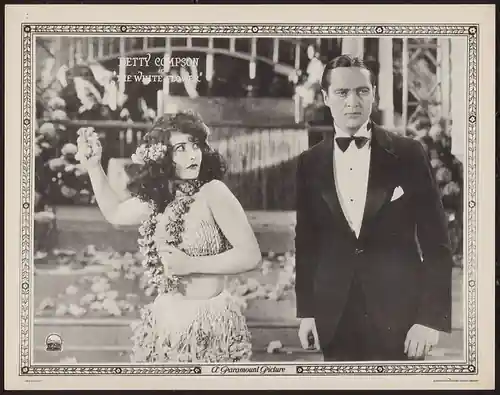
One cannot discuss The White Flower without touching upon its portrayal of Hawaiian culture. While the film undoubtedly exoticizes the setting, a common practice in Hollywood during that period, it also attempts to integrate aspects of indigenous beliefs, such as the sorceress and the kahuna, into the narrative fabric. Konia’s dual heritage adds a layer of complexity, hinting at the challenges of navigating different cultural identities. Modern viewers might find some of the depictions problematic through a contemporary lens, particularly in how indigenous spirituality is framed for a Western audience. However, within the context of its time, the film likely aimed to portray an alluring, mysterious world, much like other adventure films seeking to transport audiences to far-flung locales. It’s a valuable artifact for understanding how different cultures were represented in early cinema.
Compared to other films of its time, The White Flower stands out for its ambitious blend of romance, melodrama, and supernatural elements. It’s more emotionally charged than a straightforward adventure like The Man Tamer, and its exploration of moral ambiguity is arguably more nuanced than some of the simpler narratives of the era. While it might not have achieved the same enduring fame as some of the absolute masterpieces of silent cinema, it certainly contributed to the rich tapestry of the period. Its themes of love, jealousy, and redemption are universal, ensuring its narrative appeal transcends the specific cultural trappings of its setting. The film's ability to sustain such intense emotional arcs over its runtime speaks to the enduring power of silent storytelling.
The White Flower is a film that deserves to be rediscovered. It offers more than just a glimpse into the cinematic techniques of the 1920s; it provides a compelling narrative driven by strong performances and a fascinating blend of realism and mysticism. Betty Compson’s portrayal of Konia Markham is a particular highlight, delivering a performance that is both powerful and deeply human. The film’s willingness to delve into the darker aspects of human nature—jealousy, manipulation, and the desire for revenge—before pivoting towards themes of forgiveness and redemption gives it a timeless quality. It reminds us that even in the absence of spoken dialogue, cinema possessed an incredible power to move, to thrill, and to provoke thought. For those with an appreciation for silent cinema, or simply a curiosity about the roots of modern storytelling, The White Flower is a blossom worth beholding, its petals still holding the fragrant essence of a bygone era, yet its core themes remaining as fresh and poignant as ever. It is a testament to the fact that compelling drama and emotional resonance were not invented with the advent of sound, but were expertly honed in the silent era, leaving us with gems like this one to cherish.
IMDb —
1923
Community
Log in to comment.