DbcultAccessing Vault...
7.2/10
Senior Film Conservator
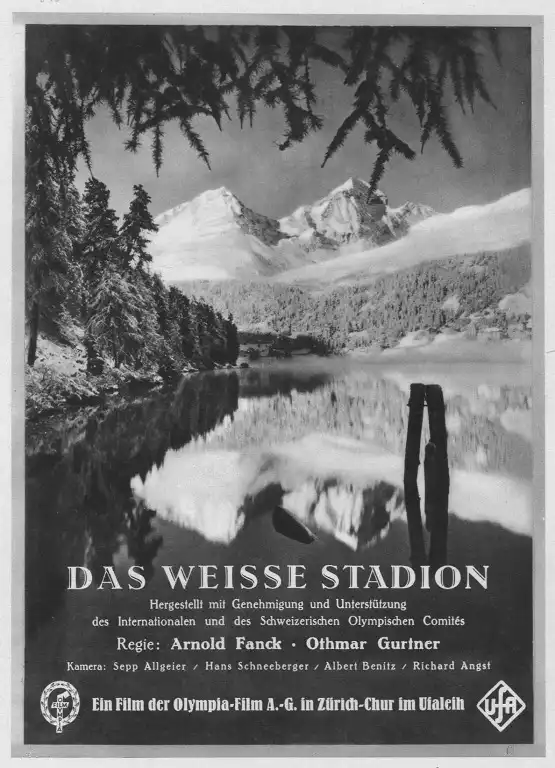
A definitive 7.2/10 rating for a film that redefined the boundaries of cult cinema. The White Stadium remains a cornerstone of transgressive art.
For those with a deep interest in sports history, early documentary filmmaking, or the visual culture of the 1920s, The White Stadium offers a fascinating, if often challenging, viewing experience. It's an invaluable historical document, capturing the nascent spirit of the Winter Olympics in a largely unadorned fashion. However, for a general audience expecting modern pacing, narrative drive, or emotional arcs, this 1928 documentary will likely feel slow and repetitive. If you appreciate cinema as a time capsule, then yes, it's worth seeking out; otherwise, proceed with caution.
Directed by Arnold Fanck and Othmar Gurtner, The White Stadium is less a conventional film and more a meticulously assembled visual record of the 1928 Winter Olympics in St. Moritz. It belongs to a tradition of early sports documentaries that aimed to capture the spectacle and the physical prowess of athletes, often with a romanticized view of nature and sport. The film opens not with fanfare, but with sweeping, almost painterly shots of the snow-covered Swiss Alps, establishing a grand, majestic backdrop against which human endeavor will play out. These initial sequences, with their quiet majesty, set a tone that oscillates between awe and a kind of detached observation.
The cinematography, for its era, is often impressive. Fanck, known for his 'mountain films,' brings a distinct sensibility to the snowy landscapes. There are some breathtaking long shots that convey the sheer scale of the mountains and the tiny figures of skiers descending vast slopes. The camera often feels positioned to capture the dynamic action, particularly in the bobsleigh sequences. We see the sleds hurtling down the ice track, the camera sometimes tracking alongside, sometimes placed at dramatic angles to emphasize speed and the g-forces on the drivers. The way the snow flies up from the runners, caught in sharp relief against the darker ice, is a recurring visual motif that genuinely conveys the speed and danger of the sport.
Where The White Stadium struggles for a modern audience is its pacing. It is a film that takes its time, often to a fault. Individual events are presented with a deliberateness that can feel like observation for observation's sake. We see multiple bobsleigh runs, several figure skating routines, numerous ski jumps. While this offers a comprehensive look at the events, it also leads to a certain visual redundancy. The film commits to showing entire sequences, often from a fixed perspective, which means moments of genuine exhilaration are frequently bookended by longer stretches of relatively static movement or setup.
For instance, the figure skating segments, while beautiful in their display of grace and precision, often consist of extended takes of skaters performing their routines. There’s a particular sequence featuring an ice dancer, where the camera holds on the intricate patterns being carved into the ice for an almost excessive duration. While it highlights the artistry, it also contributes to the film's tendency to linger beyond what feels cinematically necessary for impact. This isn't a flaw of intention, but a characteristic of early documentary style, prioritizing exhaustive coverage over concise narrative.

As a silent documentary, the film relies entirely on its visuals to convey emotion and story. There are no individual 'performances' in the traditional sense. Instead, we observe the athletes through their actions and reactions. The focus is always on the sport itself, rather than the personal drama of the competitors. We rarely get close-ups that reveal individual expressions of triumph or despair; the camera prefers to maintain a respectful distance, treating the athletes as part of a larger tableau.
However, small, almost accidental details often provide the most genuine human connection. The sheer number of spectators, bundled up in heavy coats and an array of distinctive hats, forms a living, breathing texture around the edges of the arenas. These crowds, often packed shoulder-to-shoulder on the snowy banks, offer a fascinating glimpse into the fashion and social dynamics of the time. In one scene, during a bobsleigh event, after a particularly arduous run, we see the athletes themselves having to push their heavy sled back up a slight incline for the next competitor, a practical detail that underscores the more rudimentary logistical realities of the early Olympics, far removed from today's highly organized events. These are the moments where the film truly transcends its role as a mere record and becomes a palpable window into a bygone era.
The film's greatest strength lies in its historical preservation. It’s a unique opportunity to witness the 1928 Winter Olympics as it unfolded, offering insights into the sports, the equipment, and the atmosphere that no written account could fully convey. The visual quality, particularly the stark beauty of the snowscapes and the dynamic capture of certain sports, remains compelling. The editing, while often slow, occasionally finds a rhythmic energy, especially when cutting between different competitive events, building a sense of the overall Olympic spectacle.
Its primary weakness, as noted, is its deliberate pace. Modern audiences accustomed to quick cuts and tightly structured narratives may find themselves drifting. The absence of a strong narrative through-line or individual character focus means the film relies solely on the inherent drama of the sports, which isn't always enough to sustain engagement for its entire runtime. There are moments that feel more like raw footage than a curated cinematic experience.
Ultimately, The White Stadium is a significant historical artifact, a testament to early sports cinematography and a direct link to the 1928 Winter Olympics. It's not a film designed for casual viewing, nor does it attempt to be. It exists as a record, a celebration of athleticism, and a visual journey into a specific moment in time. For film students, historians, and anyone with a genuine fascination for the early 20th century, it's an essential watch. For others, it might be best approached as a series of captivating historical vignettes rather than a cohesive, engaging film. It demands patience, but rewards it with authentic glimpses of history that feel genuinely untouched by time.
IMDb 6.3
1933
Community
Log in to comment.