DbcultAccessing Vault...
Cult Review
Senior Film Conservator
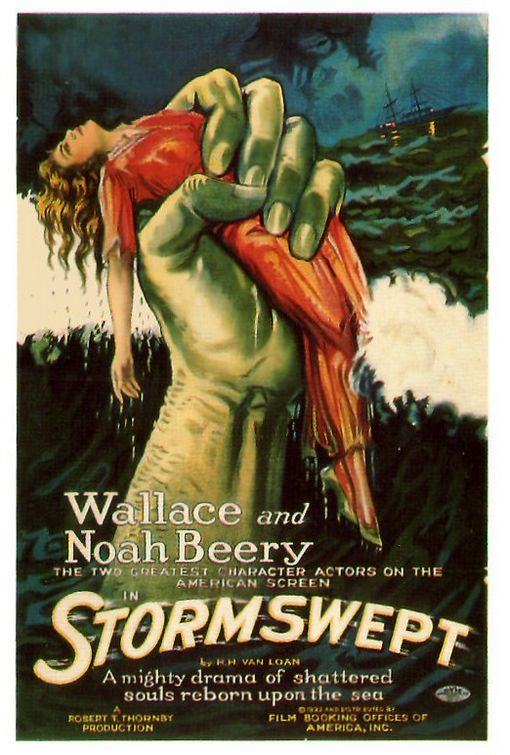
When the silent era of cinema reaches its zenith, few films capture the raw, elemental struggle between man and the sea as poignantly as Stormswept. Directed with a deft hand and anchored by the formidable talents of Noah Beery and Wallace Beery, this 1923 drama unfurls a tapestry of anguish, camaraderie, and tentative hope that resonates across the decades.
The narrative opens on a desolate pier, where William McCabe (Beery) wanders like a specter, his mind haunted by the infidelity of his wife, Helda. The cinematographer frames him against a backdrop of churning waves, the chiaroscuro lighting accentuating the abyss that yawns within his soul. McCabe's contemplation of suicide is not merely a plot device; it is a visual meditation on the human condition, rendered with a stark elegance that only silent film can achieve.
Enter Shark Moran (Wallace Beery), a rugged seafarer whose very name evokes the ferocity of the ocean he commands. In a moment of serendipity, McCabe intervenes to pull Moran from the clutches of a treacherous current, an act that births an unlikely alliance. Moran's gratitude manifests as an offer of employment aboard his lightship, a solitary vessel that drifts like a lighthouse of introspection amidst the endless blue.
The lightship becomes a crucible for transformation. Within its cramped quarters, McCabe discovers a rhythm that soothes his tormented heart. The film's mise‑en‑scene employs muted palettes punctuated by the occasional flash of sea‑foam white, underscoring the isolation that both confines and liberates him. It is here that Ann Reynolds (Virginia Brown Faire), the ethereal daughter of the supply‑ship captain, enters the tableau. Her presence is a breath of fresh wind, her laughter a melodic counterpoint to the relentless howl of the gale.
Their burgeoning romance is rendered with a delicacy that belies the harshness of their surroundings. The camera lingers on Ann's face as she gazes out over the horizon, her eyes reflecting the same yearning that drives McCabe toward redemption. The chemistry between Beery and Faire is palpable, each glance a silent sonnet that speaks louder than any intertitle could.
The film's equilibrium is violently disrupted when a ferocious storm descends upon the coast. Moran, ever the archetype of masculine bravado, rescues a woman from the tempest’s grasp and, emboldened by the adrenaline of survival, makes overt advances toward her. The tension escalates when McCabe recognizes the rescued woman as Helda, his own betrayed spouse. The revelation is a masterstroke of narrative irony, a collision of past wounds with present peril.
A brutal altercation erupts between the two men, their fists echoing the thunder that rattles the ship’s timbers. The choreography of the fight is both visceral and symbolic, each blow representing a struggle against the inexorable tide of fate. Yet, amid the chaos, the film never loses its lyrical quality; the storm serves as a metaphor for the inner tumult that both characters endure.
In a moment of quiet after the tempest, Moran’s hardened exterior cracks. He offers a sincere apology, his voice—though silent on screen—conveyed through a tender gesture that speaks volumes. Helda, portrayed with a nuanced blend of remorse and resolve by Arline Pretty, steps forward to declare that William is free to pursue a future with Ann. This resolution, while perhaps melodramatic to modern sensibilities, aligns perfectly with the era’s narrative conventions and provides a cathartic closure.
The performances merit particular commendation. Noah Beery imbues McCabe with a brooding intensity that never feels overwrought; his eyes, perpetually narrowed against the wind, convey a depth of sorrow that words could never capture. Wallace Beery, as Moran, balances gruffness with an unexpected tenderness, creating a character arc that evolves from solitary survivor to compassionate friend.
Cinematographically, Stormswept excels in its use of natural light and shadow. The sea itself becomes a character, its undulating surface reflecting the protagonists’ emotional currents. The director’s choice to film on location—rather than relying solely on studio backdrops—infuses the piece with an authenticity that elevates it above many contemporaries.
When situating Stormswept within the broader silent‑era canon, comparisons to Rider of the Law and The Deceiver are inevitable. While those films explore themes of justice and deception, Stormswept delves deeper into the psychological aftermath of betrayal, offering a more intimate portrait of redemption. Likewise, the emotional resonance found in The Awakening of Helena Ritchie finds a kindred spirit here, though the latter leans more heavily on melodrama than the stark realism that Stormswept achieves.
The screenplay, crafted by H.H. Van Loan and Winifred Dunn, balances dialogue‑free storytelling with intertitles that are both succinct and evocative. Each title card is strategically placed, allowing the visual narrative to breathe while providing essential context. This restraint showcases the writers’ confidence in the medium’s ability to convey complex emotions without reliance on spoken word.
From a thematic standpoint, the film interrogates the notion of masculinity in crisis. Both McCabe and Moran confront societal expectations of stoicism, yet their vulnerability becomes the conduit for genuine connection. The sea, ever‑present, serves as a metaphorical mirror, reflecting their internal storms and, ultimately, their capacity for forgiveness.
The production design deserves special mention. The lightship’s cramped quarters are rendered with meticulous detail—rusted railings, weather‑worn lanterns, and creaking wooden decks—all of which contribute to an immersive atmosphere. The use of authentic nautical props enhances the film’s verisimilitude, allowing viewers to feel the salt‑laden air and the ship’s gentle sway.
Musically, while the film itself is silent, contemporary screenings often pair it with a score that weaves together mournful strings and the distant roll of thunder, amplifying the emotional stakes. This auditory accompaniment, though not part of the original release, honors the film’s intent by echoing its rhythmic ebb and flow.
In terms of legacy, Stormswept may not enjoy the same household recognition as D.W. Griffith’s epics, yet its influence can be traced in later works that explore the interplay between human frailty and the unforgiving sea, such as Suspense and even modern maritime dramas. Its nuanced portrayal of redemption predates the more overt moralizing found in later Hollywood productions.
For cinephiles seeking a deeper appreciation of silent‑era craftsmanship, the film offers a masterclass in visual storytelling. The deliberate pacing, the strategic use of close‑ups, and the interplay of light and shadow all coalesce to create an experience that feels both timeless and immediate.
If you are intrigued by the thematic currents that run through Stormswept, you may also find resonance in I quattro moschettieri, which examines loyalty amidst betrayal, or An American Gentleman, a study of personal honor in a rapidly changing world. Each of these works, while distinct, shares an undercurrent of moral introspection that enriches the viewing experience.
In summation, Stormswept stands as a testament to the silent era’s capacity for profound emotional depth. Its exploration of love, loss, and the possibility of renewal is rendered with a visual poetry that transcends the limitations of its time. Whether you are a scholar of early cinema or a casual enthusiast, this film offers a compelling journey into the heart of human resilience, set against the ever‑present, ever‑unpredictable sea.
IMDb 6.7
1936
Community
Log in to comment.