DbcultAccessing Vault...
5/10
Senior Film Conservator
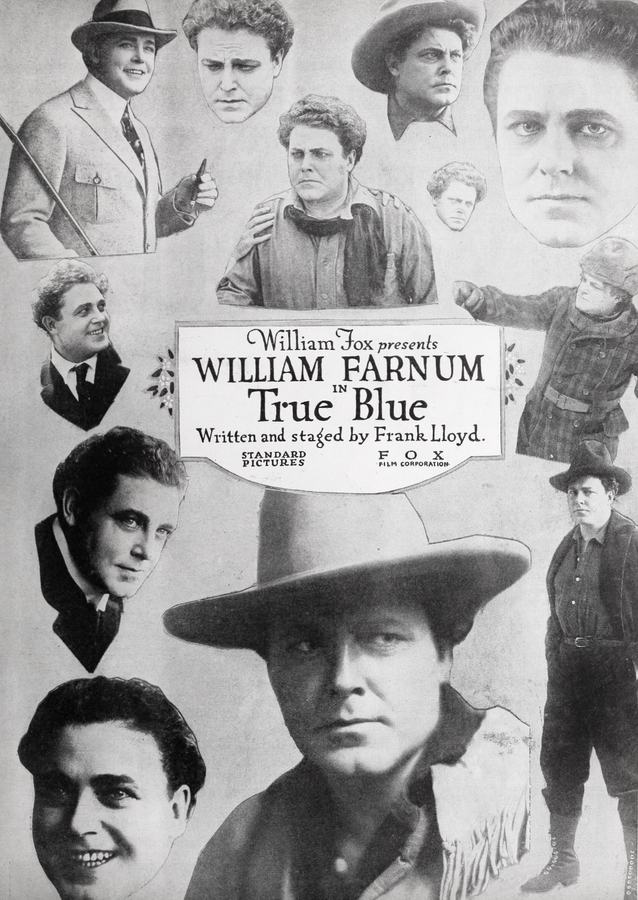
A definitive 5/10 rating for a film that redefined the boundaries of cult cinema. True Blue remains a cornerstone of transgressive art.
Frank Lloyd’s 1918 silent drama, True Blue, is far more than a mere period piece; it’s a robust exploration of identity, inheritance, and the enduring pull of both lineage and self-made destiny. Starring the formidable William Farnum, this film masterfully navigates the treacherous waters of familial betrayal and the eventual, often surprising, currents of reconciliation. It presents a stark contrast between the Old World’s rigid class structures and the New World’s rugged individualism, painting a vivid tableau of choices that ripple across generations. Lloyd, a director known for his meticulous storytelling, here crafts a narrative that feels both epic in scope and intimately personal in its emotional core, ensuring that even without spoken dialogue, the weight of each decision resonates deeply with the audience.
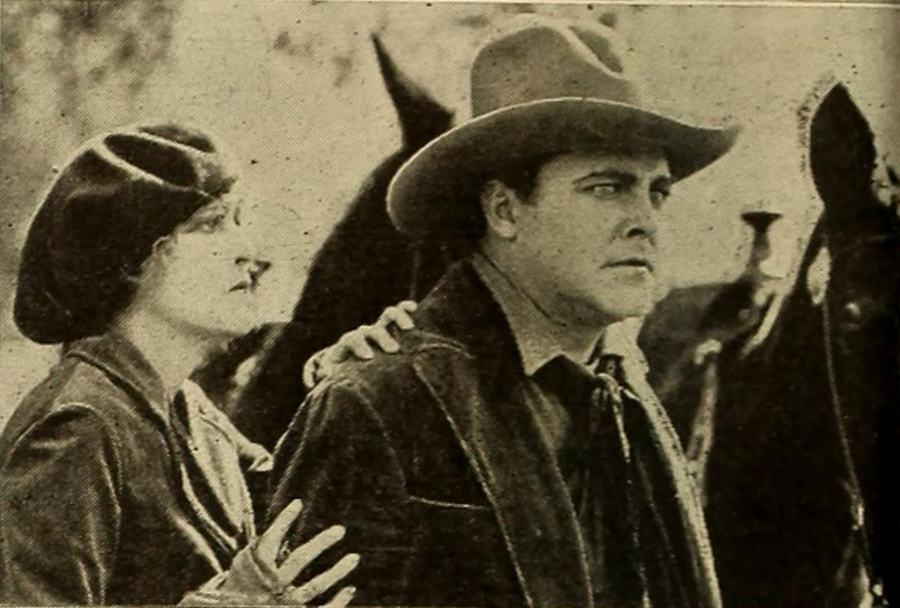
The genesis of the film’s central conflict lies in a moment of profound personal avarice and social climbing. Gilbert Brockhurst, portrayed by Marc B. Robbins, initially appears as an Englishman who has seemingly embraced American life, complete with an American wife and their young son, Robert. This veneer of contentment shatters with the news of his cousin’s death, catapulting him unexpectedly into the peerage as the Earl of Somerfield. The sudden allure of an aristocratic title and the perceived grandeur of English society prove irresistible, prompting Brockhurst to commit an act of profound desertion. He abandons his wife and child, leaving them to fend for themselves on an Arizona ranch inherited by his now-forsaken spouse. This pivotal choice, steeped in snobbery and self-interest, sets in motion a chain of tragic events, culminating in his wife’s premature death on the very ranch he spurned. It’s a stark commentary on the corrupting influence of status, suggesting that the pursuit of a noble title can often lead to ignoble actions. The film doesn't shy away from depicting the devastating human cost of such a decision, laying the groundwork for a generational saga of consequence and reckoning. The emotional void left by Brockhurst’s departure is palpable, a wound that festers and shapes the destiny of his elder son, Robert, in ways the Earl could never foresee.
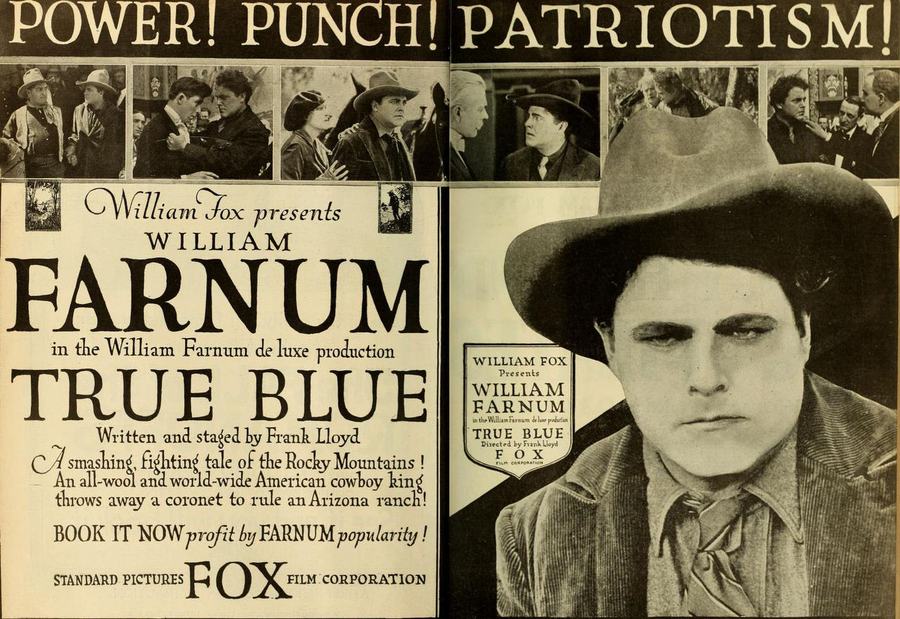
From the ashes of his mother’s heartbreak and his father’s abandonment emerges Robert, now known as Robert McKeever, embodied with compelling gravitas by William Farnum. McKeever is the quintessential self-made man, a character forged in the unforgiving crucible of the American West. Having inherited his mother's ranch, he transforms it from a symbol of neglect into a thriving testament to hard work and resilience. His hands are calloused, his gaze steady, and his moral compass unwavering. McKeever represents the 'true blue' spirit implied by the film's title—a man whose worth is not derived from birthright or inherited wealth, but from his integrity, his industry, and his unshakeable commitment to justice. He embodies the pioneering ideal, standing in stark contrast to the decadent aristocracy his father embraced. Farnum's portrayal is particularly nuanced; he conveys a deep-seated stoicism that masks the lingering pain of his past, yet allows glimpses of a profound capacity for empathy and leadership. The Arizona landscape, with its vast, untamed beauty, becomes an extension of McKeever's character—rugged, resilient, and brimming with untapped potential. His journey from an abandoned child to a respected rancher is a powerful narrative thread, demonstrating that true nobility is cultivated through character, not conferred by title. This arc resonates with the spirit found in films like Immediate Lee, which often celebrate the grit and moral fortitude of figures shaped by the frontier.
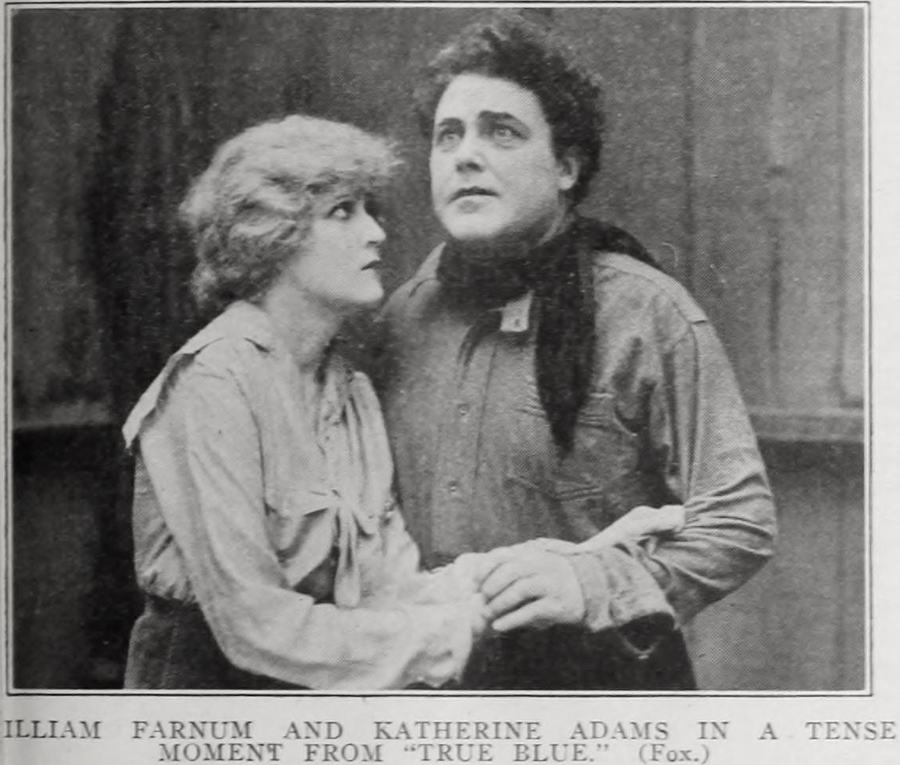
While Robert McKeever toils under the Arizona sun, his half-brother, Stanley, played by William Scott, lives a life of unbridled privilege and reckless abandon in England. Stanley is the epitome of the spendthrift heir, a product of inherited wealth without inherited wisdom. His existence is defined by gambling houses, debt, and a conspicuous lack of purpose—a stark mirror to his father's earlier moral failings, albeit manifested in a different form. When Gilbert Brockhurst, now the Earl, embarks on a diplomatic mission to America, he brings Stanley along, not out of affection, but as a desperate, final attempt to compel his son toward reformation. The threat is clear: reform, or be left to languish in America, disinherited and disgraced. This transatlantic journey, intended as a punishment, inadvertently becomes Stanley’s crucible. His inevitable encounter with McKeever in a seedy gambling den is a moment of significant narrative convergence. McKeever, recognizing a glimmer of humanity beneath Stanley’s dissolute exterior, and perhaps driven by a subconscious fraternal bond, pays off his half-brother’s debts and brings him to the ranch. This act of unexpected kindness is the catalyst for Stanley’s redemption. Away from the corrupting influences of London society, Stanley is exposed to the honest labor and moral clarity of ranch life. His transformation, though gradual, is profound, highlighting the film’s belief in the possibility of change and the redemptive power of meaningful work. This arc of a wayward individual finding purpose through hardship echoes the thematic underpinnings of films like The Habit of Happiness, where characters often navigate personal struggles to arrive at a more virtuous existence.
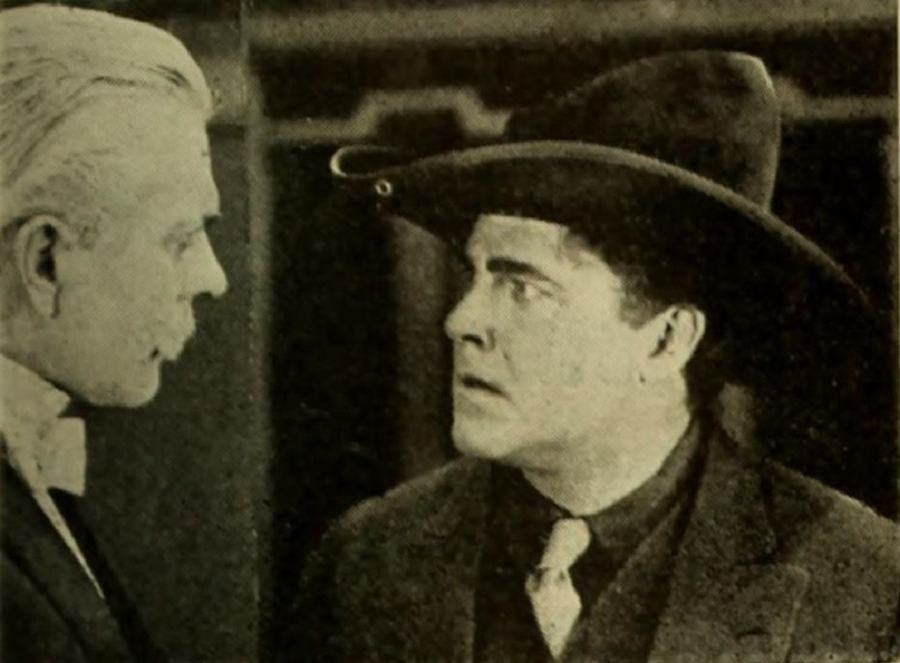
The arrival of Stanley at the ranch introduces a new layer of emotional complexity, specifically the burgeoning affections for Ruth, the local schoolteacher, portrayed by Genevieve Blinn. Ruth is not merely a romantic interest; she is a figure of quiet strength, intelligence, and moral rectitude, embodying the wholesome values of the community. Both McKeever and Stanley find themselves drawn to her, making her the unwitting focal point of a subtle, yet intense, rivalry. McKeever, ever the stoic and self-sacrificing hero, initially fears that Stanley’s charm and newfound attentiveness are winning Ruth’s heart. His deep-seated insecurities, born from his father’s abandonment, compel him to make a grand, misguided gesture: he tells Ruth she is free to go to Stanley, believing it to be the honorable course of action. This moment of self-abnegation is poignant, revealing the depth of McKeever’s character and his willingness to sacrifice his own happiness for what he perceives as the greater good, or Stanley's happiness. However, Ruth, with admirable clarity and conviction, shatters his misconception. She reveals that her love lies unequivocally with McKeever, recognizing his inherent goodness and steadfast spirit over Stanley’s more superficial, albeit now reformed, charm. This resolution to the romantic subplot is crucial, affirming that genuine affection is earned through character and integrity, not merely by proximity or a shared past. It underscores the film's broader message about true value, positioning Ruth as a discerning judge of character, capable of seeing beyond superficial appearances to the 'true blue' heart within. The dynamic mirrors the emotional complexities seen in films where familial duty and personal desire clash, albeit in a more subtle, character-driven manner than a grand adventure like Rupert of Hentzau, which deals with royal succession and divided loyalties.
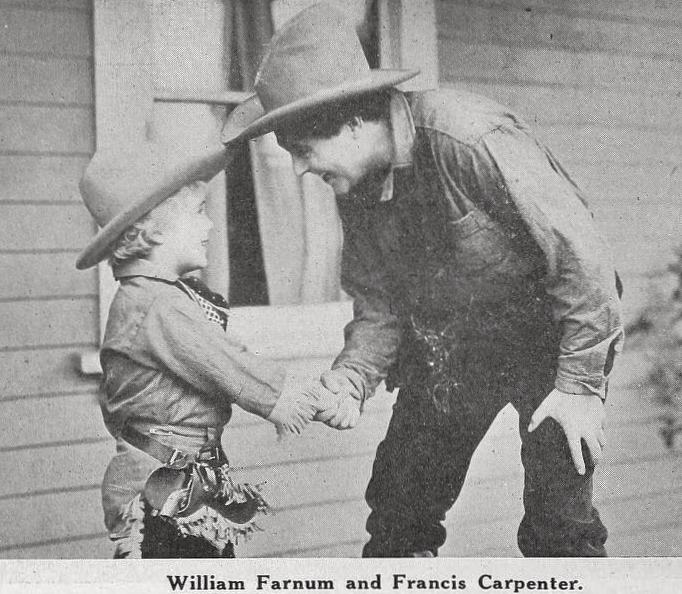
The narrative reaches its emotional zenith with the arrival of Earl Brockhurst in America. His diplomatic mission takes a backseat to a more personal reckoning. Confronted with the stark realities of his two sons—one, the self-made, honorable rancher he abandoned; the other, the reformed but still somewhat fragile heir he threatened—the Earl is forced to confront the consequences of his past choices. The contrast between McKeever’s quiet dignity and Stanley’s earlier dissipation is undeniable. Brockhurst, finally recognizing the profound character and inherent nobility of his elder son, makes a profound offer: he attempts to reinstate McKeever as his rightful heir, acknowledging his moral superiority and fitness to carry the Somerfield title. This moment is a powerful reversal, a belated attempt to correct a decades-old injustice. However, McKeever, demonstrating a magnanimity that transcends mere ambition, declines the offer. His refusal is not born of spite, but of a deep understanding of what truly constitutes worth and legacy. He has forged his own identity, built his own life, and found love and respect on his own terms. His 'true blue' nature shines brightest here, as he chooses compassion over personal gain. Instead, he sends a reformed Stanley back to England, ensuring his half-brother assumes his proper, albeit hard-won, place within the aristocratic lineage. McKeever’s decision is a profound statement: true inheritance is not merely about titles or estates, but about the values one embodies and the character one cultivates. It’s a powerful affirmation of the American ideal of meritocracy, where a man’s worth is defined by his actions, not his birth.
Frank Lloyd, a director with a keen eye for human drama, navigates the complex emotional landscape of True Blue with remarkable skill. In an era where visual storytelling was paramount, Lloyd utilizes the vast Arizona landscapes to great effect, contrasting the rugged authenticity of the West with the more confined, often morally stifling, settings of English aristocracy. His direction ensures that the audience remains deeply invested in the characters' journeys, even without the benefit of spoken dialogue. The pacing of the film is deliberate, allowing the emotional arcs of McKeever and Stanley to unfold organically. Lloyd employs subtle visual cues and expressive performances to convey internal struggles and evolving relationships. The scenes of Stanley’s reformation on the ranch, for instance, are depicted through his physical labor and growing competence, rather than explicit exposition. Similarly, McKeever’s quiet strength is conveyed through his posture, his steadfast gaze, and his actions. Lloyd’s ability to draw such nuanced performances from his cast, particularly William Farnum, is a testament to his directorial prowess. He understood the power of the close-up and the long shot, using them to emphasize both intimate moments of revelation and the grand sweep of the narrative. This thoughtful direction elevates True Blue beyond a simple melodrama, transforming it into a compelling study of character and societal values, reminiscent of the strong narrative drive found in films like The Siren's Song which also relied heavily on visual narrative to convey deep emotion.
William Farnum, a prominent star of the silent era, delivers a commanding performance as Robert McKeever. Farnum possessed a unique blend of rugged physicality and understated emotional depth, making him perfectly suited for the role of the honorable, self-made man. His portrayal of McKeever is marked by a quiet intensity; his expressions convey a wealth of unspoken feeling, from the lingering pain of abandonment to the unwavering resolve of a man committed to his principles. Farnum’s physical presence, particularly in the ranch scenes, lends an authenticity to McKeever’s connection to the land and his life of honest labor. He doesn't merely play a hero; he embodies the very essence of the 'true blue' ideal—a man whose actions speak louder than words, whose integrity is unyielding, and whose compassion is boundless. His stoicism is never cold, but rather a shield for a deeply feeling heart, making his moments of vulnerability all the more impactful. Farnum’s ability to convey such complex emotions through gesture and facial expression is a testament to his skill as a silent film actor, ensuring that McKeever remains a compelling and sympathetic protagonist throughout the film. His performance anchors the entire narrative, making the audience root for his triumphs and empathize with his struggles. This kind of iconic, morally upright lead performance can be seen as a precursor to similar strong, silent types in Westerns, a genre that often celebrated such steadfast characters.
The effectiveness of True Blue is further bolstered by its strong supporting cast. Madge Evans, though perhaps in a smaller role, likely contributed to the emotional landscape, while Charles Clary and Barney Furey would have added texture to the community around McKeever. Carrie Clark Ward and G. Raymond Nye, among others, help to populate this vibrant world, ensuring that the Arizona ranch feels like a living, breathing entity. Genevieve Blinn's portrayal of Ruth is crucial, as her character serves as a moral anchor and a catalyst for much of the romantic tension. Her discerning choice between the two half-brothers is a critical turning point, affirming the film’s message about inherent worth over inherited status. The film’s themes—class struggle, personal responsibility, the corrupting influence of wealth, and the redemptive power of love and honest labor—remain remarkably pertinent. It’s a story that asks profound questions about what truly constitutes nobility and what defines a man’s legacy. Is it the title passed down through generations, or the character forged through hardship and integrity? True Blue definitively argues for the latter, celebrating the American ideal of the self-made individual who, through sheer force of will and moral fortitude, rises above the circumstances of his birth. The narrative also subtly explores the tension between old-world aristocracy and new-world democracy, positioning the Arizona ranch as a bastion of authentic values against the hollow grandeur of Somerfield. This dichotomy between inherited privilege and earned respect is a timeless theme, explored in various forms across cinematic history, much like the familial and societal pressures often depicted in dramas like The Chattel or the personal struggles for identity in Driftwood.
Ultimately, True Blue stands as a powerful testament to the enduring appeal of stories centered on honor, sacrifice, and the triumph of character. Frank Lloyd and his team crafted a film that, despite its silent nature, speaks volumes about the human condition. It's a narrative that resonates deeply, reminding us that true wealth lies not in titles or fortunes, but in the integrity of one’s spirit and the strength of one’s moral compass. William Farnum's compelling performance as Robert McKeever cements his status as a silent film icon, embodying a heroism that transcends the screen. The film's resolution, with McKeever choosing to empower his reformed half-brother rather than claim a title for himself, is a poignant and powerful statement on magnanimity and true leadership. It's a message that remains as relevant today as it was over a century ago: true nobility is earned, not given, and the most profound legacies are built on love, integrity, and selflessness. For those seeking a compelling drama from the golden age of silent cinema, True Blue offers a rich, emotionally resonant experience that continues to captivate and inspire. It is a film that truly lives up to its name, presenting a 'true blue' hero in a story that champions the best of human nature against the backdrop of societal expectations and personal failings.

IMDb 5.6
1936
Community
Log in to comment.