DbcultAccessing Vault...
Cult Review
Senior Film Conservator
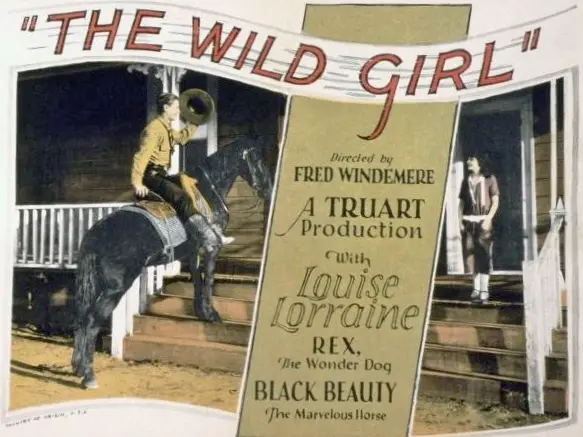
Should you dust off a century-old silent film like The Wild Girl (1925) for a viewing session in our fast-paced, CGI-laden present? Short answer: yes, but with a few crucial caveats. This charming, often melodramatic Western offers a fascinating glimpse into early Hollywood's storytelling prowess, though it undeniably shows its age.
This film is absolutely for silent film enthusiasts, those curious about cinematic history, or anyone who appreciates simple, earnest storytelling unburdened by dialogue. It’s also a delightful watch for dog lovers, given Rex the Dog's prominent and genuinely impressive role. Conversely, if you demand rapid-fire pacing, complex character arcs, or modern production values, The Wild Girl will likely test your patience. It's a product of its time, and embracing that is key to its enjoyment.
Let’s cut to the chase and address the fundamental strengths and weaknesses of this cinematic artifact:
This film works because… it delivers a straightforward, heartwarming narrative with compelling animal performances, particularly from Rex the Dog, whose intelligence and loyalty drive significant plot points. The natural beauty of its outdoor locations also provides a refreshing backdrop, a stark contrast to many studio-bound productions of the era.
This film fails because… its human antagonist, Lige Blew, is a one-note villain, lacking any nuance, which makes his motivations feel simplistic even for a silent melodrama. The pacing, while typical for 1925, can feel sluggish to modern eyes, especially during expositional sequences.
You should watch it if… you’re in the mood for a nostalgic trip to early cinema, appreciate the artistry of silent acting, or enjoy a classic good-vs-evil tale where nature plays a significant role.
The Wild Girl, directed by Art Acord (who also stars), unfurls a narrative as uncomplicated as the wilderness it depicts. We are introduced to Billy Woodruff, a photographer drawn to the untamed beauty of the forest. His lens captures not just landscapes, but the essence of Pattie, a young woman living a life of rustic purity with her Grandpapa Toto and their extraordinarily intelligent dog, Rex. Their immediate, almost fated connection forms the emotional core of the film, a testament to the power of silent cinema to convey sentiment without a single spoken word.
The film swiftly establishes its central conflict: the burgeoning romance between Billy and Pattie is shadowed by the menacing presence of Lige Blew, a local mountaineer whose possessive desires for Pattie are clearly unreciprocated. Lige is a character carved from the simplest block of villainy, embodying pure, unadulterated malevolence. His scheme to frame Grandpapa Toto for murder is a bald-faced manipulation, designed solely to isolate Pattie and bend her to his will. It’s a plot device that, while predictable, serves its purpose in propelling the narrative towards its inevitable confrontation.
Themes of innocence corrupted, the resilience of good, and the triumph of natural justice permeate the film. Pattie represents an unblemished purity, a spirit of the wild untainted by societal artifice. Billy, though from the 'civilized' world, demonstrates a complementary natural goodness. Their relationship is framed as an ideal, a harmonious blend of two worlds. Lige, on the other hand, embodies a darker, more primitive side of humanity, driven by base desires rather than genuine affection. This stark dichotomy is a hallmark of silent-era storytelling, where moral lines were often drawn in bold, unambiguous strokes.
The acting in The Wild Girl, as with many silent films, relies heavily on exaggerated expressions and physical gestures to convey emotion. Art Acord, a real-life cowboy and rodeo champion, brings an authentic Western masculinity to Billy Woodruff. His performance is earnest and straightforward, embodying the heroic archetype with a rugged charm. He’s less about nuanced internal struggle and more about decisive action, a perfect fit for the era’s demand for clear-cut heroes.
As Pattie, Louise Lorraine delivers a performance that captures the titular 'wild girl' persona with a delicate balance of naiveté and spirited defiance. Her wide-eyed innocence and expressive face effectively communicate her vulnerability and burgeoning affection for Billy, as well as her fear and disgust towards Lige. There’s a particular scene where she recoils from Lige’s advances, her entire body language screaming revulsion, that is remarkably effective in its silent portrayal of distress.
However, the undisputed star of The Wild Girl is Rex the Dog. Rex is not merely a prop or a background character; he is an active participant in the plot, a true co-star. His intelligence and loyalty are central to the film's climactic rescue. The sequence where Rex understands the peril and races to alert Billy is genuinely compelling, showcasing animal acting that often overshadows some of the human performances. Rex's ability to convey urgency and understanding through his actions is a standout element, proving that a well-trained animal can be just as, if not more, captivating than their human counterparts. It's an unconventional observation, but Rex truly carries the emotional weight of several key moments, surpassing even the dramatic capabilities of Black Beauty, the horse, who also makes a notable appearance.
Art Acord's direction, while perhaps not groundbreaking, is competent and serves the story well. He utilizes the natural settings effectively, grounding the narrative in a believable, if somewhat romanticized, wilderness. The outdoor shots of forests and mountains lend a sense of scale and authenticity that elevates the production beyond typical studio backlots. The film benefits immensely from its on-location shooting, a trend that was gaining traction in the 1920s, moving away from painted backdrops.
The cinematography, though uncredited, captures the rustic charm of the setting with a surprising clarity for the era. There's a particular beauty in the way the sunlight filters through the trees, or the wide shots that establish the isolation of Pattie’s cabin. While not as avant-garde as some European films of the period, the camera work is solid, focusing on clear storytelling and character reactions. Close-ups are used judiciously to emphasize emotional moments, such as Pattie’s fearful expressions or Billy’s determined gaze, allowing the audience to connect directly with the characters' inner states.
The action sequences, particularly Billy’s pursuit of Lige and the final confrontation, are staged with a good sense of momentum. While lacking the kinetic energy of modern action, they rely on the tension of the chase and the clear delineation of good versus evil. The sequence where Rex alerts Billy and guides him back to Pattie is especially well-executed, building suspense through cross-cutting between Pattie's predicament and Billy's urgent journey.
The pacing of The Wild Girl is undeniably a product of its time. Silent films often embraced a more deliberate rhythm, allowing audiences to absorb the visual storytelling and intertitles. For contemporary viewers accustomed to quick cuts and rapid plot progression, this can feel slow. The initial setup, establishing Pattie’s life and the burgeoning romance, takes its time, luxuriating in the natural environment and character introductions. This measured pace, however, allows for a deeper appreciation of the simple beauty and emotional beats, if one adjusts their expectations.
The tone is largely one of romantic melodrama intertwined with adventure. There are moments of genuine sweetness between Billy and Pattie, contrasted sharply with the darker, more menacing presence of Lige. The film navigates these shifts reasonably well, maintaining a cohesive emotional arc. It never veers into overly dark territory, always promising a satisfying resolution, which was typical for popular entertainment of the period. The blend of rustic romance with a thrilling rescue gives it a broad appeal within its genre.
Placing The Wild Girl within the context of 1925 cinema reveals a straightforward, commercially oriented production. While it doesn't possess the experimental flair of something like The Vampires: The Poisoner or the grand epic scale of Around the World in 80 Days, it confidently occupies its niche as a Western romance. It shares thematic similarities with other 'girl of the wilderness' stories prevalent at the time, such as A Girl of the Timber Claims, emphasizing pure heroines and rugged landscapes.
What sets it apart, perhaps, is the sheer effectiveness of Rex the Dog's performance, which gives the film a unique selling point. Many films featured animal sidekicks, but Rex truly feels like a character, influencing the plot in a way that goes beyond mere companionship. This focus on animal intelligence and heroism is a surprisingly modern touch for a film of this vintage, making it resonate even today with audiences who appreciate animal-centric narratives.
The Wild Girl is not a hidden masterpiece, nor is it a forgotten classic that will redefine your understanding of cinema. It is, however, a genuinely charming and competently made silent film that delivers exactly what it promises: a simple tale of love, danger, and heroism in the American wilderness. Its strengths lie in its earnest performances, particularly from its canine star, and its effective use of natural scenery.
The film's flaws are largely generational – the pacing can drag, the villain is archetypal to a fault. But these are small prices to pay for a journey back to a foundational era of filmmaking. It works. But it’s flawed. Yet, its flaws are part of its charm, a testament to how much cinema has evolved while still retaining the core elements of human storytelling.
The Wild Girl (1925) is a delightful, if not groundbreaking, journey back to the formative years of Hollywood. It stands as a testament to the enduring power of simple, heartfelt storytelling, elevated significantly by its four-legged co-star, Rex. While it won't challenge your perceptions of cinema or push any boundaries, it offers a comforting, nostalgic experience. For those willing to adjust to the rhythm of a bygone era, it's a worthwhile watch, a gentle reminder of where cinematic adventure began. It’s a film that, despite its age, still manages to wag its tail and earn a genuine smile.

IMDb 7.2
1925
Community
Log in to comment.