DbcultAccessing Vault...
Cult Review
Senior Film Conservator
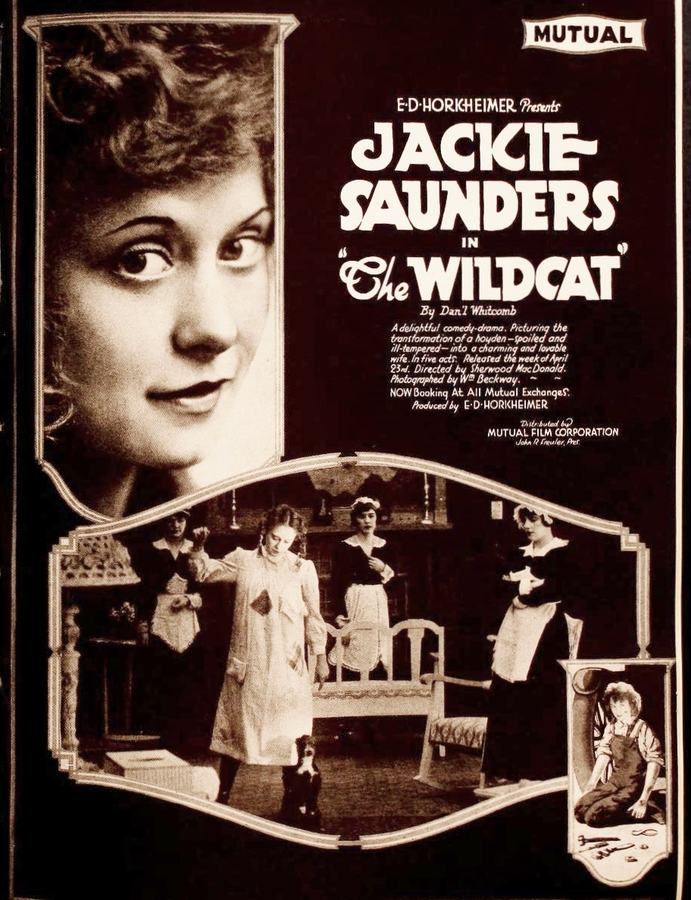
Stepping back into the annals of early cinema, one encounters a fascinating, often perplexing, landscape of narrative ambition and societal reflection. Among these cinematic artifacts, Daniel F. Whitcomb’s ‘The Wildcat’ (1917) emerges not just as a period piece, but as a potent, if profoundly unsettling, exploration of agency, desire, and the dark undercurrents of romantic pursuit. It’s a film that, even a century later, sparks conversations about its portrayal of women, the nature of love, and the moral ambiguities inherent in its melodrama. To dismiss it as merely a relic would be to overlook its audacious storytelling and its uncomfortable insights into the power dynamics that have long plagued human relationships. This isn't just a movie; it's a cultural mirror, albeit one that reflects a challenging image.
At its core, ‘The Wildcat’ is a story about Bethesda Carewe, brought to life with a captivating blend of aristocratic hauteur and burgeoning defiance by Jackie Saunders. Bethesda is introduced as the archetypal pampered heiress, a creature of comfort whose every whim is indulged by her affluent, if somewhat feckless, parents. Her world, however, is built on a precarious foundation, and it shatters dramatically when her father, played by Daniel Gilfether, loses his vast fortune. This sudden reversal of fate precipitates a desperate scramble for solvency, leading Mr. Carewe to hatch a plan that feels as old as time itself: marry his daughter to a wealthy suitor. Enter Mortimer Hunt, portrayed by Arthur Shirley, a man whose riches are matched only by his unyielding resolve and, as the narrative unfolds, his disturbing obsession. The collision of Bethesda’s fierce independence with Hunt’s unbridled possessiveness forms the central conflict, driving the film’s escalating tension and its most controversial moments.
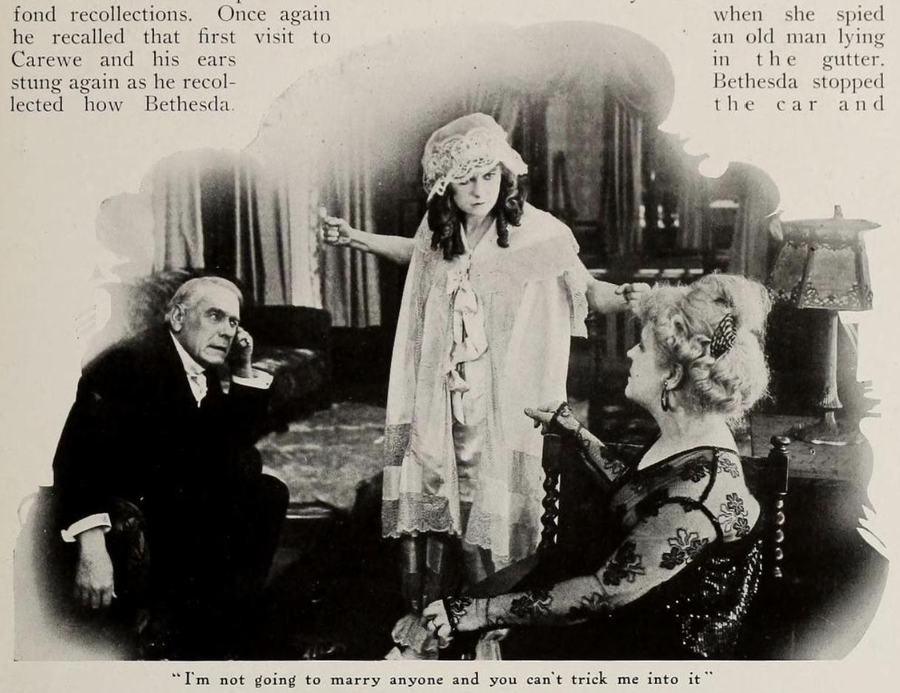
Bethesda’s initial resistance to the arranged marriage is not merely a petulant rejection; it’s a visceral refusal of commodification. She doesn't just dislike Hunt; she actively despises the notion of being bartered away like property to secure her family’s future. Her methods of repulsion are both ingenious and, at times, darkly comedic for the era. She employs every social faux pas imaginable, every cold glance and cutting remark, to make herself utterly unappealing. Yet, in a twisted psychological turn, her very defiance, her untamed spirit, only serves to inflame Hunt’s desire. This element of the plot is perhaps the most difficult to reconcile with contemporary sensibilities. It suggests that resistance can be interpreted as a challenge, an invitation to conquer, rather than a clear boundary. This problematic trope, where a woman's 'no' is merely a prelude to a 'yes' that must be extracted, is a deeply ingrained narrative device in many historical texts, and 'The Wildcat' serves as a stark cinematic illustration of it. One might draw parallels to the manipulative romantic dynamics found in other films of the era, though perhaps few push the envelope quite as far as this one does with its direct depiction of coercion.
The acting in these early scenes is crucial. Jackie Saunders, as Bethesda, radiates a fiery energy that makes her character’s predicament all the more palpable. Her eyes convey a potent mix of anger, fear, and a desperate longing for autonomy. Arthur Shirley’s Mortimer Hunt, on the other hand, is a masterclass in silent menace. His expressions, subtle yet firm, communicate a chilling determination. He’s not a mustache-twirling villain in the caricatured sense, but a man driven by a singular, possessive ambition. The dynamic between them is electric, even without spoken dialogue, relying heavily on exaggerated gestures and facial expressions that were the lingua franca of silent film. The audience is left to grapple with the disturbing implications of a man so consumed by desire that he interprets outright rejection as a mere obstacle to be overcome, rather than a definitive statement.
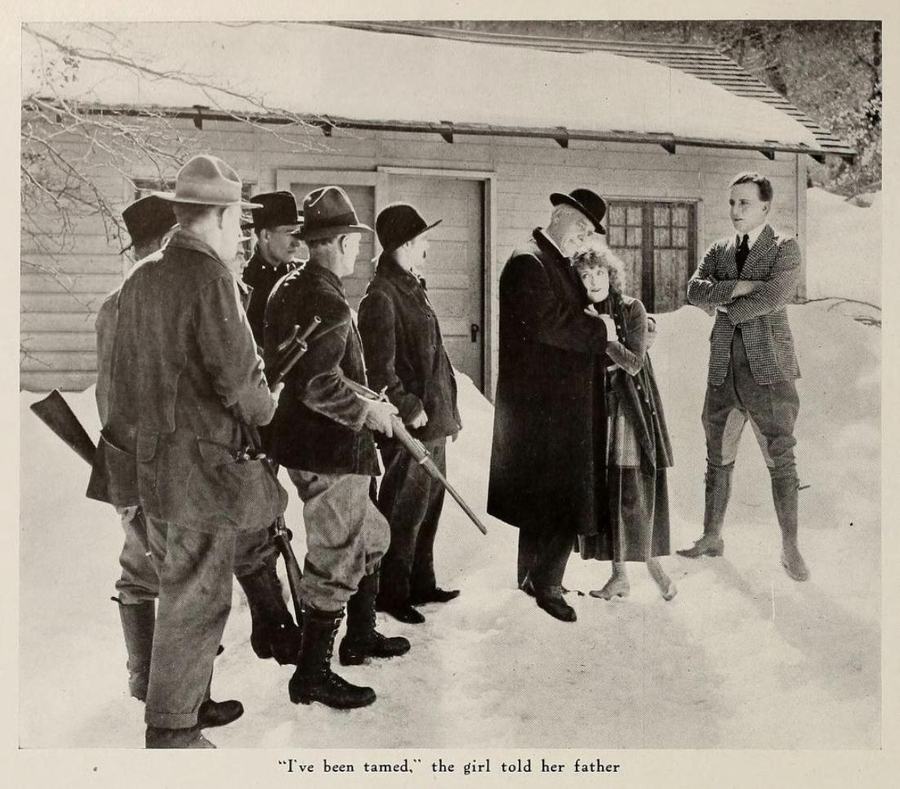
The narrative takes a decidedly darker turn when Hunt, realizing conventional courtship is futile, conspires with Bethesda's desperate father to abduct her. This act of kidnapping, removing Bethesda from her familiar surroundings and holding her captive in a remote mountain cabin, marks a significant escalation of the psychological and physical stakes. The cabin, isolated and stark, becomes a symbolic prison, a crucible where Bethesda’s will is tested against Hunt’s unwavering resolve. Here, the film sheds any pretense of lighthearted romance and delves into the raw, uncomfortable territory of power and control. Her release is made contingent upon a declaration of love, a demand that strips the very concept of affection of its voluntariness, transforming it into a tool of subjugation.
The visual storytelling during these sequences is particularly effective. The stark mountain landscapes, perhaps filmed with a raw, documentary-like quality given the technology of the time, emphasize Bethesda’s isolation and vulnerability. The contrast between her former life of opulence and her current rustic captivity is visually striking. The performances here become even more intense. Saunders conveys a profound sense of entrapment and despair, while Shirley’s Hunt maintains an unsettling composure, a man convinced of the righteousness of his twisted pursuit. This section of the film is a masterclass in silent era melodrama, pushing boundaries with its bold depiction of a woman’s struggle against overwhelming odds. It's in these moments that the film truly earns its 'wildcat' moniker for Bethesda – a creature trapped, but still capable of lashing out.
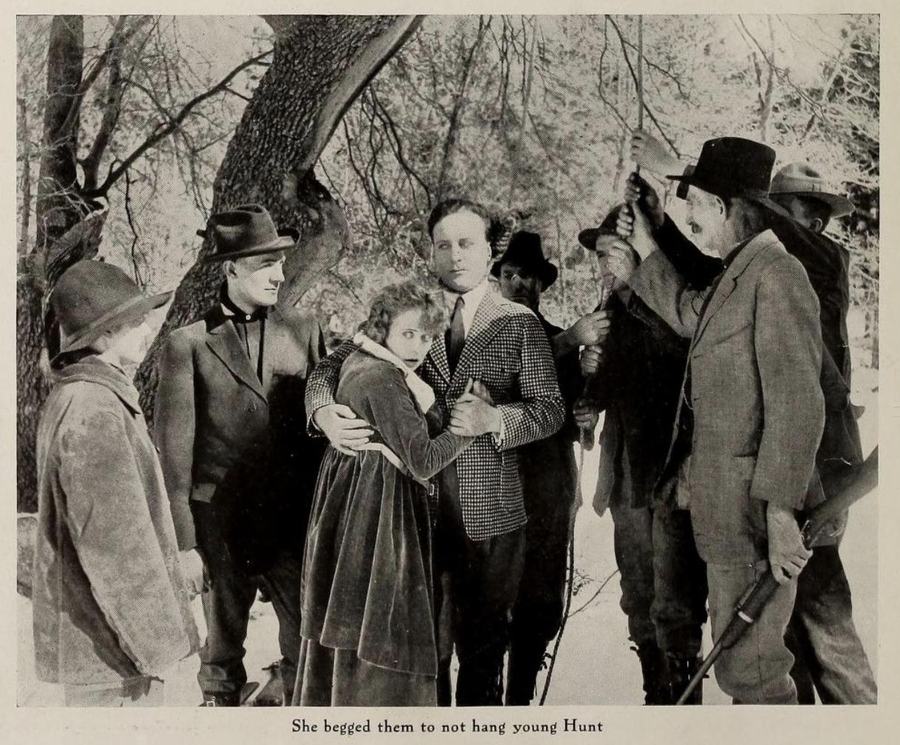
The climax of ‘The Wildcat’ is a shocking tableau of manipulation that solidifies its controversial status. Hunt, not content with mere physical captivity, orchestrates a grotesque charade: he arranges for a gang of desperadoes to stage his own lynching. The scene is designed to be a moment of extreme duress, pushing Bethesda to the brink. Faced with the imminent 'death' of her captor – the man she ostensibly despises, but whose life she is now pressured to save – Bethesda is forced into an agonizing choice. Her declaration of love, and her subsequent agreement to marry him immediately, is born not of genuine affection, but of a desperate, primal instinct for preservation and a profound sense of psychological coercion. It’s a moment that leaves a lingering taste of unease, questioning the very definition of love and consent within the narrative’s framework.
This final act of manipulation is where ‘The Wildcat’ truly distinguishes itself, for better or worse, from many of its contemporaries. While films like The Woman and the Beast might explore themes of control and male dominance, few delve into such a direct and explicit staging of emotional blackmail as a means to secure a marital bond. The film asks its audience to accept a resolution born from profound duress, a narrative choice that would be heavily scrutinized in modern cinema, and rightly so. Yet, it is precisely this audacity that makes it a compelling, if uncomfortable, artifact for study. The performances again carry the weight of this moral quandary, with Saunders’s Bethesda conveying the wrenching internal conflict of a spirit finally broken, and Shirley’s Hunt exuding a perverse triumph.
Beyond the central duo, the supporting cast, though perhaps given less screen time, contributes significantly to the film's atmosphere. Mollie McConnell and Nell Holman, likely portraying other female characters, add texture to Bethesda's world, whether as sympathetic figures or part of the social fabric she rebels against. Bruce Smith, perhaps as one of the desperadoes, helps lend credibility to the staged lynching, making the threat feel immediate and real. Daniel Gilfether’s portrayal of Mr. Carewe is particularly nuanced; he’s not a villain in the traditional sense, but a man driven to desperate measures by financial ruin, his complicity in his daughter’s abduction adding another layer of tragic complexity to the plot. His desperation is a key motivator for the entire chain of events, highlighting the economic pressures that could drive such drastic decisions in that era.
Daniel F. Whitcomb, as the writer, crafted a narrative that is undeniably bold and provocative for its time. The film’s direction, while typical of the era in its use of static camera shots and theatrical staging, effectively builds tension and communicates emotion through visual cues. The editing, though perhaps not as rapid or dynamic as later cinematic styles, allows the audience to absorb the emotional beats and the unfolding drama. The use of intertitles, a necessity of silent film, is judiciously employed to convey dialogue and exposition, guiding the viewer through the increasingly complex ethical landscape of the story. The pacing feels deliberate, allowing the psychological torment to slowly simmer and then boil over, rather than rushing through the critical moments of coercion. This deliberate rhythm amplifies the sense of inevitability as Bethesda's fate closes in around her.
‘The Wildcat’ stands as a stark reminder of certain narrative conventions that, while perhaps accepted or even romanticized in early cinema, are now rightly viewed through a critical lens. The theme of forced marriage, or marriage under duress, is not unique to this film. We see glimpses of similar power struggles and romantic entanglements in films like Indiscreet Corinne, where female characters navigate complex social expectations, albeit often with more agency than Bethesda is ultimately afforded. The manipulative plotting, the intricate web of deceit spun by Hunt, could find a distant echo in the strategic machinations of characters in a film like The Conspiracy, though there the stakes are typically political or criminal, rather than deeply personal and romantic. Even the idea of a 'game of wits' as seen in A Game of Wits takes on a sinister hue in 'The Wildcat', where the game is rigged and the consequences are devastatingly real for the protagonist.
What sets ‘The Wildcat’ apart is the bluntness of its resolution. There’s no sudden, genuine change of heart from Bethesda, no last-minute rescue by a true hero. Her capitulation is explicitly presented as a direct consequence of Hunt’s extreme psychological torture. This makes the film a valuable, albeit uncomfortable, document for understanding the evolution of cinematic portrayals of romance and consent. It forces us to confront how far our understanding of these concepts has shifted, and how much further society still needs to go. The film serves as a powerful historical marker, illustrating the societal norms and storytelling tropes that were once acceptable, offering a stark contrast to contemporary narratives that champion genuine consent and autonomy.
Viewing ‘The Wildcat’ today, it’s impossible to ignore the problematic nature of its central premise and resolution. The narrative, which culminates in a woman being forced into marriage through kidnapping and psychological terror, is deeply disturbing. It challenges modern viewers to reconcile historical cinematic practices with contemporary ethical standards. However, to simply dismiss it as 'problematic' without further analysis would be to miss an opportunity to understand the cultural context from which it emerged. It reflects a period where the agency of women, particularly within marriage, was often severely limited, and where narratives of 'taming' a strong-willed woman were not uncommon. The film, in its stark depiction, inadvertently highlights the very issues it seems to endorse.
One could argue that the film, despite its unsettling plot, offers a compelling portrait of survival. Bethesda, even in her forced submission, displays immense resilience throughout the ordeal. Her initial defiance is fierce, her resistance prolonged, and her ultimate capitulation is a strategic choice made under duress, rather than a genuine surrender of spirit. This nuanced reading allows for an appreciation of Jackie Saunders’s performance, which imbues Bethesda with a complexity that transcends the simplistic 'damsel in distress' archetype, even if her fate is ultimately dictated by male figures. Her character, though ultimately trapped, never truly loses her inherent 'wildness' in the audience's perception, even if forced to outwardly conform.
The film also serves as a testament to the power of silent cinema to convey complex emotions and narratives without dialogue. The reliance on visual storytelling, music (which would have accompanied screenings), and intertitles demanded a different kind of performance and directorial skill. The dramatic tension, the psychological warfare between Bethesda and Hunt, is palpable through their expressions and actions alone. This makes ‘The Wildcat’ a valuable study for film historians and enthusiasts interested in the evolution of cinematic language and the expressive capabilities of early actors.
In conclusion, ‘The Wildcat’ is a film that demands engagement, not just passive viewing. It’s a challenging piece of cinema that reflects the complexities and often disturbing gender dynamics of its time. While its narrative resolution is deeply problematic from a contemporary perspective, its audacious plot, the strong performances by Jackie Saunders and Arthur Shirley, and its unflinching exploration of coercion make it a significant historical document. It offers a window into the kinds of stories that captivated audiences over a century ago, and simultaneously provokes essential discussions about consent, autonomy, and the enduring power dynamics within human relationships.
It’s a film that resonates not because its message is palatable, but because it forces us to confront uncomfortable truths about the past and to critically examine how these narratives continue to influence our present. For those interested in the raw, untamed spirit of early cinema, and willing to grapple with its ethical complexities, ‘The Wildcat’ remains a compelling and essential watch. It's a reminder that even in the silent era, films could roar with powerful, if sometimes disquieting, statements about the human condition. Its legacy is not one of simple entertainment, but of profound historical and social commentary, making it a film that continues to spark debate and introspection long after its initial release.
IMDb —
1927
Community
Log in to comment.